
In PCB manufacturing, the need to separate individual boards from a larger panel efficiently and cleanly is crucial. Three primary methods have emerged as industry standards: Mouse Bites, Breakaway Tabs, and V-Grooves. Each method offers unique advantages and considerations for different production scenarios and requirements.
Mouse Bites in PCB Manufacturing
Definition and Characteristics
Mouse bites are small, perforated holes arranged in a line that allow for easy separation of PCBs from panels.
Technical Specifications
| Parameter | Typical Range | Optimal Value | Impact on Separation |
| Hole Diameter | 0.5-1.0mm | 0.7mm | High |
| Hole Spacing | 0.5-1.5mm | 1.0mm | Critical |
| Bridge Width | 0.3-0.7mm | 0.5mm | High |
| Number of Holes | 3-8 per inch | 5 per inch | Medium |
Advantages and Applications
Benefits Table
| Benefit | Description | Application Scenario |
| Clean Break | Minimal edge roughness | High-precision electronics |
| Easy Separation | Manual separation possible | Low-volume production |
| Cost-effective | No special tools required | Prototype development |
| Space-efficient | Minimal border required | Dense panel layouts |
Design Considerations
Layout Parameters
| Factor | Recommendation | Critical Concerns |
| Edge Distance | ≥ 2mm from components | Structural integrity |
| Panel Rigidity | 2-3mm thickness | Handling stability |
| Corner Design | Rounded preferred | Stress distribution |
| Support Points | Every 50-75mm | Panel stability |
Breakaway Tabs
Structure and Design
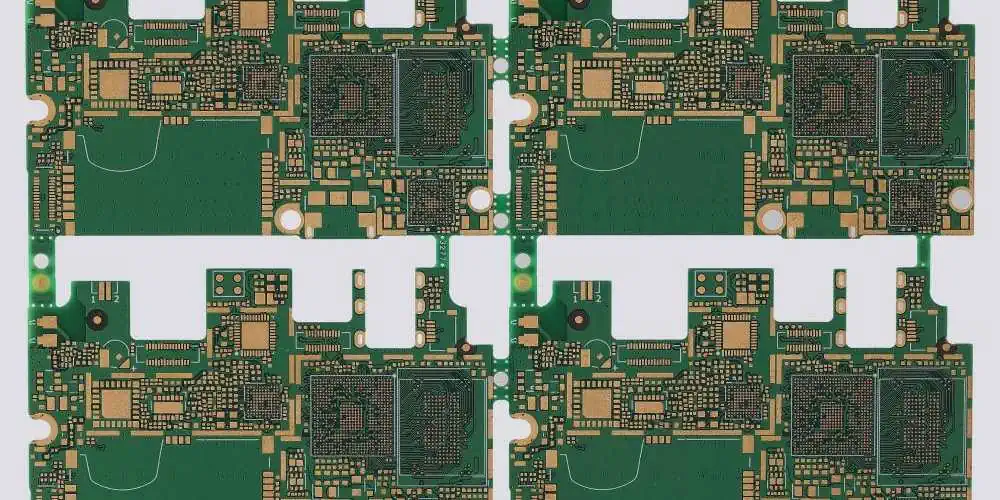
Breakaway tabs are solid sections of PCB material that connect individual boards to the panel frame.
Tab Specifications
| Dimension | Range | Optimal Size | Usage Case |
| Width | 2-5mm | 3mm | Standard boards |
| Length | 3-8mm | 5mm | Medium weight |
| Thickness | Same as PCB | 1.6mm | Most common |
| Spacing | 50-100mm | 75mm | Balance point |
Manufacturing Process
Production Parameters
| Process Step | Control Point | Quality Impact |
| Routing | Speed control | Edge quality |
| Tab Placement | Strategic locations | Board support |
| Material Selection | FR4 grade | Break strength |
| Tool Selection | Carbide endmills | Cut precision |
Strength Considerations
| Board Size | Min Tabs | Tab Width | Tab Spacing |
| Small (<50cm²) | 2 | 2mm | 75mm |
| Medium (50-150cm²) | 3 | 3mm | 100mm |
| Large (>150cm²) | 4+ | 4mm | 125mm |
V-Groove PCB
Technical Specifications
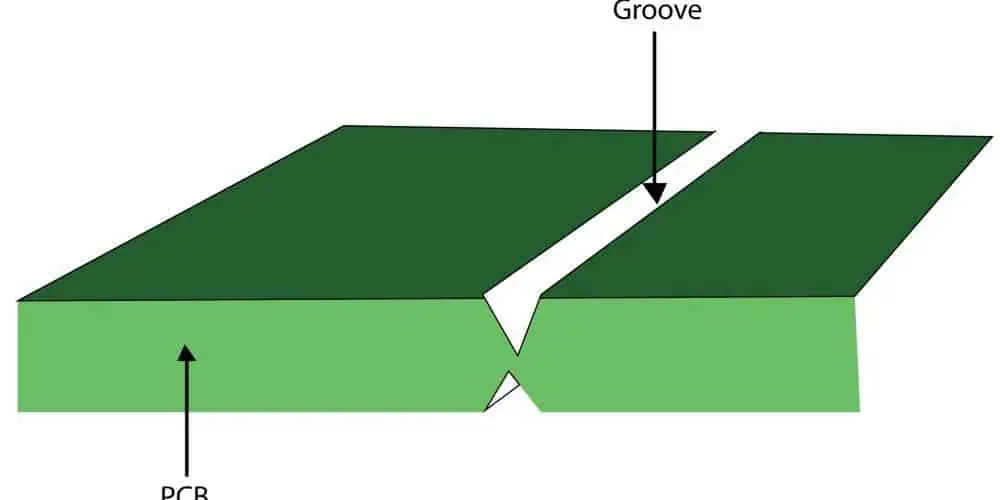
Groove Parameters
| Parameter | Standard Value | Tolerance | Critical Factor |
| Depth | 1/3 board thickness | ±0.1mm | Break control |
| Angle | 30-45 degrees | ±2° | Separation ease |
| Width | 0.6-0.8mm | ±0.05mm | Material strength |
| Spacing | Board edge aligned | ±0.1mm | Layout efficiency |
Manufacturing Process
Production Requirements
| Equipment | Precision Level | Maintenance Frequency |
| V-Score Machine | ±0.025mm | Weekly |
| Cutting Bits | 30° or 45° | 1000 boards |
| Guide System | ±0.01mm | Monthly |
| Cooling System | Temperature ±2°C | Daily |
Applications and Limitations
Usage Scenarios
| Board Type | Suitability | Limitations |
| Rigid PCB | Excellent | None significant |
| Flex PCB | Poor | Not recommended |
| Rigid-Flex | Limited | Partial use only |
| Heavy Copper | Good | Requires special tools |
Comparison of Methods
Performance Metrics
| Criteria | Mouse Bites | Breakaway Tabs | V-Groove |
| Cost | Low | Medium | High |
| Speed | Medium | Slow | Fast |
| Edge Quality | Good | Fair | Excellent |
| Automation | Limited | Manual | Full |
| Tool Life | Long | Medium | Short |
Application Recommendations
Production Volume Considerations
| Production Level | Recommended Method | Alternative |
| Prototype | Mouse Bites | Breakaway Tabs |
| Small Series | Breakaway Tabs | Mouse Bites |
| Mass Production | V-Groove | None |
| Mixed Production | Mouse Bites | V-Groove |
Quality Control
Inspection Criteria
| Method | Inspection Points | Acceptance Criteria |
| Mouse Bites | Hole alignment | ±0.1mm |
| Breakaway Tabs | Tab uniformity | ±0.2mm |
| V-Groove | Groove depth | ±0.05mm |
Common Defects
Defect Analysis
| Defect Type | Cause | Prevention |
| Rough Edges | Tool wear | Regular maintenance |
| Uneven Break | Poor design | Design optimization |
| Stress Marks | Excessive force | Process control |
| Material Damage | Improper handling | Training |
Cost Analysis
Equipment Investment
| Method | Initial Cost | Maintenance Cost | Lifespan |
| Mouse Bites | $5,000-10,000 | Low | 5-7 years |
| Breakaway Tabs | $2,000-5,000 | Medium | 3-5 years |
| V-Groove | $15,000-25,000 | High | 8-10 years |
Operating Costs
| Factor | Mouse Bites | Breakaway Tabs | V-Groove |
| Labor | Medium | High | Low |
| Tools | Low | Medium | High |
| Training | Basic | Basic | Advanced |
| Maintenance | Minimal | Low | Regular |
Future Trends
Technology Development
| Innovation | Impact | Timeline |
| Laser Separation | High | 2024-2025 |
| Smart Routing | Medium | 2023-2024 |
| Automated Break | High | 2024-2025 |
| AI-Guided Design | Medium | 2025-2026 |
Frequently Asked Questions (FAQ)
Q1: Which separation method is best for prototype PCB production?
A: For prototype production, Mouse Bites are typically the best choice because:
- Lower tooling costs
- Easy manual separation
- Minimal equipment requirements
- Good flexibility for design changes
- Suitable for small quantities
Q2: What are the key factors in choosing between these three methods?
A: The main factors to consider are:
- Production volume
- Board thickness and size
- Edge quality requirements
- Available equipment
- Cost constraints
- Automation needs
Q3: How does board thickness affect the choice of separation method?
A: Board thickness impacts method selection as follows:
- Thin boards (<0.8mm): V-Groove preferred
- Standard boards (1.6mm): All methods suitable
- Thick boards (>2.4mm): Breakaway tabs or modified mouse bites
- Very thick boards (>3.2mm): Special considerations required
Q4: What are the typical failure modes for each method?
A: Common failure modes include:
- Mouse Bites: Irregular breaking, residual protrusions
- Breakaway Tabs: Board damage during separation, uneven breaks
- V-Groove: Incorrect depth, premature separation Each requires specific preventive measures and quality control.
Q5: How do environmental conditions affect the separation process?
A: Environmental factors impact separation as follows:
- Temperature: Affects material brittleness
- Humidity: Influences FR4 properties
- Storage conditions: Can affect board integrity
- Handling environment: Impacts separation quality
Conclusion
The choice between Mouse Bites, Breakaway Tabs, and V-Groove methods depends on various factors including production volume, quality requirements, and cost considerations. Each method has its distinct advantages and limitations, making them suitable for different applications. Understanding these differences enables manufacturers to select the most appropriate method for their specific needs, ensuring efficient and high-quality PCB production.

