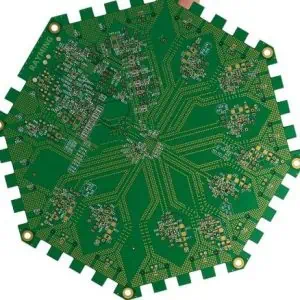
The quality and reliability of printed circuit boards (PCBs) fundamentally depend on the uniformity of copper distribution across their surface. Even copper distribution is not merely an aesthetic consideration but a critical factor that directly impacts electrical performance, thermal management, mechanical integrity, and manufacturing yield. Understanding and implementing strategies for achieving uniform copper distribution represents one of the most significant opportunities for PCB designers and manufacturers to enhance product quality and reduce field failures.

Understanding Copper Distribution Fundamentals
Copper distribution refers to how copper traces, planes, and features are arranged across a PCB’s surface area. In an ideally designed board, copper should be distributed as evenly as possible to maintain consistent electrical and thermal properties throughout the substrate. Uneven copper distribution creates localized areas of high and low copper density, leading to a cascade of quality issues that can compromise the entire circuit board’s functionality.
The physics behind copper distribution effects are rooted in the PCB manufacturing process itself. During fabrication, the board undergoes various thermal cycles including lamination, soldering, and reflow processes. Areas with dense copper concentrations expand and contract differently than areas with sparse copper coverage due to the significant difference in thermal expansion coefficients between copper and the substrate material. This differential expansion creates internal stresses that can manifest as warpage, delamination, or even copper trace cracking over time.
Manufacturing Process Implications
The impact of copper distribution becomes apparent during the etching process, where uneven copper densities can lead to inconsistent etch rates across the board. Areas with high copper density may experience over-etching or under-etching compared to sparse areas, resulting in trace width variations that directly affect impedance control and signal integrity. This manufacturing variability translates to increased scrap rates and reduced yields, making even copper distribution a critical economic consideration for manufacturers.
Plating processes are similarly affected by copper distribution uniformity. During electroplating, current density varies inversely with copper coverage, meaning areas with less existing copper receive more plating current and thus thicker copper deposits. This creates a snowball effect where uneven distribution becomes more pronounced through successive manufacturing steps. The result is inconsistent via fill, varying trace thickness, and unpredictable electrical characteristics across the finished board.
Electrical Performance Considerations

From an electrical standpoint, uneven copper distribution directly impacts signal integrity and power delivery performance. Impedance control, which is crucial for high-speed digital circuits, becomes significantly more challenging when copper distribution varies across the board. Transmission lines require consistent cross-sectional geometry to maintain target impedance values, but variations in copper thickness and spacing due to uneven distribution create impedance discontinuities that can cause signal reflections, increased EMI, and timing errors.
Power distribution networks (PDN) are particularly sensitive to copper distribution uniformity. Modern electronic devices demand clean, stable power delivery with minimal voltage ripple and noise. Uneven copper distribution in power planes creates areas of high and low impedance, leading to uneven current distribution and voltage drops that can affect circuit performance. Critical analog circuits may experience increased noise, while digital circuits might suffer from timing variations and increased jitter.
Ground planes, which serve as return paths for high-frequency signals, must maintain consistent impedance characteristics to ensure proper signal return currents. Variations in copper distribution create impedance variations in the ground plane, forcing return currents to take suboptimal paths that can increase crosstalk between adjacent signals and degrade overall system performance.
Thermal Management Benefits
Thermal management represents another critical aspect where even copper distribution provides substantial benefits. Copper’s excellent thermal conductivity makes it an effective heat spreader, but only when distributed uniformly across the board. Concentrated copper areas create thermal hotspots that can stress components and reduce their operational lifetime, while areas with insufficient copper coverage may not adequately dissipate heat generated by nearby components.
Even copper distribution enables more predictable thermal modeling and analysis during the design phase. Thermal simulation tools can more accurately predict temperature distributions when copper coverage is uniform, allowing designers to make informed decisions about component placement and thermal management strategies. This predictability reduces the need for extensive prototyping and testing, accelerating time-to-market while improving product reliability.
The thermal expansion benefits of even copper distribution cannot be overstated. When copper is distributed evenly, the entire PCB expands and contracts more uniformly during thermal cycling, reducing internal stresses that can lead to solder joint failures, component cracking, or substrate delamination. This is particularly important for products that experience wide temperature variations during operation or storage.
Design Strategies for Achieving Uniform Distribution

Achieving even copper distribution requires deliberate design strategies implemented from the earliest stages of PCB layout. Copper balancing techniques involve adding copper fills, dummy features, or adjusting trace routing to achieve more uniform coverage across each layer. Modern PCB design software includes copper balancing tools that can automatically calculate and adjust copper distribution, but designers must understand the underlying principles to use these tools effectively.
Strategic copper fill placement represents one of the most effective techniques for improving distribution uniformity. Rather than simply flooding empty areas with solid copper, designers should implement hatched or grid-pattern fills that provide more controlled copper coverage. These patterns can be optimized to achieve target copper percentages while maintaining appropriate clearances from active circuits.
Via stitching and thermal vias serve dual purposes in copper distribution optimization. Beyond their primary function of providing interlayer connections, strategically placed vias can help balance copper distribution while improving thermal performance. Dense via patterns in low-copper areas can increase local copper content while providing thermal pathways between layers.
Layer stackup design plays a crucial role in achieving even copper distribution. Alternating signal and plane layers with complementary copper patterns can help balance overall distribution while maintaining good electrical performance. Designers should consider the cumulative effect of all layers when evaluating copper distribution rather than optimizing individual layers in isolation.
Advanced Copper Management Techniques
Modern PCB design increasingly relies on advanced copper management techniques that go beyond traditional copper fills. Copper thieving involves adding non-functional copper features specifically to balance copper distribution without affecting circuit operation. These features can be strategically sized and placed to achieve target copper percentages while maintaining isolation from active circuits.
Hatched copper fills offer advantages over solid fills for copper distribution applications. The hatched pattern provides more controlled copper coverage and can be adjusted to achieve precise copper percentages. Additionally, hatched fills reduce the risk of creating large copper areas that might cause manufacturing issues or electromagnetic interference.
Cross-hatching patterns can be optimized for specific applications, with factors such as line width, spacing, and orientation affecting both copper coverage and electrical performance. Advanced design rules can automatically generate optimized cross-hatch patterns based on local copper density requirements and electrical constraints.
Quality Assurance and Testing
Implementing even copper distribution requires robust quality assurance processes to verify that design intentions translate to manufactured reality. Copper distribution analysis should be integrated into the design review process, with specific criteria for acceptable copper percentage variations across the board area. Statistical process control techniques can track copper distribution consistency across production lots, identifying trends that might indicate process drift or equipment issues.
Visual inspection techniques can identify gross copper distribution problems, but quantitative measurement requires specialized equipment. Automated optical inspection (AOI) systems can measure copper coverage percentages across defined areas, providing objective data for quality assessment. X-ray inspection can reveal copper distribution in inner layers that are not visible through conventional optical inspection.
Electrical testing can validate the functional impact of copper distribution decisions. Impedance testing should verify that copper distribution variations do not create unacceptable impedance variations. Power delivery network analysis can confirm that even copper distribution provides the intended benefits for power system performance.
Economic and Manufacturing Considerations
The business case for even copper distribution extends beyond technical performance to encompass manufacturing efficiency and cost reduction. Improved manufacturing yields result from more predictable etching and plating processes, reducing scrap and rework costs. Consistent electrical performance reduces the need for expensive testing and sorting operations, while improved reliability reduces warranty costs and field failures.
Long-term reliability benefits translate to competitive advantages in markets where product longevity is valued. Applications such as automotive electronics, medical devices, and industrial controls particularly benefit from the enhanced reliability that even copper distribution provides. The investment in design time and analysis tools required to achieve even copper distribution typically pays for itself through reduced manufacturing costs and improved customer satisfaction.
Even copper distribution represents a fundamental aspect of PCB quality that impacts every aspect of circuit board performance from manufacturing through end-of-life. By understanding the underlying principles and implementing appropriate design strategies, PCB designers and manufacturers can significantly improve product quality, reliability, and manufacturing efficiency. The investment in achieving uniform copper distribution pays dividends throughout the product lifecycle, making it an essential consideration for any quality-focused PCB development program.