Complete RF PCB Design Tutorial: From Basics to Best Practices

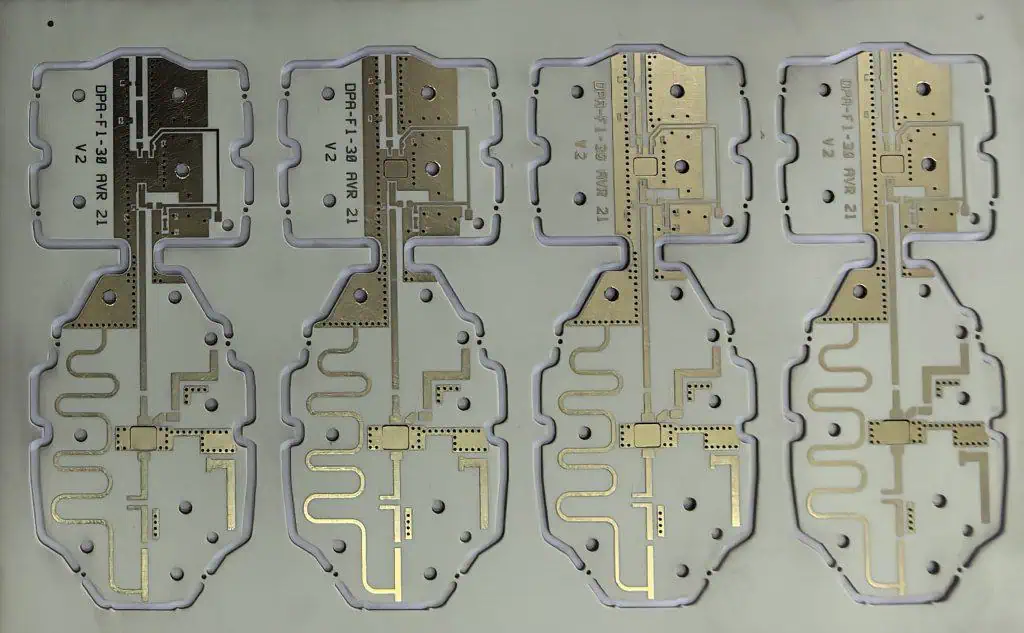
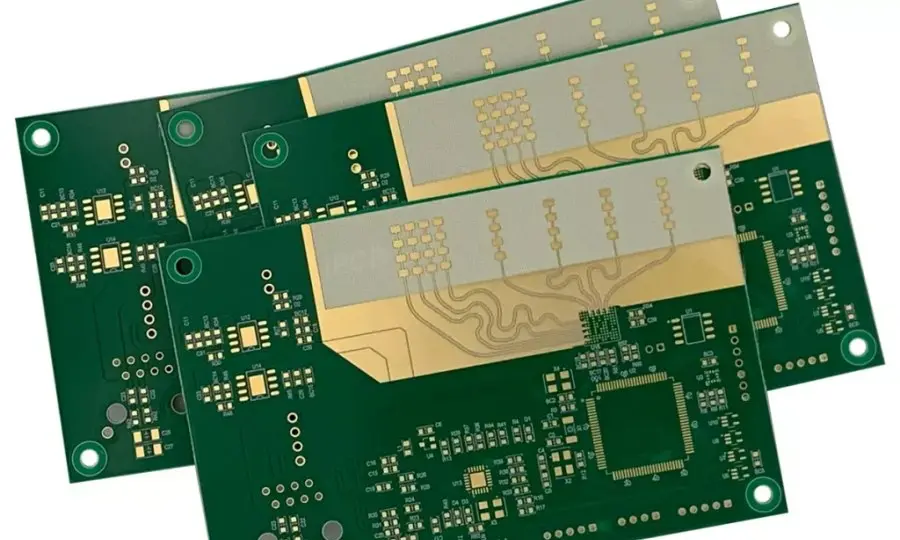
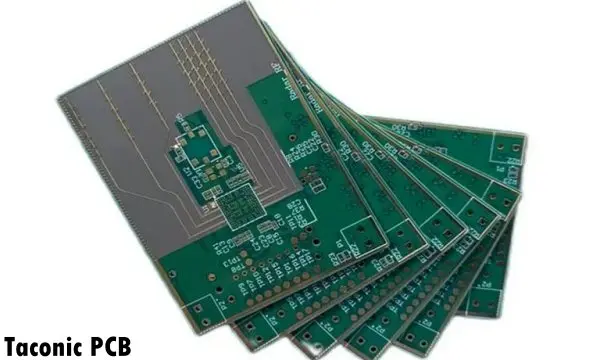
We specialize in precision fabrication of radio frequency and microwave PCBs using premium substrates like Rogers, Taconic, and PTFE materials. Our advanced manufacturing processes ensure controlled impedance and superior signal integrity for wireless, aerospace, and high-frequency applications.Retry

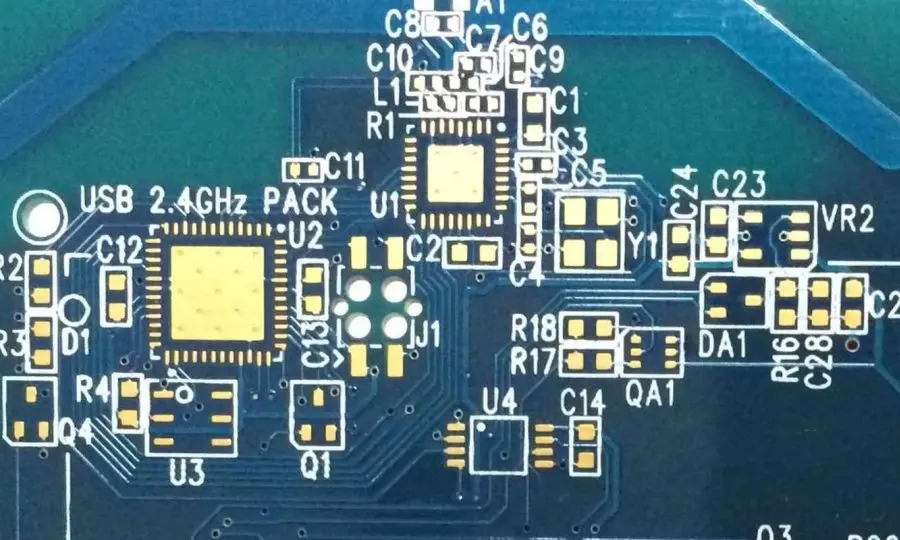
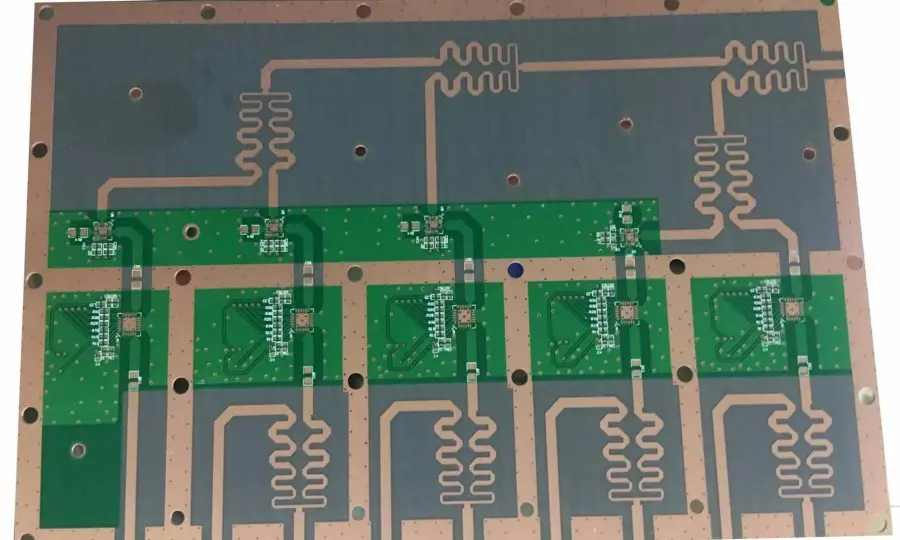
Radio Frequency (RF) PCB design represents one of the most challenging and specialized areas of electronic engineering. As frequencies continue to climb with emerging technologies like 5G, automotive radar, and satellite communications, understanding RF PCB design principles becomes crucial for engineers developing high-performance electronic systems.


Understanding RF PCB Fundamentals

What Makes RF PCB Design Different?

RF PCBs are specialized circuit boards that operate at frequencies typically above 100MHz, extending up to 300GHz. Unlike traditional low-frequency designs, RF circuits must account for distributed parameter effects where the wavelength of the RF signal becomes comparable to the geometric dimensions of the traces.

At these frequencies, every trace, via, and component pad acts as a transmission line with its own characteristic impedance. RF signals react to every PCB trace, via, and ground plane, requiring careful attention to signal integrity to prevent signal reflection, loss, and distortion.

Key RF Design Challenges

RF PCB designers face unique challenges including:

  • Signal Integrity: High-frequency signals are susceptible to reflections, attenuation, and phase distortion
  • Electromagnetic Interference (EMI): RF circuits can both generate and be affected by electromagnetic radiation
  • Impedance Control: Maintaining consistent characteristic impedance throughout signal paths
  • Thermal Management: High-frequency circuits often generate significant heat requiring effective dissipation

Critical Material Selection for RF PCBs

FR4 vs Rogers vs PTFE Materials

Material selection fundamentally impacts RF performance. While FR4 remains the standard for most PCB applications, RF designs often require specialized materials.

FR4 Limitations at RF Frequencies: FR4 has a dissipation factor of 0.02% compared to Rogers materials at 0.004%. FR4’s dielectric constant can increase by up to 10% with increasing frequency, resulting in impedance variations. The maximum dielectric constant of FR4 is approximately 4.5, which limits its high-frequency performance.

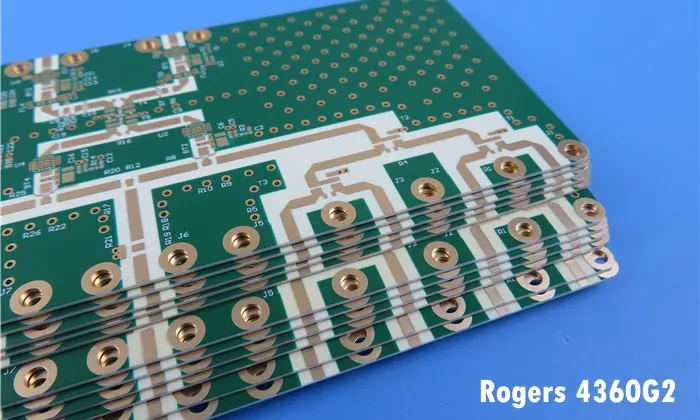
Rogers Materials Advantages: Rogers materials offer dielectric constants ranging from 2.2 to 12.85, with tolerance on dielectric constant remaining at ±2% or lower. This provides 50-80% lower insertion and transmission loss compared to FR4. Rogers materials exhibit very low dielectric loss, effectively transmitting signals with minimal absorption.

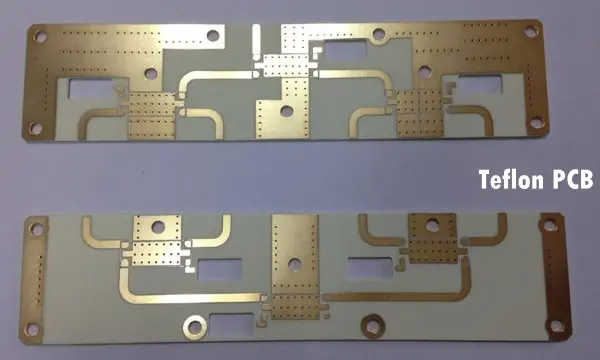
PTFE/Teflon for Premium Applications: PTFE substrates offer exceptional electrical properties with low dielectric constant (Dk) ensuring minimal signal delay and low dissipation factor (Df) reducing signal loss at high frequencies. These materials are essential for 5G, satellite, and aerospace applications where signal integrity is paramount.

Material Selection Guidelines

  • Below 500MHz: FR4 may be acceptable for cost-sensitive applications
  • 500MHz to 2GHz: Rogers 4000 series materials recommended
  • Above 2GHz: Rogers 3000 series, RT/Duroid, or PTFE materials
  • Extreme environments: Ceramic-filled PTFE composites for aerospace/military

Transmission Line Design: Microstrip vs Stripline

Microstrip Transmission Lines

Microstrip transmission lines consist of a conductor routed over a ground plane separated by a dielectric. The main advantage of microstrip historically is the ability to use just a 2-layer board, simplifying fabrication and assembly processes.

Microstrip Advantages:

  • Lower cost 2-layer construction
  • Easy component mounting and connections
  • No via inductance/capacitance
  • Easier impedance tolerance control due to wider traces

Microstrip Disadvantages:

  • Higher radiation and EMI susceptibility
  • Characteristic impedance affected by soldermask and surface coatings
  • Requires external shielding for many applications

Stripline Transmission Lines

Striplines are traces buried between two reference planes within the PCB stackup, fully surrounded by dielectric material. This technique is preferably used in multi-layer PCB designs with ground planes above and below the signal trace.

Stripline Advantages:

  • Superior EMI/EMC performance due to shielding
  • Better shielding minimizes radiation and interference, ideal for noise-sensitive circuits
  • No external electromagnetic field radiation
  • Consistent dielectric environment

Stripline Disadvantages:

  • Requires minimum 4-layer stackup
  • More complex via transitions
  • Higher manufacturing costs

Design Equations and Calculations

For 50Ω impedance, trace width calculations use formulas from IPC2141A standard, considering width W, thickness T, and distance H between trace and ground plane. Modern PCB design software automates these calculations, but understanding the relationships helps optimize designs.

Impedance Control and Matching

Importance of 50Ω Systems

The most common characteristic impedance values for RF applications are 50Ω and 75Ω, with 50Ω being widespread due to its optimal balance of power handling and loss characteristics. An approach widely used by designers is choosing 50Ω impedance, selecting RF components that feature this characteristic impedance to simplify matching.

Maximum Power Transfer

The maximum power transfer theorem states that transferred power is maximum when load resistance equals the internal resistance of the source. For AC circuits, the load impedance must be the complex conjugate of the source impedance. Impedance mismatches create dangerous signal reflections and power loss.

Practical Impedance Matching

Key impedance matching applications include:

  • Antenna Systems: Power amplifier impedance must match antenna impedance
  • Low-Noise Amplifiers: Optimization for minimum noise figure
  • Power Dividers: Ensuring maximum power transfer in distribution networks

Essential Layout and Routing Guidelines

Trace Routing Best Practices

Keep traces as short as possible to eliminate attenuation. Never place RF trace and non-RF trace parallel, as it introduces interference. Make signal paths short and simple to keep signals strong and stop noise.

Critical Routing Rules:

  • Minimize trace length to reduce loss and delay
  • Avoid sharp 90° angles; use 45° bends or curved transitions
  • Maintain consistent trace width for impedance control
  • Separate RF and digital signal routing
  • Place test points outside traces to maintain impedance-matching values

Via Design and Placement

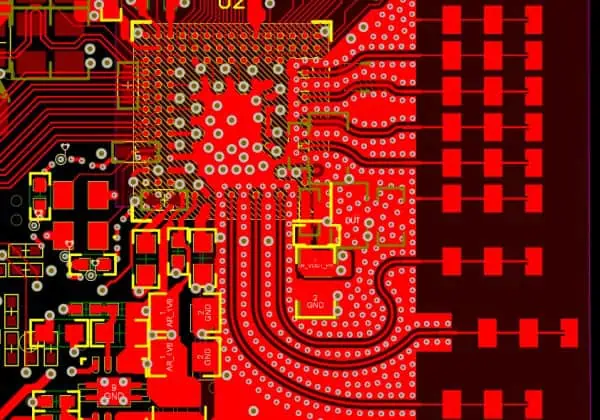
Via holes can be added on RF traces and near RF components, reducing parasitic inductances from current-back-to-ground paths and coupling between RF lines. For shunt-connected components, use at least two grounding vias per component to reduce via parasitic inductance effects.

Via Spacing Guidelines: The distance between ground via holes should not exceed one tenth of the wavelength of the maximum operating frequency. For 2.4GHz operation, via holes should be spaced 6mm apart.

Grounding Strategies and Power Distribution

Ground Plane Design

Insert continuous ground planes without interruption adjacent to each layer containing components or RF transmission lines. For striplines, dedicated ground planes are required both above and below the center conductor.

Ground Plane Best Practices:

  • Use solid, continuous ground planes under all RF circuitry
  • Avoid slots or gaps in ground planes beneath RF traces
  • Place via holes around PCB edges to reduce RF losses through laminate
  • Ensure all ground planes are at the same potential to prevent parallel-plate modes

Power Distribution and Decoupling

Place appropriate value bypass capacitors in both single and star configurations close to power pins. In star configuration, a higher capacity decoupling capacitor is placed centrally with lower capacity capacitors near each branch.

Effective power distribution requires:

  • Multiple decoupling capacitors per power pin
  • Short, wide power distribution traces
  • Dedicated power planes in multilayer designs
  • RF chokes to isolate digital switching noise from RF sections

Signal Integrity and EMC Considerations

Managing Crosstalk and Interference

High-speed design means watching for crosstalk between lines. When two transmission lines run close, signals can jump from one to the other, causing signal integrity issues. Maintain sufficient spacing between adjacent traces and use guard traces or additional ground planes if needed.

EMI Mitigation Strategies

Use Faraday cages to shield important RF components from external electromagnetic interference. These copper cages act as barriers blocking unwanted signals from entering sensitive areas.

EMC Design Techniques:

  • Physical separation of RF and digital sections
  • Ground vias and shielding boxes to separate sections and prevent interference
  • Proper filtering on power and control lines
  • Controlled board stackup for natural shielding

Advanced Design Techniques

Mixed-Signal Design Approaches

Analog and digital sections need different treatment due to how analog components interact with RF signals, influencing component placement and routing choices. Best practices include:

  • Separate RF, analog, and digital sections physically
  • Use dedicated ground planes for each section
  • Implement proper isolation between sections
  • Control digital signal edge rates to minimize interference

Thermal Management

Inadequate thermal management can alter dielectric properties of PCB materials. Rogers laminates have high thermal conductivity, effectively dissipating heat better than conventional materials.

Thermal design considerations:

  • Use materials with high thermal conductivity
  • Implement thermal vias for heat transfer
  • Consider component placement for heat distribution
  • Design adequate copper coverage for heat spreading

Testing and Validation Methods

Design Verification Approaches

Use simulation tools like HFSS, ADS, or KiCad with integrated RF modules to fine-tune designs. Use vector network analyzer (VNA) to validate impedance and signal integrity after fabrication.

Essential Testing Methods:

  • S-parameter measurements for impedance verification
  • Time-domain reflectometry (TDR) for transmission line analysis
  • Near-field EMI scanning for radiation assessment
  • Network analysis for insertion loss and return loss measurements

Common Design Mistakes to Avoid

Based on industry experience, common RF PCB design errors include:

  • Insufficient ground plane coverage
  • Poor via placement creating inductance
  • Inadequate component spacing causing coupling
  • Mixing RF and digital routing without proper isolation
  • Using inappropriate materials for frequency requirements
  • Ignoring thermal effects on performance

Future Trends and Considerations

Emerging Technologies Impact

The evolution toward 5G, 6G, and millimeter-wave applications drives new requirements:

  • Higher frequency operation demanding tighter tolerances
  • Integration of antenna-in-package (AiP) solutions
  • Ultra-HDI technology for miniaturization
  • Advanced materials for extreme performance

Design Tool Evolution

Modern RF design requires sophisticated simulation capabilities:

  • 3D electromagnetic field solvers
  • Integrated thermal analysis
  • System-level co-simulation
  • AI-assisted optimization tools

Conclusion

RF PCB design represents a complex intersection of electromagnetic theory, materials science, and practical engineering. Success requires understanding fundamental principles while applying best practices developed through industry experience.

Good RF PCB design skills help avoid mistakes and keep RF circuit boards working well. Key success factors include:

  • Material Selection: Choose appropriate substrates based on frequency and performance requirements
  • Transmission Line Design: Understand microstrip vs stripline tradeoffs for your application
  • Impedance Control: Maintain consistent 50Ω (or other target) impedance throughout signal paths
  • Layout Excellence: Apply systematic routing guidelines and grounding strategies
  • Validation: Use proper test methods to verify design performance

As RF technology continues advancing, staying current with materials, techniques, and tools becomes essential. The principles covered in this tutorial provide a solid foundation for developing high-performance RF systems that meet today’s demanding requirements.

Whether designing for 5G infrastructure, automotive radar, satellite communications, or IoT applications, these fundamental principles and best practices will help ensure your RF PCB designs achieve optimal performance, reliability, and manufacturability.