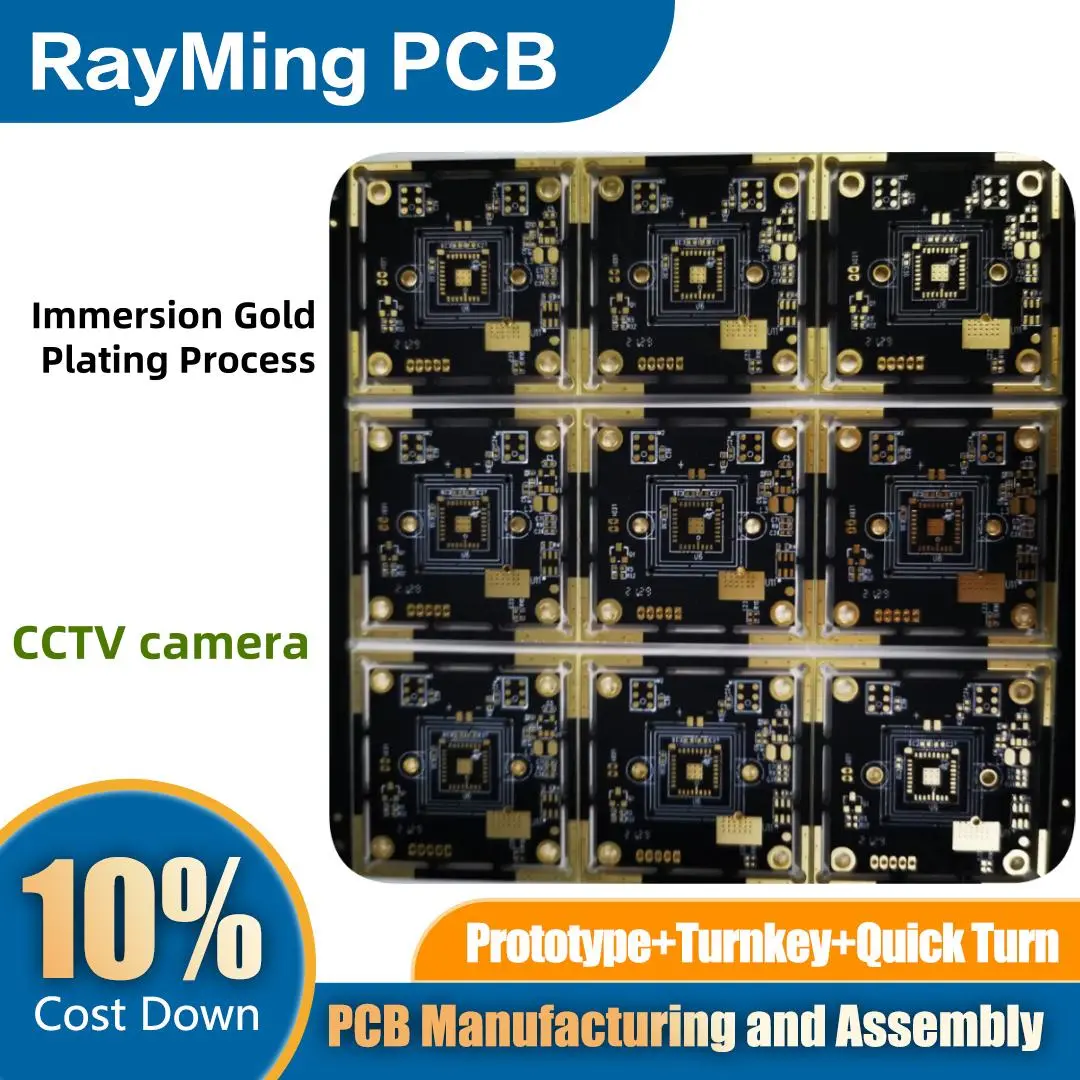
The immersion gold plating process for CCTV camera PCBs is a critical step in ensuring the reliability and performance of these surveillance devices. This process involves depositing a thin layer of gold onto the copper surfaces of the PCB through a chemical reaction, without the use of electricity.
Key steps in the process include:
-
Cleaning: The PCB is thoroughly cleaned to remove any contaminants.
-
Micro-etching: A mild acid treatment roughens the copper surface for better adhesion.
-
Activation: The surface is activated with a palladium catalyst.
-
Nickel plating: A thin layer of nickel is deposited as a barrier between copper and gold.
-
Immersion gold plating: The board is immersed in a gold solution, where gold ions replace the surface nickel atoms.
This process offers several benefits for CCTV camera PCBs:
- Enhanced corrosion resistance, crucial for outdoor cameras
- Improved solderability for component attachment
- Flat surface finish, ideal for fine-pitch components in compact cameras
- Extended shelf life, beneficial for manufacturing and inventory management
The immersion gold finish also provides excellent conductivity and low contact resistance, essential for the high-frequency signals in modern high-definition CCTV cameras. This process contributes significantly to the overall quality and longevity of CCTV surveillance systems.