
Introduction: The Revolution of High-Frequency Sensing
In the rapidly evolving landscape of sensor technology, Millimeter Wave Radar has emerged as a transformative force, redefining precision sensing across multiple industries. Operating in the frequency range of 30–300 GHz with a wavelength of 1–10 mm, millimeter wave radar is characterized by its small size, lightweight, high spatial resolution, and strong ability to penetrate fog, smoke, and dust. This advanced sensing technology has become indispensable for applications ranging from automotive safety systems to industrial automation, medical diagnostics, and beyond.
The significance of millimeter wave radar extends far beyond its technical specifications. The millimeter wave radar market size was USD 10.2 billion in 2024 and is anticipated to reach a valuation of USD 202.9 billion by the end of 2037, rising at a CAGR of 26.1%, demonstrating the technology’s unprecedented growth trajectory and market confidence.

Understanding Millimeter Wave Radar Technology
Fundamental Principles and Operation
Millimeter wave (mmWave) radar utilizes frequency bands, such as 24 GHz, 60 GHz, and 77–79 GHz, to transmit and receive signals, delivering high-resolution measurements of distance, velocity, and angle. The technology operates on the principle of radio detection and ranging (radar), where electromagnetic waves are transmitted toward targets and analyzed upon reflection.
The core components of a millimeter wave radar system include a transmitting antenna, receiving antenna, and sophisticated signal processing units. The mmWave radar system includes a transmitting antenna, a receiving antenna, and a signal processing system to determine an object’s dynamic information, such as range, velocity, and angle of arrival (AoA). The system transmits millimeter wave signals into space, which reflect off objects and return to the receiving antenna. These echo signals are then processed to extract critical information about target objects.
Key Technical Advantages
The shorter wavelengths of millimeter wave radar provide several distinct advantages over conventional radar systems. The short 1–10 mm wavelengths enable fine spatial detail for detecting small objects and movements, allowing for unprecedented precision in object detection and classification.
Superior Resolution Capabilities: Millimeter wavelengths are well suited to the detection of certain types of targets that present a maximum radar cross-section (RCS), especially cables: electrical cables, cable car lines, etc. Centimeter-wave radars are only able to detect cables when reflection is specular, while millimeter-wave radars can detect them over a very wide angle.
Environmental Resilience: Millimeter wave radar performs consistently in challenging conditions such as darkness, smoke, dust, or fog, where optical sensors often fail. This reliability makes it invaluable for applications requiring consistent performance across diverse environmental conditions.
Privacy Protection: mmWave radar detects motion, presence, or respiration without capturing images—making it ideal for privacy-sensitive environments. This non-invasive characteristic has opened new applications in healthcare, smart buildings, and personal monitoring systems.
Frequency Bands and Spectrum Utilization

24 GHz Band Applications
The 24 GHz frequency band serves as an entry-level option for many millimeter wave radar applications. While offering good performance for basic sensing tasks, this band has certain limitations in resolution and bandwidth compared to higher frequency alternatives. However, it remains popular for cost-sensitive applications and regions with specific regulatory requirements.
60 GHz Band: The Sweet Spot for Short-Range Applications
The 60 GHz mm radar has a benefit of up to 7 GHz, especially for short-range applications, to provide better resolution. This frequency band has gained significant traction in industrial applications, smart home devices, and consumer electronics.
The 60GHz millimeter wave radar chip market was valued at 146 million in 2024 and is projected to reach US$ 714 million by 2032, at a CAGR of 25.7%. The rapid growth reflects increasing adoption across multiple sectors, particularly in automotive safety systems and IoT applications.
77-81 GHz Band: The Automotive Standard
The 77-81 GHz frequency band has become the gold standard for automotive applications. 77 GHz millimeter wave radar picked up 24GHz gradually from the market, becoming mainstream in the automotive field. This band offers an optimal balance of resolution, range, and regulatory approval across global markets.
79 GHz: Next-Generation Performance
The 79 GHz frequency band represents the latest advancement in automotive radar technology, offering even higher resolution and range capabilities compared to the 77 GHz band. This frequency band is particularly beneficial for applications that require ultra-high resolution, such as high-speed autonomous driving and complex traffic scenarios.
300 GHz and Beyond: Pushing the Boundaries
Research and development efforts continue to explore higher frequency bands, with 300 GHz radar systems providing bandwidth of more than 40 GHz leading to a range resolution of a few millimeters. These ultra-high frequency systems represent the cutting edge of millimeter wave radar technology, offering unprecedented precision for specialized applications.
Applications Across Industries
Automotive Sector: The Primary Driver
The automotive industry represents the largest and most rapidly growing market for millimeter wave radar technology. The global vehicle millimeter wave radar market was valued at USD 13,810 million in 2024 and is projected to grow from USD 16,420 million in 2025 to USD 48,730 million by 2032, exhibiting a CAGR of 19.7%.
Advanced Driver Assistance Systems (ADAS): Millimeter wave radar serves as the backbone of modern ADAS implementations. The global ADAS market penetration is expected to reach over 40% in new vehicle shipments by 2025, creating substantial growth opportunities for millimeter wave radar components. These systems provide critical safety features including adaptive cruise control, collision avoidance, blind spot detection, and automated emergency braking.
Autonomous Driving Technology: As the automotive industry progresses toward full autonomy, millimeter wave radar plays an increasingly vital role. High-level intelligent driving systems represented by urban NOA are facing more complex driving environments and roads, posing higher capability requirements for the perception system, requiring it to provide a longer detection range, a wider detection angle, and a higher accuracy.
4D Imaging Radar: The latest advancement in automotive radar technology introduces the concept of 4D imaging. Compared with 3D radar, 4D radar (distance, speed, horizontal azimuth, vertical height) provides point cloud functions by increasing the number of transmitting and receiving channels. This technology enables more detailed environmental mapping and improved object classification.
Industrial Automation and Manufacturing
Industrial automation represents one of the fastest-growing segments for 60GHz millimeter wave radar chips, with annual growth rates exceeding 28%. These chips enable precise object detection, level measurement, and vibration monitoring in harsh industrial environments where optical sensors often fail.
The technology’s ability to operate reliably in challenging industrial conditions makes it ideal for quality control systems, automated assembly lines, and process monitoring applications. The mmWave Technology based Industrial RoMs (AoPCB) come with SDK 3.05, along with object detection and counting sample applications.
Healthcare and Medical Applications
The healthcare sector has embraced millimeter wave radar for its non-contact monitoring capabilities. In February 2024, Infineon, FINGGAL LINK, and NEXTY Electronics announced a collaboration to develop an elderly safety monitoring system using 60 GHz millimeter-wave radar. This system enables non-contact monitoring of crucial health metrics like presence, respiration, heart rate, sleep patterns, and urinary incontinence, even through clothing.
Defense and Security Applications
Millimeter wave radar is used in short-range fire-control radar in tanks and aircraft, and automated guns (CIWS) on naval ships to shoot down incoming missiles. The small wavelength of millimeter waves allows them to track the stream of outgoing bullets as well as the target, allowing the computer fire control system to change the aim to bring them together.
The defense sector continues to invest heavily in millimeter wave radar technology. In October 2024, the U.S. Department of Defense awarded Raytheon Technologies a contract aimed at developing advanced millimeter wave radar systems with potential use in enhancing surveillance and reconnaissance operations.
Smart Cities and Infrastructure
Smart city infrastructure projects are incorporating vehicle-to-infrastructure (V2I) communication systems that utilize millimeter wave technology for traffic management and collision prevention. These applications demonstrate the technology’s versatility beyond traditional sensing applications.
Market Dynamics and Growth Drivers
Regulatory Mandates and Safety Standards
Government regulations worldwide are driving millimeter wave radar adoption. Government mandates like the NHTSA’s requirement for automatic emergency braking (AEB) in all light-duty vehicles by 2025 are pushing OEMs to integrate 77 GHz radar systems for superior resolution and range.
Europe leads in regulatory-driven adoption of millimeter wave radar, with EU General Safety Regulation (GSR) mandating features like intelligent speed assistance and lane-keeping systems. These regulatory frameworks create a stable foundation for market growth and technology investment.
Technological Advancements and Integration
Recent developments in chipset integration have reduced form factors while increasing accuracy, with some industrial-grade chips now achieving sub-millimeter measurement precision – a key requirement for quality control systems in precision manufacturing.
Regional Market Leadership
Asia-Pacific leads in market growth due to expanding automotive production in China and Japan, while Europe maintains technological leadership. China mandating radar-based safety features in 60% of new vehicles by 2025 as part of its Intelligent Connected Vehicle (ICV) development strategy demonstrates the region’s commitment to advanced automotive safety technologies.
Leading Industry Players and Competitive Landscape
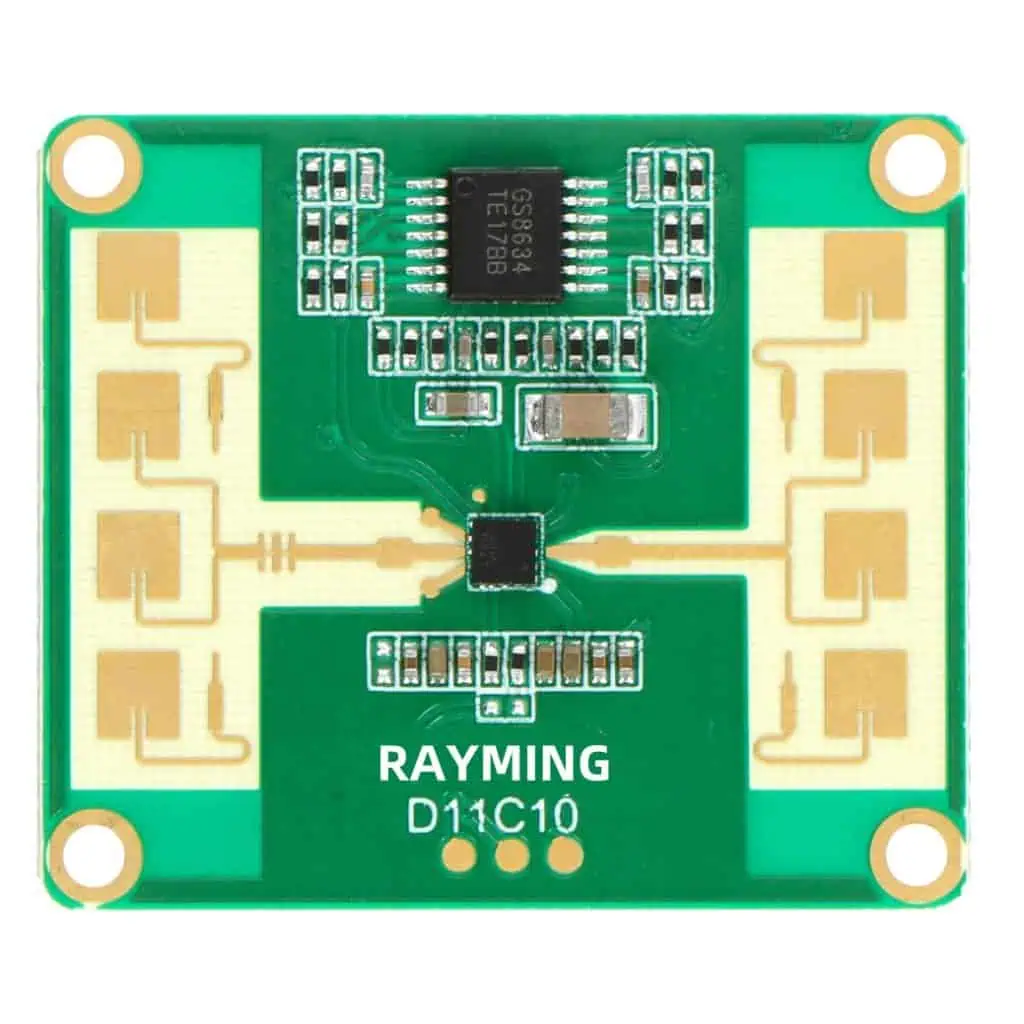
Market Leaders
Bosch dominates the market with approximately 22% revenue share in 2024, leveraging its comprehensive ADAS solutions and strong OEM relationships across Europe and Asia. Other major players include Continental, Denso, Valeo, and Aptiv, each contributing unique technologies and solutions to the market.
Emerging Technology Companies
The market also features numerous emerging companies focusing on specialized applications and breakthrough technologies. From January to July 2024, domestic radar suppliers have begun to enter the supply chain systems of more OEMs in the fields of front radars (including 4D radar) and corner radars (including 4D radar), scrambling for bigger market share.
Strategic Partnerships and Collaborations
Key players like Infineon, Texas Instruments, and NXP are partnering with automotive OEMs and electronics firms to accelerate sensor commercialization. These partnerships are crucial for developing next-generation technologies and expanding market reach.
Technical Challenges and Solutions
Signal Processing Advancements
Signal processing advancements, including constant false alarm rate detection, multiple-input–multiple-output systems, and machine learning-based techniques, are explored for their roles in improving radar performance. These developments address fundamental challenges in target detection, false alarm reduction, and system reliability.
Manufacturing and Cost Optimization
Challenges such as complex manufacturing processes and regulatory constraints in certain regions may temper growth. However, ongoing improvements in semiconductor manufacturing and economies of scale continue to drive down costs while improving performance.
Miniaturization and Power Efficiency
Our latest mmWave sensors are designed from the ground up with low-power architecture to help you bring powerful radar sensing into applications that require lower power consumption in automotive, industrial, and consumer electronics applications. This focus on power efficiency enables new applications in battery-powered and portable devices.
Future Trends and Innovations
Integration with Artificial Intelligence
Our artificial intelligence-enabled, multi-functional radar sensors can replace multiple sensor technologies in a vehicle to reduce both cost and complexity of the system. The integration of AI and machine learning capabilities represents a significant advancement in millimeter wave radar technology.
Advanced Packaging Technologies
The antenna packaging technology is evolving from AoB to AiP (Antenna in Package), to reduce antenna feeder loss. A few companies such as Calterah have launched ROP (Radiator-on-Package) technology, which uses solder balls to connect RF signals, has higher channel isolation, and offers a longer detection range.
5G and Communication Integration
The ongoing rollout of 5G infrastructure is driving substantial investment in millimeter wave technologies, as network operators require semiconductor solutions capable of operating in the 24GHz to 100GHz range. This convergence of sensing and communication technologies opens new possibilities for integrated systems.
Emerging Applications
Automotive Applications Expansion: Growing adoption of 77 GHz and 79 GHz mmWave radar sensors in advanced driver assistance systems (ADAS) and autonomous vehicles. Consumer Electronics Integration: Companies are developing mmWave radar chips for gesture recognition, smart home automation, and human-computer interaction. Healthcare Innovation: Radar semiconductor sensors are being used in contactless monitoring of vital signs.
Technical Performance Characteristics
Resolution and Accuracy
High-range resolution is achieved by the radar, with examples showing range resolution capabilities down to 0.3 meters with bandwidth of 500 MHz at 94 GHz carrier frequency. These precision capabilities enable applications requiring millimeter-level accuracy.
Range and Detection Capabilities
With an output power of around 5 mW over the complete bandwidth, the system is mainly designed for short range applications up to several hundreds of meters. While some applications focus on short-range precision, others leverage millimeter wave radar for longer-range detection in automotive and aerospace applications.
Environmental Performance
In the range of millimeter wavelengths, the atmosphere offers several windows in which attenuation is not too high and where radar can operate. Understanding these atmospheric windows is crucial for optimizing system performance across different environmental conditions.
Implementation Considerations
System Integration
Complex signal processing runs within the mmWave RADAR Modules and only the processed Point Cloud RADAR data (Object’s ID, Range, Angle and Velocity) is given out over serial/CAN interfaces. This approach simplifies system integration while maintaining high performance.
Interface Standards
The millimeter wave radar modules support flexible industrial interfaces like USB, CAN, UART and SPI and can be powered via USB or Header. These standardized interfaces ensure compatibility with existing systems and facilitate rapid deployment.
Development Tools and Resources
Use our mmWave software development kit (SDK) and our mmWave studio to simplify your software development process. Comprehensive development ecosystems accelerate product development and reduce time-to-market for new applications.
Global Market Outlook and Regional Analysis
North American Market
The North American Vehicle Millimeter Wave Radar market is experiencing robust growth, driven by stringent safety regulations and accelerated ADAS adoption in the U.S. and Canada. The region benefits from strong R&D investments and established automotive manufacturing infrastructure.
European Market Leadership
Europe leads in regulatory-driven adoption of millimeter wave radar, with EU General Safety Regulation (GSR) mandating features like intelligent speed assistance and lane-keeping systems since recent regulatory implementations. The region’s focus on automotive safety and environmental regulations continues to drive market growth.
Asia-Pacific Growth
North America is expected to dominate the Millimeter Wave Radar Market over the forecast period, owing to the presence of major automotive and industrial automation companies in the region, while Asia-Pacific leads in market growth due to expanding automotive production in China and Japan. This regional dynamic reflects both established market leadership and emerging growth opportunities.
Investment and Development Trends
Corporate Investments
In March 2024, Avant Technology announced an investment of USD 100 million in an AI-centric data center in India to further consolidate its local data processing and millimeter wave radar capabilities. This facility is expected to be fully operational by 2025. Such investments demonstrate the industry’s commitment to expanding capabilities and market reach.
Research and Development Initiatives
An example of this can be seen in the collaboration of Keysight Technologies in March 2021 to establish a millimeter wave radar lab in Suzhou, China. This move promotes the development of technologies for autonomous driving and the better integration of mmWave radars into smart mobility solutions.
Challenges and Limitations
Technical Challenges
However, this absorption is maximum at a few specific absorption lines, mainly those of oxygen at 60 GHz and water vapor at 24 GHz and 184 GHz. At frequencies in the “windows” between these absorption peaks, millimeter waves have much less atmospheric attenuation and greater range. Understanding and working within these atmospheric limitations is crucial for optimal system design.
Regulatory and Standardization
The global nature of millimeter wave radar applications requires careful attention to regulatory requirements across different regions. Frequency allocation, power limits, and safety standards vary by country and application, necessitating careful system design and certification processes.
Cost and Manufacturing Complexity
While costs continue to decrease with improved manufacturing processes and economies of scale, the sophisticated technology still requires significant investment in design, testing, and production capabilities.
Future Outlook: The Next Decade of Millimeter Wave Radar
Market Growth Projections
The Millimeter Wave Radar Market is projected to grow from USD 3.63 billion in 2024 to USD 15.85 billion by 2034, at a CAGR of 15.89%. This substantial growth reflects the technology’s expanding role across multiple industries and applications.
Technological Evolution
The future trends in the Millimeter Wave Radar Market include the development of higher-resolution and longer-range millimeter wave radar sensors, the integration of millimeter wave radar technology with other sensor technologies, and the increasing use of millimeter wave radar technology in new applications such as healthcare and robotics.
Industry Transformation
The continued advancement of millimeter wave radar technology promises to transform industries beyond automotive and industrial applications. From smart cities to healthcare, from consumer electronics to space exploration, the precision sensing capabilities of millimeter wave radar will enable new applications and business models.
Conclusion: Shaping the Future of Precision Sensing
Millimeter Wave Radar technology represents a fundamental shift in precision sensing capabilities, operating in the 30-300 GHz spectrum to deliver unprecedented accuracy, reliability, and versatility. From its foundational role in automotive safety systems to its expanding applications in healthcare, industrial automation, and smart infrastructure, millimeter wave radar continues to push the boundaries of what’s possible in sensor technology.
The remarkable market growth projections, with valuations expected to reach hundreds of billions of dollars within the next decade, reflect not just market confidence but the genuine transformation this technology brings to diverse industries. As regulatory frameworks support adoption, manufacturing processes improve efficiency, and technological innovations expand capabilities, millimeter wave radar is positioned to become an essential component of our increasingly connected and automated world.
The journey from basic radar principles to today’s sophisticated millimeter wave systems demonstrates the power of continuous innovation and cross-industry collaboration. Looking ahead, the integration of artificial intelligence, advanced packaging technologies, and new frequency bands will further expand the potential applications and performance capabilities of this remarkable sensing technology.
As we advance toward an era of autonomous systems, smart cities, and precision healthcare, Millimeter Wave Radar stands as a cornerstone technology, enabling the precise sensing capabilities that will define the next generation of intelligent systems. The 30-300 GHz spectrum represents not just a range of frequencies, but a gateway to new possibilities in precision sensing and environmental understanding.

