
Organizations across a range of industries are increasingly utilizing IoT to run more smoothly, better understand their consumers to provide better customer service, boost decision-making, and raise the value of your company.
What is the Internet of Things (IoT)?
Internet of things is a network of connected computing devices, digital and mechanical machines, items, animals, as well as people that may exchange data across a network and not requiring human-to-computer or human-to-human interaction.
A person having an implant, farm animal having a transponder, your automobile with in-built sensors to warn the driver whenever there is a low tire pressure; all of these are examples of items in internet of things.
Organizations across a range of industries are increasingly utilizing IoT to run more smoothly, better understand their consumers to provide better customer service, boost decision-making, as well as raise their company’s value.
IoT, is the collective term for the countless physical objects that are now linked to our internet and actively collecting and exchanging data. With the advent of incredibly affordable computer chips as well as the widespread use of different wireless networks, anything may become a component of the Internet of Things, from a pill up to an airplane.
By connecting these various items and equipping them with sensors, digital intelligence is added to otherwise dumb gadgets, allowing them to relay real-time data with no need for human being’s involvement.
How Do IoT Technologies Work?

IoT systems could employ the following technologies:
Edge computing
The term “edge computing” describes the technology that allows smart devices to perform tasks rather than simply transmit and receive data through its IoT platform. Also, I t boosts computational power present at the IoT network’s edges, lowering communication latency as well as speeding up reaction times.
Cloud Computing
For the storage of remote data as well as IoT device administration, cloud technology can be employed, which makes the information accessible to several devices on the networks.
Machine Learning
The software as well as algorithms sometimes used for the processing of data as well as making of choices in real time are referred to as machine learning. These artificial intelligence algorithms may be used at its edge or cloud.
How Does an IoT Computer Work?
The main element of an IoT computer, the control center which transforms data input into information output, is hidden from view. This command center’s CPU is described as a sophisticated, large-scale collection of electrical circuitry that carries out pre-stored program instructions. A CPU is a must for all computers, big and small. This control unit, as well as the arithmetic and logic unit, makes up the CPU (central processing unit).
IoT computers employ primary storage as well as secondary storage, respectively. Primary storage, often known as main memory, is in close communication with the CPU, which uses it for data and instructions. This section of reading will therefore explore memory in relation to the CPU. However, technically speaking, the CPU does not include memory.
Remember that the memory of a computer only stores information temporarily when it is running a program. Semi-permanent or permanent data is stored in secondary storage on an optical medium or external magnetic. Hard disks and the diskettes and CD-ROMs that you’ve seen with the PCs (personal computers) can be referred to as secondary storage device.
We will talk about secondary storage as well as data organization in another section of our online readings because the physical characteristics of secondary storage device dictate how data is arranged on them.
How Does the CPU Carry Out Instructions?

Let’s look at how memory and the central processor unit work together to execute any computer program. We’ll focus on how the software executes just one particular instruction. In actuality, even though they do so quickly, the majority of computers today only can carry out one command at once.
Supercomputers are speed demons that can process instructions very fast, compared to majority of personal computers that can process instructions less faster.
Program data and instructions must first be loaded into the memory from the secondary device storage or input device before a specific instruction could be performed. This procedure is made more difficult by the idea that, as already mentioned, the data would likely temporarily halt in the register.
For every instruction, the CPU completes the four steps below:
The control unit reads the command from memory and fetches it.
Control unit interprets the instruction (determines what it says) and commands its memory to transfer the relevant data to the ALU unit. Instruction time (I-time), is the collective name for these initial two steps.
The logical or arithmetic instruction is carried out by the arithmetic and logic unit. To put it another way, the ALU is granted control and carries out the actual action. The outcome of such an operation is stored in the memory or the register by the arithmetic and logic unit. Execution time, which is also known as the E-time, is the collective term for step iii and iv.
Components of a IoT Computer System

Devices/Sensors
Sensors or other equipment first gather information about their surroundings. This information may be as straightforward as the temperature report or as intricate as a whole video feed.
Because several sensors could be combined or because the sensors could be a component of such a device which doesn’t just sense things, we refer to them as “sensors/devices.” Your computer, for instance, is a tool with numerous sensors (accelerometer, camera, GPS, just to mention a few).
Connectivity
Then, after finding a route there, the data is transferred towards the cloud! Cellular, WiFi, satellite, Bluetooth, LPWAN, connecting through a router or gateway, or connecting the internet directly via Ethernet are just a few of the ways that the sensors/devices could be connected onto the cloud (don’t worry, in this article, we’ll explain further about what all these mean.
Processing of Data
Software processes the data after it is in the cloud (we’ll discuss what the cloud is in our section on data processing).
It may be as easy as making sure the reading of the temperature falls within the allowed range. Alternatively it might be quite complicated, like utilizing computer vision for recognizing things in video (like intruders on properties).
User Interface
This information is then utilized in certain ways by the end user. This may be done by sending the user a warning (text, email, notification, etc). For instance, a text message alarm when the cold storage facility’s temperature rises too high.
A user may have access to an interface which allows them to routinely monitor the system. For instance, a consumer may wish to utilize a phone app or perhaps a web browser for checking the video feed on several properties. It’s not necessarily one-way street, though.
Importance of IoT in Businesses
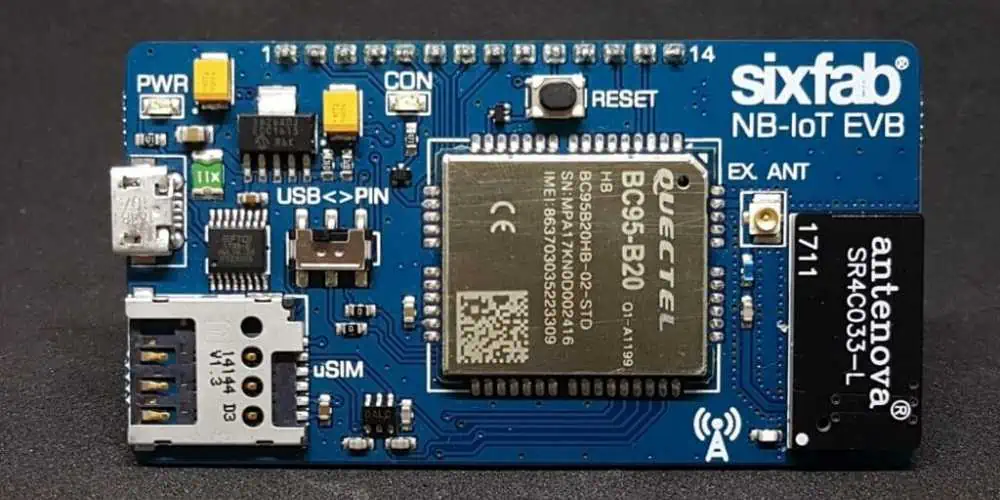
Accelerate innovation
Businesses have access to cutting-edge analytics through the IoT computer, which reveals new prospects. Businesses, for instance, can develop highly focused advertising campaigns through gathering information on consumer behavior.
Change data into actions and Insights with ML and AI
Future results can be forecast using collected data as well as historical trends. To forecast maintenance incidents, for instance, warranty information could be combined with IoT data. This could be applied to offer customers with proactive support and foster client loyalty.
Increased safety
Physical and digital infrastructure may be continuously monitored to improve performance, efficiency, and safety issues. To schedule updates of the system automatically, for instance, firmware and hardware version data might be paired with information from the onsite monitor.
Scaled distinct solutions
The IoT technologies could be utilized to boost satisfaction by putting the customer first. For instance, it is possible to quickly replenish popular items to prevent shortages.
How is IoT Improving the World?
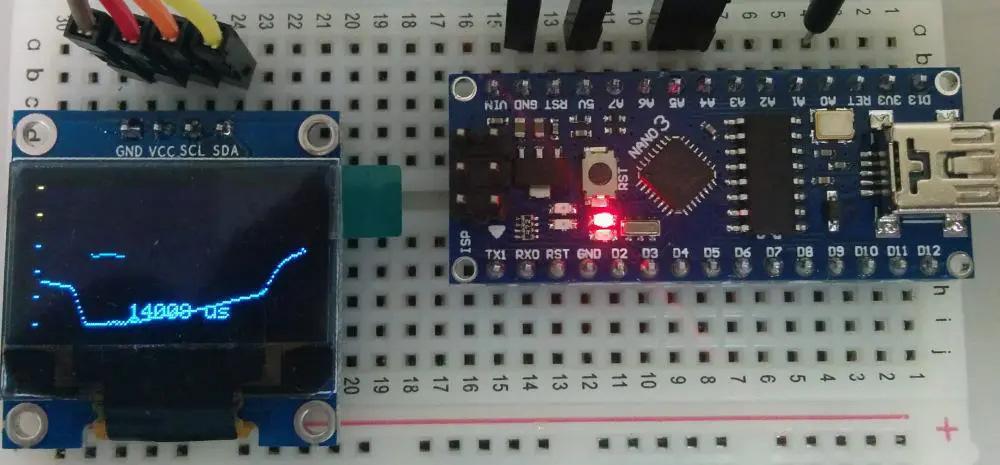
The impact of IoT on daily life and employment is extensive. It enables machines to perform more strenuous labor, take over boring activities, and improve the health, productivity, and comfort of life.
For instance, connected devices might completely alter your morning routine. An alarm clock will switch on the coffee maker and open the window blinds when you pressed its snooze button. When you have finished your groceries, the refrigerator will automatically order for delivery.
The smart oven will inform you of the daily menu and may even provide pre-assembled items for your lunch. As your linked automobile automatically instructs the GPS in order to stop get a refill of fuel, your smartwatch would book meetings. In the IoT world, there are countless chances!
Conclusion
It is anticipated that our lives will be made easier by the countless IoT gadgets that are connected to internet. It offers real-time data that enables us to remotely monitor our companies and homes. Internet of things is a network of connected computing devices, digital and mechanical machines, items, animals, as well as people that may exchange data across a network and not requiring human-to-computer or human-to-human interaction. Organizations across a range of industries are increasingly utilizing IoT to run more smoothly.

