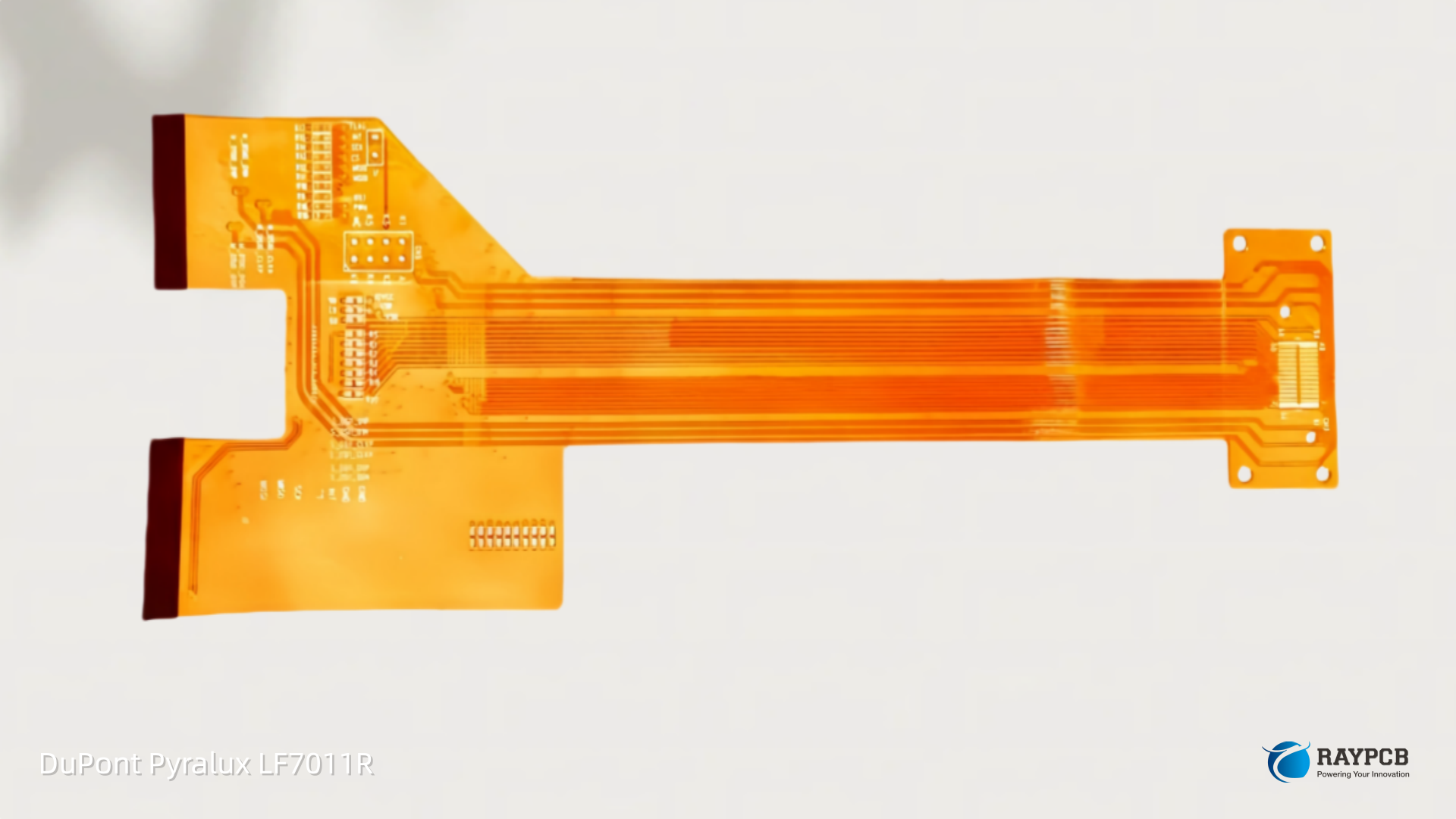
Aluminum PCB: Complete Guide to Structure, Types & Manufacturing [2026]

Rayming Manufacture 1-4 Layer aluminum PCB, Thermal Conductivity: 1- 5w Special Material; Bergquis, Laird, PTTC…

As a PCB engineer who’s spent over a decade working with thermal management solutions, I’ve watched aluminum PCB technology evolve from a niche product to an industry standard for high-power applications. If you’re dealing with LED lighting, power electronics, or automotive systems that generate serious heat, this guide will walk you through everything you need to know about aluminum PCBs—from the fundamentals to advanced manufacturing considerations.

What is an Aluminum PCB?

Aluminum_PCB

An aluminum PCB (also called aluminum-backed PCB, metal core PCB, or MCPCB) is a printed circuit board that uses aluminum as its base material instead of traditional FR4 fiberglass. The aluminum substrate acts as an integrated heat sink, pulling heat away from components and distributing it across the board surface.

Here’s what makes this matter in practice: A standard 1.5mm FR4 board has a thermal resistance of 20-22°C per watt. The same thickness aluminum PCB? Just 1-2°C per watt. That’s a 10-20x improvement in heat dissipation without adding external cooling.

The technology isn’t new—aluminum PCBs have been around since the 1970s—but modern applications in LED lighting and power electronics have driven massive improvements in dielectric materials and manufacturing processes.

Aluminum <a href="https://www.raypcb.com/pcb-design/">PCB Design</a> Tool | RayPCB Engineering Tools

Aluminum PCB Design Tool

RayPCB Engineering Tools

Input Parameters

PCB Parameters

Set to 0 for natural convection from aluminum base

Design is Thermally Safe

25.0°C margin below max junction temp

Junction Temperature

60.0°C

Max Safe Power

15.0W

Thermal Resistance Breakdown

Component Rjc 3.0 °C/W
Dielectric Layer 0.667 °C/W
Aluminum Base 0.080 °C/W
Heatsink/TIM 2.0 °C/W
Total Rth 5.75 °C/W

Thermal Path Visualization

Component
Copper
Dielectric
Aluminum
Ambient
© 2026 RayPCB Engineering Tools | Aluminum PCB Design Assistant | www.raypcb.com

Aluminum PCB Structure Explained

Aluminum PCB LAYER
Aluminum Stack Up

Understanding the layer structure helps you make better design decisions. Every aluminum PCB consists of four distinct layers, each serving a specific function.

Circuit Layer (Copper Foil)

The top layer is copper foil, typically ranging from 1oz (35μm) to 10oz (350μm) thick. This is where your traces and component pads live. Thicker copper means higher current-carrying capacity—essential for power applications.

What most designers miss: The copper weight you choose directly affects your trace width requirements and manufacturing costs. Going from 1oz to 3oz copper can nearly double your minimum trace width due to etching limitations.

Dielectric Layer (Thermal Insulation)

This is the critical layer that separates the copper circuit from the aluminum base. It needs to do two seemingly contradictory things: provide electrical insulation while conducting heat efficiently.

Modern dielectric materials use ceramic-filled epoxy resins with thermal conductivity values from 1.0 to 3.0 W/m·K. Compare that to standard FR4 at just 0.25 W/m·K.

Dielectric TypeThermal ConductivityThickness RangeBest Application
Standard Epoxy1.0-1.5 W/m·K75-150 μmGeneral LED lighting
High-Performance2.0-3.0 W/m·K50-100 μmHigh-power LEDs
Ceramic-Filled3.0-5.0 W/m·K50-75 μmPower electronics
Premium Ceramic5.0-8.0 W/m·K25-50 μmAutomotive/aerospace

The trade-off is always the same: thinner dielectric means better thermal performance but lower breakdown voltage. I typically recommend 75-100μm for most LED applications—it’s the sweet spot between thermal performance and reliability.

Aluminum Base Layer

The foundation of the board. Pure aluminum has a thermal conductivity of about 237 W/m·K, though aluminum alloys used in PCBs typically range from 120-220 W/m·K. Common alloys include 1050, 1060, 5052, and 6061.

Standard thickness options run from 0.8mm to 3.2mm. For most applications, 1.0-1.6mm provides adequate thermal mass without excessive weight.

Aluminum Base Membrane (Optional)

Some manufacturers add a protective anodized layer on the bottom surface. This prevents scratching during handling and can improve thermal interface material adhesion when mounting to heatsinks.

Types of Aluminum PCBs

Not all aluminum PCBs are created equal. Your application determines which type you need.

Single-Layer Aluminum PCB

The workhorse of the industry. One copper layer on top of the dielectric and aluminum base. Simple, cost-effective, and handles most LED and basic power applications.

Best for: LED lighting, power supplies under 50W, general thermal management

Double-Layer Aluminum PCB

Two copper layers with the aluminum base, connected through plated vias. The challenge here is isolating the vias from the aluminum—manufacturers use resin-filled holes or specialized insulation techniques.

Best for: More complex circuits requiring ground planes, power supplies 50-200W

Multi-Layer Aluminum PCB

Three or more copper layers bonded to an aluminum base. These are expensive and difficult to manufacture because each additional layer adds thermal resistance between components and the aluminum core.

Best for: High-density power electronics, complex control circuits requiring thermal management

Flexible Aluminum PCB

Uses a specially treated aluminum substrate that allows bending. The aluminum is grooved or scored to create flex points while maintaining thermal performance in the rigid sections.

Best for: Automotive interior lighting, irregular-shaped housings, designs requiring bend-to-fit installation

Hybrid Aluminum PCB

Combines aluminum base sections with traditional FR4 areas. You get thermal management where you need it and complex multi-layer capability where thermal performance isn’t critical.

Best for: Mixed-signal designs with both power and digital sections

PCB TypeLayersThermal PerformanceCostComplexity
Single-Layer1ExcellentLowSimple
Double-Layer2Very GoodMediumModerate
Multi-Layer3+GoodHighComplex
Flexible1-2Very GoodHighSpecialized
HybridMixedVariableMedium-HighModerate

Aluminum PCB vs FR4: Key Differences

aluminum pcb Vs Fr4 PCB
Aluminum PCB Vs Fr4 PCB​

I get asked about this comparison constantly. Here’s the honest breakdown.

Thermal Performance

This is where aluminum PCBs dominate. The numbers speak for themselves:

PropertyAluminum PCBFR4 PCB
Thermal Conductivity1.0-8.0 W/m·K (dielectric)0.25-0.30 W/m·K
Thermal Resistance (1.5mm)1-2 °C/W20-22 °C/W
Max Operating Temp140-150°C110-130°C
CTE (Coefficient of Thermal Expansion)50×10⁻⁶ cm/cm-°C110×10⁻⁶ cm/cm-°C

The CTE match between aluminum and copper is much closer than FR4 and copper. This reduces stress on solder joints during thermal cycling—a big deal for automotive and outdoor applications.

Design Flexibility

FR4 wins here. You can easily get 8, 10, or 20+ layer FR4 boards. Aluminum PCBs rarely exceed 4 layers, and even 2-layer designs require special manufacturing.

Cost Analysis

Raw material cost favors FR4, but total system cost can favor aluminum:

Cost FactorAluminum PCBFR4 PCB
Base MaterialHigher ($10-20/sq ft)Lower ($5-10/sq ft)
Manufacturing15-30% higherStandard
External HeatsinkOften eliminatedUsually required
Component LifespanExtendedStandard
Total System CostOften lowerVariable

For high-power applications, eliminating external heatsinks and extending component life often makes aluminum PCBs more economical despite higher initial cost.

Aluminum PCB Manufacturing Process

aluminium pcb board

Manufacturing aluminum PCBs shares many steps with FR4 production but includes critical differences.

Step 1: Material Preparation

The process starts with aluminum-clad copper laminate (CCL). Major suppliers include Bergquist, Laird, Ventec, and PTTC. Material selection directly affects your final thermal performance—this isn’t the place to cut corners.

Step 2: Drilling

Drilling aluminum requires specialized parameters to prevent burrs and material smearing. The aluminum’s softness compared to FR4 means you need:

  • Slower spindle speeds
  • Sharper carbide drill bits
  • Pecking cycles for through-holes
  • Post-drilling deburring

Step 3: Circuit Pattern Formation

Standard photolithography and etching processes apply. However, the thicker copper commonly used in aluminum PCBs (2-10oz vs 1-2oz typical for FR4) requires adjusted etching parameters and trace width compensation.

Step 4: Solder Mask Application

Two-pass solder mask printing is standard for aluminum PCBs because the thick copper creates significant topography. Some manufacturers pre-fill the areas between traces before applying solder mask.

Step 5: Surface Finish

Common options include:

  • HASL (Hot Air Solder Leveling): Cost-effective, good for through-hole
  • ENIG (Electroless Nickel Immersion Gold): Best for fine-pitch SMD
  • OSP (Organic Solderability Preservative): Budget option, limited shelf life
  • Immersion Silver: Good balance of cost and performance

Step 6: Profile Cutting

V-scoring and routing require different tooling than FR4. The aluminum tends to leave burrs that need removal, and CNC routing parameters must account for the material’s different cutting characteristics.

Aluminum PCB Applications

1200mm long led PCB
1200mm long led PCB

The applications where aluminum PCBs excel share a common theme: heat.

LED Lighting Industry

This is the largest market for aluminum PCBs. High-power LEDs convert only 30-40% of input power to light—the rest becomes heat. Without proper thermal management, LED junction temperature rises, efficiency drops, and lifespan plummets.

Specific applications:

  • Street lighting and highway illumination
  • Automotive headlights and interior lighting
  • Commercial and industrial high-bay fixtures
  • Stage and entertainment lighting
  • Horticultural grow lights

Power Electronics

Power supplies, motor drives, and voltage regulators generate significant heat. Aluminum PCBs handle power densities that would overwhelm FR4 boards.

Specific applications:

  • Switch-mode power supplies
  • DC-DC converters
  • Motor controllers and VFDs
  • Solar inverters
  • Electric vehicle charging systems

Automotive Electronics

The automotive environment combines high temperatures, vibration, and reliability requirements that aluminum PCBs handle well.

Specific applications:

  • Engine control units (ECUs)
  • LED headlight and taillight assemblies
  • Battery management systems
  • Power distribution modules
  • ADAS sensor systems

Industrial and Telecommunications

Base stations, industrial controls, and factory automation equipment benefit from aluminum PCB reliability.

Specific applications:

  • 5G base station power amplifiers
  • Industrial motor drives
  • Factory automation controls
  • Server power supplies
  • UPS systems

Aluminum PCB Design Guidelines

Getting the most from aluminum PCBs requires understanding their constraints.

Thermal Design Considerations

Spread the heat: Unlike FR4 where heat stays localized, aluminum spreads heat across the entire board. Space power components to avoid hot spots.

Maximize copper contact: The more copper area touching the dielectric, the better your thermal path. Use thermal pads and large ground fills.

Mind the dielectric thickness: Every micron of dielectric adds thermal resistance. Use the thinnest dielectric your breakdown voltage requirements allow.

Layout Best Practices

Component placement: Put highest-power components toward the board center where heat spreading is most effective.

Via considerations: Standard vias don’t help thermal performance—they’re isolated from the aluminum. For through-hole components, consider thermal mounting techniques.

Copper weight selection: Higher copper weight improves both current capacity and thermal spreading on the circuit layer.

DFM (Design for Manufacturing) Tips

Design ElementRecommendationReason
Minimum Trace Width0.2mm (1oz), 0.3mm (2oz)Etching limitations
Minimum Spacing0.2mmThick copper undercut
Drill Size≥0.3mmBurr prevention
Board Thickness1.0-1.6mm aluminum + copperStandard manufacturing
Panel UtilizationMaximizeAluminum material cost

The selection of the appropriate aluminum clad substrate depends on factors such as thermal requirements, electrical properties, cost considerations, and specific application needs.

Popular Aluminum PCB Materials and Substrates

aluminium pcb board for led
Aluminium PCB board for led

Choosing the right substrate material is critical for your aluminum PCB performance. Here’s what the market offers.

Premium Manufacturers

Bergquist (Henkel) The industry benchmark for high-performance thermal substrates. Their product line includes:

  • HT Series: High thermal performance for demanding applications (2.0-3.0 W/m·K)
  • HP Series: High power handling with enhanced dielectric strength
  • MP Series: Cost-effective for general-purpose applications

Laird Technologies Strong presence in automotive and industrial markets:

  • T-Lam DSL: Double-sided laminate for complex designs
  • T-Lam SS HTD: High thermal dissipation optimized for LED applications

Ventec International Popular choice for volume production:

  • VT-4A2: High thermal conductivity (2.0-2.2 W/m·K)
  • VT-4B: Enhanced dielectric strength for higher voltage applications

Asian Manufacturers

For cost-sensitive projects, these manufacturers offer competitive alternatives:

ManufacturerProduct LineThermal ConductivityNotes
PTTCTCP-2L, TCB-2AL1.0-2.0 W/m·KPopular in China
DoosanDST-50001.5-2.0 W/m·KKorean quality
KinwongKW-ALS1.0-1.5 W/m·KBudget option
DongliEPA-M2CTI1.0-2.0 W/m·KGood availability

Material Selection Criteria

When selecting substrate material, consider these factors in order of importance:

  1. Thermal conductivity requirement: Calculate your actual heat dissipation needs before specifying
  2. Dielectric breakdown voltage: Critical for safety in power applications
  3. UL recognition: Required for commercial products in most markets
  4. Manufacturing availability: Premium materials may have longer lead times
  5. Cost target: Premium materials can cost 2-3x standard options

Aluminum PCB Thermal Management Deep Dive

Since thermal performance is the primary reason you’re using aluminum PCBs, let’s dig deeper into the engineering.

Heat Transfer Mechanisms

Heat moves through your aluminum PCB via three mechanisms:

Conduction: The primary mechanism. Heat flows from component junction through solder, copper pad, dielectric layer, and into the aluminum base. Each interface adds thermal resistance.

Convection: The aluminum base transfers heat to surrounding air (natural convection) or to a heatsink/enclosure (forced convection or conduction).

Radiation: Minor contributor but can be enhanced with high-emissivity coatings or white solder mask for LED applications.

Calculating Thermal Performance

The thermal path from component to ambient includes:

Thermal Resistance ElementTypical ValueNotes
Junction to Case (Rjc)2-15 °C/WComponent-dependent
Solder Joint0.1-0.5 °C/WDepends on pad size
Copper Spreading0.5-2 °C/WDepends on copper weight/area
Dielectric Layer0.5-3 °C/WMaterial and thickness dependent
Aluminum Base0.1-0.5 °C/WThickness dependent
TIM to Heatsink0.1-1 °C/WInterface material dependent
Heatsink to AmbientVariableHeatsink design dependent

Total thermal resistance = sum of all elements in the path

Junction temperature = Ambient + (Power × Total thermal resistance)

Thermal Design Example

Let’s walk through a real calculation for a 10W LED module:

Given:

  • LED Rjc: 3 °C/W
  • Power: 10W
  • Maximum junction temperature: 85°C
  • Ambient temperature: 35°C

Available temperature budget: 85 – 35 = 50°C

Maximum allowable total thermal resistance: 50°C ÷ 10W = 5 °C/W

This means your PCB plus heatsink system must have total thermal resistance under 2°C/W (leaving 3°C/W for the LED itself). Standard aluminum PCB with good heatsink mounting can achieve this—but you need to verify the numbers, not assume.

Common Thermal Design Mistakes

After reviewing hundreds of failed designs, these are the recurring issues:

  1. Undersized thermal pads: The copper pad under your component is the thermal gateway. Make it as large as possible.
  2. Inadequate copper weight: 1oz copper is insufficient for spreading heat from concentrated sources. Use 2oz minimum for power applications.
  3. Ignoring dielectric selection: The difference between 1.0 and 2.0 W/m·K dielectric is significant in real applications.
  4. Poor heatsink interface: The best aluminum PCB is worthless if your TIM (thermal interface material) creates a bottleneck.
  5. Insufficient testing: Design calculations are estimates. Always validate with actual temperature measurements under worst-case conditions.

Aluminum PCB Assembly Considerations

Assembling aluminum PCBs requires adjustments to standard SMT processes.

Soldering Challenges

The aluminum base acts as a massive heat sink, which affects soldering:

Reflow profile adjustments:

  • Longer preheat time to bring the board to temperature uniformly
  • Higher peak temperatures may be needed (but watch component ratings)
  • Extended time above liquidus for proper wetting

Typical aluminum PCB reflow profile:

PhaseStandard FR4Aluminum PCB
Preheat Rate1-2°C/sec0.5-1°C/sec
Soak Time60-90 sec90-120 sec
Peak Temp240-250°C250-260°C
Time Above Liquidus45-60 sec60-90 sec

Hand Soldering Tips

For rework or low-volume production:

  • Use a high-wattage iron (80W+ recommended)
  • Preheat the board on a hot plate (100-150°C)
  • Allow extra dwell time for heat to reach the joint
  • Consider using flux generously to improve heat transfer

Component Selection

Some components perform better on aluminum PCBs:

Preferred:

  • Large thermal pad packages (QFN, exposed pad)
  • Ceramic capacitors (handle thermal stress well)
  • High-temperature rated components

Avoid when possible:

  • Plastic packages with poor thermal tolerance
  • Components with CTE mismatch concerns
  • Parts with tight soldering windows

Aluminum PCB Cost Factors

Understanding cost drivers helps you optimize your design.

Material Cost Components

The aluminum-clad laminate typically represents 20-30% of total cost. Factors affecting laminate price:

  • Dielectric thermal conductivity (higher = more expensive)
  • Aluminum thickness and alloy
  • Copper weight
  • Board dimensions

Manufacturing Cost Factors

FactorCost ImpactNotes
Layer Count+50-100% per layerExponential complexity
Copper Weight+10-20% per ozEtching time/compensation
Surface FinishVariableENIG > HASL > OSP
Board SizeLinearMaterial utilization
VolumeSignificant discountSetup cost amortization

Cost Optimization Strategies

  1. Standardize dimensions: Use standard panel sizes (commonly 18″×24″)
  2. Optimize dielectric: Don’t over-specify thermal performance
  3. Consider hybrid designs: Use aluminum only where needed
  4. Volume planning: Prototype costs are 5-10x production costs per unit

Choosing the Right Aluminum PCB Supplier

Selection criteria that matter:

Technical Capability:

  • Thermal conductivity options available
  • Layer count capability
  • Minimum feature sizes
  • Testing equipment (thermal imaging, reliability testing)

Quality Certifications:

  • ISO 9001 (minimum)
  • IATF 16949 (automotive)
  • AS9100 (aerospace)
  • UL recognition

Material Partnerships:

  • Relationships with major laminate suppliers (Bergquist, Laird, Ventec)
  • Ability to source premium materials

Useful Resources for Aluminum PCB Design

Here are resources I reference regularly:

Industry Standards

  • IPC-4101: Base materials specification for rigid and multilayer boards
  • IPC-6012: Qualification and performance specification for rigid PCBs
  • IPC-2221: Generic standard on printed board design

Material Datasheets

  • Bergquist HT Series (high thermal performance)
  • Laird T-Lam (thermal management solutions)
  • Ventec VT-4A2/VT-4B (thermal substrates)

Design Software

  • Altium Designer (thermal simulation tools)
  • KiCad (free, open-source)
  • ANSYS Icepak (advanced thermal analysis)

Calculation Tools

  • Thermal resistance calculators (most laminate suppliers provide these)
  • Trace width calculators (adjusted for thick copper)
  • Stack-up planning tools

FAQs About Aluminum PCBs

What is the thermal conductivity of aluminum PCB?

The thermal conductivity depends on which layer you’re measuring. The aluminum base itself has conductivity of 150-237 W/m·K. However, the system thermal conductivity is limited by the dielectric layer, which ranges from 1.0 to 8.0 W/m·K depending on material grade. For most calculations, use the dielectric conductivity as your limiting factor.

Can aluminum PCBs be multi-layer?

Yes, but with limitations. 2-layer aluminum PCBs are common. 4-layer designs exist but are expensive and complex. Beyond 4 layers is rare because each layer adds thermal resistance between components and the aluminum base, partially defeating the purpose. For complex circuits, hybrid designs combining aluminum and FR4 often make more sense.

How much do aluminum PCBs cost compared to FR4?

Aluminum PCBs typically cost 30-50% more than equivalent FR4 boards for raw fabrication. However, total system cost often favors aluminum in high-power applications because you eliminate external heatsinks, reduce assembly complexity, and improve component lifespan. For LED applications, aluminum usually wins on total cost despite higher PCB price.

What thickness of aluminum PCB should I use?

Standard options are 0.8mm, 1.0mm, 1.5mm, 1.6mm, 2.0mm, and 3.0mm. For most LED and moderate-power applications, 1.0-1.6mm provides sufficient thermal mass without excessive weight. High-power applications or those requiring significant mechanical strength may benefit from 2.0mm or thicker. Thicker isn’t always better—the dielectric layer is your thermal bottleneck, not the aluminum thickness.

Are aluminum PCBs suitable for high-frequency applications?

Aluminum PCBs work well at lower frequencies but face challenges above a few hundred MHz. The dielectric materials aren’t optimized for RF performance, and the aluminum base can create unwanted capacitance and electromagnetic interference. For high-frequency needs, consider hybrid designs with RF sections on Rogers or other high-frequency materials and power sections on aluminum.

Future Trends in Aluminum PCB Technology

The aluminum PCB industry continues evolving. Here’s what’s coming:

Advanced Dielectric Materials

Research focuses on ceramic nano-particles and advanced polymer matrices pushing dielectric thermal conductivity beyond 10 W/m·K. These materials will enable even more compact, high-power designs.

Embedded Component Technology

Integrating passive components within the dielectric layer reduces surface area requirements and improves thermal coupling. Early adopters are seeing 20-30% size reductions.

Hybrid Manufacturing

Combining aluminum substrates with high-density interconnect (HDI) techniques enables complex multi-layer designs while maintaining thermal performance where needed.

Sustainability Initiatives

Aluminum is highly recyclable, and manufacturers are developing processes to recover and reuse substrate materials. This aligns with increasing environmental regulations and customer demands.

Conclusion

Aluminum PCBs solve a fundamental problem in power electronics: getting heat out of your circuit before it damages components. The technology has matured significantly, with modern dielectric materials offering thermal performance that seemed impossible a decade ago.

For LED lighting, power electronics, and automotive applications, aluminum PCBs often represent the most practical thermal management solution. They eliminate external heatsinks, improve reliability, and frequently reduce total system cost despite higher initial PCB price.

The key is matching your requirements to the right aluminum PCB specification. Over-specifying wastes money; under-specifying creates thermal failures. Use the guidelines in this article to make informed decisions, and don’t hesitate to work with your PCB supplier’s engineering team—thermal design is where their expertise adds real value.

Whether you’re designing your first LED driver or optimizing a high-power industrial system, understanding aluminum PCB fundamentals will help you build products that handle heat effectively and last longer in the field.

The investment in learning aluminum PCB design principles pays dividends across your entire career as thermal management becomes increasingly critical in modern electronics. As devices get smaller and more powerful, the engineers who understand thermal design will have significant advantages in creating reliable, competitive products.