Product Specifications
Core Architecture
- Part Number: XCV300E-8PQ240C
- Device Family: Virtex-E High-Performance FPGA Series
- Logic Capacity: 300,000 system gates
- Logic Cell Count: 3,456 total logic cells
- Configurable Logic Blocks (CLBs): 432 CLBs in 24×18 array
- Slice Organization: 4 slices per CLB, 864 total slices
Memory Architecture
- Block RAM Capacity: 32 Kbits embedded block memory
- Distributed RAM: 54 Kbits distributed memory capacity
- Block RAM Blocks: 8 dual-port RAM blocks (4K bits each)
- Memory Configuration: Flexible width (1, 2, 4, 8, 16 bits) and depth options
- Block RAM Modes: Single-port, dual-port, and FIFO configurations
High-Speed Performance
- Speed Grade: -8 (premium high-speed optimization)
- Core Supply Voltage: 1.8V ±5% tolerance
- I/O Supply Voltage: 3.3V, 2.5V selectable
- Maximum Clock Frequency: Up to 200 MHz system clock
- Logic Propagation Delay: 0.18ns typical (fastest speed grade)
- Clock-to-Output Delay: 0.7ns typical
PQ240 Package Specifications
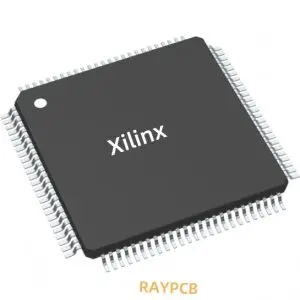
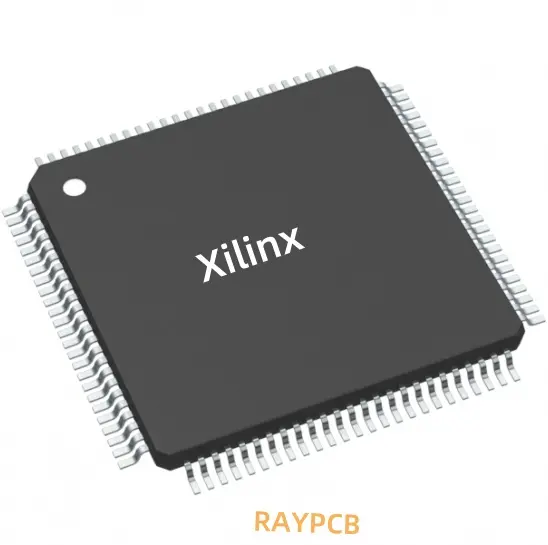
- Package Type: PQ240 Plastic Quad Flat Pack
- Temperature Grade: C (Commercial: 0°C to +85°C)
- Pin Count: 240 pins total
- Pin Pitch: 0.5mm fine pitch
- Package Dimensions: 32mm x 32mm x 3.4mm max height
- Lead Style: Gull-wing leads for surface mount assembly
Input/Output Capabilities
- Maximum User I/O: 180 user-configurable I/O pins
- I/O Banks: 4 independent I/O voltage banks
- Drive Strength: Programmable 2mA to 24mA output current
- Input Threshold: Programmable VREF for optimal noise margins
- I/O Standards: LVTTL, LVCMOS, GTL+, HSTL, SSTL2, SSTL3
DSP and Arithmetic Features
- Dedicated Multipliers: 32 embedded 18×18 multipliers
- DSP Performance: Optimized for high-throughput signal processing
- Multiply-Accumulate: Hardware MAC operations support
- Fast Arithmetic: Dedicated carry chains for efficient addition/subtraction
- Digital Filtering: Efficient FIR and IIR filter implementation
Clock Management System
- Delay Locked Loops (DLLs): 4 precision DLLs for clock conditioning
- Global Clock Networks: 4 dedicated low-skew clock distribution trees
- Clock De-skew: Advanced phase alignment and timing control
- Clock Synthesis: Frequency multiplication and division capabilities
Configuration and Debugging
- Configuration Method: SRAM-based with multiple configuration modes
- Configuration Memory: 1,319,616 bits total
- Boundary Scan: IEEE 1149.1 JTAG compliance for testing
- Readback Support: Full configuration and logic state readback
- Partial Reconfiguration: Dynamic reconfiguration capabilities
Pricing Information
XCV300E-8PQ240C commercial pricing and procurement:
Speed Grade Premium Pricing
- Single Unit (1-9 pieces): Premium pricing for -8 speed grade performance
- Small Volume (10-49 units): Standard commercial rates with speed grade premium
- Medium Volume (50-199 units): Volume discounts available for production quantities
- Large Volume (200+ units): Competitive pricing for high-volume applications
Commercial Grade Economics
- PQ240 Package Advantage: Cost-effective alternative to BGA packages
- Commercial Temperature: Optimized pricing for 0°C to +85°C applications
- Speed Grade -8: Premium pricing for maximum performance requirements
- Lead Time: 8-14 weeks standard delivery for commercial grade
Cost Considerations
- High-Speed Performance: Premium pricing reflects -8 speed grade capabilities
- Compact Package: PQ240 offers lower assembly costs than BGA alternatives
- Volume Scaling: Attractive pricing progression for production quantities
Contact authorized Xilinx distributors for current XCV300E-8PQ240C pricing, availability, and volume discount schedules.
Documents & Media
Core Technical Documentation
- Product Datasheet: Complete XCV300E-8PQ240C electrical specifications and timing
- Virtex-E Family User Guide: Architecture overview and design methodology
- PQ240 Package Information: Mechanical specifications, dimensions, and assembly
- Pin Assignment Guide: Complete pinout diagram and signal descriptions
Design Support Resources
- PCB Design Guidelines: Layout recommendations for PQ240 package assembly
- Footprint Libraries: CAD symbols for major PCB design tools
- IBIS Models: Signal integrity simulation models for high-speed design
- Timing Constraint Files: UCF templates and timing constraint examples
Application Documentation
- High-Speed Design Guidelines: Best practices for -8 speed grade implementation
- Power Management: Voltage regulation and power distribution design
- Thermal Analysis: Heat dissipation calculations and cooling recommendations
- Signal Integrity: High-speed PCB design considerations and solutions
Software Documentation
- ISE Design Suite: Development environment user guides and tutorials
- Synthesis Optimization: Speed-focused synthesis techniques for -8 grade
- Place and Route: Implementation strategies for maximum performance
- Timing Analysis: Static timing analysis methodology and closure techniques
Characterization Data
- AC Timing Specifications: Setup, hold, and propagation delay parameters
- DC Electrical Characteristics: Voltage and current specifications
- Switching Characteristics: Dynamic power consumption data
- Temperature Derating: Performance vs. temperature characterization
Related Resources
Development and Prototyping
- XCV300E-8PQ240C Evaluation Boards: Complete development platforms
- High-Speed Prototyping Kits: Specialized boards for -8 speed grade evaluation
- Reference Designs: Proven high-performance implementations
- Application Modules: Task-specific demonstration and evaluation boards
Programming and Configuration
- JTAG Programming Solutions: Platform Cable USB and Parallel Cable interfaces
- Configuration Memory: Compatible PROM and Flash memory solutions
- Download Cables: High-speed programming and debugging interfaces
- Boundary Scan Tools: JTAG test equipment and software solutions
High-Speed Design Support
- Signal Integrity Tools: Simulation and analysis software recommendations
- High-Speed Connectors: Compatible connector solutions for fast I/O
- Clock Distribution: Low-jitter clock sources and distribution networks
- Power Delivery: High-performance voltage regulation solutions
Component Ecosystem
- Voltage Regulators: Multi-output supplies optimized for Virtex-E
- Clock Generation: Ultra-low jitter oscillators and PLL devices
- Interface Circuits: High-speed level shifters and signal conditioners
- Memory Solutions: Fast SRAM, DDR, and cache memory interfaces
Intellectual Property Cores
- High-Speed IP: Cores optimized for -8 speed grade performance
- Communication Protocols: Ethernet, PCI, and serial interface IP
- DSP Functions: Digital signal processing and filtering cores
- Custom IP Development: Third-party IP vendors and design services
Environmental & Export Classifications
Environmental Compliance
- RoHS Directive: Lead-free manufacturing with compliant solder and materials
- REACH Regulation: Full compliance with European Union chemical safety
- Green Packaging: Environmentally responsible packaging materials
- Conflict Minerals: Dodd-Frank Act Section 1502 compliant sourcing
Commercial Operating Environment
- Operating Temperature: 0°C to +85°C (Commercial grade C specification)
- Junction Temperature: 0°C to +125°C maximum junction temperature
- Storage Temperature: -65°C to +150°C for extended storage
- Relative Humidity: 5% to 85% non-condensing operational range
Thermal Management – PQ240 Package
- Thermal Resistance: θJA = 32°C/W (still air), θJA = 28°C/W (200 LFM)
- Power Dissipation: Calculate based on utilization and switching frequency
- Heat Sink Compatibility: Standard QFP heat sink mounting options
- Thermal Simulation: Models available for thermal analysis tools
Reliability and Quality Standards
- Commercial Quality Grade: Standard commercial reliability specifications
- JEDEC Compliance: Meets JEDEC solid-state technology standards
- Quality System: ISO 9001:2015 certified manufacturing processes
- Failure Rate: <100 FIT (Failures in Time) at 55°C
Electrostatic Discharge Protection
- ESD Classification: Class 1C (>2000V Human Body Model)
- Charged Device Model: >750V CDM for enhanced protection
- Machine Model: >200V MM protection level
- Latch-up Immunity: >100mA at maximum rated temperature
Export Control Classifications
- Export Control Classification: ECCN 3A001.a.7 (US Export Administration)
- Harmonized System Code: 8542.31.0000 for customs classification
- Country of Origin: Manufacturing location dependent on supply chain
- Export License: May require authorization for specific destination countries
Regulatory Certifications
- UL Recognition: UL 1998 recognized component status
- CE Conformity: European Union conformity declaration
- FCC Part 15: Unintentional radiator equipment compliance
- ITAR Classification: Not subject to International Traffic in Arms Regulations
Package Handling Specifications
- Moisture Sensitivity: MSL 3 (168 hours at 30°C/60% relative humidity)
- Handling Precautions: ESD-sensitive device requiring proper grounding
- Package Marking: Laser marking with part number, speed grade, and date code
- Tray Packaging: Anti-static trays for safe storage and handling
Assembly and Manufacturing
- Soldering Profile: Lead-free reflow soldering temperature profile
- Package Coplanarity: ±0.10mm maximum lead coplanarity specification
- Assembly Guidelines: Recommended pick-and-place and reflow parameters
- Inspection Criteria: Visual and automated optical inspection standards
Key Commercial Applications
The XCV300E-8PQ240C excels in high-speed commercial applications:
High-Performance Communications
- Network Processing: Packet classification and forwarding engines
- Protocol Acceleration: TCP/IP and protocol offload processing
- Wireless Infrastructure: Signal processing for cellular base stations
- Optical Networking: High-speed data path processing and control
Real-Time Control Systems
- Industrial Automation: High-speed control loops and motion control
- Process Control: Real-time data acquisition and control algorithms
- Robotics: Servo control and sensor fusion applications
- Machine Vision: High-speed image processing and pattern recognition
Test and Measurement
- Signal Generation: Arbitrary waveform generation and synthesis
- Data Acquisition: High-speed sampling and signal analysis
- Automated Test Equipment: Stimulus generation and response analysis
- Instrumentation: Digital oscilloscopes and spectrum analyzers
Computing and Storage
- Server Acceleration: Computational offload and specialized processing
- Storage Controllers: High-performance RAID and SAN controllers
- Embedded Computing: Real-time processing in embedded systems
- Coprocessing: Algorithm acceleration and parallel processing
Design Advantages of XCV300E-8PQ240C
High-Speed Performance Benefits
- Premium Speed Grade: -8 speed grade provides maximum performance
- 200 MHz Operation: Industry-leading clock frequencies for demanding applications
- Fast Logic Delays: 0.18ns propagation delays enable high-speed designs
- Optimized Routing: Architecture designed for speed-critical applications
PQ240 Package Advantages
- Space Efficient: Compact 32mm x 32mm footprint for size-constrained designs
- Cost Effective: Lower assembly costs compared to BGA packages
- Design Friendly: 0.5mm pitch suitable for standard PCB manufacturing
- Thermal Access: Exposed package top for heat sink attachment
Commercial Grade Benefits
- Temperature Range: 0°C to +85°C covers most commercial applications
- Cost Optimization: Commercial grade pricing for budget-conscious projects
- Availability: Strong supply chain support for commercial quantities
- Documentation: Comprehensive commercial application support
Technical Implementation Guidelines
High-Speed Design Considerations
- Clock Distribution: Use DLLs for optimal clock skew management
- Signal Integrity: Follow high-speed PCB design guidelines for -8 grade
- Power Integrity: Ensure clean power delivery for maximum performance
- Thermal Management: Consider heat dissipation at high utilization
PQ240 PCB Design Tips
- Via Placement: Strategic via placement for signal layer transitions
- Ground Plane: Solid ground plane design for signal integrity
- Decoupling: Adequate decoupling capacitor placement near package
- Trace Routing: Controlled impedance routing for high-speed signals
Performance Optimization
- Resource Utilization: Efficient use of embedded multipliers and block RAM
- Pipeline Design: Deep pipelining for maximum clock frequency achievement
- Constraint Definition: Proper timing constraints for speed-critical paths
- Implementation Strategy: Hierarchical design for complex applications
Conclusion
The XCV300E-8PQ240C delivers exceptional high-speed performance in a compact, cost-effective package ideal for demanding commercial applications. With its premium -8 speed grade capability, space-efficient PQ240 package, and commercial temperature range, this Virtex-E FPGA enables engineers to implement high-performance digital systems while meeting stringent timing and space requirements.
For complete technical specifications, current pricing, and comprehensive design support for the XCV300E-8PQ240C, contact authorized Xilinx distributors or access official Xilinx documentation and technical resources.