Product Specifications
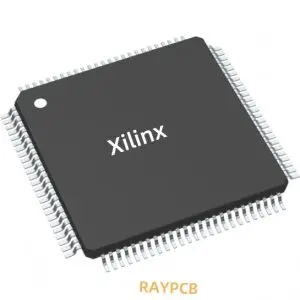
The XC5VLX220T-1FFG1738I features an impressive array of technical specifications that position it as a leader in its class. This FPGA incorporates 220,000 logic cells with advanced 65nm process technology, providing exceptional processing power while maintaining energy efficiency. The device includes 1,200 user I/O pins housed in a robust 1738-pin flip-chip fine-pitch ball grid array (FFG) package.
Key specifications include 16,560 configurable logic blocks (CLBs), 298 dedicated DSP48E slices for high-speed mathematical operations, and 13,248 Kb of block RAM. The XC5VLX220T-1FFG1738I operates at speed grade -1, ensuring reliable performance across various operating conditions. The device supports multiple I/O standards including LVDS, SSTL, and HSTL, providing flexible connectivity options for diverse system architectures.
The FPGA’s advanced SelectIO technology enables high-speed data transmission with built-in serialization and deserialization capabilities. Clock management is handled by up to 12 clock management tiles (CMTs), each featuring phase-locked loops (PLLs) and digital clock managers (DCMs) for precise timing control.
Price
The XC5VLX220T-1FFG1738I typically ranges from $8,000 to $15,000 per unit, depending on quantity, supplier, and market conditions. Volume pricing is available for orders exceeding 100 units, with significant discounts possible for large-scale deployments. Educational institutions and research organizations may qualify for special academic pricing programs.
Price variations depend on several factors including lead times, packaging requirements, and additional services such as pre-programming or custom testing. It’s recommended to contact authorized Xilinx distributors for current pricing and availability, as semiconductor markets can experience fluctuations based on supply chain conditions and demand.
Documents & Media
Comprehensive technical documentation supports the XC5VLX220T-1FFG1738I implementation process. The primary datasheet provides detailed electrical characteristics, timing specifications, and package information essential for design engineers. This document includes DC and AC parameter tables, power consumption guidelines, and thermal management recommendations.
The Virtex-5 FPGA User Guide offers in-depth coverage of the device architecture, configuration options, and design methodologies. This resource explains the internal structure of logic blocks, memory components, and I/O capabilities. Additional application notes cover specific implementation topics such as high-speed design techniques, power optimization strategies, and signal integrity considerations.
PCB design guidelines and reference designs are available to accelerate development cycles. These materials include recommended layout practices, layer stackup configurations, and component placement guidelines. IBIS models and simulation files support signal integrity analysis and board-level verification.
Software support includes compatibility with Xilinx Vivado Design Suite and ISE Design Suite, providing comprehensive tools for synthesis, implementation, and debugging. IP core libraries offer pre-verified building blocks for common functions such as memory controllers, communication interfaces, and signal processing algorithms.
Related Resources
The XC5VLX220T-1FFG1738I ecosystem includes various development boards and evaluation platforms that facilitate rapid prototyping and system validation. The ML507 evaluation board provides a complete development environment with the XC5VLX220T-1FFG1738I as the central processing element, along with various peripherals and interfaces.
Compatible IP cores enhance the FPGA’s functionality across multiple application domains. PCI Express endpoints, Ethernet MAC cores, and DDR memory controllers are available as licensed IP or through Xilinx’s comprehensive IP catalog. These pre-verified components reduce development time and ensure reliable system operation.
Educational resources include online training modules, webinars, and documentation that help engineers maximize the XC5VLX220T-1FFG1738I capabilities. The Xilinx University Program provides academic institutions with tools, curricula, and support for incorporating FPGA technology into educational programs.
Community forums and technical support channels offer additional assistance for troubleshooting and optimization. These platforms connect users with Xilinx engineers and experienced developers who can provide guidance on complex implementation challenges.
Environmental & Export Classifications
The XC5VLX220T-1FFG1738I complies with multiple environmental and regulatory standards required for commercial and industrial applications. RoHS compliance ensures the device meets lead-free manufacturing requirements, while REACH certification confirms adherence to European chemical safety regulations.
Operating temperature range extends from 0°C to 85°C for commercial grade devices, with industrial and extended temperature variants available for harsh environment applications. The junction temperature can reach up to 125°C under maximum operating conditions, requiring appropriate thermal management solutions.
Export classification follows U.S. Department of Commerce regulations, with the XC5VLX220T-1FFG1738I typically classified under Export Control Classification Number (ECCN) 3A001. This classification may require export licenses for certain destinations and end-use applications, particularly those involving military or dual-use technologies.
Environmental testing standards include JEDEC qualification procedures for temperature cycling, thermal shock, and moisture sensitivity. The device meets MSL-3 (Moisture Sensitivity Level 3) requirements, necessitating proper handling and storage procedures to prevent moisture-related damage during assembly processes.
The XC5VLX220T-1FFG1738I represents a sophisticated FPGA solution that combines high performance, flexibility, and reliability for advanced electronic systems. Its comprehensive feature set and robust support ecosystem make it an excellent choice for engineers developing next-generation applications across multiple industries.