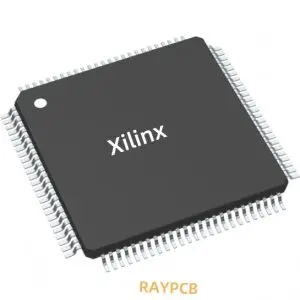
1. Product Specifications
Core Performance Specifications
- Part Number: XC5215-HQ208AKJ
- Manufacturer: Xilinx (now AMD Xilinx)
- Product Family: XC5200 FPGA Series
- Process Technology: 0.5μm three-layer metal CMOS
- Logic Capacity: 23,000 gates (23K Gates)
- Logic Cells: 1,936 configurable logic blocks (CLBs)
- VersaBlock Array Configuration: 22 x 22 matrix
- Maximum Operating Frequency: 83MHz
- Supply Voltage: 5V ±5%
Package and Physical Specifications
- Package Type: HQFP (High-Pin-Count Quad Flat Pack)
- Pin Count: 208 pins
- Package Designation: HQ208AKJ
- Suffix Code: AKJ (specialized packaging/ordering specification)
- Body Dimensions: Compact form factor for space-efficient designs
- Lead Pitch: Standard 0.5mm pin spacing
- Mounting Technology: Surface Mount Device (SMD)
- Operating Temperature Range: Commercial grade (0°C to +70°C)
- Package Marking: Laser-marked identification for traceability
Advanced Architecture Features
- Architecture Type: SRAM-based reconfigurable programmable logic
- Logic Module: VersaBlock™ technology for optimized resource utilization
- I/O Interface: VersaRing™ I/O system with enhanced signal integrity
- Interconnect Architecture: Hierarchical routing resources for design flexibility
- Configuration Method: JTAG boundary scan in-system programming
- Memory Architecture: Distributed register/latch rich design
Logic and Memory Resources
- Configurable Logic Blocks (CLBs): 484 CLBs in optimized array
- Flip-Flops: 1,936 dedicated storage elements
- Function Generators: 4-input look-up tables (LUTs) per CLB
- Dedicated Carry Logic: High-speed arithmetic carry chains
- Cascade Capability: Wide-input function support
- Memory Configuration: Distributed RAM capability
I/O and Interface Capabilities
- Maximum User I/O: Up to 164 user-configurable I/O pins
- I/O Standards: TTL/CMOS compatible with programmable characteristics
- Family I/O Maximum: Up to 244 I/O signals (XC5200 family capability)
- Input Features: Zero flip-flop hold time for simplified timing closure
- Output Features: Programmable slew-rate control for EMI reduction
- Special Functions: IEEE 1149.1 JTAG boundary scan support
Electrical and Timing Characteristics
- Core Supply Voltage: 5V ±5% (4.75V to 5.25V)
- I/O Voltage Compatibility: 5V TTL/CMOS standards
- Power Consumption: Design and utilization dependent
- Clock Distribution: Global clock networks with low-skew distribution
- Propagation Delays: Optimized for 83MHz system performance
- Setup/Hold Requirements: Zero hold time on input registers
2. Pricing Information
Market Dynamics: As a legacy product with “NOT RECOMMENDED for NEW DESIGN” status, the XC5215-HQ208AKJ exhibits specialized pricing characteristics reflecting limited production, specific market demand, and the unique AKJ packaging designation.
Current Market Price Ranges
- Single Unit Pricing: $25-$70+ (varies by supplier, condition, and availability)
- Small Volume (2-10 units): 10-20% volume discounts where inventory available
- Medium Volume (11-50 units): Negotiable pricing subject to stock availability
- Large Volume (50+ units): Limited availability, premium pricing typical
Pricing Influence Factors
- Legacy Product Premium: Increased costs due to discontinued manufacturing
- AKJ Suffix Specificity: Specialized packaging requirements may command higher pricing
- Limited Supply Chain: Restricted authorized distribution channels
- Replacement Market Demand: Existing system maintenance drives pricing
- Inventory Scarcity: New old stock (NOS) availability affects market pricing
Strategic Sourcing Considerations
- Multi-Supplier Strategy: Essential due to limited single-source availability
- Lifecycle Cost Analysis: Evaluate modern FPGA migration versus continued legacy support
- Inventory Buffer Planning: Strategic purchasing for long-term system maintenance
- Alternative Part Cross-Reference: Identify functionally equivalent alternatives
Recommended Procurement Channels
- Authorized Electronic Distributors: Limited availability through Xilinx/AMD authorized channels
- Independent Component Distributors: Specialized obsolescence management suppliers
- Electronic Component Brokers: Excess inventory and surplus component specialists
- OEM Parts Suppliers: Original equipment manufacturer excess stock
- Certified Online Marketplaces: Verify authenticity and component condition
Cost Management Strategies
- Forward Purchase Agreements: Secure inventory at negotiated pricing
- Cross-Platform Compatibility: Investigate pin-compatible modern alternatives
- System Redesign Evaluation: Cost-benefit analysis of FPGA modernization
- Supplier Relationship Development: Build partnerships with obsolescence specialists
3. Documents & Media
Official Technical Documentation
- XC5200 Family Complete Datasheet – Comprehensive electrical specifications, timing parameters, and application guidelines
- XC5215 Device User Guide – Detailed implementation procedures, design constraints, and optimization techniques
- HQ208AKJ Package Specifications – Mechanical drawings, thermal characteristics, footprint dimensions, and assembly guidelines
- Pin Assignment and Signal Documentation – Complete I/O mapping, signal descriptions, and electrical characteristics
Design and Implementation Resources
- Application Notes Collection – Proven design methodologies, implementation examples, and best practices
- Reference Design Library – Working circuit implementations, test cases, and verification procedures
- Design Constraint Templates – Timing constraints, placement guidelines, and optimization parameters
- Migration and Upgrade Documentation – Transition strategies to modern FPGA architectures
Software and Development Tool Documentation
- ISE Design Suite Compatibility Guide – Legacy development environment setup and configuration
- Programming and Configuration Procedures – Bitstream generation, device programming, and verification methods
- Debug and Verification Resources – Troubleshooting procedures, test methodologies, and validation techniques
- IP Core and Library Documentation – Available intellectual property blocks, macros, and design elements
Technical Media and Resources
- Downloadable PDF Documentation – Complete technical specification libraries
- CAD Design Libraries – PCB footprint libraries, schematic symbols, and 3D models
- Simulation and Modeling Files – Timing models, behavioral simulations, and SPICE models
- Example Code Repository – Sample VHDL and Verilog implementations, testbenches, and design templates
Development Environment Support
- Xilinx ISE Design Suite – Primary integrated development platform (archived versions)
- ISE WebPACK Edition – Free development environment with XC5200 family support
- Foundation Series Software – Entry-level design tools (discontinued)
- Third-party Tool Integration – Compatible synthesis, simulation, and verification tools
Documentation Access and Archive Resources
- Xilinx Legacy Documentation Portal – Historical technical documentation repositories
- Community Knowledge Bases – User-generated content, forums, and solution databases
- Professional Services Documentation – Consulting resources for legacy system support
- Training and Educational Materials – Historical FPGA design methodology resources
4. Related Resources
Development Ecosystem and Legacy Tool Support
Primary Development Environment
The XC5215-HQ208AKJ requires legacy development tools for optimal design implementation:
- Xilinx ISE Design Suite – Complete integrated development environment (archived versions 10.1-14.7)
- ISE WebPACK – Free development platform with full XC5200 family support
- Foundation Series – Simplified design entry environment (discontinued but archived)
- Alliance Series – Professional development toolkit for advanced applications
Design Entry and Implementation Methods
- Schematic Capture – Graphical design entry with comprehensive symbol libraries
- VHDL Synthesis – IEEE 1076 compliant hardware description language support
- Verilog HDL – IEEE 1364 hardware description language methodology
- ABEL Hardware Description Language – Boolean equation-based design entry (legacy)
Modern FPGA Migration and Alternatives
Direct Xilinx/AMD Migration Pathways
Given the XC5215-HQ208AKJ’s legacy status, evaluate these modern alternatives:
- Spartan-7 Series – Cost-optimized architecture with significantly enhanced capabilities
- Artix-7 Series – Low-power, high-performance solutions with advanced features
- Spartan-6 Series – Intermediate migration option (note: also approaching end-of-life)
- Zynq-7000 SoC Series – System-on-Chip FPGAs with embedded ARM Cortex-A9 processors
Package and Interface Compatibility Analysis
- Pin Count Equivalents – Modern FPGAs with similar or enhanced I/O capabilities
- Voltage Standard Migration – Transition from 5V to modern 3.3V/1.8V standards
- Performance Enhancement – Significantly higher operating frequencies and capabilities
- Resource Expansion – Enhanced logic, memory, DSP, and connectivity features
Competitive FPGA Alternatives
- Intel Cyclone Series – Comparable cost-effective programmable logic solutions
- Lattice Semiconductor FPGAs – Ultra-low power and compact form factor options
- Microsemi SmartFusion2 – Mixed-signal FPGAs with integrated microcontroller functionality
- Gowin Semiconductor FPGAs – Emerging cost-competitive programmable logic alternatives
Design Migration and Modernization Resources
- System Architecture Migration Guides – Systematic approaches to FPGA modernization
- Development Tool Transition – Migration from ISE to modern Vivado Design Suite
- Performance Benchmarking Tools – Comparative analysis of legacy versus modern capabilities
- Return on Investment Calculators – Financial analysis tools for system upgrade decisions
Professional Support Networks and Services
- Legacy System Consulting Services – Specialists experienced with XC5200 family implementation
- Online Technical Communities – User forums, knowledge sharing, and collaborative problem-solving
- Application Engineering Support – Professional design assistance and migration planning
- Training and Certification Programs – Historical and modern FPGA design methodologies
Intellectual Property and Design Assets
- Soft IP Core Libraries – Available intellectual property blocks and design components
- Reference Implementation Portfolio – Proven designs for common applications and interfaces
- Design Pattern and Template Libraries – Reusable VHDL and Verilog code modules
- Verification and Test Resources – Testbench frameworks and validation methodologies
5. Environmental & Export Classifications
Environmental Compliance and Standards
- RoHS Directive Compliance: Legacy product status – verify current compliance with supplier documentation
- REACH Regulation Status: Chemical substance registration compliance varies by manufacturing date and lot
- Conflict Minerals Compliance: Supply chain verification dependent on production era and sourcing
- Halogen Content Assessment: Check specific part markings and manufacturer documentation for halogen-free status
- Environmental Impact Considerations: 0.5μm CMOS process technology environmental footprint
Export Control and International Trade Regulations
United States Export Administration Regulations (EAR)
- Export Control Classification Number (ECCN): Typically classified as 3A001.a.2 for commercial programmable logic devices
- Export License Requirements: Verify current Bureau of Industry and Security (BIS) country-specific restrictions
- Dual-Use Technology Classification: Subject to export control regulations for certain destinations and end-uses
- End-User and End-Use Screening: Required verification for specific applications and geographic regions
- Re-export and Transfer Controls: Applicable to subsequent international transfers and third-party distributions
International Trade and Customs Classifications
- Harmonized System (HS) Tariff Code: 8542.39.0001 (Electronic integrated circuits and microassemblies)
- Country of Origin Determination: Verify with supplier documentation (typically Asian manufacturing facilities)
- Import Documentation Requirements: Standard commercial invoicing, packing lists, and customs declarations
- Customs Valuation Methodology: Transaction value-based assessment for duty and tax calculation
- Trade Agreement Eligibility: Verify preferential treatment under applicable bilateral and multilateral agreements
Quality Standards and Reliability Classifications
- Operating Temperature Grade: Commercial grade specification (0°C to +70°C ambient temperature range)
- Reliability Qualification Level: Standard commercial device qualification testing and validation
- Military/Aerospace Standards: Not qualified for MIL-STD-883 or aerospace applications
- Automotive Industry Standards: Not AEC-Q100 qualified for automotive electronic applications
- Industrial Operating Environment: Suitable for standard industrial control and automation applications
Component Handling and Storage Requirements
- Moisture Sensitivity Level (MSL): Verify MSL rating documentation for proper storage and handling procedures
- Electrostatic Discharge (ESD) Sensitivity: Implement appropriate ESD control measures during handling and assembly
- Storage Environment Specifications: Climate-controlled conditions with temperature and humidity monitoring
- Packaging and Protection Requirements: Anti-static packaging materials and proper component protection
- Shelf Life and Aging Considerations: Monitor manufacturing date codes and implement first-in-first-out inventory management
End-of-Life Environmental Management
- Product Lifecycle Status: End-of-life designation with discontinued manufacturing and limited support
- Waste Electrical and Electronic Equipment (WEEE) Directive Compliance: Follow regional electronic waste disposal regulations
- Material Recovery and Recycling Programs: Contains recoverable precious metals, silicon, and other valuable materials
- Environmental Disposal Requirements: Comply with local environmental protection regulations for electronic component disposal
- Corporate Environmental Responsibility: Consider sustainability factors in procurement and lifecycle management decisions
Supply Chain Transparency and Ethical Sourcing
- Supplier Code of Conduct Compliance: Verify ethical manufacturing practices and labor standards
- Social Responsibility and Human Rights: Ensure fair labor practices throughout the manufacturing supply chain
- Environmental Management System Certification: ISO 14001 compliance verification for manufacturing facilities
- Conflict Minerals Reporting and Due Diligence: 3TG (tin, tantalum, tungsten, gold) sourcing verification and documentation
- Corporate Governance and ESG Alignment: Environmental, Social, and Governance principles integration in sourcing decisions
Technical Implementation and Application Guidelines
Primary Application Areas for XC5215-HQ208AKJ
- Legacy Industrial System Maintenance – Critical component replacement in manufacturing and process control systems
- Educational and Research Applications – FPGA design education, concept development, and academic research projects
- Prototype Development and Proof-of-Concept – Rapid implementation for moderate complexity digital designs
- Digital Signal Processing Applications – Basic to intermediate DSP implementations within performance constraints
- Interface and Communication Protocol Implementation – Standard communication interfaces and protocol conversion
- Control System Integration – Industrial automation, motor control, and sensor interface applications
Design Implementation Best Practices
- Resource Utilization Optimization – Efficient use of 1,936 logic cells and 484 CLBs for maximum design density
- Timing Closure Strategies – 83MHz maximum frequency requires careful constraint application and design optimization
- Power Supply Design Considerations – 5V operation necessitates appropriate voltage regulation and power distribution
- Signal Integrity and PCB Layout – High-pin-count package requires multi-layer PCB design with controlled impedance
- Thermal Management Planning – Package thermal characteristics and heat dissipation strategy development
System Integration and Interface Design
- I/O Planning and Assignment – Optimal utilization of up to 164 user I/O pins for system connectivity
- Clock Distribution Strategy – Global clock network utilization for optimal timing performance
- Interface Standard Compatibility – TTL/CMOS level compatibility with both legacy and modern system components
- Test and Debug Infrastructure – JTAG boundary scan implementation for manufacturing test and field debugging
- Configuration and Programming – SRAM-based architecture enables rapid reconfiguration and iterative development
Performance Optimization and Validation
- Logic Synthesis Optimization – Efficient mapping to VersaBlock architecture for maximum performance
- Routing and Placement Strategy – Utilization of VersaRing I/O and interconnect resources for optimal results
- Timing Analysis and Validation – Comprehensive static timing analysis and functional verification procedures
- Power Analysis and Management – Design-dependent power consumption analysis and optimization techniques
Key Takeaways and Strategic Recommendations
The XC5215-HQ208AKJ represents mature and reliable FPGA technology from Xilinx’s established XC5200 family, offering proven programmable logic solutions in a 208-pin HQFP package with specialized AKJ designation. While classified as “NOT RECOMMENDED for NEW DESIGN,” it maintains significant value for specific applications:
Recommended Use Cases
- Legacy System Support and Maintenance – Essential for maintaining existing industrial and commercial systems
- Educational and Training Applications – Excellent platform for learning fundamental FPGA design principles
- Short-term Project Implementation – Suitable for bridging applications while planning system modernization
- Cost-constrained Development – Applications where advanced modern features are not required
Strategic Business Considerations
- Lifecycle Management Planning – Develop comprehensive strategies for component obsolescence and system migration
- Inventory Management Strategy – Secure strategic component inventory while planning technology transition
- Technology Roadmap Development – Create clear migration paths to modern FPGA architectures
- Total Cost of Ownership Analysis – Evaluate long-term costs including development tools, support, and availability
Future-Proofing Recommendations
- Modern FPGA Evaluation – Assess Spartan-7, Artix-7, or Zynq-7000 series for enhanced capabilities and longevity
- Development Environment Migration – Plan transition from legacy ISE to modern Vivado Design Suite
- System Architecture Modernization – Leverage modern FPGA capabilities for enhanced functionality and performance
- Supplier Diversification Strategy – Develop relationships with multiple suppliers for continued component availability
Investment and Migration Guidance
For organizations currently using or considering the XC5215-HQ208AKJ, modern FPGA alternatives provide significantly enhanced performance, reduced power consumption, advanced connectivity features, and guaranteed long-term manufacturing support, making migration evaluation a strategic priority for sustainable system development.
SEO Keywords: XC5215-HQ208AKJ, Xilinx FPGA, XC5200 family, 208-pin HQFP, AKJ package, field programmable gate array, legacy FPGA, programmable logic, 23K gates, 83MHz FPGA, SRAM-based FPGA, VersaBlock technology, VersaRing I/O, JTAG boundary scan, industrial control FPGA