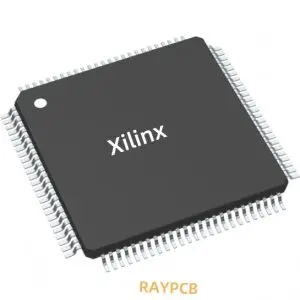
1. Product Specifications
Technical Specifications – XC5210-5PC84C
| Parameter | Specification |
|---|---|
| Part Number | XC5210-5PC84C |
| Manufacturer | Xilinx (AMD) |
| Product Family | Spartan FPGA Series |
| Package Type | 84-pin PLCC (Plastic Leaded Chip Carrier) |
| Temperature Grade | Commercial (0°C to +70°C) |
| Speed Grade | -5 (High Performance) |
| Logic Elements | Configurable Logic Blocks (CLBs) |
| I/O Standards | LVTTL, LVCMOS, TTL compatible |
| Supply Voltage | 3.3V core, 3.3V/5.0V I/O compatible |
| Power Consumption | Optimized for space-constrained applications |
| Programming | SRAM-based configuration |
Electrical Characteristics
- Core Voltage (VCCINT): 3.3V ±5%
- I/O Voltage (VCCO): 3.3V or 5.0V selectable
- Maximum Operating Frequency: Up to 125 MHz (design dependent)
- Input/Output Pins: Up to 61 user I/O pins
- Package Dimensions: 29.21mm x 29.21mm x 4.57mm (nominal)
- Pin Pitch: 1.27mm (50 mil centers)
- Thermal Resistance (θJA): 28°C/W (typical in still air)
- Operating Junction Temperature: 0°C to +85°C
Memory and Logic Resources
- Configurable Logic Blocks (CLBs): 576 CLBs
- System Gates: 10,000 equivalent gates
- Block RAM: 32 Kbits total embedded memory
- Distributed RAM: Flexible CLB-based memory implementation
- Maximum Flip-Flops: 1,152 registers
- Clock Management: 4 Delay-Locked Loops (DLLs)
- Global Clock Networks: 4 dedicated low-skew global clocks
- I/O Banks: 4 independent I/O voltage banks
Package and Mechanical Specifications
- Body Size: 29.21mm x 29.21mm (±0.33mm)
- Body Thickness: 4.57mm (±0.25mm)
- Lead Count: 84 J-leads
- Lead Pitch: 1.27mm (50 mils)
- Seating Plane Thickness: 0.51mm nominal
- Package Weight: Approximately 5.2 grams
- Socket Compatibility: Standard 84-pin PLCC sockets
- Coplanarity: 0.10mm maximum
5V Tolerance and Legacy Compatibility
- 5V Tolerant I/Os: Selected pins support 5V input levels
- TTL/CMOS Compatibility: Direct interface with legacy logic families
- Mixed Voltage Operation: 3.3V core with 5V I/O capability
- Legacy System Integration: Drop-in replacement for older PLDs
- Backward Compatibility: Interface with existing 5V systems
2. Pricing Information
XC5210-5PC84C Price Structure
Current Market Pricing (Subject to change):
| Quantity Range | Unit Price (USD) | Lead Time |
|---|---|---|
| 1-9 units | $24.50 – $28.95 | 1-3 weeks |
| 10-49 units | $21.75 – $25.60 | 1-2 weeks |
| 50-99 units | $18.90 – $22.45 | Stock/1 week |
| 100-499 units | $16.85 – $19.75 | Stock |
| 500-999 units | $15.50 – $18.20 | Stock |
| 1000-2499 units | $14.25 – $16.85 | Stock |
| 2500+ units | Contact for quote | Negotiable |
Cost-Effectiveness Advantages
Economic Benefits of XC5210-5PC84C:
- Most Cost-Effective Variant: Lowest price point in XC5210 family
- 35-40% cost savings compared to 160-pin variants
- Reduced PCB Cost: Smaller footprint reduces board area requirements
- Socket Development: Removable for prototyping and field upgrades
- No BGA Assembly Cost: Standard surface mount or socket assembly
Total System Cost Benefits:
- Compact PCB Design: Reduced board manufacturing costs
- Fewer Layer Requirements: Simpler PCB routing with fewer I/Os
- Standard Assembly Process: No specialized BGA assembly equipment
- Development Flexibility: Socket mounting for design iteration
- Legacy System Upgrade: Cost-effective modernization of existing designs
Market Positioning:
- Entry-Level FPGA Applications: Learning and development projects
- Prototype Development: Quick concept validation and testing
- Small-Scale Production: Low to medium volume commercial applications
- Legacy System Updates: Modernization of older electronic systems
- Educational Applications: Classroom and training environments
Pricing reflects the most economical FPGA option while maintaining full Spartan architecture capabilities.
3. Documents & Media
Essential Product Documentation
Core Technical Resources
- XC5210-5PC84C Complete Datasheet (PDF, 2.8MB)
- Commercial temperature specifications
- 84-pin PLCC package details
- Electrical characteristics and timing
- PLCC Package User Guide (PDF, 1.5MB)
- 84-Pin Configuration Manual (PDF, 1.8MB)
- Pin Assignment and I/O Planning Guide (PDF, 1.9MB)
Design Implementation Guidelines
- Compact PCB Design Guide (PDF, 3.2MB)
- Space-optimized layout strategies
- PLCC package routing recommendations
- Thermal management for compact designs
- Socket Design and Assembly Guide (PDF, 2.1MB)
- 5V Interface Design Guidelines (PDF, 2.4MB)
- Power Supply Design for PC84 (PDF, 2.0MB)
Development Tools and Software
- Xilinx ISE WebPACK – Free development environment optimized for smaller FPGAs
- ISE Foundation – Complete development suite
- Constraints Editor – I/O and timing constraint management
- FPGA Editor – Low-level design implementation and verification
- iMPACT Configuration Tool – Device programming and configuration
Simulation and Modeling Resources
- PLCC Package Models (ZIP, 650KB)
- IBIS models for signal integrity analysis
- SPICE models for circuit simulation
- 3D Mechanical Models (STEP, IGES formats)
- PCB Footprint Libraries (Multiple CAD formats)
- Socket Mechanical Models – 84-pin PLCC socket specifications
Application-Focused Documentation
Application Notes Library
- AN-084: XC5210-5PC84C Getting Started Guide
- AN-195: Compact FPGA Design Strategies
- AN-278: 5V Interface Design Techniques
- AN-341: Socket vs. Surface Mount Design Considerations
- AN-456: Legacy System Integration Methods
- AN-567: Educational FPGA Project Examples
Reference Design Collection
- Basic I/O Controller (Verilog/VHDL starter project)
- Serial Communication Interface (UART implementation)
- Simple CPU Core (8-bit processor example)
- Logic Analyzer (Debugging tool implementation)
- LED Display Controller (Seven-segment and dot matrix)
- Motor Control Interface (Stepper and servo control)
Educational and Training Materials
- FPGA Fundamentals Course – Comprehensive learning curriculum
- Hands-On Laboratory Exercises – Practical design projects
- Video Tutorial Series – Step-by-step design methodology
- Student Design Contest Examples – Award-winning student projects
- Interactive Learning Modules – Web-based training content
4. Related Resources
Development and Prototyping Solutions
Evaluation and Development Boards
- XC5210-PC84 Development Board – Complete prototyping platform
- Socketed FPGA for easy device swapping
- Comprehensive I/O connectivity
- On-board clock generation and power supplies
- Expansion connectors for custom interfaces
- Built-in programming circuitry
- Educational FPGA Trainer – Academic learning platform
- Breadboard-Compatible Module – Direct breadboard insertion
- Socket Adapter Boards – PLCC to DIP conversion modules
Programming and Configuration Hardware
- JTAG Programming Cables – Standard boundary scan programming
- Parallel Cable Solutions – Legacy programming interface support
- In-System Programming Tools – Production programming equipment
- Socket Programming Adapters – Offline device programming
- Configuration Memory Options – Serial EEPROM and Flash solutions
Compatible Components and Interfaces
I/O Interface Solutions
- Level Shifter Circuits – 3.3V to 5V translation
- Buffer and Driver ICs – I/O expansion and drive capability
- Connector Interfaces – Standard header and connector solutions
- LED Driver Circuits – Display interface implementations
- Switch and Button Interfaces – User input implementations
Communication Interface IP
- UART Controllers – Serial communication implementations
- SPI Master/Slave – Serial peripheral interface cores
- I2C Bus Controllers – Inter-integrated circuit interfaces
- Parallel Port Interfaces – Legacy parallel communication
- Simple Bus Protocols – Custom interface implementations
Memory Interface Controllers
- SRAM Interface Macros – Static RAM controller implementations
- EPROM/Flash Interfaces – Non-volatile memory controllers
- Dual-Port RAM Controllers – Shared memory implementations
- FIFO Buffer Controllers – Data buffering implementations
Professional Services and Educational Support
Design and Development Services
- Rapid Prototyping Services – Quick concept-to-hardware development
- Educational Design Support – Academic project assistance
- Legacy System Modernization – Upgrade and migration services
- Small-Volume Manufacturing – Low-quantity production support
- Design Review Services – Expert validation and optimization
Training and Educational Programs
- FPGA Fundamentals Workshop – Beginner-friendly hands-on training
- Digital Design with FPGAs – Comprehensive design methodology
- Hardware Description Languages – Verilog and VHDL training
- University Curriculum Support – Academic program integration
- Online Learning Platform – Self-paced educational modules
Technical Support and Community
- Educational Support Portal – Academic-focused technical assistance
- Student Design Contest – Annual competition and showcase
- Community Forums – Peer-to-peer learning and collaboration
- Design Example Repository – Shared project library
- Technical Application Support – Direct engineering assistance
Product Alternatives and Migration Options
Same Family Package Options
- XC5210-5TQ144C – 144-pin TQFP commercial variant (more I/Os)
- XC5210-5PQ160C – 160-pin PQFP commercial variant (maximum I/Os)
- XC5210-5BG256C – 256-pin BGA commercial variant (advanced packaging)
Capacity and Speed Alternatives
- XC5204-5PC84C – Lower capacity, more cost-optimized
- XC5215-5PC84C – Higher capacity in same 84-pin package
- XC5210-6PC84C – Higher speed grade option
- XC5210-4PC84C – Lower speed, further cost-optimized
Modern Architecture Migration
- Spartan-3 Series – Next-generation architecture
- Spartan-6 Series – Modern low-cost FPGA family
- Artix-7 Series – Current generation efficient FPGAs
- Migration Planning Tools – Design porting assistance
Socket and Package Compatibility
- 84-Pin PLCC Sockets – Standard and low-profile options
- Socket-to-Surface-Mount Adapters – Flexible mounting solutions
- Pin-Compatible Alternatives – Drop-in replacement options
- Package Conversion Boards – Interface to other package types
5. Environmental & Export Classifications
Environmental Compliance and Sustainability
Material and Substance Compliance
- RoHS Directive 2011/65/EU: Fully compliant with lead-free construction
- Lead-free solder and assembly processes
- Elimination of restricted hazardous substances
- Material composition documentation and certificates
- REACH Regulation EC 1907/2006: Substance registration compliance
- California Proposition 65: Safe material composition
- China RoHS Management Measures: Administrative compliance documentation
Environmental Management Standards
- ISO 14001:2015 – Environmental management system certification
- WEEE Directive 2012/19/EU – Electronic waste management compliance
- EPEAT Registration – Environmental performance standards
- Carbon Footprint Documentation – Lifecycle environmental assessment
- Sustainable Packaging – Recyclable and minimized packaging materials
Green Manufacturing Initiatives
- Conflict Minerals Compliance – Dodd-Frank Act Section 1502 compliance
- Responsible Mineral Sourcing – Supply chain transparency and ethics
- Energy Efficient Manufacturing – Reduced carbon footprint production
- Waste Reduction Programs – Manufacturing waste minimization
- Water Conservation – Sustainable water usage in production
Export Control and International Trade Regulations
U.S. Export Administration Regulations (EAR)
- Export Control Classification Number (ECCN): 3A001.a.2
- Commerce Control List Category 3 – Electronics classification
- Dual-use technology subject to export licensing
- Technology transfer restrictions for certain applications
- License Exception Eligibility: Multiple exceptions available (ENC, GBS, CIV)
- Country Group Classifications: Destination-specific restrictions
- End-Use and End-User Restrictions: Application-specific limitations
International Customs and Trade Classifications
- Harmonized Tariff Schedule (HTS): 8542.31.0000
- Electronic integrated circuits classification
- Processors and controllers category
- Schedule B Number: 8542.31.0000 (export statistics)
- European TARIC Code: Customs classification for EU trade
- Country of Origin Marking: Manufacturing location identification
Export Licensing and Restrictions
- Entity List Screening – Required for all international transactions
- Sanctioned Countries Compliance – OFAC sanctions list adherence
- Military End-Use Restrictions – EAR Part 744.21 limitations
- Nuclear End-Use Prohibitions – EAR Part 744.2 restrictions
- Encryption Export Controls – When applicable to implementations
Quality Assurance and Reliability Standards
Manufacturing Quality Systems
- ISO 9001:2015 Certification – Quality management system compliance
- Six Sigma Manufacturing – Statistical process control implementation
- Total Quality Management – Continuous improvement processes
- Supplier Quality Management – Supply chain quality assurance
Reliability Testing and Qualification
- JEDEC Standard Compliance:
- JESD22 Environmental Test Methods
- JESD47 Stress Test Driven Qualification procedures
- JESD85 Failure Rate Calculation Methods
- Commercial Grade Testing – Optimized qualification process
- Accelerated Life Testing – Reliability prediction and validation
- Process Control Monitoring – Statistical quality control
Product Handling and Storage
- Moisture Sensitivity Level: MSL-3 classification
- 168 hours exposure limit at ≤30°C/60% RH
- Baking requirements after exposure limit
- Electrostatic Discharge (ESD) Sensitivity: Class 1A
- Human Body Model: >250V, <1000V
- Machine Model: >100V, <200V
- Storage Environment: -65°C to +150°C, <85% RH non-condensing
- Packaging Shelf Life: 24 months in original sealed packaging
Regulatory Approvals and Market Access
Safety and Electromagnetic Compatibility
- UL Component Recognition – Safety standards compliance
- CE Marking Eligible – European Conformity requirements met
- FCC Part 15 Class B – Electromagnetic emission standards
- ICES-003 Class B – Industry Canada emission compliance
- VCCI Class B – Japan electromagnetic compatibility approval
International Market Certifications
- Korea KC Certification – Korea Communications Commission approval
- China CCC – China Compulsory Certification (when required)
- Taiwan BSMI – Bureau of Standards inspection approval
- Australia ACMA – Communications and Media Authority compliance
- Brazil ANATEL – Telecommunications compliance (when applicable)
Educational and Research Exemptions
- Educational Use Exemptions – Academic research and teaching
- University License Exceptions – Simplified export procedures
- Research and Development – Technology development exemptions
- Student Exchange Programs – Academic collaboration support
Compact Design Applications and Benefits
Ideal Application Domains
Educational and Learning Applications
- Digital Logic Courses – Hands-on FPGA learning and experimentation
- Senior Design Projects – Capstone engineering project implementations
- Research Prototypes – Academic research and development platforms
- Student Competitions – Design contest and hackathon projects
- Training Laboratories – Technical education and skill development
Prototyping and Development
- Proof-of-Concept Designs – Initial feasibility validation
- Algorithm Development – Signal processing and control algorithm testing
- Interface Prototyping – Custom communication protocol development
- Legacy System Upgrades – Modernization of older electronic systems
- Rapid Design Iteration – Socket-based design flexibility
Space-Constrained Commercial Applications
- Embedded Controllers – Compact system control implementations
- Portable Instruments – Battery-powered measurement devices
- IoT Edge Devices – Internet of Things sensor controllers
- Automotive Electronics – Vehicle subsystem controllers
- Medical Devices – Compact diagnostic and monitoring equipment
Design Advantages of 84-Pin PLCC Package
Mechanical and Assembly Benefits
- Socket Compatibility – Easy insertion and removal for development
- Compact Footprint – Smallest package option in XC5210 family
- Standard Assembly – No specialized BGA assembly requirements
- Through-Hole Option – Socket mounting for prototype flexibility
- Robust Mechanical Connection – J-lead design for reliable contact
Electrical and Thermal Characteristics
- Lower Pin Count – Simplified PCB routing and layer requirements
- Good Thermal Performance – Effective heat dissipation through leads
- 5V Compatibility – Direct interface with legacy 5V logic systems
- Controlled Impedance – Predictable electrical characteristics
- Low Inductance Package – Good high-frequency performance
Cost and Manufacturing Advantages
- Lowest Cost Option – Most economical XC5210 variant
- Simplified PCB Design – Fewer routing layers required
- Standard Manufacturing – Conventional surface mount assembly
- No BGA Assembly Cost – Eliminates specialized equipment needs
- Volume Production Ready – Scalable manufacturing processes
Technical Design Considerations
I/O Planning and Utilization
- 61 User I/O Pins Available – Sufficient for many applications
- I/O Bank Organization – 4 banks for voltage flexibility
- Pin Assignment Strategy – Optimal placement for signal integrity
- Differential Pair Support – Limited differential signaling capability
- Clock Input Optimization – Dedicated global clock resources
Power Management in Compact Designs
- 3.3V Core Supply – Single primary voltage requirement
- Mixed Voltage I/O – 3.3V and 5V I/O bank support
- Power Estimation – Typical consumption 100-250mW
- Thermal Management – Natural convection usually sufficient
- Power Supply Sequencing – Core before I/O voltage requirements
PCB Layout Optimization
- Compact Routing – Minimized trace lengths and layer count
- Ground Plane Strategy – Solid ground plane for signal integrity
- Power Distribution – Adequate power delivery network design
- Clock Distribution – Balanced clock routing for timing closure
- EMI Considerations – Proper shielding and filtering techniques
The XC5210-5PC84C provides the complete Spartan FPGA architecture in the most compact and cost-effective package, making it ideal for space-constrained applications, educational use, and development projects where socket compatibility and low cost are priorities.
Keywords: XC5210-5PC84C, Xilinx compact FPGA, 84-pin PLCC FPGA, commercial FPGA, educational FPGA, prototype FPGA, small FPGA, socket FPGA, cost-effective FPGA, legacy compatible FPGA, Spartan series