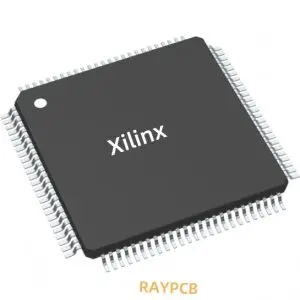
The XC2S100-5PQG208C is a versatile Spartan-II FPGA (Field-Programmable Gate Array) from Xilinx, designed to deliver exceptional performance for a wide range of digital logic applications. This programmable logic device combines cost-effectiveness with robust functionality, making it an ideal choice for engineers and developers seeking reliable FPGA solutions.
Product Specifications
The XC2S100-5PQG208C features comprehensive specifications that make it suitable for diverse applications:
Core Architecture:
- Spartan-II family FPGA with advanced programmable logic capabilities
- 100,000 system gates providing ample logic capacity
- High-speed performance with -5 speed grade designation
- Optimized for both prototyping and production environments
Package Details:
- PQG208 package type with 208-pin Plastic Quad Flat Pack configuration
- Commercial temperature range operation (0°C to +85°C)
- Compact form factor suitable for space-constrained designs
- RoHS compliant construction meeting environmental standards
Logic Resources:
- Configurable Logic Blocks (CLBs) for flexible digital design implementation
- Dedicated carry logic for efficient arithmetic operations
- Distributed RAM capability for embedded memory applications
- Multiple I/O standards support for interface flexibility
Price
The XC2S100-5PQG208C offers competitive pricing in the FPGA market, with costs varying based on quantity and supplier. Typical pricing ranges from $15-40 per unit for smaller quantities, with significant volume discounts available for production orders. Contact authorized distributors for current pricing and availability, as semiconductor prices fluctuate based on market conditions and supply chain factors.
Documents & Media
Essential documentation for the XC2S100-5PQG208C includes:
Technical Documentation:
- Spartan-II Family Data Sheet with complete electrical specifications
- XC2S100-5PQG208C Product Brief highlighting key features
- Package thermal characteristics and mechanical drawings
- Pin assignment and configuration guidelines
Design Resources:
- Application notes for common implementation scenarios
- Reference designs demonstrating typical use cases
- Power consumption analysis and thermal management guides
- PCB layout recommendations for optimal performance
Software Support:
- ISE Design Suite compatibility information
- Constraint files and timing analysis documentation
- Programming and configuration file formats
Related Resources
The XC2S100-5PQG208C ecosystem includes numerous supporting resources:
Development Tools:
- Xilinx ISE WebPACK for design entry and synthesis
- ModelSim simulation software compatibility
- ChipScope Pro for embedded logic analysis
- Various third-party EDA tool support
Evaluation Platforms:
- Spartan-II development boards for rapid prototyping
- Reference evaluation kits with XC2S100-5PQG208C implementations
- University program resources for educational applications
Technical Support:
- Xilinx Answer Database with searchable solutions
- Community forums and user groups
- Application engineering support services
- Training materials and webinar resources
Environmental & Export Classifications
The XC2S100-5PQG208C meets stringent environmental and regulatory requirements:
Environmental Compliance:
- RoHS (Restriction of Hazardous Substances) compliant
- REACH regulation compliance for European markets
- Lead-free manufacturing process
- Halogen-free package options available
Export Classifications:
- Export Control Classification Number (ECCN) designation
- International Traffic in Arms Regulations (ITAR) status
- Country of origin marking for customs compliance
- Conflict minerals reporting compliance
Quality Standards:
- ISO 9001 certified manufacturing facilities
- Automotive qualification available for select variants
- Extended temperature range options for industrial applications
- Long-term product availability commitments
The XC2S100-5PQG208C represents an excellent balance of performance, cost, and reliability for FPGA-based designs. Its comprehensive feature set and extensive support ecosystem make it a preferred choice for engineers developing next-generation digital systems across telecommunications, industrial automation, consumer electronics, and aerospace applications.