
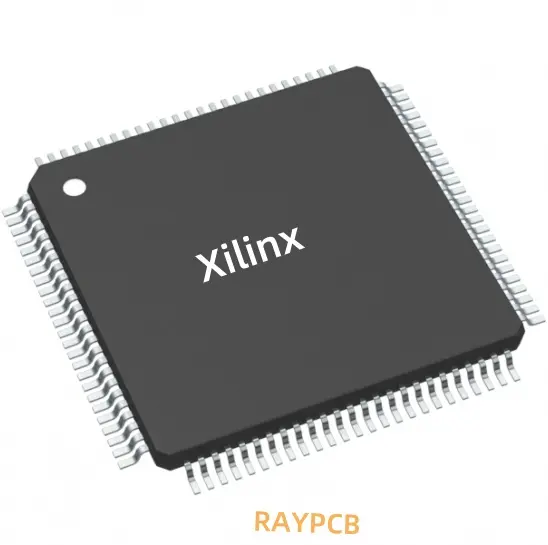
1. Product Specification
The XC2C384-10FG324C is a high-performance Complex Programmable Logic Device (CPLD) from Xilinx’s CoolRunner-II family. This advanced device features 9,000 gates and 384 macro cells with operating speeds up to 125MHz, manufactured using efficient 0.18um CMOS technology. With its 1.8V core voltage and 324-Pin FBGA (Fine-Pitch Ball Grid Array) package, the XC2C384-10FG324C delivers exceptional performance and integration capabilities for complex digital applications requiring substantial logic resources.
Core Features:
- Architecture: CoolRunner-II CPLD with 384 macro cells
- Logic Capacity: 9,000 gates for implementing complex digital functions
- Performance: 125MHz operation with 10ns speed grade
- Process Technology: 0.18um CMOS for optimal performance and efficiency
- Package Type: 324-Pin FBGA (23mm × 23mm footprint)
- I/O Count: Up to 240 user-configurable I/O pins
- Core Voltage: 1.8V (1.7V-1.9V operating range)
- Logic Block Structure: 24 function blocks with 16 macrocells each
Power Management Features:
- Ultra-Low Power Consumption: Industry-leading power efficiency for its density class
- Standby Current: Extremely low standby current for enhanced system battery life
- CoolCLOCK Technology: Dynamic power reduction through clock management
- DataGATE Function: Reduces power by minimizing signal switching activity
- Fast Zero Power (FZP): Technology balances both high speed and low power operation
Advanced Capabilities:
- In-System Programmability: Complete JTAG support for programming and testing
- IEEE Standard 1149.1/1532 Boundary-Scan: Support for programming, prototyping, and testing
- Schmitt-Trigger Inputs: Available for enhanced noise immunity
- I/O Banking: Multiple I/O banks for interfacing with various voltage standards
- DualEDGE Flip-Flops: Higher performance with reduced clock frequencies
- Advanced Interconnect Matrix (AIM): Efficient signal routing architecture
- Hot-Pluggable PLA Architecture: Ensures reliable system integration
Architecture Details:
- Function Blocks: 24 Function Blocks interconnected by Advanced Interconnect Matrix
- PLA Structure: 40 × 56 P-term PLA per Function Block
- Macrocell Configuration: 16 macrocells per Function Block with flexible configuration options
- Register Options: Configurable as D or T flip-flops or D latches
- Clock Resources: Multiple global and local product-term clock options
- Clock Divider: Built-in divider capabilities
- Output Configurations: Includes slew rate limiting, bus hold, pull-up, open drain, and programmable grounds
2. Price
The XC2C384-10FG324C is strategically priced to deliver exceptional value for high-density CPLD applications. Current market pricing typically follows this structure:
| Quantity | Approximate Price (USD) |
|---|---|
| 1-9 | $55.00 – $65.00 |
| 10-24 | $50.00 – $58.00 |
| 25-99 | $45.00 – $52.00 |
| 100-249 | $42.00 – $48.00 |
| 250+ | Contact for pricing |
Note: Pricing information is subject to change based on market conditions, supplier inventory, and other factors. Contact authorized distributors such as DigiKey, Mouser, or direct Xilinx/AMD channels for current pricing and availability.
3. Documents & Media
Comprehensive documentation is available to support designers working with the XC2C384-10FG324C:
Technical Documentation:
- Product Datasheet: Complete specifications, electrical characteristics, and timing parameters
- Family Overview: CoolRunner-II CPLD family architecture and features
- Application Notes: Implementation guidance for complex designs
- White Papers: Technical deep-dives on CPLD architecture and optimization
- Design Guidelines: Recommendations for high-speed and high-density designs
- Migration Guides: Information on migrating from other CPLD families
Design Resources:
- Package Drawings: Detailed dimensional specifications for the 324-Pin FBGA package
- Footprint Files: PCB footprint information for proper board layout
- Pin Assignment Tables: Complete pin descriptions and functions
- Symbol Libraries: Schematic symbols for CAD tools
- Thermal Analysis Guidelines: Thermal management for high-density applications
- Power Estimation Tools: Tools for analyzing and optimizing power consumption
Programming Information:
- JTAG Programming Guide: Step-by-step instructions for device programming
- Boundary Scan Descriptions: JTAG boundary scan implementation details
- ISP Programming Procedures: In-system programming protocols and methods
- Configuration Bit Definitions: Detailed explanation of configuration settings
- Test Vectors: Validation procedures for complex designs
All documentation is available through the official Xilinx/AMD website or from authorized distributors. Engineers should always reference the latest documentation to ensure design accuracy.
4. Related Resources
The XC2C384-10FG324C is supported by a comprehensive ecosystem of development tools, hardware, and reference materials:
Development Software:
- Xilinx Vivado Design Suite: Advanced integrated development environment
- Xilinx ISE Design Suite: Legacy development environment with dedicated CPLD support
- iMPACT Programming Software: Device programming and configuration utility
- ChipScope Pro Analyzer: In-system logic analysis and debugging tool
- Third-Party Support: Compatible with tools from Cadence, Mentor, Synopsys, and others
Design Entry Methods:
- HDL Support: Complete VHDL and Verilog language support
- ABEL: Advanced Boolean Expression Language support
- Schematic Entry: Graphical design capture options
- Mixed Design Entry: Combination of HDL and schematic design capabilities
Programming Hardware:
- Platform Cable USB: JTAG programming cable for Xilinx devices
- JTAG Chain Support: Multiple device programming and testing
- Third-Party Programmers: Compatible with standard JTAG programmers
Development Boards:
- CoolRunner-II Starter Kits: Official development platforms for rapid prototyping
- Third-Party Development Boards: Available from various manufacturers
- ZedBoard, Basys 3, TinyFPGA BX, Nexys4-DDR, and other compatible platforms
Design Resources:
- Reference Designs: Pre-built examples demonstrating optimal implementation
- Design Patterns: Best practices for high-density designs
- Technical Support Forums: Community resources and official support channels
- High-Speed Design Guidelines: Layout recommendations and signal integrity guidance
- Verification Methodologies: Test strategies for complex designs
5. Environmental & Export Classifications
Environmental Specifications:
- Operating Temperature Range: Commercial grade (0°C to +70°C)
- Industrial Temperature Option: Available as XC2C384-10FG324I (-40°C to +85°C)
- Storage Temperature: -65°C to +150°C
- Relative Humidity: Non-condensing, 5% to 95%
- ESD Sensitivity: Human Body Model (HBM) Class A
Compliance Certifications:
- RoHS Status: Available in RoHS compliant versions (XC2C384-10FGG324C)
- Lead-Free Status: Lead-free package and finish options available
- REACH Compliance: Compliant with REACH regulations
- Green Status: Meets environmental sustainability requirements
- Halogen-Free Option: Available for environmentally sensitive applications
Reliability Information:
- MTBF (Mean Time Between Failures): >1,000,000 hours at +55°C
- ESD Protection: 2000V Human Body Model
- Latch-up Immunity: Exceeds 100mA per JEDEC standard
- Moisture Sensitivity Level (MSL): Level 3 at 260°C
- Qualification Standards: Qualified to industry standards for high-reliability applications
Export Classifications:
- US HTS Code: 8542390001
- China HTS Code: 8542399000
- EU TARIC Code: 8542399000
- ECCN Classification: EAR99
Application Areas:
The XC2C384-10FG324C is ideally suited for complex digital applications requiring substantial logic resources:
- Telecommunications Equipment
- Network Infrastructure
- High-Performance Computing
- Industrial Control Systems
- Test and Measurement Equipment
- High-Speed Data Acquisition
- Signal Processing
- Protocol Conversion
- Complex State Machines
- Multi-channel Systems
With its combination of high density, excellent performance, and comprehensive features, the XC2C384-10FG324C represents an ideal solution for designers requiring substantial programmable logic resources in a single device.


