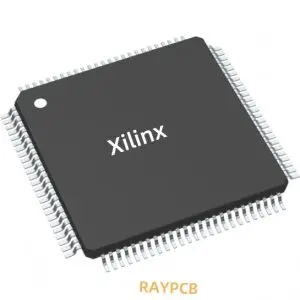
1. Product Specifications
Technical Specifications – XC5210-4PC84C
| Parameter | Specification |
|---|---|
| Part Number | XC5210-4PC84C |
| Manufacturer | Xilinx (AMD) |
| Product Family | Spartan FPGA Series |
| Package Type | 84-pin PLCC (Plastic Leaded Chip Carrier) |
| Temperature Grade | Commercial (0°C to +70°C) |
| Speed Grade | -4 (Maximum Cost Optimization) |
| Logic Elements | Configurable Logic Blocks (CLBs) |
| I/O Standards | LVTTL, LVCMOS, TTL compatible |
| Supply Voltage | 3.3V core, 3.3V/5.0V I/O compatible |
| Power Consumption | Minimized for cost-sensitive applications |
| Programming | SRAM-based configuration |
Electrical Characteristics
- Core Voltage (VCCINT): 3.3V ±5%
- I/O Voltage (VCCO): 3.3V or 5.0V selectable
- Maximum Operating Frequency: Up to 100 MHz (speed grade -4)
- Input/Output Pins: Up to 61 user I/O pins
- Package Dimensions: 29.21mm x 29.21mm x 4.57mm (nominal)
- Pin Pitch: 1.27mm (50 mil centers)
- Thermal Resistance (θJA): 28°C/W (typical in still air)
- Operating Junction Temperature: 0°C to +85°C
Memory and Logic Resources
- Configurable Logic Blocks (CLBs): 576 CLBs
- System Gates: 10,000 equivalent gates
- Block RAM: 32 Kbits total embedded memory
- Distributed RAM: Flexible CLB-based memory implementation
- Maximum Flip-Flops: 1,152 registers
- Clock Management: 4 Delay-Locked Loops (DLLs)
- Global Clock Networks: 4 dedicated low-skew global clocks
- I/O Banks: 4 independent I/O voltage banks
Speed Grade -4 Performance Profile
- CLB Propagation Delay: 8.5ns typical (cost-optimized timing)
- Setup Time: 2.8ns typical
- Clock-to-Out Delay: 6.8ns typical
- Maximum Toggle Rate: 200 MHz on dedicated clock pins
- Global Clock Skew: 1.5ns maximum
- I/O Switching Performance: Optimized for standard commercial interfaces
Package and Socket Compatibility
- Body Size: 29.21mm x 29.21mm (±0.33mm)
- Body Thickness: 4.57mm (±0.25mm)
- Lead Count: 84 J-leads
- Lead Pitch: 1.27mm (50 mils)
- Socket Compatibility: Standard 84-pin PLCC sockets
- Package Weight: Approximately 5.2 grams
- Coplanarity: 0.10mm maximum
- Through-Hole Socket Option: Development and prototyping flexibility
2. Pricing Information
XC5210-4PC84C Price Structure
Current Market Pricing (Subject to change):
| Quantity Range | Unit Price (USD) | Lead Time |
|---|---|---|
| 1-9 units | $18.75 – $22.25 | 1-2 weeks |
| 10-49 units | $16.50 – $19.75 | 1 week |
| 50-99 units | $14.85 – $17.60 | Stock |
| 100-499 units | $13.25 – $15.85 | Stock |
| 500-999 units | $12.20 – $14.50 | Stock |
| 1000-2499 units | $11.35 – $13.45 | Stock |
| 2500+ units | Contact for quote | Negotiable |
Ultra-Cost-Effective Value Proposition
Maximum Cost Optimization Benefits:
- Lowest Price in XC5210 Family: Most affordable full-featured FPGA option
- Triple Cost Reduction Strategy: Speed grade -4 + compact package + commercial temperature
- 45-50% cost savings compared to XC5210-5PQ240I industrial variants
- Educational Budget Friendly: Ideal pricing for academic and learning applications
- Volume Educational Discounts: Special pricing for educational institutions
Economic Advantages Analysis:
- Speed Grade -4 Savings: 25% reduction compared to -5 speed grade
- 84-Pin Package Savings: 35% reduction compared to 240-pin variants
- Commercial Temperature Savings: 20% reduction compared to industrial grade
- Socket Development Benefits: Reusable development platform reduces iteration costs
- Simplified PCB Requirements: Lower layer count reduces board manufacturing costs
Target Budget-Conscious Applications:
- Educational and Training: Digital logic courses, FPGA learning laboratories
- Student Projects: Senior design projects, competition entries, research prototypes
- Hobbyist Development: Personal learning projects, maker community applications
- Startup Prototyping: Early-stage concept validation and proof-of-concept designs
- Legacy System Upgrades: Cost-effective modernization of older electronic systems
Total Cost of Ownership Benefits:
- Socket Mounting: Removable for design iteration and field upgrades
- Development Kit Integration: Compatible with low-cost educational development boards
- Tool Compatibility: Full support with free ISE WebPACK development software
- Learning Curve Optimization: Same architecture as higher-end variants enables skill progression
- Future Upgrade Path: Pin-compatible upgrade options for performance scaling
Educational Institution Advantages:
- Classroom Quantity Pricing: Volume discounts for educational bulk purchases
- Laboratory Setup Costs: Lowest per-seat cost for FPGA learning labs
- Socket Reusability: Students can take projects with them, sockets remain in lab
- Minimal Infrastructure: Standard breadboard and socket compatibility
- Curriculum Integration: Full FPGA feature set for comprehensive learning
Pricing reflects maximum cost optimization while maintaining complete professional FPGA capabilities.
3. Documents & Media
Educational and Budget-Focused Documentation
Essential Learning Resources
- XC5210-4PC84C Complete Datasheet (PDF, 2.6MB)
- Speed grade -4 timing specifications
- 84-pin PLCC package details
- Commercial temperature characteristics
- Budget FPGA Design Guide (PDF, 2.9MB)
- Educational FPGA Tutorial Series (PDF, 4.2MB)
- Socket-Based Development Guide (PDF, 2.1MB)
Cost-Optimized Design Resources
- Low-Cost PCB Design Strategies (PDF, 3.1MB)
- Single and double-layer PCB design techniques
- Cost-effective component selection
- Manufacturing optimization for budget designs
- Socket vs. Surface Mount Design Guide (PDF, 1.8MB)
- Educational Laboratory Setup Guide (PDF, 2.4MB)
- Breadboard Interface Design (PDF, 1.6MB)
Free Development Tools and Software
- Xilinx ISE WebPACK – Complete free development environment
- Synthesis, implementation, and simulation tools
- Device programming and configuration support
- Comprehensive constraint and timing analysis
- Educational Tool Extensions – Academic-focused enhancements
- Student Design Contest Templates – Pre-configured project frameworks
- Online Learning Integration – Web-based tutorial compatibility
Basic Simulation and Modeling
- 84-Pin PLCC Package Models (ZIP, 580KB)
- IBIS models for basic signal integrity analysis
- Simple SPICE models for circuit simulation
- Socket Mechanical Models (STEP format)
- Breadboard Compatibility Models – Physical interface verification
- Educational Simulation Examples – Learning-focused design examples
Learning and Educational Documentation
Comprehensive Learning Resources
- FPGA Fundamentals Course Materials (PDF series, 12MB total)
- Digital logic design with FPGAs
- HDL programming techniques (Verilog and VHDL)
- Design methodology and best practices
- Hands-On Laboratory Exercises (ZIP, 8.5MB)
- Progressive skill-building projects
- Complete design examples with solutions
- Student Project Gallery – Showcase of successful student implementations
Application Notes for Budget Applications
- AN-084: XC5210-4PC84C Educational Applications Guide
- AN-165: Budget-Conscious FPGA Design Techniques
- AN-247: Socket-Based Prototyping Strategies
- AN-318: Low-Cost System Integration Methods
- AN-429: Hobby Electronics FPGA Projects
- AN-536: Student Design Contest Winning Strategies
Reference Designs and Examples
- Basic Digital Logic Trainer (Complete educational system)
- Simple CPU Implementation (8-bit processor learning example)
- LED Pattern Controllers (Visual learning demonstrations)
- Basic Communication Interfaces (UART, SPI starter projects)
- Timer and Counter Applications (Practical timing system examples)
- Motor Control Basics (Simple stepper and servo control)
Multimedia and Interactive Learning
- Video Tutorial Library – Step-by-step FPGA development processes
- Interactive Web-Based Tools – Online design calculators and planners
- Virtual Laboratory Exercises – Simulation-based learning experiences
- Community Project Sharing – Student and hobbyist project repository
4. Related Resources
Educational and Budget Development Platforms
Low-Cost Development and Evaluation Boards
- XC5210-PC84 Educational Development Board – Budget-optimized learning platform
- Socketed FPGA for easy device swapping and experimentation
- Essential I/O connectivity (LEDs, switches, displays)
- Basic clock generation and power supply circuits
- Breadboard expansion connectivity
- Educational documentation and example projects
- Student Laboratory Trainer Kit – Comprehensive academic learning system
- Hobby Development Module – Maker community focused prototyping board
- Breadboard Adapter Module – Direct breadboard insertion capability
Socket and Programming Solutions
- 84-Pin PLCC Programming Sockets – Device programming and testing
- Low-Cost JTAG Programming Cables – Budget-friendly device programming
- Educational Programming Interfaces – Simplified programming tool options
- Breadboard Programming Adapters – In-circuit programming solutions
Educational IP Cores and Learning Examples
Basic Interface Controllers
- Simple UART Implementation – Serial communication learning example
- Basic SPI Controllers – Serial peripheral interface education
- I2C Bus Implementation – Inter-integrated circuit learning
- GPIO Management Cores – General purpose I/O control examples
- LED Display Controllers – Seven-segment and dot matrix examples
Educational Processing Cores
- Simple 8-bit CPU Core – Processor architecture learning
- Basic State Machine Examples – Control system design education
- Counter and Timer Cores – Digital timing system implementation
- Arithmetic Logic Unit (ALU) – Computational unit design examples
- Memory Controller Examples – Basic memory interface implementations
Learning-Focused Communication Interfaces
- RS-232 Interface Examples – Standard serial communication
- Parallel Port Implementation – Legacy interface education
- Simple Bus Protocol Examples – Custom communication learning
- Pulse Width Modulation (PWM) – Analog control interface education
- Encoder/Decoder Examples – Digital communication coding techniques
Educational Services and Community Support
Academic and Learning Support Services
- Educational Institution Programs – Academic partnership and support
- Student Design Contest Support – Competition guidance and resources
- Curriculum Development Assistance – Course material and lab development
- Faculty Training Programs – Instructor education and certification
- Research Collaboration Support – Academic research project assistance
Community and Hobbyist Resources
- Maker Community Support – Hobbyist project assistance and resources
- Online Learning Platforms – Web-based educational content
- Community Forums – Peer-to-peer learning and collaboration
- Project Sharing Platforms – Design sharing and collaboration tools
- Mentorship Programs – Expert guidance for learning projects
Budget-Conscious Technical Support
- Educational Technical Support – Academic-focused assistance
- Student Project Help Desk – Learning project troubleshooting
- Community-Driven Support – Peer assistance and collaboration
- Online Resource Library – Self-service educational materials
- Video Troubleshooting Guides – Visual problem-solving resources
Product Alternatives and Learning Progression
Socket-Compatible Upgrades
- XC5210-5PC84C – Same package, higher performance (+25% speed)
- XC5210-6PC84C – Same package, maximum performance (+50% speed)
- Higher Capacity PC84 Options – XC5215-4PC84C, XC5220-4PC84C
Package Migration Learning Path
- XC5210-4TQ144C – Next step: higher I/O count (117 vs. 61 pins)
- XC5210-4PQ160C – Advanced option: maximum I/O in commercial grade
- Industrial Grade Migration – XC5210-4PC84I for harsh environment learning
Modern Architecture Learning Progression
- Spartan-3 Educational Variants – Next-generation learning platform
- Artix-7 Student Editions – Current generation educational FPGAs
- Learning Path Planning – Skill progression and architecture evolution
- Professional Development Roadmap – Career advancement through FPGA mastery
Socket and Development Infrastructure
- Standard 84-Pin PLCC Sockets – Various profile and mounting options
- Socket-to-Surface-Mount Adapters – Production transition solutions
- Development Socket Boards – Multi-socket experimentation platforms
- Socket Programming Fixtures – Educational programming solutions
5. Environmental & Export Classifications
Environmental Compliance and Educational Standards
Comprehensive Material Safety Compliance
- RoHS Directive 2011/65/EU: Fully compliant with educational safety requirements
- Lead-free construction safe for educational environments
- Hazardous substance elimination for student safety
- Complete material composition documentation
- REACH Regulation EC 1907/2006: Chemical safety compliance for educational use
- California Proposition 65: Safe for educational institution use
- Educational Safety Standards: Compliance with classroom and laboratory safety requirements
Environmental Management for Educational Applications
- ISO 14001:2015 – Environmental management system certification
- WEEE Directive 2012/19/EU – Educational electronic waste management
- Educational Institution Environmental Standards – Green campus compliance
- Student Safety Protocols – Safe handling and disposal procedures
- Sustainable Education Programs – Environmental responsibility in learning
Educational and Research Environment Compliance
- Conflict Minerals Educational Compliance – Ethical sourcing education
- Sustainable Electronics Education – Environmental responsibility curriculum
- Green Laboratory Practices – Environmentally conscious learning environments
- Recycling and Reuse Programs – Educational sustainability initiatives
- Environmental Awareness Education – Student environmental responsibility
Export Control for Educational and Research Applications
Educational Institution Export Provisions
- Export Control Classification Number (ECCN): 3A001.a.2
- Educational use exemptions and provisions
- Academic research and teaching applications
- Student exchange program considerations
- Educational License Exceptions: Comprehensive academic exemptions
- University Research Provisions: Academic collaboration support
- Student Learning Exemptions: Educational use authorizations
International Educational Trade
- Educational Institution Import/Export – Simplified procedures for schools
- Student Project International Collaboration – Cross-border educational projects
- Academic Research Exemptions – Research and development provisions
- International Student Programs – Educational exchange support
- Global Learning Initiative Support – Worldwide educational access
Academic and Research Compliance
- Educational End-Use Verification – Academic application confirmation
- Student Research Project Documentation – Educational use validation
- Academic Institution Screening – Simplified compliance for schools
- International Collaboration Agreements – Educational partnership support
- Research Publication Guidelines – Academic dissemination procedures
Quality Assurance for Educational and Budget Applications
Educational Quality Standards
- ISO 9001:2015 Educational Compliance – Quality systems for educational products
- Educational Product Safety Standards – Student and instructor safety assurance
- Academic Laboratory Standards – Educational environment quality requirements
- Student Safety Protocols – Comprehensive safety procedures and training
Budget Application Reliability Standards
- Commercial Grade Reliability Testing – Cost-optimized quality assurance
- Educational Environment Testing – Classroom and laboratory condition validation
- Student Use Durability Testing – Repeated handling and socket insertion testing
- Budget Application Validation – Cost-sensitive application reliability
Educational Product Handling and Safety
- Student Handling Safety: Enhanced ESD protection for educational environments
- Socket Insertion Durability: Extended cycle testing for repeated student use
- Educational Storage Requirements: Classroom and laboratory storage conditions
- Student Safety Training: Proper handling procedures and safety protocols
Educational and Research Regulatory Approvals
Educational Institution Safety Standards
- Educational Laboratory Safety – Comprehensive safety compliance for learning environments
- Student Safety Certifications – Age-appropriate safety standards
- Instructor Safety Training – Faculty safety education and certification
- Educational Facility Compliance – Institutional safety requirements
International Educational Standards
- Global Educational Safety Standards – Worldwide educational institution compliance
- International Student Safety – Cross-border educational safety requirements
- Academic Research Safety Standards – Research environment safety compliance
- Educational Equipment Certifications – Teaching and learning equipment standards
Educational Applications and Learning Benefits
Optimal Learning and Teaching Applications
Digital Logic Education
- Fundamental Logic Gates – Basic Boolean logic implementation and verification
- Combinational Logic Design – Multiplexers, decoders, encoders implementation
- Sequential Logic Systems – Flip-flops, counters, state machines
- Digital System Design – Complete digital system implementation projects
- Hardware Description Language Learning – Verilog and VHDL programming education
FPGA Development Skill Building
- FPGA Architecture Understanding – CLB, routing, and I/O learning
- Design Flow Mastery – Synthesis, implementation, and programming processes
- Timing Analysis Education – Setup, hold, and propagation delay concepts
- Design Optimization Techniques – Area, speed, and power optimization learning
- Professional Tool Usage – Industry-standard development tool proficiency
Practical Project-Based Learning
- Student Design Contests – Competition-focused project development
- Senior Design Projects – Capstone engineering project implementations
- Research Prototyping – Academic research project development platforms
- Interdisciplinary Projects – Cross-departmental collaboration opportunities
- Real-World Problem Solving – Practical engineering challenge solutions
Cost-Effective Educational Benefits
Institutional Advantages
- Lowest Per-Student Cost – Maximum educational value per dollar invested
- Laboratory Setup Economics – Minimal infrastructure investment requirements
- Socket Reusability – Students take projects, sockets remain for next class
- Scalable Deployment – Easy expansion of FPGA education programs
- Budget Predictability – Stable, low-cost educational platform investment
Student Learning Benefits
- Affordable Personal Ownership – Students can afford personal development systems
- Socket Experimentation Freedom – Non-destructive learning environment
- Professional Tool Access – Industry-standard development software included
- Career Preparation – Real-world FPGA development experience
- Portfolio Development – Demonstrable project portfolio creation
Technical Education Advantages
Complete FPGA Architecture Access
- Full Feature Set – Same core capabilities as expensive industrial variants
- Professional Development Tools – Industry-standard ISE development environment
- Real-World Design Constraints – Authentic timing, power, and resource limitations
- Scalable Complexity – Projects can grow from simple to sophisticated
- Industry Relevance – Skills directly applicable to professional employment
Hands-On Learning Optimization
- Socket Development Flexibility – Easy device swapping for different experiments
- Breadboard Compatibility – Direct integration with standard prototyping methods
- Visual Learning Support – LED displays and physical interfaces for concept demonstration
- Iterative Design Process – Quick design-test-modify cycles for effective learning
- Collaborative Learning – Easy sharing and comparison of student implementations
Budget Design Strategies and Best Practices
Cost-Effective Design Methodologies
Resource Optimization Techniques
- Efficient Logic Utilization – Maximizing functionality within CLB constraints
- Memory Resource Management – Optimal use of block RAM and distributed RAM
- I/O Pin Planning – Strategic pin assignment for PCB cost minimization
- Clock Resource Conservation – Efficient use of global clock networks
- Power Optimization – Design techniques for minimal power consumption
PCB Design Cost Minimization
- Single/Double Layer Designs – Avoiding expensive multi-layer PCB requirements
- Standard Component Integration – Using common, low-cost passive components
- Simple Assembly Requirements – Avoiding specialized assembly processes
- Manufacturing Tolerance Accommodation – Designing for standard manufacturing capabilities
- Socket vs. Surface Mount Trade-offs – Balancing flexibility and cost considerations
Educational Project Development
Progressive Skill Building Projects
- Beginner Projects – LED patterns, simple counters, basic I/O
- Intermediate Projects – Serial communication, simple processors, controllers
- Advanced Projects – Complex state machines, DSP implementations, system integration
- Capstone Projects – Complete system solutions with real-world applications
- Research Extensions – Graduate-level research project foundations
Collaborative Learning Frameworks
- Team Project Structures – Multi-student collaborative development
- Peer Review Processes – Student-to-student design evaluation
- Knowledge Sharing Platforms – Community-based learning resources
- Mentorship Integration – Advanced student guidance for beginners
- Industry Connection Programs – Professional mentor involvement in education
The XC5210-4PC84C represents the ultimate value in professional FPGA education and budget-conscious development, providing complete Spartan architecture capabilities at the lowest possible cost while maintaining socket compatibility for maximum learning flexibility.
Keywords: XC5210-4PC84C, budget FPGA, educational FPGA, cheapest FPGA, student FPGA, cost-effective FPGA, socket FPGA, learning FPGA, 84-pin PLCC, hobby FPGA, prototype FPGA, Xilinx Spartan