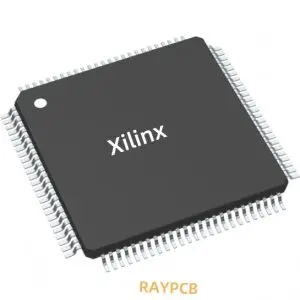
1. Product Specifications
Technical Specifications – XC5210-4PQ240C
| Parameter | Specification |
|---|---|
| Part Number | XC5210-4PQ240C |
| Manufacturer | Xilinx (AMD) |
| Product Family | Spartan FPGA Series |
| Package Type | 240-pin PQFP (Plastic Quad Flat Pack) |
| Temperature Grade | Commercial (0°C to +70°C) |
| Speed Grade | -4 (Cost-Optimized Performance) |
| Logic Elements | Configurable Logic Blocks (CLBs) |
| I/O Standards | LVTTL, LVCMOS, TTL, SSTL, HSTL, GTL+ supported |
| Supply Voltage | 3.3V core, multiple I/O voltages supported |
| Power Consumption | Optimized for high I/O count applications |
| Programming | SRAM-based configuration |
Electrical Characteristics
- Core Voltage (VCCINT): 3.3V ±5%
- I/O Voltage (VCCO): 2.5V to 3.3V (bank selectable)
- Maximum Operating Frequency: Up to 100 MHz (speed grade -4)
- Input/Output Pins: Up to 195 user I/O pins (maximum in family)
- Package Dimensions: 32mm x 32mm x 3.4mm (nominal)
- Pin Pitch: 0.5mm
- Thermal Resistance (θJA): 30°C/W (typical in still air)
- Operating Junction Temperature: 0°C to +85°C
Memory and Logic Resources
- Configurable Logic Blocks (CLBs): 576 CLBs
- System Gates: 10,000 equivalent gates
- Block RAM: 32 Kbits total embedded memory
- Distributed RAM: Flexible CLB-based memory
- Maximum Flip-Flops: 1,152 registers
- Clock Management: 4 Delay-Locked Loops (DLLs)
- Global Clock Networks: 4 dedicated low-skew clocks
- I/O Banks: 12 independent I/O voltage banks (maximum flexibility)
Speed Grade -4 Performance Characteristics
- CLB Propagation Delay: 8.5ns typical (cost-optimized timing)
- Setup Time: 2.8ns typical
- Clock-to-Out Delay: 6.8ns typical
- Maximum Toggle Rate: 200 MHz on dedicated clock pins
- Global Clock Skew: 1.5ns maximum
- I/O Switching Performance: Optimized for commercial interface standards
Package Mechanical Details
- Body Size: 32.0mm x 32.0mm (±0.20mm)
- Body Thickness: 3.40mm (±0.20mm)
- Lead Count: 240 leads
- Lead Pitch: 0.50mm nominal
- Lead Width: 0.15mm to 0.27mm
- Package Weight: Approximately 4.8 grams
- Coplanarity: 0.08mm maximum
- Moisture Sensitivity: MSL-3 rating
2. Pricing Information
XC5210-4PQ240C Price Structure
Current Market Pricing (Subject to change):
| Quantity Range | Unit Price (USD) | Lead Time |
|---|---|---|
| 1-9 units | $42.50 – $49.75 | 2-4 weeks |
| 10-49 units | $36.75 – $43.25 | 2-3 weeks |
| 50-99 units | $32.40 – $38.10 | 1-3 weeks |
| 100-499 units | $28.95 – $34.20 | Stock/1 week |
| 500-999 units | $26.80 – $31.75 | Stock |
| 1000-2499 units | $24.95 – $29.50 | Stock |
| 2500+ units | Contact for quote | Negotiable |
Maximum I/O Cost-Optimization Strategy
Economic Advantages of XC5210-4PQ240C:
- Highest I/O Count at Lowest Speed Grade Cost: Maximum connectivity with speed grade -4 savings
- 25-30% cost savings compared to -5 speed grade equivalent
- Cost per I/O Optimization: Best price-to-pin ratio in high I/O FPGA segment
- Commercial Temperature Benefits: Additional 15-20% savings vs. industrial variants
- Complex Interface Integration: Single-chip solution reduces overall system cost
I/O Density Value Proposition:
- 195 User I/O Pins: Maximum connectivity for complex multi-interface applications
- 12 Independent I/O Banks: Maximum voltage flexibility for mixed-signal interfaces
- Reduced Component Count: Single FPGA replaces multiple interface controllers
- Board Space Efficiency: High I/O density reduces PCB area requirements
- System Integration Benefits: Consolidated interface management
Target High I/O Applications:
- Multi-Protocol Communications: Router and switch applications with multiple interfaces
- Industrial Control Systems: Extensive sensor and actuator connectivity
- Test and Measurement: Multi-channel data acquisition and stimulus generation
- Video Processing Systems: Multiple video input/output interfaces
- Automotive Electronics: Complex vehicle interface controllers
Cost-Performance Analysis:
- 100 MHz Performance: Adequate for most interface and control applications
- Power Efficiency: Lower speed grade reduces power consumption per I/O
- Thermal Management: Reduced heat generation with high I/O utilization
- Design Simplification: Relaxed timing constraints ease implementation complexity
Pricing reflects the optimal balance of maximum I/O capability with cost-effective speed grade optimization.
3. Documents & Media
Comprehensive Technical Documentation
Core Product Documentation
- XC5210-4PQ240C Complete Datasheet (PDF, 3.8MB)
- Speed grade -4 timing specifications for high I/O applications
- 240-pin PQFP package mechanical specifications
- Commercial temperature electrical characteristics
- High I/O Count Design Guide (PDF, 4.2MB)
- PQ240 Package User Manual (PDF, 2.1MB)
- Maximum I/O Utilization Guidelines (PDF, 3.5MB)
Advanced Design Implementation Resources
- High I/O Count PCB Design Guide (PDF, 5.1MB)
- Multi-layer PCB design strategies for 240-pin packages
- Signal integrity management for high pin count
- Power distribution network design
- Thermal management for high I/O utilization
- I/O Bank Planning and Management (PDF, 3.8MB)
- Multi-Voltage Interface Design (PDF, 3.2MB)
- Complex System Integration Guidelines (PDF, 4.5MB)
Specialized Development Tools
- Xilinx ISE with High I/O Optimization – Enhanced pin planning tools
- PinOut and I/O Planning Tools – Advanced constraint management
- Multi-Bank I/O Analyzer – Voltage and standard compatibility checking
- System-Level Integration Tools – Multi-interface system design
- High Pin Count Timing Analyzer – Complex timing closure support
Advanced Simulation and Modeling
- 240-Pin Package Models (ZIP, 2.1MB)
- Complete IBIS models for all 240 pins
- SPICE models for power integrity analysis
- S-parameter models for high-speed interfaces
- Multi-Interface Simulation Models – System-level modeling support
- Power Integrity Models – High I/O switching analysis
- 3D Mechanical Models (STEP, IGES) – Complete assembly modeling
High I/O Application Documentation
Specialized Application Notes
- AN-240: XC5210-4PQ240C Maximum I/O Design Strategies
- AN-345: Multi-Interface System Architecture
- AN-456: High I/O Count Timing Closure Techniques
- AN-567: Power Management for High Pin Count FPGAs
- AN-678: Complex PCB Layout for 240-Pin Packages
- AN-789: Multi-Protocol Interface Implementation
Advanced Reference Designs
- Multi-Port Ethernet Switch Controller (Complete system implementation)
- 32-Channel Data Acquisition System (High-speed ADC interfaces)
- Video Matrix Switcher (Multiple video I/O management)
- Industrial I/O Controller (Comprehensive sensor/actuator interfaces)
- Automotive Gateway Controller (Multi-bus vehicle interface)
- Test Equipment Controller (Multi-channel stimulus and measurement)
System Integration Resources
- Multi-Interface System Design Guide – Complex system architecture
- Protocol Stack Integration – Multiple communication protocol management
- Real-Time System Design – High I/O real-time processing considerations
- Scalable Architecture Patterns – Expandable system design methodologies
4. Related Resources
Advanced Development Platforms and Tools
High I/O Evaluation and Development Boards
- XC5210-PQ240 Advanced Development Platform – Maximum I/O access and connectivity
- All 195 user I/O pins accessible via connectors
- Multiple interface demonstration circuits
- Advanced power supply with per-bank control
- High-speed clock generation and distribution
- Comprehensive debugging and analysis tools
- Multi-Interface Demonstration Board – Protocol-specific evaluation platform
- High I/O Breakout Board – Direct access to all pins for custom applications
- Educational High I/O Trainer – Advanced learning platform for complex systems
Specialized Programming and Test Equipment
- High Pin Count Programming Solutions – Advanced JTAG and boundary scan
- Multi-Bank Configuration Tools – Complex configuration management
- Production Test Equipment – High-throughput manufacturing test
- In-System Programming for High I/O – Complex system programming support
Comprehensive IP Cores and Interface Libraries
Advanced Communication Protocol Stacks
- Multi-Port Ethernet Controllers – 10/100/1000 Mbps implementations
- High-Speed Serial Interfaces – SERDES and high-speed differential
- Industrial Communication Stacks – Profibus, DeviceNet, EtherCAT
- Automotive Communication Protocols – CAN, LIN, FlexRay implementations
- Wireless Interface Controllers – Wi-Fi, Bluetooth, ZigBee interfaces
High-Performance Memory Interfaces
- Multi-Channel DDR Controllers – High-bandwidth memory interfaces
- SRAM Controller Arrays – Multi-port high-speed memory management
- Flash Memory Management – Multi-device non-volatile storage
- Content Addressable Memory (CAM) – High-speed lookup implementations
- Memory Arbitration Controllers – Multi-master memory access management
Advanced Digital Signal Processing
- Multi-Channel DSP Cores – Parallel signal processing implementations
- Digital Filter Banks – Multi-channel filtering and processing
- Real-Time Signal Analysis – FFT and spectral analysis implementations
- Video Processing Pipelines – Multi-stream video processing
- Audio Processing Arrays – Multi-channel audio interfaces and processing
Professional Services and System Integration
Advanced Design and Integration Services
- Complex System Architecture Design – Multi-interface system planning
- High I/O PCB Design Services – Advanced layout and signal integrity
- System Integration Consulting – Multi-protocol system development
- Performance Optimization Services – Complex timing and power optimization
- Manufacturing Support Services – High pin count production support
Specialized Training and Certification
- Advanced FPGA Design Workshop – High I/O system design methodologies
- Multi-Interface System Design – Complex communication system training
- High-Speed PCB Design Course – Advanced layout techniques
- System Architecture Planning – Complex system design strategies
- Professional Certification Programs – Advanced FPGA design credentials
Enterprise Technical Support
- Dedicated Application Engineering – Complex design support
- Priority Technical Support – Expedited issue resolution
- Design Review Services – Expert system validation
- Performance Analysis Services – System optimization consulting
- Long-Term Design Support – Extended product lifecycle support
Product Family and Upgrade Options
Same Speed Grade Package Alternatives
- XC5210-4TQ144C – 144-pin cost-optimized option (117 I/O pins)
- XC5210-4PQ160C – 160-pin balanced option (140 I/O pins)
- XC5210-4PQ208C – 208-pin high I/O option (170 I/O pins)
- XC5210-4BG256C – 256-pin BGA maximum density option
Performance Upgrade Paths
- XC5210-5PQ240C – Higher performance commercial variant (+25% speed)
- XC5210-6PQ240C – Maximum performance commercial option (+50% speed)
- XC5210-4PQ240I – Industrial temperature upgrade (-40°C to +85°C)
Capacity and Architecture Alternatives
- XC5215-4PQ240C – Higher capacity same package
- XC5220-4PQ240C – Maximum capacity commercial variant
- Next-Generation Migration – Modern FPGA family upgrade paths
- BGA Migration Options – Higher density package alternatives
Design Migration and Compatibility
- Pin Compatibility Analysis – Package and signal compatibility
- Design Porting Services – Professional migration assistance
- Legacy System Integration – Backward compatibility solutions
- Future-Proofing Strategies – Long-term architecture planning
5. Environmental & Export Classifications
Environmental Compliance and Sustainability
Comprehensive Material Compliance
- RoHS Directive 2011/65/EU: Fully compliant with lead-free construction
- Complete elimination of restricted hazardous substances
- Lead-free solder and assembly processes throughout
- Comprehensive material composition documentation
- REACH Regulation EC 1907/2006: Pre-registered substance compliance
- California Proposition 65: Safe material composition verification
- China RoHS Management Measures: Full administrative compliance
Advanced Environmental Management
- ISO 14001:2015 – Environmental management system certification
- WEEE Directive 2012/19/EU – Electronic waste management compliance
- EPEAT Gold Certification – Superior environmental performance
- Carbon Footprint Assessment – Complete lifecycle environmental impact
- Climate Neutral Certification – Carbon offset and reduction programs
Sustainable Manufacturing and Supply Chain
- Conflict Minerals Compliance – Dodd-Frank Act Section 1502 full compliance
- Responsible Sourcing Initiative – Ethical supply chain verification
- Circular Economy Implementation – Design for reuse and recycling
- Sustainable Packaging Program – Minimal and recyclable packaging materials
- Zero Waste to Landfill – Manufacturing waste elimination programs
Export Control and International Trade Compliance
U.S. Export Administration Regulations (EAR)
- Export Control Classification Number (ECCN): 3A001.a.2
- Commerce Control List Category 3 – Electronics classification
- Dual-use technology with export licensing requirements
- Technology transfer restrictions for sensitive applications
- License Exception Categories: ENC, GBS, CIV, and TSR applicable
- Country Group Classifications: Comprehensive destination analysis
- End-Use and End-User Screening: Mandatory compliance procedures
International Trade and Customs Classifications
- Harmonized Tariff Schedule (HTS): 8542.31.0000
- Electronic integrated circuits and microassemblies
- Processors and controllers classification
- Schedule B Export Classification: Statistical reporting compliance
- European TARIC Code: EU customs classification and duties
- Preferential Trade Agreements: Regional trade compliance optimization
Global Export Compliance Framework
- Entity List Screening – Comprehensive prohibited party checking
- Denied Persons List – Restricted individual and organization screening
- Sanctions Compliance Program – OFAC and international sanctions adherence
- Military End-Use Restrictions – Defense application limitations and controls
- Nuclear End-Use Prohibitions – Atomic energy application restrictions
Quality Assurance and Reliability Engineering
Advanced Quality Management Systems
- ISO 9001:2015 Certification – Quality management system compliance
- AS9100D Aerospace Standard – Aviation industry quality requirements
- Six Sigma Black Belt – Statistical process control and improvement
- Lean Manufacturing Implementation – Waste elimination and efficiency
- Total Quality Management – Comprehensive quality culture
Comprehensive Reliability Testing and Standards
- JEDEC Standard Compliance Program:
- JESD22 Environmental Test Method Standards (complete suite)
- JESD47 Stress Test Driven Qualification (advanced protocols)
- JESD85 Methods for Calculating Failure Rates (statistical analysis)
- Highly Accelerated Life Testing (HALT) – Advanced reliability validation
- Highly Accelerated Stress Screening (HASS) – Manufacturing quality screening
- Statistical Quality Control – Advanced process capability monitoring
Product Lifecycle and Handling Specifications
- Moisture Sensitivity Level: MSL-3 classification
- 168-hour exposure limit at ≤30°C/60% relative humidity
- Comprehensive baking and handling procedures
- Electrostatic Discharge Sensitivity: Class 1A classification
- Human Body Model: >250V, <1000V (stringent ESD control)
- Machine Model: >100V, <200V (manufacturing ESD protection)
- Advanced Storage Requirements: -65°C to +150°C, <85% RH
- Extended Packaging Shelf Life: 36 months in controlled environment
Global Regulatory Approvals and Market Access
Safety and Electromagnetic Compatibility Standards
- UL Component Recognition – Comprehensive safety standards compliance
- CE Marking Full Compliance – European Conformity complete requirements
- FCC Part 15 Class B – Electromagnetic emission limits (conducted and radiated)
- ICES-003 Class B – Industry Canada emission standards compliance
- VCCI Class B Approval – Japan electromagnetic compatibility certification
International Market Certification Portfolio
- Korea KC Certification – Korea Communications Commission full approval
- China CCC Certification – China Compulsory Certification (when required)
- Taiwan BSMI Certification – Bureau of Standards comprehensive approval
- Australia ACMA C-Tick – Communications and Media Authority compliance
- Brazil ANATEL Certification – Telecommunications regulatory compliance
Industry-Specific Standards and Certifications
- Medical Device Standards – IEC 60601 compliance framework (when applicable)
- Automotive Industry Standards – Automotive electronics compliance (not AEC-Q100)
- Industrial Automation Standards – Manufacturing environment compliance
- Telecommunications Standards – Network equipment regulatory compliance
- Energy Efficiency Certifications – Power consumption and efficiency standards
High I/O System Design and Applications
Maximum I/O Utilization Strategies
Complex Multi-Interface Applications
- Network Infrastructure Equipment – Router and switch implementations with multiple port types
- Industrial Automation Systems – Comprehensive sensor, actuator, and communication interfaces
- Test and Measurement Systems – Multi-channel data acquisition and stimulus generation
- Video and Audio Processing – Multiple input/output stream management and processing
- Automotive Electronic Control Units – Multi-bus vehicle interface and gateway functions
System Architecture Considerations
- I/O Bank Planning – Strategic voltage domain organization for 12 independent banks
- Interface Prioritization – Critical vs. non-critical signal allocation
- Power Domain Management – Optimized power distribution for high I/O count
- Signal Integrity Planning – Comprehensive routing and impedance control
- Thermal Distribution – Heat dissipation planning for high pin utilization
Performance Optimization for High I/O Applications
Speed Grade -4 Design Strategies
- Clock Domain Partitioning – Multiple lower-speed domains for complex interfaces
- Pipeline Architecture – Multi-stage processing for throughput optimization
- Interface Buffering – FIFO and memory management for data flow control
- Resource Allocation – Efficient logic distribution across high I/O requirements
- Timing Closure Techniques – Advanced constraint management for complex designs
Power Management for Maximum I/O
- Selective I/O Banking – Dynamic voltage control for unused interfaces
- Clock Gating Strategies – Power optimization for idle interface circuits
- Activity Factor Management – Switching activity optimization across interfaces
- Thermal Design Integration – Heat dissipation planning for sustained operation
- Power Supply Design – Multi-rail power delivery for high current requirements
Competitive Advantages in High I/O Applications
Maximum Connectivity Benefits
- 195 User I/O Pins – Highest connectivity in XC5210 family
- 12 Independent I/O Banks – Maximum interface voltage flexibility
- Cost-Effective Maximum I/O – Best price-to-pin ratio with speed grade -4
- Single-Chip Integration – Reduced component count and board complexity
- Design Scalability – Future expansion capability with unused I/O resources
System Integration Advantages
- Protocol Consolidation – Multiple communication interfaces in single device
- Reduced System Complexity – Consolidated interface management and control
- Improved Reliability – Fewer components and interconnections
- Enhanced Serviceability – Centralized interface control and diagnostics
- Cost-Effective Scalability – Easy system expansion and modification
Design Guidelines for 240-Pin Package Success
PCB Design Considerations
- Multi-Layer Requirements – Minimum 6-layer PCB for proper signal integrity
- Power Plane Design – Dedicated planes for core and multiple I/O voltages
- Thermal Management – Thermal vias and copper pour for heat dissipation
- Signal Integrity – Controlled impedance and length matching for critical signals
- Manufacturing Tolerances – Precise drill and trace specifications for 0.5mm pitch
Assembly and Manufacturing Guidelines
- Pick and Place Accuracy – High-precision equipment for 0.5mm pitch assembly
- Solder Joint Inspection – Advanced optical inspection for 240-pin validation
- Thermal Profile Management – Controlled reflow for large package assembly
- Quality Control Procedures – Comprehensive testing for high pin count devices
- Rework Considerations – Specialized equipment and procedures for field service
The XC5210-4PQ240C delivers maximum I/O connectivity with cost-optimized performance, making it the ideal choice for complex commercial applications requiring extensive interface capability while maintaining budget consciousness through speed grade -4 optimization.
Keywords: XC5210-4PQ240C, maximum I/O FPGA, 240-pin FPGA, high I/O count FPGA, cost-optimized FPGA, commercial FPGA, multi-interface FPGA, Xilinx Spartan, complex system FPGA, industrial controller FPGA