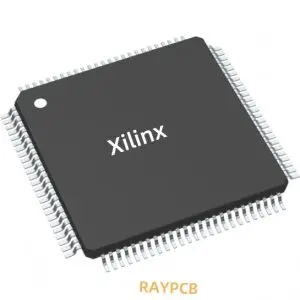
1. Product Specifications
Complete Technical Specifications – XC3030-70PC68C
| Parameter | Specification |
|---|---|
| Part Number | XC3030-70PC68C |
| Manufacturer | AMD (formerly Xilinx) |
| Product Family | XC3000 Series Commercial FPGA |
| Speed Grade | -70 (70MHz maximum frequency) |
| Temperature Grade | Commercial (0°C to +70°C) |
| Package Type | 68-Pin PLCC (Plastic Leaded Chip Carrier) |
| Package Dimensions | 24.23mm x 24.23mm x 4.57mm |
| Logic Architecture | 100 Configurable Logic Blocks (CLBs) |
| Gate Equivalent | ~2,000 gates (1,500 usable gates) |
| Total RAM Bits | 22,176 bits |
| User I/O Pins | 58 bidirectional pins |
| Maximum Clock Frequency | 70 MHz |
| Operating Voltage | 4.75V to 5.25V (5V ± 5%) |
| Combinatorial Delay (CLB) | 9.0ns maximum |
| Technology Process | CMOS static memory configuration |
| Configuration Method | SRAM-based reprogrammable |
Advanced Architecture Details
The XC3030-70PC68C features identical internal logic to the 84-pin version but with optimized pin allocation for compact applications:
Core Logic Resources:
- 100 Configurable Logic Blocks (CLBs) in 10×10 array arrangement
- Input/Output Blocks (IOBs) with flexible electrical characteristics
- Programmable Interconnect Matrix for flexible signal routing
- Configuration Storage using internal SRAM technology
Performance Features:
- Global Clock Networks with low-skew distribution
- High-Speed Interconnect for critical timing paths
- TTL/CMOS Compatible I/O with programmable input thresholds
- 3-State Bus Support for internal bus architectures
- On-Chip Oscillator amplifier for crystal connections
Pin Configuration & Package Comparison
68-Pin PLCC Package Advantages:
- Reduced Footprint: 24.23mm x 24.23mm vs. 29.31mm x 29.31mm (84-pin)
- Lower Cost: Fewer pins reduce package and assembly costs
- Board Space Savings: 30% smaller PCB footprint than 84-pin version
- Suitable I/O Count: 58 pins adequate for many applications
Pin Allocation Breakdown:
- Total Pins: 68 pins in J-lead configuration
- User I/O Pins: 58 configurable as input, output, or bidirectional
- Power Supply Pins: VCC (+5V), GND (multiple pins)
- Configuration Pins: Programming and mode control
- Clock Inputs: Dedicated global clock inputs
- Control Signals: RESET, DONE, PROGRAM_B
I/O Pin Comparison:
- XC3030-70PC68C: 58 user I/O pins
- XC3030-70PC84C: 74 user I/O pins
- Pin Savings: 16 fewer I/O pins, 23% reduction in package size
2. Pricing Information
Current Market Pricing for XC3030-70PC68C
Important Notice: The XC3030-70PC68C is classified as an obsolete/legacy product with limited availability from specialized distributors.
Market Price Ranges:
| Quantity Range | Price Per Unit (USD) | Typical Condition |
|---|---|---|
| 1-9 pieces | $16-30 | New Old Stock |
| 10-49 pieces | $14-25 | New/Refurbished |
| 50-199 pieces | $11-20 | Mixed condition |
| 200+ pieces | Contact for quotes | Volume pricing |
Cost Advantages vs. 84-Pin Version:
- 10-15% Lower Cost: Reduced package complexity
- Assembly Savings: Fewer solder joints, faster placement
- PCB Cost Reduction: Smaller footprint, simpler routing
- Better Availability: More inventory due to space-saving popularity
Where to Purchase XC3030-70PC68C
Primary Distribution Channels:
- IC Components – New original stock with 55+ pieces available
- DigiPart – Electronic component aggregator with multiple suppliers
- Specialty Parts Inc. – Refurbished components with 25-year experience
- FPGAkey – Global FPGA component marketplace
Online Marketplaces:
- Electronic surplus dealers – Used and new old stock
- Industrial component brokers – Obsolete parts specialists
- Auction sites – Individual and bulk lots
- OEM equipment refurbishers – Harvested components
Procurement Considerations:
- Verify authenticity and electrical specifications
- Request proper anti-static packaging and handling
- Consider purchasing extra units due to obsolescence
- Validate date codes and storage conditions
Pricing reflects market conditions as of 2025. Contact suppliers for current availability and volume discounts.
3. Documents & Media
Essential Technical Documentation
Core Documentation for XC3030-70PC68C:
- XC3000 Family Datasheet – Complete electrical specifications and timing parameters
- 68-Pin PLCC Package Guide – Mechanical specifications and footprint details
- Pin Assignment Documentation – Detailed pinout with signal descriptions
- Application Guidelines – Design recommendations for 68-pin package
- Package Migration Guide – Comparison with 84-pin and other package options
Development Tools & Software Support
Legacy Development Environment:
- XACT Development System – Original Xilinx design tools (discontinued)
- Foundation Series – Schematic capture and place-and-route
- Alliance Series – Advanced FPGA development platform
Last Supported Modern Tools:
- ISE Design Suite 14.7 – Final version supporting XC3000 series
- WebPACK ISE – Free version with limited XC3000 support
- Third-Party Synthesis Tools – Alternative VHDL/Verilog compilers
Programming and Configuration:
- Bitstream Generation – Device configuration file creation
- PROM Programming – Serial configuration memory support
- JTAG Interface – Boundary scan testing and debugging
- Parallel Configuration – Direct programming methods
Design Resources & Reference Materials
Application Examples:
- Space-constrained embedded controller designs
- Communication interface implementations
- Digital signal processing applications
- Educational and prototyping projects
Key Application Notes:
- XAPP003 – XC3000 68-Pin Package Design Guidelines
- XAPP028 – I/O Optimization for Reduced Pin Count Packages
- XAPP045 – Migration from 84-Pin to 68-Pin Packages
- XAPP065 – PCB Layout Best Practices for Compact FPGAs
Media Resources:
- High-resolution package photographs and dimensions
- PCB footprint CAD files and libraries
- Pin assignment charts and signal reference guides
- Comparative analysis charts vs. other package options
4. Related Resources
Package Variants & Alternatives
XC3030 Package Family:
- XC3030-70PC44C – Ultra-compact 44-pin PLCC (44 I/O pins)
- XC3030-70PC68C – This device – compact 68-pin PLCC (58 I/O pins)
- XC3030-70PC84C – Standard 84-pin PLCC (74 I/O pins)
- XC3030-70PG84C – Pin grid array version (74 I/O pins)
Speed Grade Alternatives:
- XC3030-50PC68C – Lower speed grade (50MHz operation)
- XC3030-100PC68C – Higher performance (100MHz operation)
- XC3030-70PC68I – Industrial temperature range (-40°C to +85°C)
Logic Capacity Alternatives:
- XC3020-70PC68C – Smaller capacity (64 CLBs, 48 I/O pins)
- XC3042-70PC68C – Increased capacity (144 CLBs, 58 I/O pins)
Modern FPGA Migration Strategy
Recommended Upgrade Paths:
- Spartan-3E Series – Direct architectural successor with pin compatibility options
- Spartan-6 LX Series – Modern alternative with migration tools and compact packages
- Spartan-7 Series – Latest technology with backward compatibility features
Migration Considerations for Compact Packages:
- I/O Planning: Optimize pin usage for reduced count packages
- Voltage Level Translation: 5V to modern 3.3V/1.8V systems
- Package Footprint: Modern alternatives in similar form factors
- Tool Chain Updates: Transition from ISE to Vivado Design Suite
Development Resources & Support
Evaluation and Prototyping:
- Custom PCB development for 68-pin PLCC packages
- Adapter boards for breadboard prototyping
- Socket solutions for development and testing
Design Services:
- Legacy FPGA Consultants – Specialists in XC3000 series design
- PCB Layout Services – Optimized routing for compact packages
- Design Migration Services – Upgrade to modern FPGA families
Community Resources:
- Vintage Computing Forums – Legacy FPGA user communities
- Academic Institutions – Universities with XC3000 expertise
- Open Source Projects – Reverse engineering and documentation efforts
Technical Support & Documentation
Expert Assistance:
- AMD/Xilinx legacy product support (limited)
- Independent FPGA design consultants
- Electronic component testing and validation services
- Reverse engineering for lost design files
Documentation Archives:
- Legacy Xilinx documentation repositories
- Technical paper databases and research publications
- Educational course materials and tutorials
- Community-maintained knowledge bases
5. Environmental & Export Classifications
Environmental Specifications & Compliance
Operating Environmental Conditions:
- Temperature Range: 0°C to +70°C (Commercial grade specification)
- Storage Temperature: -65°C to +150°C (Non-operating storage)
- Relative Humidity: 85% non-condensing during operation
- Junction Temperature: Maximum +125°C with appropriate thermal design
Thermal Management:
- Thermal Resistance (θJA): ~32°C/W in still air (68-pin package advantage)
- Lower Power Dissipation: Improved thermal performance vs. larger packages
- Heat Sink Compatibility: Standard mounting options available
- Operating Altitude: Up to 2,000 meters standard conditions
Physical Durability Specifications:
- Vibration Resistance: Commercial electronics standards compliance
- Shock Tolerance: Suitable for standard transportation and handling
- Moisture Sensitivity: Level 3 per JEDEC J-STD-020 standard
- Lead-Free Compatibility: Package suitable for lead-free soldering processes
Package Construction & Materials
Package Material Specifications:
- Body Material: UL94-V0 rated flame-retardant plastic compound
- Lead Frame: Copper alloy with tin-lead plating finish
- Die Attachment: Gold-silicon eutectic for thermal and electrical performance
- Wire Bonding: Gold wire for reliable electrical connections
Environmental Impact Information:
- Lead Content: Contains lead in package construction (Pre-RoHS manufacturing)
- Precious Metal Content: Gold content suitable for recovery in large quantities
- Recycling Requirements: Electronic waste disposal following local regulations
- Package Size Advantage: Reduced material usage vs. larger packages
Regulatory Compliance & Standards
Quality and Manufacturing Standards:
- ISO 9001: Manufactured under certified quality management systems
- JEDEC Compliance: Meets solid-state technology reliability standards
- IPC Standards: Compatible with standard PCB assembly processes
- ESD Protection: Proper handling procedures for static-sensitive devices
RoHS Compliance Status:
- Current Classification: Non-RoHS compliant (legacy manufacturing)
- Lead Content: Package contains lead in solder plating
- Modern Alternatives: Contact suppliers for RoHS-compliant replacement options
- Grandfathering: Existing inventory exempt from RoHS restrictions
Export Control & International Trade
Export Control Classification:
- ECCN Classification: 3A001.a.7 (General-purpose integrated circuits)
- Export License: No License Required (NLR) for most commercial destinations
- Restricted Countries: Check current BIS Entity List for export restrictions
International Trade Information:
- Country of Origin: United States (Xilinx/AMD manufacturing)
- Harmonized Tariff Code: 8542.31.0001 (Microprocessors and controllers)
- Trade Agreement Eligibility: NAFTA/USMCA preferential treatment available
- Documentation: Standard commercial electronics export classification
Import/Export Considerations:
- No special licensing required for standard commercial applications
- Military or aerospace end-use may require additional documentation
- Dual-use technology considerations for certain applications
- Customs documentation available from authorized distributors
Disposal & Lifecycle Management
End-of-Life Considerations:
- Electronic Waste Classification: Requires certified e-waste recycling
- Precious Metal Recovery: Gold and copper recovery economically viable
- Lead Disposal: Hazardous material handling for lead-containing components
- Documentation Requirements: Maintain disposal records for compliance
Sustainable Practices:
- Inventory Management: Plan for long-term component availability
- Design Migration: Develop transition plans to modern, RoHS-compliant alternatives
- Component Reuse: Consideration for equipment refurbishment applications
- Packaging Optimization: Compact package reduces overall material usage
Summary
The XC3030-70PC68C represents an optimal balance of performance, space efficiency, and cost-effectiveness from AMD’s XC3000 legacy FPGA series. This compact 68-pin PLCC device delivers the same 100 configurable logic blocks and 70MHz performance as larger package variants while offering significant space and cost savings for commercial applications with moderate I/O requirements.
Space-Optimized Advantages of XC3030-70PC68C:
- ✅ Compact Footprint – 30% smaller PCB area than 84-pin equivalent
- ✅ Cost-Effective Design – Reduced package costs and assembly complexity
- ✅ Adequate I/O Count – 58 user pins sufficient for many applications
- ✅ Standard SMT Package – Compatible with automated assembly processes
- ✅ Proven Reliability – Same internal architecture as larger variants
Ideal Applications:
- Space-constrained embedded systems
- Cost-sensitive consumer electronics
- Educational and research projects
- Prototyping and development systems
- Legacy system upgrades with size constraints
- Industrial control with limited I/O requirements
Technical Highlights:
- Identical 100 CLB internal architecture to 84-pin version
- 58 user I/O pins providing flexible interface capabilities
- 70MHz operation suitable for moderate-speed applications
- 5V operation maintaining compatibility with legacy systems
- SRAM-based configuration enabling unlimited reprogrammability
Design Considerations:
- I/O Planning: Careful pin assignment required due to reduced pin count
- Thermal Management: Improved thermal characteristics due to smaller package
- PCB Layout: Compact footprint enables higher integration density
- Cost Optimization: Lower overall system cost through reduced package complexity
While the XC3030-70PC68C is now classified as obsolete, it remains highly valuable for space-critical applications and cost-sensitive designs where 58 I/O pins are sufficient. The compact 68-pin package offers the best compromise between functionality and form factor in the XC3030 series.
Procurement Strategy:
- Source from specialized obsolete parts distributors for guaranteed authenticity
- Consider adequate backup inventory due to limited long-term availability
- Validate I/O pin count meets application requirements before design commitment
- Plan migration to modern compact FPGA families for new product development
For technical documentation, design support, or sourcing assistance for the XC3030-70PC68C, contact specialized FPGA component distributors or legacy electronics suppliers with XC3000 series expertise.