Capacitor Polarity: How to Identify Positive & Negative Leads

Learn to identify capacitor polarity on electrolytic, tantalum & SMD types. Covers markings, PCB silkscreen symbols, multimeter testing & common polarity mistakes.

If you’ve spent any time on the bench debugging a blown PCB, there’s a decent chance a backwards electrolytic capacitor was somewhere in the story. Capacitor polarity is one of those fundamentals that trips up beginners and occasionally bites experienced engineers too โ€” especially when you’re staring at a 105ยฐC bulk capacitor with worn markings under fluorescent lighting at midnight.

This guide walks through everything you need to know: what capacitor polarity means, which capacitor types are affected, how to read the physical markings, how to interpret PCB silkscreen symbols, and how to test polarity with a multimeter when the markings are gone.

What Is CapacitorArity and Why Does It Matter?

Capacitor polarity refers to the orientation requirement of certain capacitors โ€” specifically, which terminal must connect to the higher voltage (positive) and which must connect to the lower voltage (negative or ground). Install one the wrong way around and you’re looking at reduced capacitance, excessive leakage current, internal gas buildup, and in worst-case scenarios, a capacitor that vents, bulges, or explodes.

This isn’t theoretical. Reversed electrolytic capacitors are a leading cause of field failures in consumer electronics power supplies. The damage is often silent at first: the cap degrades over weeks before the circuit starts misbehaving.

Not all capacitors are polarized. The distinction is critical before you even pick up your soldering iron.

Polarized vs. Non-Polarized Capacitors

Understanding which capacitor types require correct polarity orientation is step one.

Capacitor TypePolarized?Typical Use Case
Aluminum Electrolyticโœ… YesBulk power filtering, decoupling
Tantalum (solid)โœ… YesLow-profile power filtering
Niobium Oxideโœ… YesAlternative to tantalum
Ceramic (MLCC)โŒ NoHigh-frequency decoupling
Film (polyester, polypropylene)โŒ NoAudio, timing, filtering
MicaโŒ NoRF, precision circuits
Supercapacitor / EDLCโœ… YesEnergy storage, backup power
Bipolar ElectrolyticโŒ NoAudio crossovers (special case)

The key takeaway: if it has an electrolyte inside โ€” liquid or solid โ€” it almost certainly has a polarity requirement. Ceramics and films are inherently symmetric and can be placed in either direction.

How to Identify Capacitor Polarity: The Markings Explained

H3: Through-Hole Electrolytic Capacitors

Through-hole aluminum electrolytics are the easiest to read once you know the conventions. Manufacturers use multiple overlapping cues, which helps when one marking gets obscured.

Negative stripe: The most universal marking is a prominent stripe โ€” usually white or light gray โ€” running vertically along the body of the capacitor. This stripe marks the negative (โˆ’) lead. The stripe typically contains repeated “โˆ’” symbols or chevrons pointing toward the negative terminal.

Lead length: On a brand-new, untrimmed capacitor, the longer lead is positive (+). This mirrors the convention used for LEDs and diodes. Once leads are trimmed during assembly, this method becomes unreliable โ€” use the stripe instead.

Flat side on the base: Some capacitors (especially smaller radial types) have a slight flat edge on the bottom plastic ring, indicating the negative terminal side.

Markings summary table:

Marking MethodPositive (+) IndicatorNegative (โˆ’) Indicator
Lead length (untrimmed)Longer leadShorter lead
Body stripeOpposite sideStripe side
Base flatOpposite sideFlat edge side
Printed symbol“+” printed on body“โˆ’” or stripe

H3: SMD Electrolytic Capacitors (Radial SMD / Can Style)

Surface-mount aluminum electrolytics follow the same stripe convention but the implementation varies slightly. Look for:

  • A notch or indentย on the top of the can โ€” this marks the negative terminal
  • A light-colored stripeย on the body wrapping toward the negative pad
  • PCB silkscreen will show a “+” marker on the positive land

Because SMD electrolytics are tiny, always cross-reference with the PCB silkscreen before soldering.

H3: Tantalum Capacitors (Through-Hole and SMD)

Tantalum capacitors are the exception to the “stripe = negative” rule that trips people up constantly.

Through-hole tantalum: The longer lead is positive, and the positive terminal is usually marked with a “+” symbol directly on the body. Some older teardrop-shaped tantalums have a band at the positive end โ€” the opposite of electrolytic convention.

SMD tantalum (chip style): A line or bar marking at one end indicates the POSITIVE terminal. This is the reverse of what you’d expect coming from electrolytic experience. The positive end often has a colored band or a stripe on the top of the component. This catches engineers out regularly.

Capacitor TypeStripe/Band Meaning
Aluminum ElectrolyticStripe = NEGATIVE
Tantalum SMDStripe/Bar = POSITIVE
SupercapacitorStripe = NEGATIVE (follows electrolytic)

Commit that table to memory. The tantalum reversal has caused more than a few smoke-testing incidents.

H3: Supercapacitors (EDLCs)

Supercapacitors follow the same convention as aluminum electrolytics: the stripe indicates the negative terminal, and the longer lead (when untrimmed) is positive. Given that supercapacitors can store significant energy, reversed installation isn’t just a component failure โ€” it can be a safety hazard.

Reading Capacitor Polarity on a PCB

Even if you can’t read the component markings clearly, the PCB itself carries polarity information.

H3: Silkscreen Symbols

The silkscreen layer on a properly designed PCB will indicate polarity in several ways:

  • A “+” symbolย next to or inside the component footprint pad
  • A filled or shaded semicircleย inside the circular outline โ€” the filled half indicates the negativeย side (this is the most common electrolytic symbol)
  • A longer line on one padย in the component outline
  • Some designs add explicit “+” and “โˆ’” labels on the copper or silkscreen

H3: Component Footprint in PCB Design Software

If you’re designing the PCB yourself, the capacitor footprint in your EDA tool (KiCad, Altium, Eagle) will designate Pin 1 as positive by IPC convention for polarized capacitors. The silkscreen should be generated automatically to reflect this, but always verify โ€” library footprints are not always reliable on polarity markings.

H3: Checking Polarity on an Assembled PCB

When reworking an existing board where silkscreen is unclear:

  1. Locate the ground plane connection using continuity mode on your multimeter โ€” the negative lead of a bulk electrolytic almost always ties to ground
  2. Check the schematic if available
  3. Use circuit context: the positive rail goes to the positive terminal

How to Test Capacitor Polarity with a Multimeter

When physical markings are worn, obscured, or simply absent (it happens with salvaged components), you can use a multimeter to determine polarity.

Method โ€” Diode/Resistance Mode:

  1. Set your multimeter to resistance (ฮฉ) or diode mode
  2. Touch the red probe (positive)ย to one lead, black to the other
  3. Record the resistance reading
  4. Swap the probes and record again
  5. The orientation that gives the higher resistanceย has the red probe on the positive lead

This works because polarized electrolytic capacitors have a slightly forward-biased oxide layer when correctly oriented, producing asymmetric leakage behavior.

Method โ€” Capacitance Mode (for confirmation):

Most modern multimeters with a capacitance function show a stable, accurate reading when the capacitor is inserted with correct polarity, and may show an erratic or lower reading when reversed. This isn’t definitive but can confirm your resistance-mode finding.

TestResultInterpretation
Red on Lead A โ†’ High resistanceRed probe = +Lead A is positive
Red on Lead B โ†’ Lower resistanceCorrect polarity confirmedLead B is negative

Common Capacitor Polarity Mistakes (And How to Avoid Them)

From a board-level perspective, here are the failure patterns that come up repeatedly:

1. Assuming all stripe conventions are the same. The tantalum vs. electrolytic reversal catches even experienced engineers. Always check the datasheet for the specific component.

2. Trusting lead length on pre-assembled boards. Leads get trimmed. The length is meaningless once the component has been cut.

3. Ignoring silkscreen on dense boards. On tightly packed boards, the “+” marker might be hidden under a nearby component. Always check before soldering.

4. Reusing salvaged capacitors without verification. If you don’t know the history of a component, test it before trusting it.

5. Forgetting polarity on SMD tantalums during hand assembly. The bar marking is subtle. Use a magnifying lens and orient the component in good lighting before placement.

Capacitor Polarity Marking Standards Reference

StandardScopeKey Guidance
IEC 60062Component marking codesColor and alphanumeric marking
EIA-198Ceramic capacitorsNon-polarized, no polarity marking required
JIS C 5101Aluminum electrolyticsNegative terminal marking requirements
EIA-717Tantalum capacitorsPositive terminal indicated by marking band
IPC-7351PCB land patternsPin 1 = positive for polarized footprints

Useful Resources for Capacitor Polarity

  • Murata Capacitor FAQย โ€” murata.comย โ€” Detailed technical notes on MLCC and electrolytic behavior
  • Nichicon Application Notesย โ€” nichicon.co.jpย โ€” Aluminum electrolytic construction and reliability data
  • KEMET Tantalum Capacitor Handbookย โ€” kemet.comย โ€” Comprehensive SMD tantalum polarity and handling guide
  • IPC-7351B Standardย โ€” PCB footprint and land pattern standard including polarity conventions
  • All About Circuits Capacitor Referenceย โ€” allaboutcircuits.comย โ€” Community-reviewed component guides
  • Digi-Key Capacitor Parametric Searchย โ€” digikey.comย โ€” Filter by type, polarity, voltage, capacitance

FAQs About Capacitor Polarity

Q1: What happens if I install a polarized capacitor backwards? At best, the capacitor will have reduced capacitance and higher leakage current, causing circuit malfunction. At worst, internal gas pressure builds up and the capacitor vents (usually through a scored vent on top of aluminum electrolytics) or ruptures. Reversed tantalum capacitors can fail catastrophically and catch fire. Always double-check polarity before powering up.

Q2: Can you use a non-polarized capacitor in place of a polarized one? In principle, yes โ€” a non-polarized capacitor of equivalent capacitance and voltage rating will work in the same position. However, non-polarized types (ceramics, films) of equivalent capacitance and voltage rating are physically much larger and more expensive for values above ~10ยตF. It’s not a practical swap for bulk filtering applications.

Q3: How do I identify capacitor polarity on an old, worn component? Use the resistance method with a multimeter: the orientation giving higher resistance has the red (positive) probe on the positive lead. Cross-reference with the PCB silkscreen or schematic if available.

Q4: Do ceramic capacitors have polarity? Standard ceramic MLCCs are non-polarized and can be installed in any orientation. The only exception is certain specialty types used in specific filter applications โ€” always check the datasheet if you’re unsure.

Q5: Why does the tantalum capacitor stripe indicate positive while electrolytic stripe indicates negative? Historical convention from different manufacturing traditions. Tantalum marking standards followed a “this is the important terminal” philosophy and marked the anode (positive). Electrolytic manufacturers chose to mark the cathode sleeve (negative) for safety reasons โ€” indicating which terminal must not go to high voltage. Both conventions coexist today, which is why you always need to check the specific component datasheet.

Final Thoughts

Capacitor polarity is a small detail with large consequences. Whether you’re designing a new board, reworking a failed unit, or sourcing replacement components, taking sixty seconds to verify polarity with the datasheet, silkscreen, and physical markings is always worth it. The tantalum stripe-equals-positive convention alone has caused more circuit smoke than it should have โ€” now that you know it, you won’t be caught out.

When in doubt: check the datasheet, check the silkscreen, and test before you power up.

Capacitor for Arduino & Microcontrollers: Complete Guide

Capacitor for Arduino guide: decoupling values, crystal loading caps, reset circuits, motor noise filtering, and PCB layout rules every maker should know.

If you’ve ever had an Arduino randomly reset when you turned on a motor, seen an ADC reading jump all over the place for no obvious reason, or watched a sketch upload fail inconsistently โ€” congratulations, you’ve already experienced what happens when capacitors are missing or wrong. The capacitor for Arduino and microcontroller circuits isn’t a “nice to have.” It’s a fundamental part of making the circuit work reliably.

This guide walks through every practical role capacitors play in Arduino and microcontroller designs, from decoupling and bypass to crystal loading, reset circuits, and motor noise suppression. Whether you’re building on breadboard, designing a custom PCB, or troubleshooting a board that misbehaves under load, this is the reference you’ll want to hand.

Why Capacitors Are Critical in Microcontroller Circuits

Microcontrollers like the ATmega328P at the heart of Arduino Uno switch millions of logic states per second. Every time an output pin changes state or an internal logic block switches, it draws a brief spike of current from the supply rail. These spikes happen in nanoseconds โ€” far faster than any power supply or voltage regulator can respond to.

Power supplies, including good LDO regulators, have a bandwidth of roughly 10โ€“100 kHz. That means they take approximately 10 microseconds to react to a sudden change in load current. In that time, a 16 MHz ATmega328P has already executed 160 clock cycles. During that 10 ยตs window, the supply voltage droops as charge is pulled from the parasitic capacitance of the PCB traces alone. If that droop is deep enough, the microcontroller can misread an I/O pin, corrupt a register, or โ€” in extreme cases โ€” trigger a brown-out reset.

A capacitor placed physically close to the microcontroller’s power pins acts as a local energy reservoir. It supplies the burst of charge the IC demands during switching transients, keeping the local supply voltage stable until the regulator catches up. That is the core job. Everything else in this guide is a variation on the same idea applied to specific circuits.

Decoupling Capacitor for Arduino: The Foundation

What a Decoupling Capacitor Does

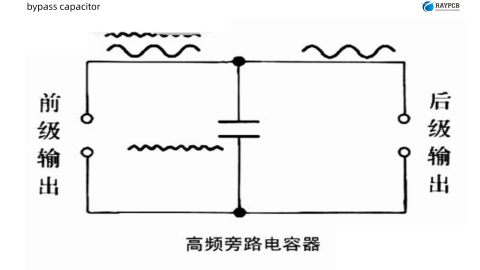
A decoupling capacitor sits between the VCC (or 3.3V) and GND pins of the microcontroller, as close to those pins as possible. When the microcontroller demands a burst of current, the capacitor discharges into the supply pin instead of pulling that current through the inductance of long supply traces. This prevents a voltage dip at the IC power pin, and it also prevents the current spike from propagating back along the supply rail and disturbing other components.

There is a second job running simultaneously: high-frequency noise on the supply rail โ€” generated by motors, switching regulators, relays, or RF transmitters on the same board โ€” is shunted to ground through the low-impedance path of the capacitor before it can enter the IC’s power pin. The capacitor acts as a low-pass filter with the trace inductance between the noisy supply and the IC forming the series element.

Recommended Values for ATmega328P and Arduino

The ATmega328P has two VCC pins (pins 7 and 20) and two GND pins (pins 8 and 22). Best practice, reflected in the official Arduino Uno schematic and most professional ATmega-based designs, is to place decoupling capacitors on both VCC pins:

  • 100 nF (0.1 ยตF) ceramicย on each VCC pin โ€” handles high-frequency noise up to ~100 MHz
  • 10 ยตF electrolytic or tantalumย on at least one VCC pin โ€” handles lower-frequency load transients and provides bulk charge storage

This two-tier approach covers a broad frequency range. The ceramic handles the fast, high-frequency switching transients. The larger electrolytic handles slower, larger current demands โ€” like when you turn on a relay, enable a servo, or start a wireless transmission.

Decoupling Capacitor Placement: The Rule That Actually Matters

The physical placement of decoupling capacitors determines how effective they are. Placing a 100 nF cap 5 cm from the IC with a thin trace to the power pin is almost useless โ€” the inductance of that trace (roughly 1 nH per mm) creates an impedance at high frequencies that negates the capacitor’s benefit.

The rule is: place decoupling capacitors as physically close to the IC power pins as possible, with the shortest possible traces to VCC and GND. On a PCB, this means within 1โ€“2 mm of the IC’s power pins. On a breadboard, place the capacitor in the power rail immediately adjacent to the rows containing the IC’s VCC and GND connections.

When routing the capacitor on a PCB, the capacitor should sit between the power trace and the IC pin โ€” not tapped off a long trace that first goes to the IC. The current path should be: supply trace โ†’ capacitor โ†’ IC power pin, with the ground side returning to the nearest ground plane via.

Decoupling Capacitor Values: Quick Reference Table

Capacitor ValueTypeFrequency CoverageWhere It Goes
10 pF โ€“ 100 pFC0G/NP0 ceramic>100 MHz (RF/GHz range)RF ICs, high-speed oscillators
10 nFX7R ceramic~10โ€“100 MHzHigh-speed digital ICs, ADCs
100 nF (0.1 ยตF)X7R ceramic~1โ€“100 MHzEvery IC power pin โ€” the standard decoupling cap
1 ยตFX5R/X7R ceramic or tantalum~100 kHzโ€“10 MHzAlongside 100 nF for better mid-frequency coverage
10 ยตFElectrolytic or polymer~1 kHzโ€“1 MHzBulk bypass, per supply rail or per power-hungry IC
100 ยตF+Electrolytic<1 kHzBoard-level bulk reservoir, motor supply filtering

The 100 nF ceramic is the single most important capacitor in any microcontroller design. If you only add one capacitor per IC, make it a 100 nF ceramic placed as close to the power pin as possible.

Crystal Oscillator Capacitors: Why 22 pF Matters

Most Arduino-compatible designs using an external 16 MHz crystal require two small ceramic capacitors โ€” one from each crystal pin (XTAL1, XTAL2) to ground. The purpose is to set the correct load capacitance for the crystal, which determines its precise oscillating frequency.

The standard value specified for the ATmega328P with a 16 MHz crystal is 22 pF for each capacitor. This sets the effective load capacitance seen by the crystal at approximately 11 pF (two 22 pF caps in series), which matches the 18 pF typical load capacitance of standard HC-49 style crystals, accounting for stray PCB capacitance of around 5โ€“7 pF.

Getting this wrong causes the crystal to oscillate at a frequency slightly off from 16 MHz โ€” which matters if your sketch relies on accurate timing for UART communication, I2C, precise PWM, or real-time clock calculations. Using 0 pF (no capacitors) causes the crystal to run high; using excessively large capacitors (100 pF) causes it to run low or fail to start.

Use C0G/NP0 ceramic capacitors for crystal loading. Their capacitance is stable over temperature and voltage โ€” critical for a timing reference. X7R types will change slightly with temperature and could affect timing accuracy in precision applications.

Crystal Capacitor Selection Table

Crystal TypeNominal Load CapRecommended CapacitorsNotes
16 MHz HC-49 (Arduino Uno)18 pF22 pF each (C0G)Accounts for ~5 pF PCB stray
SMD crystal, low CL spec8โ€“10 pF12โ€“15 pF each (C0G)Check crystal datasheet CL spec
Ceramic resonatorBuilt-inUsually none neededResonator has integral caps
RTC crystal 32.768 kHz7โ€“12 pF12 pF each (C0G)Very sensitive to PCB stray

The Reset Pin Capacitor: What It Does and When to Use It

The 100 nF capacitor on the Arduino’s RESET pin is one of the most commonly misunderstood components in the circuit. It serves two different functions depending on where it’s placed.

Auto-Reset Circuit for Programming

On the standard Arduino Uno, a 100 nF capacitor connects between the DTR line of the USB-to-serial converter and the RESET pin of the ATmega328P. When the Arduino IDE uploads a sketch, it toggles the DTR line low, causing the capacitor to briefly pull the RESET pin low (active-low reset), which resets the ATmega328P and starts the bootloader. This is AC coupling โ€” the capacitor only passes the brief transient, then blocks the DC level, allowing the reset pin to float back to its HIGH idle state.

Without this capacitor, the RESET pin would follow the DTR line’s DC state, holding the ATmega in reset continuously when a serial connection is active, or failing to pulse it at the right moment for programming. The 100 nF value gives roughly a 1 ms pulse duration with the 10 kฮฉ pull-up resistor, which is sufficient to trigger the bootloader handshake.

Noise Filter on the RESET Pin

In custom ATmega designs operating in electrically noisy environments โ€” near motors, relays, or switching power supplies โ€” the RESET pin can pick up interference and cause unintended resets. A 100 nF capacitor from RESET to ground, combined with a 10 kฮฉ pull-up to VCC, creates an RC filter with a time constant of about 1 ms. This filters out brief noise spikes while still allowing intentional reset pulses from a pushbutton to work normally.

This capacitor is not part of the standard Arduino Uno auto-reset circuit. It is an addition for standalone ATmega circuits in noisy environments.

AREF Capacitor: Cleaning Up Analog Readings

The ATmega328P’s AREF pin is the reference voltage for the on-chip ADC. In the default configuration, AREF is internally connected to VCC through the microcontroller, giving a reference of 5V (or 3.3V on 3.3V Arduinos). Adding a 100 nF ceramic capacitor from AREF to GND filters noise on this reference voltage.

Why does this matter? The ADC measures input voltage as a fraction of VREF. Noise on VREF directly appears as noise on every ADC reading. If your analog readings are jumping around even with a stable input signal, a dirty AREF is often the culprit. Adding 100 nF to AREF is cheap, takes minimal board space, and typically reduces ADC noise significantly.

For precision analog measurements where 10-bit resolution needs to be usable, consider adding 10 ยตF in parallel with the 100 nF for better low-frequency filtering of the reference voltage.

Capacitors for Motor and Relay Noise Suppression

This is where many Arduino beginners first encounter noise problems. DC motors generate significant electrical interference when their brushes commutate โ€” the rapid making and breaking of current through the brush-commutator interface creates voltage spikes that propagate across the power supply and radiate as EMI. Relays create a similar inductive kickback spike when their coil is switched off.

Motor Bypass Capacitor

The standard motor noise suppression technique uses three ceramic capacitors placed directly at the motor terminals:

  • One 100 nF ceramic capacitor between each motor terminal and the motor case (ground)
  • One 100 nF ceramic capacitor between the two motor terminals

This creates a low-impedance path for high-frequency noise directly at the source, before it can travel along supply wires to the Arduino. Use ceramic capacitors rated for the motor supply voltage with some margin โ€” a 12V motor supply calls for 25V or 50V rated ceramics. Place the capacitors physically at the motor terminals, not at the Arduino end of the supply wires.

Power Supply Decoupling for Motor Circuits

When a motor shares a supply rail with an Arduino, its starting current surge causes a voltage dip that can reset the microcontroller. The fix is a large bulk capacitor (100 ยตF to 1000 ยตF electrolytic) on the motor supply rail, combined with a separate filtered supply for the Arduino if the interference is severe.

A practical approach for breadboard and prototyping builds: add a 100 ยตF electrolytic and a 100 nF ceramic in parallel directly at the motor driver module’s supply pins. This combination handles both the initial inrush and the ongoing high-frequency noise.

Relay Flyback and Snubber Capacitors

A relay coil is an inductor. When switched off, it generates a large reverse voltage spike (inductive kickback). The standard protection is a flyback diode in parallel with the coil. For applications sensitive to the brief spike that occurs before the diode conducts, a small RC snubber (typically 100 ฮฉ in series with 10 nF) in parallel with the relay coil contacts further reduces switching transients.

ESP32, ESP8266, and Other 3.3V Microcontrollers

The capacitor requirements for 3.3V microcontrollers like the ESP32 and ESP8266 are more demanding than for the ATmega328P, primarily because these modules draw substantial peak currents during WiFi and Bluetooth transmission โ€” 300โ€“600 mA peaks are common for ESP32 WiFi transmissions, compared to the 50โ€“200 mA typical for ATmega switching transients.

The ESP8266 is notorious for resetting when connected to an Arduino’s 3.3V output pin, which typically only supplies 50 mA. Even with an adequate supply, insufficient bulk capacitance causes the supply voltage to sag during transmission, triggering the brown-out detector and resetting the module.

Recommended capacitors for ESP32/ESP8266 power supply filtering:

  • 100 ยตF electrolyticย across the 3.3V supply at the module
  • 10 ยตF ceramic or tantalumย (if available at the package size)
  • 100 nF ceramicย as close as possible to the VCC pin

This combination of capacitor values handles the wide range of transient frequencies from the module’s RF circuitry.

Full Reference: Capacitor Roles in Arduino/Microcontroller Circuits

RoleLocationRecommended ValueTypeNotes
IC decoupling (high-frequency)Each IC VCC pin100 nFX7R ceramicMaximum 1โ€“2 mm from pin
IC decoupling (bulk)Main supply rail10โ€“100 ยตFElectrolytic or polymerOne per board at minimum
Crystal loadingXTAL1, XTAL2 to GND22 pF (ATmega 16MHz)C0G ceramicMatch to crystal datasheet
ADC reference filterAREF to GND100 nF + 10 ยตFCeramic + electrolyticReduces ADC noise significantly
Auto-reset (DTR coupling)DTR to RESET100 nFCeramicRequired for auto-programming
Reset noise filterRESET to GND100 nFCeramicOnly in very noisy environments
Motor terminal noiseAt motor terminals3ร— 100 nFCeramic, rated for motor voltagePhysical placement is critical
Motor supply bulkMotor supply rail100โ€“1000 ยตFElectrolyticPrevents reset from motor inrush
Relay snubberRelay coil contacts10 nF + 100 ฮฉCeramic + resistorReduces switching transient
ESP32/ESP8266 supplyModule VCC to GND100 ยตF + 100 nFElectrolytic + ceramicPrevents WiFi transmission resets
SMPS output filterLDO/regulator output10โ€“100 ยตFPolymer or electrolyticPer regulator datasheet

Common PCB Layout Mistakes with Microcontroller Capacitors

Getting the value right and the placement wrong is one of the most common causes of microcontroller noise problems that pass component-level inspection but fail in the field.

Mistake 1 โ€” Capacitor too far from the power pin. A 100 nF cap placed 20 mm from the IC pin is far less effective than one placed 1 mm away. The trace inductance between the capacitor and the power pin creates an impedance that negates the capacitor’s benefit at high frequencies. Keep decoupling caps within 1โ€“2 mm of the IC power pins whenever possible.

Mistake 2 โ€” Long, narrow supply traces. A 0.2 mm wide trace between the decoupling cap and the IC adds roughly 1โ€“2 nH per mm of inductance. For a 100 MHz switching transient, that’s a significant impedance. Use the minimum trace length and maximum trace width practical.

Mistake 3 โ€” Single via in a high-current ground path. A single small via can carry approximately 0.5โ€“1A before thermal issues arise. The ground return from a decoupling capacitor must be as low inductance as possible โ€” multiple vias or a direct connection to a ground plane immediately beneath the component.

Mistake 4 โ€” No ground plane. Through-hole prototype builds on perf board without a solid ground return are the most common cause of noise problems in beginner projects. The resistance and inductance of long GND wires is significant. A copper poured GND layer on a custom PCB reduces ground impedance by orders of magnitude compared to wired point-to-point grounds.

Mistake 5 โ€” Forgetting the second VCC pin on ATmega328P. The chip has VCC on both pin 7 and pin 20. Both pins need decoupling capacitors. Many beginner custom PCB designs add decoupling to only one VCC pin and then wonder why the chip has occasional glitches.

Useful Resources for Arduino and Microcontroller Capacitor Design

Frequently Asked Questions

1. Do I really need decoupling capacitors on a breadboard Arduino project?

Yes, even on a breadboard โ€” especially if your project uses motors, servos, relays, RF modules, or drives significant LED loads. Without decoupling capacitors, current spikes from switching loads cause brief supply voltage dips that can reset the Arduino or cause corrupted ADC readings. The fix is simple: add a 100 nF ceramic and a 10 ยตF electrolytic across the power rails of your breadboard, physically close to the ATmega or Arduino module. This alone resolves the majority of noise and reset problems that beginners encounter.

2. What happens if I use the wrong capacitor value for the crystal?

Using incorrect crystal load capacitors causes the oscillator to run at a slightly different frequency than nominal. For most sketch purposes โ€” blinking LEDs, reading sensors โ€” a few ppm of frequency error is undetectable. For UART serial communication at high baud rates (115200 bps), timing errors from a wrong crystal frequency can cause character corruption. For I2C in clock-stretching scenarios, or for real-time clock applications, frequency accuracy matters more. Always use the value specified in the ATmega328P datasheet (22 pF for the standard 16 MHz crystal) and choose C0G ceramic capacitors for temperature stability.

3. My ESP8266 or ESP32 keeps resetting randomly. Can capacitors fix this?

This is one of the most common issues with ESP modules on Arduino projects, and capacitors are almost always the answer. The WiFi radio draws 300โ€“600 mA peak current during transmission. If the 3.3V supply can’t deliver this without sagging below the brown-out threshold (approximately 2.5โ€“2.7V), the module resets. Add a 100โ€“470 ยตF electrolytic capacitor directly across the 3.3V and GND pins of the module. If using a 3.3V LDO regulator to power the module from a 5V supply, ensure the regulator is rated for at least 600 mA continuous and has adequate output capacitance per its datasheet.

4. Can I use electrolytic capacitors instead of ceramics for decoupling?

Electrolytic capacitors work reasonably well for low-frequency decoupling (bulk charge storage at tens of kHz and below) but have significant ESL (Equivalent Series Inductance) and ESR at high frequencies, which limits their effectiveness for the fast transients generated by microcontroller switching. At 16 MHz and above, an electrolytic capacitor’s impedance rises rather than falls, making it a poor choice as the primary decoupling element. The correct approach is ceramic for high-frequency decoupling (100 nF close to the pin) plus electrolytic for bulk charge storage (10โ€“100 ยตF at the supply rail). Using only electrolytics without ceramics is a common source of noise problems in beginner designs.

5. How do I know if my Arduino circuit needs more decoupling capacitors?

The signs are: random resets under load, inconsistent sketch uploads, erratic ADC readings that jump unpredictably, I2C or SPI communication errors that appear intermittently, or behavior that changes depending on what else is running in the circuit. The first diagnostic step is to add 100 nF ceramic capacitors to every IC’s VCC pin and 100โ€“470 ยตF electrolytic to the main supply rail, then observe whether the behavior improves. If you have an oscilloscope, probe the VCC rail at the ATmega power pins with a short probe ground lead and look for dips or spikes during load transitions โ€” these will tell you directly whether supply decoupling is the issue.

The Practical Takeaway

The capacitor for Arduino and microcontroller circuits isn’t exotic or complicated โ€” it’s a small number of well-understood components placed correctly to solve a fundamental problem of speed mismatch between fast ICs and slow power supplies. The 100 nF ceramic is the workhorse. The 10โ€“100 ยตF electrolytic is its partner for bulk energy. The 22 pF crystal cap sets accurate timing. The 100 nF on the RESET pin enables reliable auto-programming. And a 100 nF ceramic at each motor terminal prevents the noisiest component on your board from corrupting everything else.

Get these right from the start โ€” on both breadboard prototypes and final PCB designs โ€” and the class of hard-to-diagnose, intermittent failures that costs designers hours of debugging largely disappears.

Written from a PCB and embedded hardware engineering perspective, based on Microchip application notes, official Arduino schematics, and hands-on design experience.

Capacitor Failure Modes: Bad Caps, Leaks & What Causes Them

Learn every capacitor failure mode โ€” from electrolytic leaks to MLCC flex cracks and tantalum short circuits โ€” with causes, symptoms, and PCB design fixes.

Walk into any electronics repair shop and ask what kills more boards than anything else. Nine times out of ten, the answer is capacitor failure. Whether it’s a bulging electrolytic on a power supply PCB, a cracked MLCC hiding under a BGA, or a tantalum that decides to short-circuit at the worst possible moment โ€” bad capacitors are one of the most consistent reliability problems engineers deal with across the entire industry.

This guide covers capacitor failure in real depth: the failure modes, the root causes, the physical symptoms, how each capacitor technology fails differently, and what you can do to prevent it in your designs. If you’re troubleshooting a field failure or trying to build more robust products, this is the starting point.

Why Capacitor Failure Is So Hard to Catch Early

The frustrating thing about capacitor failure is that it rarely announces itself cleanly. A bad resistor usually shows up as a clearly wrong voltage. A failed transistor is typically a hard on or off. But a degrading capacitor drifts โ€” its capacitance drops, its ESR climbs, and the circuit slowly becomes less stable. Power rails get noisier. Startup behavior gets erratic. Ripple rejection suffers. And if you’re not measuring the right things with the right instruments, you can chase that fault for weeks.

Capacitors can fail without any visible symptoms at all. Since the electrical characteristics of electrolytic capacitors are the primary reason for their use, these parameters must be tested with instruments to definitively determine whether a device has failed. A standard capacitance meter is not enough โ€” ESR measurement is the key diagnostic tool that most bench technicians skip.

Understanding how capacitor failure happens โ€” and what drives each failure mode โ€” is the first step to catching problems before they escape to the field.

The Five Root Causes That Drive Almost Every Capacitor Failure

Before diving into failure modes by type, it helps to understand the common driving forces. Almost every capacitor failure can be traced back to one or more of these five stress categories:

Stress CategoryDescriptionMost Affected Types
Thermal stressElevated temperature accelerates chemical degradation, electrolyte loss, and dielectric breakdownElectrolytic, tantalum
Voltage overstressOvervoltage destroys the dielectric layer permanently or weakens it progressivelyAll types
Ripple currentAC current through ESR creates internal heatingElectrolytic, polymer
Mechanical stressBoard flex, vibration, and thermal cycling crack brittle dielectricsMLCC, ceramic
Reverse polarityPolarized caps (electrolytic, tantalum) fail rapidly when biased backwardsElectrolytic, tantalum

Failures can be the result of electrical, mechanical, or environmental overstress, wear-out due to dielectric degradation during operation, or manufacturing defects. In practice, it’s often a combination: a marginally-specified cap in a warm enclosure subjected to startup transients will fail much earlier than any single factor would predict.

Electrolytic Capacitor Failure Modes: The Most Common Culprit

Aluminum electrolytic capacitors are in everything โ€” power supplies, motor drives, audio equipment, industrial controls. They offer high capacitance in compact packages, but they’re also the most failure-prone component type in most PCB assemblies.

Electrolyte Evaporation and ESR Rise

Most electrolytic capacitor degradation leads to a single failure pathway: the vaporization or leakage of electrolyte. The liquid electrolyte inside โ€” typically an ethylene glycol-based solution โ€” slowly evaporates through the rubber seal over time, and heat dramatically accelerates this process.

As electrolyte volume drops, two things happen in parallel. Capacitance falls because effective dielectric contact is reduced. ESR rises because the remaining electrolyte conducts less efficiently. The problem compounds itself: higher ESR means more Joule heating from ripple current, which drives the temperature up further, which accelerates evaporation even more.

Short Circuit Failure

Electrolytic short circuits usually result from overvoltage punching through the thin aluminum oxide dielectric layer, reverse biasing, or the dielectric deteriorating to the point where conduction paths form across it. A shorted electrolytic in a power supply rail can pull significant current and damage surrounding components, particularly when there’s no current-limiting protection in the design.

Open Circuit Failure

At the far end of the wear-out spectrum, a fully desiccated electrolytic goes open circuit. No capacitance, no function. This typically happens in very old equipment or in capacitors that have been operating at elevated temperature for years past their rated lifespan. An open cap on a power rail means zero filtering โ€” the circuit sees full switching noise.

Catastrophic Venting and Explosion

In the worst cases, self-heating develops gases inside the electrolytic capacitor, which subsequently explode the capacitor through the pressure-relief vent. You’ll recognize a vented cap immediately by the star-shaped crack or fully open top vent. In severe cases the entire top lifts off. This typically happens from reverse polarity (rapid hydrogen generation), severe overvoltage, or a shorted load condition that prevents the cap from ever discharging.

Electrolyte Leakage and PCB Damage

If the seal degrades or a partial vent occurs, liquid electrolyte reaches the PCB. This is not a benign event. Electrolyte is both conductive and corrosive โ€” it will attack copper traces, eat solder joints, corrode IC leads, and cause PCB laminate damage if left untreated. A common symptom is unexplained trace resistance or intermittent connection faults near failed capacitors on old boards.

Summary of Electrolytic Failure Modes

Failure ModePrimary TriggerElectrical Symptom
ESR rise / capacitance lossThermal aging, electrolyte evaporationOutput ripple increase, instability
Short circuitOvervoltage, reverse bias, dielectric breakdownExcess current, fuse blow, component damage
Open circuitFull electrolyte dry-outLoss of filtering, rail noise
Electrolyte leakageSeal failure, aging, overvoltagePCB corrosion, conductive residue
Case vent / explosionRapid gas generation, extreme overstressPhysical damage, component loss

MLCC Failure Modes: Brittle, Invisible, and Often PCB-Induced

Multi-layer ceramic capacitors (MLCCs) are everywhere in modern PCB designs. They’re compact, they don’t wear out the way electrolytics do, and they handle high frequencies beautifully. But calling them reliable without understanding their failure modes is a mistake. MLCCs do not have any intrinsic wear-out mechanism, but they are highly vulnerable to short-circuit failure caused by mechanical stress including vibration โ€” and many of those failures are introduced during the PCB manufacturing process before the board ever reaches a customer.

Flex Cracking: The Silent Killer in MLCC Reliability

The most common MLCC failure mechanism is crack propagation in the ceramic initiating at the device end caps. MLCC ceramic is a brittle material. It can handle compressive loads reasonably well but has poor resistance to bending stress. When the PCB flexes โ€” during depaneling, during test probe contact, during screwdriver installation, or during in-circuit test fixtures โ€” the MLCC experiences bending stress that it may not survive.

These flex cracks typically originate at the upper and lower metallization ends and propagate inward at roughly 45ยฐ. The resulting failure is usually a partial or complete short circuit, because the cracked ceramic creates a conductive path between the electrode layers. A cracked MLCC in a decoupling application on a power rail can cause substantial localized heating or even burning if the fault current isn’t limited.

The location of MLCCs on a PCB is a significant factor in reliability. Components placed near PCB edges are subjected to excess mechanical stress during depaneling, making edge placement a design-level risk that requires deliberate attention.

Thermal Shock During Reflow

The thermal expansion coefficient of MLCC ceramic is approximately half that of standard FR4. During soldering โ€” especially if the temperature profile ramps too quickly โ€” different parts of the capacitor body expand at different rates, generating internal stress. This is significantly worsened when wave soldering is used instead of reflow, since wave soldering exposes the component to a far more severe thermal gradient.

Dielectric Breakdown in MLCCs

Catastrophic failure of MLCC is primarily dielectric breakdown. There are three recognized mechanisms: intrinsic breakdown from applied voltage exceeding dielectric strength, thermal breakdown where local Joule heating causes chemical reduction of the dielectric material, and ionization breakdown. In all three cases, the result is a short circuit failure that can heat rapidly and cause physical damage to the surrounding PCB area.

MLCC Failure Modes at a Glance

Failure ModeRoot CausePCB Symptom
Flex crack shortPCB bending, depaneling, test fixturesLow resistance short on supply rail
Thermal crackRapid reflow, wave soldering, thermal cyclingIntermittent short or open
Dielectric breakdownOvervoltage, aging in high-K dielectricsHard short, possible burn mark
Silver migrationHigh humidity + DC field in older designsLeakage current increase
Open circuitCrack progression, delaminationLoss of decoupling

Tantalum Capacitor Failure Modes: The Dangerous Short

Tantalum capacitors are prized for their high volumetric efficiency, low ESR, and stable performance across temperature. They’re common in military, aerospace, and medical applications for exactly these reasons. But tantalum capacitors have one failure mode that demands serious respect from any PCB engineer: the most common failure mode for dry tantalum capacitors is a short circuit.

Surge Current: The Primary Tantalum Killer

The most prevalent failure in tantalum capacitors is power-on failure driven by surge current. When a circuit powers up, the initial charging current into the capacitor โ€” I = C ร— dV/dt โ€” can be extremely high if there is no current-limiting resistance in series. If the capacitor has a weak point in the tantalum pentoxide dielectric โ€” even microscopic โ€” the surge current concentrates there. At temperatures between 400โ€“500ยฐC at the fault site, a reaction occurs between the tantalum and the manganese dioxide counter-electrode that is self-sustaining and runaway. The result is a catastrophic short.

Tantalum capacitor manufacturers universally recommend derating by 50% from the headline voltage rating in most circuit applications. In addition, a series resistor should be incorporated to limit inrush current at power-on. Without these precautions, the probability of surge-induced failure is substantial, especially in low-impedance DC circuits.

Reverse Bias

Like electrolytic capacitors, tantalums are polarized. Reverse bias โ€” even briefly โ€” causes rapid degradation of the tantalum pentoxide dielectric. In AC-coupled circuits or circuits where supply rails can go negative during faults, this is a real risk. The result is typically a low-resistance short that may thermally damage adjacent components.

Leakage Current Increase

Imperfections in the tantalum oxide film โ€” from metallic impurities in the base material, surface geometry irregularities, or physical stress during PCB assembly โ€” cause localized current concentration. This manifests as elevated leakage current. Left uncorrected under voltage stress, the leakage site can progress to full breakdown.

Tantalum Failure Modes Summary

Failure ModePrimary CauseRisk Mitigation
Surge short circuitHigh dV/dt at power-on, no series RAdd 3โ€“10ฮฉ series resistor; derate voltage 50%
Reverse polarity shortIncorrect installation, AC signal pathVerify polarity; avoid in AC-coupled paths
Dielectric degradationImpurity in tantalum powder, solder stressSource mil-spec or screened parts
Leakage current riseWeak dielectric sites, moistureProof-test post-assembly; operate within rating

Film Capacitor Failure Modes

Film capacitors are generally the most reliable passive component in a well-designed circuit. They’re non-polarized, they don’t dry out, and their dielectric doesn’t degrade the way electrolytics do. But they’re not immune to failure.

Paper and plastic film capacitors are subject to two classic failure modes: opens or shorts. The classic film capacitor failure mechanism is dielectric breakdown under overvoltage or transient conditions. Metallized film capacitors have a notable advantage here: they are self-healing. When a localized breakdown occurs, the thin metal electrode around the fault vaporizes, isolating the damaged area, and the capacitor continues operating with slightly reduced capacitance.

The notable exception is the RIFA X2 safety capacitor. These paper-dielectric capacitors, common in power supply line filters from the 1970s through the 1990s, develop cracks in their plastic casing over time. When the cracked casing allows moisture ingress to the paper dielectric, the capacitor fails noisily โ€” and often spectacularly โ€” with smoke and an unmistakable burned-plastic smell. Any vintage equipment with these capacitors should have them replaced proactively.

How to Identify a Bad Capacitor on Your PCB

Knowing what a capacitor failure looks like โ€” both visually and electrically โ€” saves hours of troubleshooting.

Visual Inspection Checklist

Visual SignWhat It Indicates
Bulging or domed top (electrolytic)Internal gas pressure โ€” replace immediately
Brown/yellow residue at baseElectrolyte leakage โ€” clean with IPA, check nearby traces
Cracked ceramic body (MLCC)Flex or thermal crack โ€” check for short circuit
Discolored PCB beneath capHeat stress or electrolyte corrosion
Swollen or split sleeveSevere overstress, reverse polarity
Burn marks around componentShort-circuit current heating

Electrical Measurement Guide

Visual inspection only catches the worst cases. For electrical diagnosis, use these methods:

Measurement MethodWhat It RevealsTool Required
ESR testRise in ESR indicates electrolyte loss, agingESR meter or LCR meter
Capacitance measurementDrop in capacitance confirms degradationLCR meter
DC leakage currentHigh leakage = dielectric damageBench PSU + ammeter
Resistance (in-circuit, power off)Short circuit detectionDMM
Thermal imaging under loadLocalized heating at failed capsThermal camera

The most important point: never rely on a basic capacitance reading alone to declare a capacitor healthy. An electrolytic can measure within 10% of its nominal capacitance while its ESR has tripled and its filtering performance has collapsed completely.

Design Rules to Prevent Capacitor Failure

Good design practice is the most cost-effective form of failure prevention. These rules address the leading root causes of capacitor failure across all types.

For Electrolytic Capacitors

Keep electrolytics away from hot components in your layout. Even 5โ€“10ยฐC reduction in ambient temperature roughly doubles service life per the Arrhenius rule. Use 105ยฐC-rated parts in all designs where the ambient can exceed 60ยฐC. Derate operating voltage to 75% or less of rated voltage. Measure actual RMS ripple current at the cap location and ensure it stays below the rated value with margin.

For MLCCs

Place high-capacitance MLCCs (1ยตF and above) away from PCB edges where depaneling stress concentrates. Use soft-termination MLCCs (with a flexible resin buffer in the end caps) in high-stress environments such as automotive, industrial, or any design with significant flex events. Define the reflow temperature profile carefully, especially for large-body 1206 and above. If wave soldering is unavoidable, investigate compatible MLCC grades specifically rated for it.

For Tantalum Capacitors

Always add a series resistor โ€” typically 3โ€“10ฮฉ depending on capacitance value โ€” to limit power-on surge current. Derate operating voltage to 50% of rated in all switching or low-impedance circuits. Never use dry tantalum in circuits where the voltage can go negative. If high reliability is paramount and budget allows, consider switching to wet tantalum or polymer tantalum variants, which offer significantly better surge resilience.

Useful Resources for Engineers Diagnosing Capacitor Failure

The following resources provide deeper analysis, failure data, and technical guidance on capacitor failure across all types:

Frequently Asked Questions About Capacitor Failure

Q1: Can a capacitor fail and still measure correct capacitance?

Yes, and this is one of the most common diagnostic traps. An electrolytic can retain most of its capacitance while its ESR has increased two to three times from the datasheet value. The capacitance test passes; the circuit fails. Always test ESR separately, especially on any capacitor in a power conversion or filtering application.

Q2: What causes a tantalum capacitor to catch fire or burn?

The root cause is a short-circuit failure driven by surge current at power-on. When inrush current hits a weak dielectric site in the tantalum pentoxide layer, a thermal runaway reaction starts between the tantalum anode and its manganese dioxide counter-electrode. Without a current-limiting series resistor, this reaction sustains itself and generates significant heat. The component burns, and depending on fault current, may ignite adjacent PCB material. A series resistor of even a few ohms prevents this in most practical circuits.

Q3: How do I know if a cracked MLCC is causing intermittent issues on my board?

Cracked MLCCs are notoriously hard to spot. The crack may be invisible under normal lighting and only partially through the ceramic. Symptoms include an intermittent short on a power rail (often temperature-dependent as the crack opens and closes with thermal cycling), unexplained signal noise in high-speed circuits, and in severe cases a board area that gets warm during operation near a small passive component. Cross-sectional analysis by a failure analysis lab is the definitive test.

Q4: Is it safe to replace a failed capacitor with a higher voltage rating?

For electrolytic and film capacitors, yes โ€” using a higher voltage rating generally improves reliability, and is recommended if the footprint allows. For tantalum, it’s more nuanced: a higher-voltage tantalum at the same capacitance value typically has a thicker dielectric and better surge resilience, which is beneficial. For MLCC, be aware that higher-voltage versions in the same package size often achieve their rating by using a thinner dielectric layer per layer, which may not improve reliability in the way you expect.

Q5: What’s the difference between a capacitor short-circuit failure and an open-circuit failure?

A short-circuit failure creates a low-resistance path between the capacitor terminals. On a power rail, this typically trips protection or damages the upstream supply. On a signal line, it pulls the signal to a fixed voltage. An open-circuit failure removes the capacitor from the circuit entirely โ€” on a bypass or decoupling capacitor, this allows high-frequency noise to pass unchecked. On a timing or coupling capacitor, it stops signal transmission. Both are bad, but short-circuit failures are generally more immediately damaging to surrounding components because of the current they draw.

Capacitor failure is not random. Each type fails predictably, in response to specific stressors, and with recognizable symptoms once you know what to look for. The electrolytic that bulges is telling you its operating temperature is too high. The tantalum that shorts is telling you it needed a series resistor. The MLCC with a flex crack is telling you the board handling process needs tighter controls. Treat every failure as a data point, trace it to its root cause, and design out the conditions that caused it. That discipline is the foundation of reliable PCB engineering.

Capacitor ESR Explained: Why It Matters & How to Measure It

Capacitor ESR explained: what causes it, why it matters for SMPS ripple and stability, typical ESR values by capacitor type, how to measure it accurately, and a full reference chart and FAQ for PCB engineers.

Walk into any electronics repair shop and ask why a switching power supply failed. More often than not, the answer is a bulging electrolytic capacitor with an ESR value that climbed from 50 milliohms to 4 ohms over three years of continuous operation. The capacitance on the meter still reads within 20% of spec. The voltage rating was never exceeded. But the board is dead because capacitor ESR โ€” not capacitance โ€” was the real design variable that mattered, and no one was watching it.

If you’ve ever ignored the ESR column in a capacitor datasheet, this guide will change that habit. ESR is the single most important parasitic in power electronics, and understanding it from the circuit-level up โ€” what causes it, how it behaves across frequency and temperature, how to measure it accurately, and when it matters most โ€” is the difference between a design that lasts ten years in the field and one that starts failing at year two.

What Is Capacitor ESR?

Capacitor ESR (Equivalent Series Resistance) is the total resistive loss inside a real capacitor, modeled as a single resistance in series with the ideal capacitance. It is not a physical resistor you can see or remove โ€” it is the lumped representation of all energy-dissipating mechanisms inside the component.

The complete equivalent circuit model of a real capacitor looks like this:

[Terminal+] โ”€โ”€โ”€ ESR โ”€โ”€โ”€ ESL โ”€โ”€โ”€ C (ideal) โ”€โ”€โ”€ [Terminalโˆ’]

Where ESL is the equivalent series inductance (from lead geometry and internal construction). At most power-supply frequencies, ESR is the dominant parasitic. At very high frequencies, ESL takes over. At DC, capacitors ideally have infinite impedance, and the only real loss is leakage resistance โ€” which is a parallel element, not the series ESR.

Three Sources of ESR in a Real Capacitor

Every microohm of ESR originates from one of three physical mechanisms:

1. Ohmic resistance of conductors โ€” the metal foil, electrodes, end spray, lead terminations, and solder connections. This component scales with frequency due to the skin effect: at high frequencies, current concentrates at the conductor surface, increasing effective resistance.

2. Electrolyte resistance (electrolytic capacitors only) โ€” in aluminum and tantalum wet-electrolytic types, ionic current must flow through the liquid electrolyte. The conductivity of the electrolyte is orders of magnitude lower than metal, making this term dominant at low to mid frequencies in these capacitor types. As the electrolyte ages โ€” drying out due to evaporation and oxygen depletion โ€” this component increases irreversibly.

3. Dielectric losses โ€” even solid dielectrics are not perfectly lossless. The molecular polarization of the dielectric material lags the applied AC field, dissipating energy. This is characterized by the dissipation factor (tan ฮด) and dominates at lower frequencies. Class II ceramics (X7R, Y5V) have noticeably higher dielectric losses than Class I (C0G/NP0) types due to their ferroelectric microstructure.

Why Capacitor ESR Matters: Four Critical Impacts

1. Ripple Voltage on Power Rails

In a switching converter, the output capacitor must absorb ripple current from the inductor on every switching cycle. That ripple current flows through the capacitor’s ESR and generates a voltage drop:

V_ripple = I_ripple ร— ESR

This is additive to the ripple caused by charging and discharging the capacitance. At switching frequencies above about 20โ€“50 kHz, the ESR-induced ripple often exceeds the capacitance-induced ripple, meaning that halving the ESR is more effective than doubling the capacitance for reducing output ripple voltage. This is a non-obvious result that surprises engineers who focus only on the ยตF number.

2. Power Dissipation and Thermal Aging

Every ampere of ripple current flowing through ESR generates heat:

P_heat = Iยฒ_RMS ร— ESR

This heat accelerates aging in electrolytic capacitors โ€” primarily by driving electrolyte evaporation. The Arrhenius relationship applies: every 10ยฐC rise in capacitor core temperature roughly halves the remaining operational lifetime. A capacitor rated for 2,000 hours at 105ยฐC runs at significantly less than half that life if it operates at 115ยฐC due to ESR-driven self-heating in a high-ripple-current application.

3. Converter Control Loop Stability

In voltage-mode or current-mode PWM controllers, the output ESR creates a zero in the open-loop transfer function of the output filter. This ESR zero occurs at:

f_ESR_zero = 1 / (2ฯ€ ร— ESR ร— C)

In classic designs using aluminum electrolytic output capacitors, this zero was relied upon to provide phase boost in the control loop at frequencies near the crossover, improving stability margins. When designers switched to low-ESR polymer or ceramic capacitors to reduce ripple, they sometimes inadvertently destabilized control loops that had been designed around the old ESR zero frequency. This is the classic case where lower ESR is not unconditionally better โ€” it depends entirely on the control loop design.

Some LDO regulators explicitly require a minimum output capacitor ESR in their datasheet for stable operation. Always check before substituting a polymer type for an electrolytic in an LDO output stage.

4. Capacitor Self-Heating and Life Prediction

Manufacturers rate capacitor life at a specific maximum core temperature. The core temperature is a function of both ambient temperature and self-heating from ripple current. The self-heating calculation is:

ฮ”T_core = Iยฒ_RMS ร— ESR ร— R_th

Where R_th is the capacitor’s thermal resistance (ยฐC/W), typically 10โ€“50 ยฐC/W for small electrolytics. At high ripple currents, ESR self-heating can add 10โ€“30ยฐC to the core temperature โ€” enough to halve estimated lifetime even when ambient temperature is within spec.

Capacitor ESR by Type: Reference Values

At low frequencies below 1 kHz, aluminum electrolytic and tantalum capacitors behave similarly to film and ceramic types in terms of impedance magnitude. But above 1 kHz, the higher electrolyte resistivity in aluminum and tantalum types causes their impedance to diverge significantly from ceramic and film capacitors, which use metallic electrodes with far lower resistivity.

The table below gives typical ESR reference values measured at 100 kHz, 25ยฐC โ€” the standard condition for SMPS component characterization:

Capacitor TypeTypical ESR at 100 kHzESR StabilityNotes
Aluminum electrolytic (wet)50 mฮฉ โ€“ 5 ฮฉDegrades with age/tempHigher cap value = lower ESR
Aluminum electrolytic (polymer)5 mฮฉ โ€“ 50 mฮฉVery stable10ร— better than wet at high freq
Aluminum polymer hybrid10 mฮฉ โ€“ 80 mฮฉStableBetter voltage rating than pure polymer
Tantalum (MnO2 electrolyte)100 mฮฉ โ€“ 2 ฮฉStable but highFailure mode: short circuit
Tantalum (polymer cathode)4 mฮฉ โ€“ 100 mฮฉExcellentUp to 8A ripple current possible
Polypropylene film1 mฮฉ โ€“ 20 mฮฉExcellent, lifetime stableBest for high-power, high-frequency
MLCC, Class II (X7R)10 mฮฉ โ€“ 100 mฮฉGood; rises with frequency above SRFCapacitance drops with DC bias
MLCC, Class I (C0G/NP0)5 mฮฉ โ€“ 50 mฮฉOutstanding stabilityLow capacitance per volume
Supercapacitor (EDLC)50 mฮฉ โ€“ 200 mฮฉModerateNot suitable for fast switching

Rule of thumb: If measured ESR is more than 2โ€“3ร— the nominal value for that capacitor type and value, the component is aging and replacement should be planned. More than 3ร— nominal means replace immediately.

For detailed guidance on how ESR, dielectric type, and package geometry interact in PCB-level component selection, the reference on PCB capacitors covers these characteristics in the context of real board design.

How ESR Changes with Frequency and Temperature

ESR vs. Frequency Behavior

In actual capacitors, the impedance-versus-frequency curve forms a characteristic V-shape (or U-shape depending on type). In the low-frequency capacitive region, impedance falls with increasing frequency. At the self-resonant frequency (SRF), impedance reaches its minimum value โ€” and at exactly that frequency, impedance equals ESR. Above SRF, parasitic inductance (ESL) dominates and impedance begins rising, making the capacitor behave more like an inductor than a capacitor.

This has a critical practical implication: a capacitor is most effective as a decoupling element at or near its SRF, because that is where its impedance โ€” and therefore its insertion loss for noise โ€” is lowest. A 100 nF MLCC with an SRF of 50 MHz is an excellent decoupling element at 50 MHz and becomes progressively less effective at frequencies well above or below that point.

At low frequencies (50 Hzโ€“1 kHz), dielectric and conduction losses dominate the ESR. At mid frequencies (1 kHzโ€“10 kHz), internal construction losses including electrolyte conductivity come to the fore. Above 100 kHz, ohmic effects and the skin effect in terminations and electrodes become the ruling factors.

ESR vs. Temperature

Temperature behavior differs dramatically by capacitor technology:

Capacitor TypeESR at Low Temp (โˆ’40ยฐC)ESR at High Temp (+85ยฐC)Trend
Aluminum electrolytic (wet)5โ€“10ร— nominalBelow nominalESR drops as temp rises (electrolyte warms)
Aluminum polymerNear nominalNear nominalVery stable
Tantalum (MnO2)Moderately higherNear nominalStable at operating temp
Polypropylene filmNear nominalNear nominalExcellent stability
MLCC (X7R)Near nominalNear nominalGood stability

The wet aluminum electrolytic’s cold-temperature ESR behavior is particularly important for automotive and outdoor industrial applications. A capacitor that meets its ESR specification at 25ยฐC can have 5โ€“10ร— higher ESR at โˆ’40ยฐC, dramatically increasing ripple voltage and potentially exceeding the capacitor’s own ripple current rating during cold-start conditions. Polymer electrolytic capacitors resolve this problem โ€” their ESR remains stable across the full operating temperature range, making them far better suited to wide-temperature-range applications than wet types.

How to Measure Capacitor ESR

Why a Standard Ohmmeter Doesn’t Work

You cannot measure ESR with a standard DC ohmmeter. Capacitors block DC, so a DC resistance measurement reads open circuit or meaningless values. ESR is an AC resistance โ€” it requires an AC test signal at the correct frequency to measure correctly.

ESR is always an AC resistance measured at specified frequencies: 100 kHz for switched-mode power supply components, 120 Hz for linear power-supply components, and at the self-resonant frequency for general-application components.

Method 1: Dedicated ESR Meter (Most Practical)

A dedicated ESR meter injects a low-voltage (typically 250 mV or less), high-frequency (typically 100 kHz) AC signal through the capacitor and measures the real component of the resulting impedance.

The low voltage used by ESR meters is deliberately chosen to be insufficient to bias and activate semiconductor junctions in surrounding circuitry, which means the meter can often test capacitors in-circuit without desoldering โ€” though parallel low-impedance components can affect the reading.

ESR meter procedure:

  1. Power off and discharge the circuit completely. For capacitors above 50 V, discharge manually through a 10โ€“20 kฮฉ resistor before connecting the meter.
  2. Connect the ESR meter probes directly to the capacitor terminals โ€” for in-circuit testing, make sure no low-impedance components are shunting the capacitor.
  3. Read the ESR value and compare to the typical reference for that capacitor type and value.
  4. If ESR reads near zero (below 0.1 ฮฉ for a large electrolytic), the capacitor may be shorted โ€” verify with a capacitance check before trusting the ESR reading alone.

Recommended ESR meters for bench use:

InstrumentBest ForFrequency Range
Peak Atlas ESR70In-circuit electrolytic testing100 kHz
MESR-100 (auto-ranging)Production and repair testing100 kHz
IET 1920 LCR MeterLab-grade low-ESR measurement100 Hz โ€“ 100 kHz
Keysight E4990A Impedance AnalyzerFull impedance characterization20 Hz โ€“ 120 MHz
Boonton 34A Resonant LineRF capacitor ESR (high-Q)1 MHz โ€“ 1.3 GHz

Method 2: LCR Meter

A benchtop LCR meter set to series impedance mode at 100 kHz will measure and display ESR (Rs or R) alongside capacitance. This is more accurate than a handheld ESR meter and provides frequency-sweep capability on higher-end models. Use series (Cs) mode for large capacitors with impedance below 10 ฮฉ, and parallel (Cp) mode for small capacitors with impedance above 10 kฮฉ.

Method 3: Ripple Voltage/Current Ratio (In-Circuit Estimation)

If an ESR meter or LCR meter is unavailable, ESR can be estimated from operating measurements:

ESR โ‰ˆ V_ripple_pp / I_ripple_pp

Measure the peak-to-peak ripple voltage across the capacitor with a scope and the peak-to-peak ripple current through it (via a current probe or sense resistor in series). The ratio gives a reasonable ESR estimate under operating conditions, which is arguably more useful than a static measurement because it reflects the capacitor’s real behavior at operating temperature and frequency.

Important limitation: This method works best when the ripple current waveform is approximately sinusoidal or triangular and the ESR component of ripple is dominant. In designs where capacitance-induced ripple is also significant, the raw ratio will overestimate ESR.

Method 4: High-Frequency Resonant Line (For RF Capacitors)

For ceramic capacitors operated at very high frequencies (100 MHz to 1.3 GHz), the coaxial resonant line method based on the Boonton 34A standard is the most accurate ESR measurement technique. Vector network analyzer S-parameter methods are not acceptable for high-Q devices because the amplitude calibration accuracy of a typical VNA is insufficient to resolve the extremely small resistance value against the large reactive component.

ESR and Dissipation Factor: Understanding the Relationship

Capacitor datasheets often specify tan ฮด (dissipation factor, DF) rather than ESR directly โ€” especially for film and ceramic types. The relationship is:

ESR = tan ฮด / (2ฯ€ ร— f ร— C)

Or equivalently:

tan ฮด = ESR ร— 2ฯ€ ร— f ร— C = ESR / X_C

Where X_C is the capacitive reactance at frequency f. Dissipation factor is dimensionless and frequency-independent for an ideal lossy capacitor โ€” which is why it is the preferred specification for film and ceramic types. For electrolytics, ESR is the more useful practical specification because tan ฮด varies too much with frequency and temperature to be useful as a single design parameter.

ESR, Tan ฮด, and Q Factor Reference

ParameterDefinitionBest For
ESR (ฮฉ or mฮฉ)Total series resistance at test frequencyPower electronics, filter design, SMPS
Tan ฮด / DFRatio of loss to reactive energy per cycleFilm, ceramic, precision capacitors
Q factorReactance / ESR = 1 / tan ฮดRF, resonant circuits, high-frequency decoupling

Capacitor ESR in Specific Application Contexts

SMPS Output Capacitor

The SMPS output capacitor takes the full inductor ripple current every switching cycle. ESR directly sets the high-frequency component of output ripple. In a switching power supply, even adequate capacitance cannot fix high ESR โ€” at higher switching frequencies, ESR becomes the dominant impedance of the capacitor, and the capacitor’s ability to suppress high-frequency noise depends critically on low ESR. For a 100โ€“500 kHz buck converter output, polymer aluminum or X7R MLCC capacitors are the appropriate choice.

Bulk Input Filter Capacitor

The input filter capacitor of an SMPS must handle the discontinuous input current from the converter’s switching. Peak currents are typically much higher than at the output. ESR losses at the input raise noise across the capacitor, reducing the effectiveness of differential-mode EMI filtering and increasing voltage stress on the converter’s input stage.

PDN (Power Delivery Network) Decoupling

In a PDN, capacitors of multiple values and types are placed in parallel to cover a wide frequency range. The key design insight is that the effective impedance of the PDN is determined by the lowest-ESR capacitor at each frequency โ€” not by total capacitance. Understanding each capacitor’s ESR-vs-frequency profile is essential to predict and flatten the PDN impedance across the target frequency range.

LDO Output Stability

Some LDO regulators and amplifier circuits require a minimum ESR for stable operation. Excessively low ESR can cause control loop instability โ€” this becomes especially important when adopting wide-bandgap semiconductors like GaN or SiC, whose lower circuit resistance can induce spikes and current surges that interact with the output capacitor ESR zero in unexpected ways. Always verify the minimum and maximum ESR range specified in the LDO datasheet before substituting capacitor types.

Typical ESR Values Reference Chart for Common Electrolytic Capacitors

The following approximate values apply to standard aluminum electrolytic capacitors at 100 kHz, 20ยฐC. Low-ESR and polymer series are significantly lower.

Capacitance16 V25 V50 V100 V
10 ยตF4.0 ฮฉ4.5 ฮฉ5.0 ฮฉ6.0 ฮฉ
47 ยตF1.5 ฮฉ1.8 ฮฉ2.2 ฮฉ2.8 ฮฉ
100 ยตF0.8 ฮฉ1.0 ฮฉ1.3 ฮฉ1.7 ฮฉ
220 ยตF0.4 ฮฉ0.5 ฮฉ0.7 ฮฉ1.0 ฮฉ
470 ยตF0.2 ฮฉ0.25 ฮฉ0.35 ฮฉ0.5 ฮฉ
1000 ยตF0.1 ฮฉ0.12 ฮฉ0.18 ฮฉ0.28 ฮฉ
2200 ยตF0.05 ฮฉ0.06 ฮฉ0.09 ฮฉโ€”
4700 ยตF0.025 ฮฉ0.03 ฮฉโ€”โ€”

Values are approximate references. Always verify against manufacturer datasheet for specific series and lot.

Signs of High ESR Causing Circuit Problems

These symptoms in a live circuit are often the first practical indicator of elevated capacitor ESR before any component is physically damaged:

SymptomESR ConnectionNext Step
High output ripple voltageESR ร— ripple current exceeds specMeasure ESR; replace if >2ร— nominal
SMPS runs hot but load is normalESR self-heating in output/input capsCheck ESR on all high-ripple caps
Control loop instability / oscillationESR zero frequency has shiftedMeasure ESR; verify against loop design
Random resets under loadOutput rail drooping from high ESR transientScope the output rail under load step
Capacitor bulging or ventingExtreme ESR-induced overheatingReplace immediately; inspect board
PC crashes during GPU/CPU loadDegraded motherboard polymer capsTest ESR of board decoupling capacitors

Useful Resources for Capacitor ESR

ResourceTypeLink
Murata โ€“ Impedance/ESR Frequency Characteristics in CapacitorsTechnical Articlearticle.murata.com
DigiKey โ€“ Simple Explanation of Capacitor ESRReference Articledigikey.com
Wikipedia โ€“ Equivalent Series ResistanceReference Overviewen.wikipedia.org
IET Labs โ€“ ESR of Capacitors (Application Note 035002)Technical Paper / PDFietlabs.com PDF
Passive Components โ€“ ESR Mechanisms, Measurements and ApplicationsDeep-Dive Articlepassive-components.eu
Avnet Abacus โ€“ Understanding ESR in Electrolytic CapacitorsTechnical Articlemy.avnet.com
AllAboutCircuits โ€“ Determining ESR of CapacitorsTechnical Articleallaboutcircuits.com
EPCI โ€“ Influence of ESR and Ripple Current for Capacitor SelectionDesign Guideepci.eu
Specap โ€“ Typical ESR for Electrolytic Capacitors (Power Supply Guide)Reference Guidespecap.com

Frequently Asked Questions About Capacitor ESR

Q1: My capacitor reads correct capacitance on a multimeter but the circuit is malfunctioning. Could ESR be the cause?

Yes โ€” this is one of the most common diagnostic traps in power electronics. ESR can increase enough to cause circuit malfunction and even component damage even when measured capacitance remains within tolerance. A wet electrolytic that has aged badly will often measure 90โ€“110% of its nominal capacitance while its ESR has climbed from 100 mฮฉ to 3โ€“4 ฮฉ. The capacitance test gives a false pass. Always measure ESR separately with a dedicated ESR meter or LCR meter at 100 kHz when troubleshooting power supply instability, high ripple, or thermal issues.

Q2: Is lower ESR always better?

No, and this is a critical point. For most switching power supply output and input filters, lower ESR is better because it reduces ripple and thermal losses. However, some LDO voltage regulators and op-amp circuits rely on a minimum output capacitor ESR to maintain control loop stability. In those designs, using a near-zero ESR polymer capacitor where the datasheet requires a wet electrolytic output cap can cause the regulator to oscillate. Always check the ESR range specification in the IC datasheet before substituting capacitor types.

Q3: What is the difference between capacitor ESR and dissipation factor (tan ฮด)?

They both describe the same underlying dielectric and conductor losses but are expressed differently. Tan ฮด (dissipation factor) is dimensionless and represents the ratio of energy lost to energy stored per cycle. ESR is the equivalent resistive loss expressed in ohms at a specific frequency. They are mathematically related: ESR = tan ฮด / (2ฯ€ ร— f ร— C). For ceramic and film capacitors, datasheets often specify tan ฮด because it is more constant across frequencies. For electrolytic capacitors in power supply design, ESR at 100 kHz is the more useful working parameter.

Q4: Can I use multiple capacitors in parallel to achieve lower effective ESR?

Yes โ€” paralleling capacitors reduces effective ESR in the same way resistors in parallel reduce resistance. Two identical capacitors in parallel halve the combined ESR, and also halve the combined ESL and double the capacitance and ripple current rating. This is a common and effective technique for PDN design on PCBs, where an array of smaller MLCCs often achieves lower total ESL and competitive ESR compared to a single large electrolytic. The critical caveat is that all paralleled units must have equal parasitic loop inductance from the layout โ€” an unequal layout concentrates current in the physically closest unit, defeating the purpose of paralleling.

Q5: How do I know what ESR value to specify when selecting a replacement capacitor?

The safest approach is to match the original manufacturer’s series and part number, since the original designer would have selected that specific series for its ESR characteristics at the application frequency. If the original part is obsolete, find the ESR value in the original datasheet and ensure the replacement’s ESR at 100 kHz is within ยฑ20% of that value. Never substitute a wet aluminum electrolytic with a polymer type without checking the control loop stability requirement โ€” in most SMPS output stages, polymer is an improvement, but in some LDO and linear regulator designs, the drastic ESR reduction changes the stability characteristic.

The Bottom Line on Capacitor ESR

Capacitor ESR is not a footnote in the datasheet โ€” it is often the binding design constraint in power electronics. It sets ripple voltage, determines thermal stress and component lifetime, shapes control loop behavior, and is the first parameter to degrade as a capacitor ages. Capacitance can remain within tolerance for years while ESR quietly climbs to values that destabilize power supplies, overheat components, and cause intermittent field failures that are nearly impossible to debug without an ESR meter.

The practical takeaways from a PCB engineering standpoint: always specify ESR at 100 kHz when selecting SMPS capacitors; use polymer types where ripple current and ESR stability matter; check LDO datasheets for minimum ESR requirements before substituting types; derate ripple current based on actual ESR at operating temperature; and build ESR testing into your incoming inspection process for any design where electrolytic capacitors handle significant ripple current. That single habit will prevent more field failures than almost anything else in the PCB design process.

Capacitor Bank Design: How to Parallel Capacitors Correctly

Learn how to design a capacitor bank correctly โ€” covering parallel and series configurations, DC link sizing, PFC resonance risks, current sharing, anti-resonance, inrush protection, and PCB layout rules. With formulas, tables, and a full FAQ.

Every experienced PCB engineer has made this mistake at least once: you need more bulk capacitance on a DC rail, you grab three identical electrolytics, solder them in parallel, and call it done. The schematic is clean. The math looks right. Then the board comes back from test with a 200 mV ripple spike you cannot explain โ€” or worse, two of the three capacitors are running noticeably hotter than the third.

Paralleling capacitors is not as simple as adding microfarads together on paper. A capacitor bank introduces current sharing problems, parasitic resonances, inrush events, and layout-driven impedance imbalances that a single capacitor never has to deal with. This guide covers everything from the fundamental math to the practical PCB layout decisions and protection requirements that separate a reliable capacitor bank design from one that causes intermittent field failures.

What Is a Capacitor Bank and When Do You Need One?

A capacitor bank is a group of capacitors connected in parallel, series, or a series-parallel combination to achieve a voltage rating, capacitance value, or current-handling capability that a single capacitor cannot deliver on its own.

In practical terms, you build a capacitor bank when:

  • No single capacitor in the right package provides the total capacitance you need
  • The ripple current requirement exceeds what one capacitor can handle thermally
  • You need lower effective ESL than any single large capacitor can achieve
  • The bus voltage exceeds the rating of available single-unit capacitors (requiring series banks)
  • You need redundancy โ€” continued operation if one unit fails

Capacitor banks appear across an enormous range of power levels: from a cluster of MLCCs on a microcontroller’s VCC pin all the way up to multi-megavar PFC installations correcting power factor for an entire manufacturing plant. The physics are the same. The design discipline scales.

Capacitor Bank Fundamentals: Series vs. Parallel Configurations

Before getting into layout and protection, it helps to have the formulas and trade-offs clearly in one place.

Parallel Capacitor Bank

When capacitors are connected in parallel, all positive terminals share one node and all negative (or return) terminals share the other. Every capacitor sees the same voltage.

Total capacitance:

C_total = Cโ‚ + Cโ‚‚ + Cโ‚ƒ + โ€ฆ + Cโ‚™

Total ESR: (parallel combination, like resistors in parallel)

ESR_total = 1 / (1/ESRโ‚ + 1/ESRโ‚‚ + โ€ฆ + 1/ESRโ‚™)

Total ESL: (parallel combination)

ESL_total = 1 / (1/ESLโ‚ + 1/ESLโ‚‚ + โ€ฆ + 1/ESLโ‚™)

Paralleling capacitors adds capacitance, reduces ESR, and reduces ESL. For most power electronics applications, this is the desired outcome.

Series Capacitor Bank

Capacitors in series share the same charge but divide the voltage. Capacitance decreases while voltage rating increases.

Total capacitance:

1/C_total = 1/Cโ‚ + 1/Cโ‚‚ + โ€ฆ + 1/Cโ‚™

For identical capacitors in series: C_total = C_unit / n

Total voltage rating: approximately V_total = V_unit ร— n (with balancing)

Series banks are used when bus voltage exceeds what individual capacitors can withstand โ€” common in high-voltage DC links, traction inverters, and utility-scale PFC systems. Voltage sharing between series capacitors is never perfectly equal in practice, which introduces a balancing resistor requirement covered later in this guide.

Series-Parallel Combined Bank

The full series-parallel configuration provides the most flexibility. For a bank of m rows of n capacitors in series, each capacitor rated at C_unit and V_unit:

C_total = (m ร— C_unit) / n V_total โ‰ˆ n ร— V_unit

This approach allows the designer to independently target total capacitance, total voltage rating, and current handling capability by adjusting the row and column count.

Configuration Summary Table

ConfigurationCapacitanceVoltage RatingESRESLPrimary Use
Parallel onlyIncreases (sum)Same as one unitDecreasesDecreasesDC link, decoupling, bulk rail
Series onlyDecreases (1/n)Multiplied by nIncreasesIncreasesHigh-voltage DC links
Series-parallelTunableTunableTunableTunableIndustrial PFC, inverter DC bus

Capacitor Bank Applications: Matching Design to Use Case

DC Link Capacitor Bank (Inverter and Motor Drive)

The DC link capacitor bank is one of the most common and demanding applications in power electronics. In a PWM inverter โ€” whether driving a motor, a UPS output stage, or a grid-tie converter โ€” the DC link capacitor bank performs two simultaneous jobs:

1. Voltage stiffening: The bank decouples the effects of stray inductance in the DC cable or bus bar. Any inductance between the DC source and the inverter bridge will cause voltage spikes during switching transitions. The capacitor bank sits directly across the inverter input and provides the instantaneous current the switches demand, preventing the DC bus from collapsing under each switching event.

2. Ripple current absorption: PWM switching generates AC ripple current components at multiples of the switching frequency. The capacitor bank absorbs these ripple currents through its internal ESR, which is why ripple current rating โ€” not capacitance alone โ€” is often the dimensioning constraint for DC link banks.

For DC link design, the minimum capacitance is estimated from the allowable DC bus ripple voltage:

C_min = I_load / (f_sw ร— ฮ”V_bus)

Where f_sw is switching frequency and ฮ”V_bus is the maximum allowable peak-to-peak bus ripple (commonly specified as 1โ€“5% of bus voltage). Ripple current through the bank at peak load must then be checked against the combined ripple current rating of the paralleled capacitors, since ripple current thermal stress โ€” not capacitance value โ€” typically drives component selection and quantity.

Power Factor Correction (PFC) Capacitor Bank

In AC systems, capacitor banks supply reactive power to counteract inductive loads. Inductive loads (motors, transformers) draw reactive current that circulates in the wiring and transformer without doing useful work, lowering the power factor and forcing the utility to oversize distribution equipment.

The reactive power a capacitor bank must provide is calculated from:

Q_C (kVAR) = P ร— (tan ฯ†โ‚ โˆ’ tan ฯ†โ‚‚)

Where P is active load power in kW, ฯ†โ‚ is the existing power factor angle, and ฯ†โ‚‚ is the target power factor angle. Most utility tariffs impose penalties below power factor 0.9, making PFC economically mandatory in most industrial facilities.

Harmonic resonance is the dominant failure risk in PFC banks. Modern facilities with variable frequency drives, switching power supplies, and rectifiers generate harmonic currents โ€” particularly the 5th (250/300 Hz), 7th (350/420 Hz), and 11th harmonics. If the PFC bank’s natural resonant frequency coincides with a dominant harmonic, current amplification can destroy the capacitor bank within hours. The resonant frequency is:

f_res = f_fundamental ร— โˆš(kVA_sc / kVAR_bank)

Any facility where non-linear loads represent more than 20% of total load should use detuned reactors (series inductors) to shift the resonant frequency below the lowest significant harmonic โ€” typically tuned to 189 Hz (4.7th harmonic) for 60 Hz systems.

PCB-Level Decoupling Capacitor Bank

At the circuit board level, a capacitor bank is the standard architecture for power delivery network (PDN) decoupling. The strategy is to cover a broad frequency range with capacitors of different values and types placed at different distances from the load:

StageCapacitor TypeValue RangeLocationPurpose
BulkElectrolytic or tantalum47โ€“470 ยตFNear power entry pointLow-frequency ripple, bulk charge reservoir
IntermediateMLCC (X5R/X7R)1โ€“22 ยตFNear device clustersMid-frequency transient response
High-frequencyMLCC (X7R/C0G)10โ€“100 nFAt IC power pinsHigh-frequency switching noise
Ultra-HFMLCC (C0G)100 pF โ€“ 1 nFDirectly at IC pinsMulti-hundred MHz decoupling

For a thorough discussion of how capacitor dielectric type, package geometry, and mounting affect performance in PCB-level bank designs, the detailed reference on PCB capacitors covers the key characteristics that scale from discrete circuit-board applications all the way up to power converter design.

The Critical Problems with Paralleling Capacitors

This is where most designs run into trouble. The equations say capacitance adds up and ESR and ESL divide โ€” but only if current shares equally between all paralleled units. In practice, current sharing is almost never equal unless the layout enforces it.

Unequal Current Sharing Due to Layout Asymmetry

Current follows the path of lowest impedance. In a parallel capacitor bank, the capacitor physically closest to the switching node will have a shorter current path and lower parasitic inductance in its loop. That unit sees higher peak currents, higher ripple current, and higher thermal stress than the units further from the source.

Bus bars or PCB traces connecting parallel capacitors must have equal impedance to each unit. Unequal trace lengths cause unequal current sharing, concentrating stress on the closest capacitors. Symmetrical star or balanced bus bar layouts are essential.

This is not theoretical. In high-ripple-current applications (DC link banks, gate drive bypass banks), a layout-asymmetric bank can fail one capacitor every few months while the others appear fine. The root cause is always the same: unequal loop inductance in the parallel paths.

ESR Mismatch Between Parallel Units

The ripple current divides inversely proportional to ESR โ€” a unit with lower ESR carries more current and runs hotter. In practice, use the same manufacturer, part number, and production lot for all paralleled capacitors.

Even capacitors from the same production run have ESR variation within the manufacturer’s tolerance. A capacitor whose ESR is 20% below its nominal value will carry 20% more ripple current than its neighbors. Over thousands of hours at elevated temperature, this becomes a life-limiting factor.

Anti-Resonance Between Parallel Capacitors of Different Values

When capacitors of different values are placed in parallel โ€” as in a multi-stage PDN decoupling bank โ€” their different self-resonant frequencies interact and can produce an anti-resonance peak: a frequency at which the combined impedance is actually higher than either capacitor alone. This happens when one capacitor’s inductive region overlaps with the other’s capacitive region at the same frequency.

Anti-resonance is the reason you cannot simply stack up a large electrolytic and several small ceramics and call it a broadband solution. The interaction between them at the transition frequency creates a local impedance peak that can amplify noise rather than suppress it. The solution is to:

  • Simulate the combined impedance across frequency before finalizing values (SPICE or dedicated PDN simulators)
  • Use capacitors whose self-resonant frequencies are well separated so the resonance interaction falls outside the critical frequency range
  • Add a small resistor (0.1โ€“1 ฮฉ) in series with the larger capacitors to damp the resonance without significantly affecting its capacitive performance

Inrush Current on Power-Up

When a capacitor bank powers up into a discharged state, it looks momentarily like a short circuit. The inrush current is limited only by the source impedance and the ESR plus loop inductance of the bank:

I_peak โ‰ˆ V_bus / (ESR_bank + R_source)

For a large DC link bank at 400โ€“800 V bus with very low ESR film capacitors, this peak inrush can reach tens of kiloamperes โ€” enough to weld relay contacts, blow fuses, and destroy bridge rectifier diodes. Pre-charge circuits are mandatory for any capacitor bank above a few hundred microfarads at voltages above 48 V.

The standard pre-charge approach places a resistor in series with the rectifier input. The resistor limits inrush current during initial charge-up; a bypass contactor then shorts around it once the bus voltage reaches approximately 80% of nominal. Sizing the pre-charge resistor:

R_precharge = V_bus / I_max_inrush P_R โ‰ฅ (ยฝ ร— C_bank ร— Vยฒ_bus) / t_precharge

Where t_precharge is the time allowed for the bus to charge.

Voltage Balancing in Series Capacitor Banks

Connecting capacitors in series for high-voltage applications introduces a voltage sharing problem that can kill capacitors even when the total bank voltage is well within spec.

In theory, identical series capacitors share voltage equally. In practice, manufacturing tolerances in capacitance value, leakage current, and dielectric absorption all cause unequal voltage distribution. The capacitor with the lowest leakage current will charge to the highest voltage. If that overvoltage exceeds the unit’s rating, it fails โ€” and its failure immediately stresses the remaining capacitors.

The fix is balancing resistors โ€” one resistor in parallel with each series capacitor โ€” sized to dominate the voltage distribution by providing a consistent parallel leakage path:

R_balance = V_working / (10 ร— I_leakage_max)

A typical balancing resistor value for a series bank of electrolytics is 10โ€“100 kฮฉ depending on working voltage. A bleeder effect โ€” the bank discharges through the balancing resistors when power is removed โ€” is a side benefit, though for safety-critical applications an explicit discharge circuit is still required.

PCB Layout Rules for Capacitor Bank Design

The layout is where the design either works or fails. Every calculation above assumes an idealized circuit โ€” the layout determines how close you get to that ideal.

Symmetrical Layout: The Single Most Important Rule

Every parallel capacitor in a bank should have the same electrical path length from the source to its positive terminal and from its negative terminal back to the return. Star topology โ€” where each capacitor connects back to a central bus point via equal-length traces โ€” is the textbook approach.

Minimize Loop Area in Each Capacitor’s Current Path

Loop area drives parasitic inductance. Keep the positive and negative traces of each capacitor’s current loop as close together as possible (ideally on adjacent PCB layers with overlapping copper planes) to cancel mutual inductance through proximity.

Via Placement for Capacitor Banks

Each capacitor in a bank should have its own dedicated vias to the power and ground planes. Sharing vias with adjacent capacitors introduces common-impedance coupling โ€” a current event in one capacitor’s loop appears in its neighbor’s loop through the shared via inductance. As a rule, never share a via between two capacitors in the same bank.

Capacitor Placement Relative to Load

For PCB-level decoupling banks, placement priority is clear: smallest-value, highest-frequency capacitors go closest to the IC power pins. Larger-value bulk capacitors go further away. This ensures the fastest-responding capacitors have the shortest loop inductance to the point of current demand.

Layout Best Practices Summary

Layout DecisionCorrect PracticeWhy It Matters
Trace length to parallel capsEqual length to all unitsForces equal current sharing
Trace widthMaximize for current-carrying tracesReduces trace resistance and inductance
Via placementDedicated vias per capacitorAvoids shared-impedance coupling
Layer stackupPower and ground planes adjacentMinimizes loop inductance via flux cancellation
Capacitor orientationAlign pads along current flow directionReduces package ESL contribution
Distance from switch nodeMinimize for high-frequency capsShorter path = lower impedance at frequency

Capacitor Type Selection for Bank Applications

Not every capacitor type is suited to bank duty. The correct choice depends on the application’s frequency range, voltage, temperature, and expected service life.

Capacitor TypeBest Bank ApplicationKey StrengthKey Limitation
Aluminum electrolyticBulk DC link, low-frequency railHigh capacitance/volume, low costLimited ripple current, temperature-sensitive life
Polypropylene filmHigh-power DC link, PFC, snubberLow ESR/ESL, self-healing, long lifeLarger volume per ยตF than electrolytic
MLCC (X7R)PCB decoupling, high-frequency bankTiny size, very low ESLCapacitance drops with DC bias voltage
MLCC (C0G/NP0)Ultra-high-frequency precision bankStable capacitance, very low lossLower maximum capacitance per package
Supercapacitor (EDLC)Energy storage banks, holdupExtremely high capacitanceLow voltage rating; ESR not suitable for fast switching

Protection and Safety Requirements for Capacitor Banks

Discharge Resistors

A charged capacitor bank is an electrocution hazard and a source of destructive fault energy. Every capacitor bank above a few joules of stored energy โ€” calculated as E = ยฝ ร— C ร— Vยฒ โ€” should include bleed-down resistors sized to discharge the bank to safe voltage within a defined time after power removal. A typical target is to reach below 50 V within 5 seconds for operator safety.

Overcurrent Protection

Individual fuses or overcurrent relays protect against cascade failure. If one capacitor in a parallel bank fails short, it can absorb enough energy from the remaining capacitors to explode. IEC 60831-1 requires PFC capacitor bank protection to trip if current exceeds 1.3ร— rated current. For DC link banks, individual fusing of each capacitor branch in high-power designs allows a single failed unit to be isolated without taking down the entire bank.

Thermal Monitoring

Temperature is the dominant life-determining factor for both electrolytic and film capacitors. A 10ยฐC rise above rated temperature roughly halves electrolytic capacitor life. For high-power banks in thermally challenging environments, thermocouple or IR thermography checks during commissioning are strongly recommended. Banks installed adjacent to heat sinks or in poorly ventilated enclosures will fail years ahead of their design life.

Useful Resources for Capacitor Bank Design

ResourceTypeLink
Specap โ€” Capacitor Bank Design & Sizing GuideComprehensive Design Guidespecap.com
Cornell Dubilier โ€” Selecting and Applying DC Link Bus CapacitorsTechnical Papercde.com PDF
Eaton โ€” Capacitor Bank Protection Design White PaperWhite Papereaton.com PDF
Eaton โ€” Inrush Currents in Single and Multi-Step Capacitor BanksTechnical Documenteaton.com PDF
Electronics Tutorials โ€” Capacitors in ParallelTutorial Referenceelectronics-tutorials.ws
Specter Engineering โ€” Inverter DC Link Capacitor SelectionPractical Design Guidespecterengineering.com
EEP โ€” Capacitor Bank PFC Calculation and SchematicsElectrical Engineering Guideelectrical-engineering-portal.com
Wevolver โ€” Capacitors in Parallel: Theory, Design, ImplementationDeep-Dive Articlewevolver.com

Frequently Asked Questions About Capacitor Bank Design

Q1: How many capacitors should I put in parallel for a DC link bank?

Start with the ripple current requirement, not the capacitance requirement โ€” ripple current is almost always the binding constraint. Divide the total required ripple current rating by the per-unit ripple current rating at your switching frequency and operating temperature. That gives you the minimum parallel count. Then verify the total capacitance meets your bus ripple voltage specification. Add one extra unit if the ripple current is within 10% of the limit, since any production variation in ESR will cause current concentration in the lower-ESR unit.

Q2: Can I mix different capacitor brands or production lots in the same parallel bank?

Technically yes for capacitance; practically problematic for ripple current sharing. ESR variation between different manufacturers or production dates can exceed 30%. Since ripple current divides inversely with ESR, a low-ESR unit in a mixed bank will carry disproportionately higher current and run hotter. For anything other than a low-stress bulk bypass application, use the same manufacturer, part number, and ideally the same production lot for all paralleled units in a power bank.

Q3: Why does my capacitor bank ring after each switching event despite correct component values?

Ringing after switching is almost always caused by the capacitor bank’s combined ESL forming an LC tank with the switch node’s stray inductance. If the ringing frequency is above a few MHz, the loop inductance in your capacitor bank layout is the primary culprit โ€” not the components themselves. Check whether your capacitor placement is truly symmetric, whether you have dedicated vias, and whether any long narrow traces exist between the capacitor bank and the switch terminals. Adding a small RC snubber (typically 1โ€“10 ฮฉ in series with 10โ€“100 nF) directly across the switch node will damp the ringing while you optimize the layout.

Q4: Do I need balancing resistors when paralleling capacitors?

No โ€” balancing resistors are only required for series-connected capacitor banks. In a parallel bank, all capacitors share the same terminal voltage automatically. Balancing resistors in a parallel bank serve only as bleeder resistors (discharge paths), not for voltage equalization. However, if your parallel bank also contains units wired in series for higher voltage rating (a series-parallel bank), then the series strings within the bank do require balancing resistors.

Q5: At what energy level does a capacitor bank require a pre-charge circuit?

There is no universally mandated threshold, but practical experience sets the bar at approximately 1 joule stored energy at voltages above 48 V as the point where uncontrolled inrush starts risking component damage. For automotive and industrial inverter applications, pre-charge is essentially universal for any bank above 100 ยตF at bus voltages above 100 V. The calculation is straightforward: E = ยฝ ร— C ร— Vยฒ. A 2,000 ยตF bank at 400 V stores 160 joules โ€” enough to cause severe arc flash on any connector or relay contact that closes into it without pre-charge current limiting.

Putting It All Together

A well-designed capacitor bank is not a shortcut to more capacitance โ€” it’s a system design challenge that touches layout symmetry, ESR matching, resonance management, inrush protection, and thermal planning simultaneously. The parallel combination formulas are the easy part. The hard part is ensuring that what you draw on the schematic is what the physics actually sees on the board or in the power cabinet.

Use identical components from the same lot. Make your layout symmetric. Keep loop areas small and via counts equal between parallel paths. Pre-charge high-voltage banks. Plan for thermal stress, not just rated temperature. And when you’re not certain whether your PDN impedance is flat enough across frequency, run the simulation โ€” it is always cheaper to fix in software than in hardware.

Capacitor Aging: How Electrolytics Degrade Over Time

Learn how capacitor aging degrades electrolytic capacitors over time, why ESR rises, how to use the Arrhenius equation, and design strategies to extend service life.

If you’ve ever chased a mysterious failure in a power supply that was working perfectly six months ago, there’s a good chance a degraded electrolytic capacitor was the culprit. Capacitor aging is one of the most predictable โ€” and most overlooked โ€” reliability threats in PCB design. Unlike a transistor that either works or blows up spectacularly, an electrolytic slowly drifts out of spec over months or years, taking your circuit’s performance down with it.

This guide covers everything a practicing PCB engineer needs to understand about capacitor aging: the physics behind it, how to calculate expected lifespan, what warning signs to look for, and how to design around it from day one.

What Is Capacitor Aging and Why Does It Happen?

Capacitor aging refers to the gradual, irreversible deterioration of an electrolytic capacitor’s electrical parameters over time and under operating stress. It’s not a sudden event โ€” it’s a slow, chemistry-driven process that compounds on itself.

The Core Mechanism: Electrolyte Evaporation

The primary mechanism that causes the degradation and failure of electrolytic capacitors is slow evaporation of the electrolyte over time, and this process is made worse at higher temperatures. Inside every aluminum electrolytic capacitor is a liquid electrolyte โ€” typically an ethylene glycol-based solution โ€” that acts as the conductive medium between the aluminum oxide dielectric and the cathode foil.

The vapor pressure of ethylene glycol, a component in many electrolyte recipes, can change multiple orders of magnitude over standard capacitor operation temperatures. Depending on the temperature and the quality of capacitor construction, the solvent may readily evaporate at higher temperatures, decreasing electrolyte volume and increasing the capacitor’s ESR.

As the electrolyte dries out, two damaging things happen simultaneously:

  • Capacitance dropsย โ€” less electrolyte means less effective dielectric contact area
  • Equivalent Series Resistance (ESR) risesย โ€” reduced electrolyte conductivity means more resistive loss

The ESR Feedback Loop: A Vicious Cycle

As ESR rises, so does any self-heating effect due to ripple currents. This can lead to significant localized temperature rises that can accelerate the problem even further. In other words, aging makes things hotter, and heat makes aging faster. This increased ESR causes a decrease in capacitance and a further increase in ESR, which increases losses and, consequently, raises temperature even more.

For power supply designers in particular, this is critical: the output filter cap that’s supposed to smooth your rail is quietly becoming a resistor, and the heat it generates is killing itself faster.

Key Failure Modes in Electrolytic Capacitors

Most electrolytic capacitor degradation leads to a common failure mode: the vaporization or leakage of electrolyte. In the worst cases, self-heating develops gases inside the electrolytic capacitor, which subsequently explode the capacitor through the vent.

Failure ModePrimary CauseObservable Symptom
Electrolyte evaporationHigh temperature + timeDrop in capacitance, rise in ESR
Electrolyte leakageSeal degradation, overvoltageBrown residue around base, PCB corrosion
Dielectric breakdownReverse bias, overvoltageShort circuit, catastrophic failure
Case venting / bulgingInternal gas pressureVisible swelling of top vent
Open circuitComplete electrolyte dry-outNo capacitance measured
Increased leakage currentDielectric thinningExcess current draw at idle

To prevent electrolytic capacitor degradation in critical circuits, planned maintenance, replacement, or swapping of electrolytic capacitors should be scheduled at regular intervals during their useful lifespan.

How to Read a Capacitor Aging Datasheet

Every reputable manufacturer publishes a rated lifetime for their aluminum electrolytics, but interpreting that number correctly is half the battle.

Understanding the Rated Lifetime

The lifespan of electrolytic capacitors typically ranges from 1,000 to 10,000 hours of operation at their maximum rated temperature. This range can be influenced by several factors such as operating temperature, voltage, and the specific brand of capacitor.

That “5,000 hours at 105ยฐC” figure on the datasheet is a baseline โ€” it assumes the worst-case operating temperature the cap is rated for. Run it cooler, and your life multiplies dramatically.

Industry-Standard End-of-Life Criteria

Industry standards specify the end-of-life of an electrolytic capacitor under thermal stress when the capacitance value decreases by 10% and the ESR value increases by 250% or more from its initial rated value. Under electrical stress conditions, end-of-life is defined by ESR increasing by 280โ€“300% and capacitance decreasing by 20% below initial values.

In practice, many engineers treat a doubling of ESR as the practical failure threshold for noise-sensitive or high-ripple applications, since the impact on circuit performance becomes noticeable well before the datasheet EOL criteria are reached.

The Arrhenius Equation: Your Life Calculation Tool

Manufacturers provide calculations to determine lifetime based on the Arrhenius equation for temperature dependence of reaction rates. This determines that the reaction rate doubles for every 10ยฐC rise in temperature. That means the lifetime doubles for each 10ยฐC reduction in temperature, so a capacitor rated at 5,000 hours at 105ยฐC would have a service life of 10,000 hours at 95ยฐC and 20,000 hours at 85ยฐC.

The simplified life calculation formula is:

Lx = L0 ร— 2^((T0 โˆ’ Tx) / 10)

Where:

  • Lxย = expected life at operating temperature Tx
  • L0ย = rated life at rated temperature T0
  • T0ย = maximum rated temperature (e.g., 105ยฐC)
  • Txย = actual operating temperature

Practical Life Estimation Table

The table below assumes a standard 5,000-hour / 105ยฐC rated capacitor:

Operating TemperatureLife MultiplierEstimated Lifespan
105ยฐC (rated max)ร—15,000 hours (~7 months continuous)
95ยฐCร—210,000 hours (~14 months)
85ยฐCร—420,000 hours (~2.3 years)
75ยฐCร—840,000 hours (~4.6 years)
65ยฐCร—1680,000 hours (~9 years)
55ยฐCร—32160,000 hours (~18 years)

The engineering takeaway here is obvious: thermal management is capacitor life management. A few degrees of additional cooling can add years of useful service life.

Ripple Current: The Hidden Aging Accelerant

Operating temperature isn’t the only aging driver. In the lifetime estimation of a capacitor, it is necessary to consider not only the temperature acceleration factor (KT) but also the ripple acceleration factor (KR), which accounts for the increase in internal temperature due to ripple current.

Ripple current causes Joule heating (P = Iยฒ ร— ESR) inside the capacitor core. Because the core temperature is always higher than the case temperature, the actual stress on the capacitor is greater than ambient measurements suggest. High-frequency switching converters are particularly harsh environments for electrolytics because they generate broadband ripple across a wide frequency range.

Ripple Derating Guidelines

Ripple Current vs. RatedRelative Aging Acceleration
100% of ratedBaseline (1ร—)
80% of rated~0.6ร— โ€” extended life
60% of rated~0.4ร— โ€” significant improvement
>100% of ratedRapid degradation, avoid

Always measure or simulate the actual RMS ripple current at the capacitor’s location in your design, across all operating modes including startup and load transients.

Capacitor Aging Under Storage (Shelf Life)

An important nuance that catches many engineers: capacitor aging doesn’t stop when the power is off. The aluminum oxide dielectric layer in an electrolytic capacitor is not perfectly stable. Without periodic voltage application, the dielectric can thin out โ€” a process sometimes called “de-formation.”

Both AC polymeric film and DC electrolytic capacitors degrade under field operating conditions. The field aging process is slow and takes place over years, but eventually leads to capacitor failure unless the capacitors are periodically replaced.

For boards that sit in storage or are powered off for extended periods, best practice is to periodically power them up at reduced voltage (voltage conditioning) to allow the dielectric to reform. This is especially relevant for boards used in industrial standby applications or spare parts inventory.

Physical Warning Signs of Capacitor Aging

Before a capacitor fails electrically, it often gives visual clues on the board. If you’re doing a PCB inspection or repair, watch for:

Visual SymptomWhat It Indicates
Bulging top vent (dome shape)Internal gas pressure โ€” replace immediately
Brown or yellowish residue around leadsElectrolyte leakage โ€” check nearby components for corrosion
Discolored PCB under or around capLong-term heat stress or leakage
Cracked or split sleeveMechanical or thermal damage
Corroded or blackened leadsElectrolyte leakage over time

Never assume a cap that “measures okay” on a basic capacitance meter is healthy. ESR measurement is the critical test โ€” a standard meter won’t catch a cap with doubled ESR and degraded capacitance. Use a dedicated ESR meter or LCR meter with ESR capability.

Design Strategies to Minimize Capacitor Aging

Good design can dramatically extend the working life of electrolytic capacitors in your PCB. Here are the most effective interventions:

1. Derate Operating Voltage

Running a capacitor below its rated voltage significantly reduces dielectric stress. Operating voltages below the rated voltage cause less stress to the dielectric layer. The closer the operating voltage approaches the rated voltage, the more electrolyte is consumed for the self-healing of small flaws within the dielectric layer. A common rule is to use capacitors rated at least 1.5โ€“2ร— the expected operating voltage.

2. Improve Thermal Design

Keep hot components โ€” power transistors, inductors, regulators โ€” away from electrolytics in your layout. Add thermal relief, increase copper pour around hot zones, and consider airflow paths. Even 5โ€“10ยฐC of reduction in ambient cap temperature can double its service life.

3. Use 105ยฐC-Rated Parts in Warm Environments

When your ambient conditions push 60ยฐC or higher (enclosures, industrial cabinets, automotive), always specify 105ยฐC-rated caps โ€” not 85ยฐC. The extra headroom pays for itself in reliability.

4. Consider Polymer Aluminum Electrolytics

For high-reliability designs, polymer aluminum capacitors (with solid electrolyte) are significantly more stable under aging than liquid electrolyte types. They trade off some maximum capacitance for dramatically better ESR stability and longer life under high-ripple conditions.

5. Schedule Proactive Replacement

Proactive replacement of capacitors every 7โ€“10 years as a preventive measure is recommended, especially in critical applications. In industrial equipment with long service intervals, building a capacitor replacement into the scheduled maintenance plan is far cheaper than a field failure.

The Capacitor Plague: A Case Study in Aging Acceleration

No discussion of electrolytic aging is complete without mentioning the so-called “capacitor plague” of 1999โ€“2007. During this period, an incorrect electrolyte formula caused a higher rate of premature electrolytic capacitor degradation, leading to capacitor failures in a wide range of consumer and industrial electronics. Millions of motherboards, monitors, and power supplies failed within 2โ€“3 years instead of the expected 10+. The root cause was an unstable electrolyte formulation that generated hydrogen gas rapidly, causing caps to bulge and vent within months.

The lesson: electrolyte chemistry is everything. This is why sourcing from reputable, well-established manufacturers matters even when the off-brand parts measure identically on arrival.

Useful Resources for PCB Engineers

The following resources provide deeper technical information on capacitor aging, life modeling, and testing:

Frequently Asked Questions About Capacitor Aging

Q1: How do I know if my electrolytic capacitors have aged too much without removing them from the board?

The most reliable in-circuit check is measuring ESR with a dedicated meter at the operating frequency. Many ESR meters work in-circuit with the power off. If ESR has more than doubled from the datasheet value at room temperature, plan for replacement. Visual inspection (bulging, residue) catches the worst cases but misses gradual electrical drift.

Q2: Does a capacitor age if it’s never been used or powered?

Yes, but more slowly than under operating stress. Electrolytics in storage still undergo slow electrolyte evaporation through the seals, and the dielectric oxide layer can weaken without periodic voltage re-forming. Caps stored more than 2 years should be voltage-conditioned before use in critical applications.

Q3: Do ceramic capacitors age the same way electrolytics do?

No โ€” ceramics age differently. Class II ceramics (X5R, X7R) exhibit capacitance loss due to dielectric polarization decay, but this is partially reversible by heating above the Curie temperature. They don’t have liquid electrolytes, so they don’t dry out. For high-reliability filter applications, ceramics generally outlast electrolytics by a significant margin under most operating conditions.

Q4: Can I slow down capacitor aging by running at lower voltage?

Yes, meaningfully so โ€” especially for larger snap-in and screw-terminal types. For small radial types, the voltage derating effect is less pronounced. For all sizes, temperature reduction is the single most effective aging mitigation. Voltage derating is a secondary but useful strategy, particularly when combined with a conservative thermal design.

Q5: What’s the difference between capacitor lifespan and MTBF?

These are often confused. Lifespan (endurance) describes when a single capacitor will wear out under specific conditions โ€” it’s a wear-out mechanism. MTBF is a statistical failure rate based on random failures during the normal operating period. If you parallel multiple capacitors, the MTBF of the assembly improves, but the lifespan of each individual component stays the same. Wear-out failure of any one cap can still cause system failure.

Understanding capacitor aging isn’t just academic โ€” it directly determines the service life of your product in the field. The Arrhenius equation gives you the tools to predict and control that degradation. Good layout, thermal management, voltage derating, and proactive replacement schedules are the engineering levers available to you. Use them, and capacitor aging becomes a managed risk rather than a mystery failure.

Bypass Capacitor: What It Does and How to Use It on a PCB

Bypass capacitor guide for PCB engineers: covers SRF, value selection tables, placement rules, common mistakes, and IC-specific strategies for clean power rails.

Every experienced PCB engineer has been there. The board passes simulation, the schematic looks correct, and then on the bench the microcontroller locks up randomly, the ADC readings are noisier than expected, or the digital logic occasionally throws spurious pulses. Half the time, the culprit is a missing or badly placed bypass capacitor.

Understanding what a bypass capacitor actually doesโ€”not just the textbook definition but the physical reality of why loop inductance kills its effectiveness and why “sprinkle them around the board” is genuinely bad adviceโ€”is one of those fundamentals that searates PCB designs that work reliably in production from ones that are quietly unreliable.

This guide covers the theory, the practical value selection, the placement rules that actually matter, and the common mistakes that show up repeatedly in design reviews.

What Is a Bypass Capacitor?

A bypass capacitor is a capacitor connected between a power supply rail and ground, placed close to an active component, with the specific purpose of providing a low-impedance local energy reservoir that can instantaneously supply current during fast switching transientsโ€”and simultaneously route high-frequency noise from the power rail directly to ground before it reaches the device’s supply pins.

The name comes from the function: high-frequency noise is “bypassed” around the sensitive circuitry to ground. One end of the bypass capacitor connects to the VCC (or other supply) pin of the IC, and the other end connects to the ground reference.

A clean DC voltage at the supply input of a power converter or regulator is not the same thing as a clean voltage at the power pin of an IC switching at 100 MHz or faster. The traces, vias, and power plane copper between the supply and the IC all have resistance, capacitance, andโ€”most criticallyโ€”inductance. That parasitic inductance resists instantaneous current changes. When a digital gate switches and demands a sharp spike of current, the power supply cannot respond fast enough because the parasitic inductance of the PDN (Power Distribution Network) between the supply and the IC limits the rate of current delivery.

The bypass capacitor is local to the IC. Because it is physically close, the parasitic loop inductance between the capacitor and the IC’s supply pins is very small. When the gate switches and demands current, the bypass capacitor discharges and supplies that current almost instantaneously, long before the power supply can react. After the transient, the power supply slowly recharges the bypass capacitor, ready for the next switching event.

Bypass Capacitor vs Decoupling Capacitor: Clearing Up the Confusion

These two terms are frequently used interchangeably, and in casual conversation that is often fine. In a design review, however, precision matters.

TermPrimary FunctionFrequency RangeTypical Value
Bypass capacitorRoute HF noise to groundHigh frequency (MHz range)1 nF โ€“ 100 nF
Decoupling capacitorSupply local transient current to ICMid frequency (kHzโ€“MHz)100 nF โ€“ 10 ยตF
Bulk capacitorEnergy reservoir for PDNLow frequency (Hzโ€“kHz)10 ยตF โ€“ 1000 ยตF

In practice, the same physical component placed between VCC and GND near an IC is doing both jobs simultaneouslyโ€”routing noise to ground and supplying transient current. The terminology difference is really about emphasis and scale. A 100 nF ceramic capacitor near a microcontroller’s VDD pin is typically called a bypass capacitor because its primary role at high frequency is shunting noise to ground. A 10 ยตF tantalum or electrolytic nearby is more commonly called a decoupling capacitor because its bulk charge storage supplies transient current demand. Both concepts describe aspects of the same power integrity challenge.

How a Bypass Capacitor Works: The Electrical Reality

To understand why placement and value matter so much, you need to think about a bypass capacitor not as an ideal component but as a real one with three parasitic elements: capacitance (C), equivalent series resistance (ESR), and equivalent series inductance (ESL).

Self-Resonant Frequency (SRF)

Every real capacitor has a self-resonant frequency (SRF), determined by its capacitance and ESL:

SRF = 1 / (2ฯ€ ร— โˆš(L ร— C))

Below the SRF, the component behaves as a capacitorโ€”impedance decreases with frequency. Above the SRF, the ESL dominates and the component behaves as an inductorโ€”impedance increases with frequency. This means every bypass capacitor has a frequency range where it is actually useful, and outside that range it is either doing very little or actively making things worse.

A 100 nF MLCC in a 0402 package typically has a SRF around 50โ€“100 MHz. A 10 ยตF ceramic in an 0805 package might resonate at 5โ€“10 MHz. A 100 ยตF electrolytic might resonate below 1 MHz. This is why a single bypass capacitor can never cover the full frequency range of a modern high-speed designโ€”you need a network of values.

The PDN Impedance Target

The goal of bypass capacitor strategy is to keep the impedance of the power distribution network flat and below a target level across the frequency range where the IC draws current. That target impedance (Z_target) is typically calculated as:

Z_target = Allowable voltage droop / Maximum transient current

For a 3.3 V microcontroller with a 5% tolerance (165 mV droop budget) drawing 500 mA transients, the target is 165 mV / 500 mA = 0.33 ฮฉ. The bypass capacitor networkโ€”in combination with the power and ground planesโ€”must maintain impedance below this threshold across frequency.

Bypass Capacitor Value Selection

This is the area most often handled by rule-of-thumb rather than analysis. The rules-of-thumb are reasonable starting points, but understanding why they work helps you deviate correctly when a design demands it.

Standard Value Guidelines

ApplicationRecommended ValuePackageNotes
High-speed digital IC (per power pin)100 nF (0.1 ยตF)0402 or 0603Standard starting point for most logic
High-speed IC supplementary bypass10 nF0402Placed closest to pin; handles higher freq
MCU / FPGA bulk decoupling1 ยตF โ€“ 10 ยตF0603 or 0805One per power rail, handles mid-freq
Board-level bulk storage47 ยตF โ€“ 470 ยตFElectrolytic or tantalumSupply rail energy reservoir
Analog IC / op-amp bypass100 nF 10 ยตF
RF IC / oscillator bypass100 pF + 10 nF0402Use lowest-inductance package available
DDR memory VDD bypassPer JEDEC spec, multiple values0402/0201Follow IC vendor layout guidelines

The 100 nF (0.1 ยตF) MLCC has been the dominant bypass capacitor value for decades because it resonates in a frequency rangeโ€”roughly 10โ€“100 MHzโ€”that aligns with the switching speeds of most digital logic. It is not a magic number; it is a practical starting point that can be tuned through simulation or measurement.

Choosing the Right Capacitor Type

The capacitor type matters almost as much as the value for bypass applications. Here’s how the main types compare:

TypeESRESLMax FrequencyTemperature StabilityCost
MLCC (ceramic X5R/X7R)Very lowVery low100 MHz+Good (X7R: ยฑ15%)Low
MLCC (C0G/NP0)Extremely lowVery low100 MHz+Excellent (ยฑ30 ppm/ยฐC)Medium
TantalumLowโ€“mediumLow1โ€“10 MHzGoodMedium
Aluminum electrolyticMediumโ€“highMedium<1 MHzPoor at extremesLow
Film (PP or PET)Very lowLow1โ€“10 MHzGoodMedium

For high-frequency bypass, MLCC ceramic capacitorsโ€”particularly X7R dielectric in 0402 or smaller packagesโ€”are the clear choice. Their extremely low ESL makes them effective at the frequencies where high-speed ICs need help most. C0G (NP0) ceramic is preferred in precision analog and RF bypass positions where capacitance must remain stable with voltage and temperature.

One critical note on MLCC capacitors: X5R and X7R types exhibit significant capacitance reduction under DC bias. A 100 nF X5R capacitor rated at 10 V may only deliver 60โ€“70 nF at its actual operating voltage of 3.3 V. Always derate accordingly, or use the manufacturer’s derating curves to verify actual capacitance at the operating point.

How to Place a Bypass Capacitor: PCB Layout Rules That Actually Matter

Selecting the right value is only half the job. A correctly specified bypass capacitor placed badlyโ€”or routed sloppilyโ€”can perform worse than a poorly specified capacitor placed well. Placement is where most design errors with bypass capacitors actually occur.

Rule 1: Minimize Loop Inductance Above All Else

The parasitic inductance of the bypass capacitor loopโ€”from the IC’s power pin, through the trace to the capacitor, through the capacitor, back through the ground trace to the IC’s ground pin, and back to the power pinโ€”determines how effective the capacitor is at high frequency. Every nanometer of trace length adds inductance. Every via adds inductance. At 100 MHz, even 1 nH of extra loop inductance is meaningful.

To minimize loop inductance, keep bypass capacitors as close to the IC power and ground pins as physically possible. On a two-layer board, this means right beside the power pin with the shortest possible traces. On a four-layer board with inner power and ground planes, place the capacitor’s via immediately adjacent to the capacitor pads, not at the end of a long stub trace.

Rule 2: Place on the Opposite Side When Possible

Placing the bypass capacitor on the bottom side of the board, directly underneath the IC’s power pin position, is often the best option. This keeps the connection loop very short, avoids consuming routing space on the top side, and frequently allows via-in-pad construction that further reduces loop inductance. The ground return path through a device ground pin to the capacitor beneath it is shorter and less inductive than routing along the top side of the board.

Rule 3: Order Multiple Capacitors by Value

When multiple bypass capacitors of different values serve the same IC power pin, place the smallest-value capacitor physically closest to the pin. The smallest capacitor has the highest SRF and handles the fastest (highest-frequency) transients. The larger capacitors handle lower-frequency transients and can tolerate slightly more physical distance from the pin.

For example, a typical arrangement might look like:

  • 10 nF (0402) โ€” placed directly adjacent to the IC power pin, or underneath it
  • 100 nF (0402) โ€” placed next, just beyond the 10 nF cap
  • 10 ยตF (0805) โ€” placed nearby, slightly further away but still local to the IC

Rule 4: Keep Vias Short and Multiple

The via from the bypass capacitor pad to the power plane (or ground plane) adds series inductance. Use multiple vias in parallel when possibleโ€”each via in parallel halves the via inductance. On dense boards, via-in-pad construction (vias drilled directly through the capacitor land pads) is the gold standard for minimizing loop inductance, though it requires filling and plating the vias to provide a flat solder surface.

Rule 5: Avoid Daisy-Chaining Through the Bypass Capacitor

A routing practice that occasionally appears on older boards is “sequencing” the bypass connection: power plane โ†’ bypass capacitor โ†’ IC pin. The intent is to force all supply current through the capacitor as a filter. This is incorrect for high-speed designs. The trace from the capacitor to the IC pin adds series inductance that partially counteracts the capacitor’s effectiveness. The correct routing connects the bypass capacitor directly to the IC’s power and ground pins with the shortest possible loop, and separately connects to the power and ground planes.

Rule 6: One Bypass Capacitor Per Power Pin

ICs with multiple power supply pinsโ€”common in FPGAs, high-performance microcontrollers, and DDR memory interfacesโ€”need at least one bypass capacitor per power pin, not one capacitor shared across multiple pins. Each power pin has its own transient current demand, and a capacitor at one pin cannot effectively supply transient current to a pin several millimeters away at switching speeds.

Bypass Capacitor Placement: Common Mistakes to Avoid

MistakeWhy It MattersCorrect Practice
Placing bypass caps far from ICIncreased loop inductance nullifies HF effectivenessPlace within 1โ€“2 mm of IC power pin
Using one large cap instead of parallel valuesOne value can’t cover full frequency rangeUse 10 nF + 100 nF + 1โ€“10 ยตF in parallel
Long trace between cap and IC pin~7 nH/inch on FR-4; kills HF performanceUse shortest trace possible or via-in-pad
Skipping bypass on “quiet” analog ICsOp-amps still need supply bypassing100 nF ceramic + 10 ยตF bulk per supply pin
Using electrolytic only for HF bypassHigh ESR and ESL; poor above ~1 MHzCeramic MLCC for HF, electrolytic for bulk
Sharing one bypass cap across multiple power pinsEach pin has independent transient demandOne bypass cap per supply pin
Not derating MLCC capacitance for DC biasX7R/X5R capacitance drops significantly under DCVerify actual capacitance at operating voltage

Bypass Capacitor Strategy for Specific IC Types

Microcontrollers and DSPs

For most modern 32-bit MCUs (ARM Cortex-M series, for example), the datasheet will specify the recommended bypass capacitor arrangement explicitly. A typical recommendation is 100 nF ceramic at each VDD pin plus a shared 4.7โ€“10 ยตF bulk ceramic or tantalum capacitor. Follow the IC vendor’s layout guidelines preciselyโ€”they test these recommendations against their specific die and package inductances.

FPGAs

FPGAs are the most demanding bypass capacitor consumers on a board. A mid-range FPGA may have dozens of VCC and VCCIO pins, each needing individual bypass. The FPGA vendor’s power guidelines (Xilinx/AMD, Intel/Altera, Lattice all publish detailed PDN application notes) will specify required capacitor values, quantities, and placement rules. Skipping this step and just “sprinkling” 100 nF caps is a reliable way to cause random fabric errors under load.

Analog ICs and Op-Amps

For analog ICs, bypass capacitor selection focuses on keeping supply noise out of the signal path. A 100 nF X7R ceramic handles high-frequency noise. A 10 ยตF tantalum or ceramic handles mid-frequency supply variations. For very low-noise analog front-ends, C0G ceramics are preferred because their capacitance is voltage- and temperature-independent, preventing the capacitor itself from modulating the supply impedance.

RF and High-Speed Serial ICs

RF ICs and SerDes transceivers (PCIe, USB 3.x, Ethernet PHYs) often require very small bypass capacitorsโ€”as small as 100 pFโ€”in addition to standard 100 nF caps. These tiny capacitors handle frequencies above the SRF of the 100 nF cap. The vendor’s layout guidelines are mandatory reading; RF IC bypass layouts are often extremely specific about capacitor placement relative to the IC body.

Bypass Capacitor Value Calculator Reference

Use this quick reference table for common IC supply rails:

Supply VoltageIC TypeRecommended Bypass Network
3.3 VGeneral digital logic100 nF (0402) per power pin + 10 ยตF bulk
3.3 VHigh-speed MCU/DSP10 nF (0402) + 100 nF (0402) + 10 ยตF
1.8 V / 1.2 VFPGA corePer vendor PDN guide; typically 100 nF ร— 4โ€“6 + 10โ€“47 ยตF
5 VTTL / legacy logic100 nF (0603) per IC + 47โ€“100 ยตF bulk per supply section
ยฑ15 VPrecision op-amp100 nF ceramic + 10 ยตF electrolytic per supply rail
3.3 VRF IC100 pF (0402) + 10 nF (0402) + 100 nF (0402)
1.0โ€“1.2 VDDR memory VDDPer JEDEC/vendor: 100 nF per device + bulk 100โ€“470 ยตF

Useful Resources for Bypass Capacitor Design

These are the reference materials that belong in any serious PCB engineer’s bookmarks:

TI Application Report SLOA089 โ€“ Bypass Capacitor, Its Functions, Selection and Application โ€” ti.com โ€” Clear, practical Texas Instruments guide covering selection, placement, and value calculation.

Altium Designer PDN Analyzer Documentation โ€” altium.com โ€” In-tool PDN impedance analysis that can validate bypass capacitor networks before fabrication.

Murata SimSurfing Impedance Simulator โ€” ds.murata.com/simsurfing โ€” Simulate impedance vs frequency for Murata MLCC types; essential for verifying SRF and capacitance under DC bias.

Wรผrth Elektronik REDEXPERT โ€” we-online.com/redexpert โ€” Excellent tool for simulating real-world capacitor behavior including DC bias derating for Wรผrth MLCC products.

Henry Ott Consultants โ€“ Decoupling and Bypassing โ€” hottconsultants.com โ€” Henry Ott’s seminal work on EMC and signal integrity is required reading; his articles on bypass and decoupling remain foundational.

Digi-Key MLCC Parametric Search โ€” digikey.com/capacitors โ€” Real-time stock, pricing, and datasheet access with derating curve data for major MLCC manufacturers.

IPC-2141A โ€“ Controlled Impedance Circuit Boards and High-Speed Logic Design โ€” ipc.org โ€” Industry standard covering PCB design guidelines including power distribution and decoupling requirements.

Frequently Asked Questions About Bypass Capacitors

What value bypass capacitor should I use?

The standard starting point is 100 nF (0.1 ยตF) ceramic MLCC at each IC power supply pin. For high-speed designs, pair this with a 10 nF ceramic for higher-frequency bypassing placed closer to the pin, and a 1โ€“10 ยตF bulk capacitor for lower-frequency decoupling placed nearby. Always check the IC vendor’s datasheet and layout guidelinesโ€”many modern ICs specify their required bypass network explicitly, and deviating from it can cause reliability issues that are difficult to debug.

How close to the IC does a bypass capacitor need to be?

As close as physically practicalโ€”ideally within 1โ€“2 mm of the IC’s power pin. The critical metric is the loop inductance of the bypass path, which increases with trace length at roughly 7โ€“10 nH per inch on a standard FR-4 board. Even a short 5 mm trace adds 1.5โ€“2 nH of series inductance, which can meaningfully degrade the capacitor’s effectiveness above 50โ€“100 MHz. On multi-layer boards with power planes, placing the bypass capacitor on the opposite side of the board directly beneath the IC’s power pin is often the most effective approach.

Can I use one large capacitor instead of multiple small bypass capacitors?

Not effectively for high-frequency bypassing. A single 10 ยตF capacitor has a lower self-resonant frequency than a 100 nF capacitor, so it becomes inductiveโ€”and therefore ineffective as a bypassโ€”at the high frequencies where digital ICs need help most. Parallel combinations of capacitors with different values cover a broader frequency range. The 10 nF + 100 nF + 10 ยตF combination provides overlapping coverage from roughly 1 MHz to several hundred MHz, which a single large value cap simply cannot match.

Why does my circuit still have noise even with bypass capacitors installed?

The most common reason is placementโ€”the bypass capacitors are the right value but are positioned too far from the IC’s power pins, allowing too much parasitic inductance in the bypass loop. Other causes include incorrect routing (traces that are too long or too narrow between the cap and the IC pin), insufficient via connections to the ground plane, absence of a solid ground plane, or the capacitance value being mismatched to the frequency of the noise problem. Measure the noise frequency with a scope and verify that the bypass capacitor’s self-resonant frequency actually falls in that range. If the dominant noise is at 200 MHz, a 100 nF cap with an SRF of 50 MHz won’t helpโ€”you need smaller-value, lower-inductance caps.

Is a bypass capacitor the same as a decoupling capacitor?

Functionally, they are related but not identical, though the terms are often used interchangeably in schematics and BOMs. A bypass capacitor specifically routes high-frequency noise from the power pin to ground. A decoupling capacitor acts as a local charge reservoir that supplies transient current to the IC, keeping supply voltage stable during fast switching events. In practice, a single capacitor placed between VCC and GND near an IC performs both functions simultaneously. The distinction becomes meaningful mainly when designing a layered bypass strategyโ€”small ceramics for high-frequency bypass, larger ceramics or tantalums for mid-frequency decoupling, and bulk electrolytics for low-frequency energy storage.

Summary

The bypass capacitor is one of those components that gets taken for granted until the design is on the bench and something is clearly wrong. Getting bypass capacitor strategy right means thinking through three things together: the right value (or set of values) for the frequency range that matters, the right capacitor type with appropriately low ESR and ESL, andโ€”most criticallyโ€”the right placement with minimal loop inductance.

A 100 nF MLCC placed 10 mm from the IC with a long trace connecting it is far less effective than the same 100 nF cap placed 1 mm away with a direct via to the ground plane. The physics are the same whether you are designing a simple single-supply MCU board or a multi-rail FPGA platform. Loop inductance is the enemy, proximity is the solution, and layered bypass networks are what make the strategy complete across frequency. Understanding your capacitor choices at this level of depth is what separates designs that pass first-article testing from designs that need another revision spin.

Audio Capacitor Guide: Coupling, Bypass & Crossover Selection

Choosing the right audio capacitor for coupling, bypass, or crossover? Compare polypropylene, polyester, electrolytic, and ceramic with practical selection tables.

Ask ten audio engineers which capacitor sounds best and you’ll get ten different answersโ€”some informed by measurement, some by legend, and a few by genuine listening experience on revealing systems. The truth, as usual, sits in the engineering data rather than the mythology. Understanding what an audio capacitor actually does in each circuit position, and why certain dielectric types perform better than others in those positions, cuts through most of the noise.

This guide covers the three main audio capacitor applicationsโ€”coupling, power supply bypass, and speaker crossoverโ€”with practical selection guidance grounded in what the datasheets, impedance measurements, and physics actually tell us.

Why Audio Capacitors Are a Separate Conversation

Most of the time, choosing a capacitor is a straightforward exercise in matching value, voltage rating, and package to a circuit position. Audio design adds a layer of complexity because capacitors in the signal path are working with dynamic, frequency-sensitive electrical signals that a loudspeaker or headphone driver converts directly into mechanical motion that a human ear evaluates. Several capacitor characteristics that are irrelevant in a digital power rail position become audibleโ€”or at least measurableโ€”in an audio signal path.

The three parameters that drive audio capacitor selection, beyond the basic value and voltage specification, are equivalent series resistance (ESR), dissipation factor (DF), and dielectric absorption (DA). Understanding each is the starting point for making defensible component choices.

ESR in Audio Circuits

ESR represents the total resistive loss inside a real capacitor. In a crossover network, a capacitor’s ESR adds series resistance that slightly shifts the crossover frequency and introduces frequency-dependent losses. Measurements using an impedance analyzer show that electrolytics have high series resistance compared to polypropyleneโ€”an amount that is not negligible in crossover design, comparable to the series resistance that designers routinely model in inductors. Polypropylene film capacitors have ESR values low enough that they are typically below the noise floor of most measurement instruments in audio frequency bands.

Dissipation Factor

Dissipation factor (DF) is the ratio of energy lost per cycle to energy stored. Notice how capacitance drops with frequency and dissipation factor rises in electrolytic capacitorsโ€”electrolytics show around a 10% change in capacitance from 100 Hz to 10 kHz, while polypropylene capacitors are fairly linear in capacitance with frequency and most have dissipation factors too low to reliably measure. In a coupling capacitor carrying a small signal voltage, the practical consequences of DF are debated. In a crossover capacitor handling watts of power, a high DF means the capacitor heats up internallyโ€”shortening its life and shifting its capacitance value as temperature rises.

Dielectric Absorption

Dielectric absorption is the tendency of a capacitor’s dielectric to retain a residual charge after it has been discharged, releasing it slowly afterward. Low dielectric absorption keeps transient responsesโ€”like the attack of a snare drum or the pluck of a guitar stringโ€”reproduced clearly. Polypropylene’s DA is typically below 0.02%. Polyester runs around 0.2%. Standard electrolytics can be 2โ€“5%. In a sample-and-hold circuit this difference is decisive. In an audio coupling capacitor with a small AC signal riding on DC bias, the effect is small and contested; in a crossover carrying significant signal power the effect is larger and more defensible.

Audio Capacitor Types: What’s Actually Available

Before getting into application-specific guidance, here is a practical comparison of the main capacitor types used in audio work and their key characteristics.

TypeESRDissipation FactorDielectric AbsorptionPolarityAudio Signal Path?
Polypropylene film & foilVery low<0.02%<0.02%Non-polarExcellent
Metallized polypropylene (MKP)Low<0.1%<0.05%Non-polarVery good
Polyester / PET (MKT)Low-medium1.0โ€“1.5%~0.2%Non-polarAcceptable
Non-polar electrolytic (NP)Mediumโ€“high2โ€“15%1โ€“5%Non-polarBudget only
Polar electrolyticHigh2โ€“50%2โ€“5%PolarizedPower supply only
C0G / NP0 ceramicVery low<0.1%NegligibleNon-polarBypass/decoupling only
X7R ceramicLow~1.0%ModerateNon-polarDecoupling only
PolystyreneExtremely low<0.02%<0.02%Non-polarExcellent (legacy)

High-k ceramic capacitors such as X7R and Z5U are perfectly suited for bypassing and decoupling op-amp supply rails, but should never be used for audio coupling, in filters, tone controls, or anywhere else in the signal pathโ€”these caps are designed for supply rail decoupling, not to replace film caps. They exhibit a piezoelectric effect where they vibrate under AC current and generate a small voltage when mechanically disturbed, which shows up as audible distortion called microphonics.

Coupling Capacitors in Audio Amplifiers

A coupling capacitor sits in series with the audio signal path, passing AC audio frequencies while blocking any DC offset between circuit stages. The DC bias of a transistor, FET, or op-amp output stage must not reach the next stage’s inputโ€”it would shift the operating point, cause distortion, or in the case of a speaker output, drive the driver to one extreme of its travel.

How to Calculate Coupling Capacitor Value

The coupling capacitor forms a high-pass filter with the input impedance of the following stage. The โ€“3 dB cutoff frequency is:

f = 1 / (2ฯ€ ร— R ร— C)

For a 20 Hz lower frequency limit (the bottom of human hearing) with a 10 kฮฉ input impedance following stage:

C = 1 / (2ฯ€ ร— 10,000 ร— 20) = approximately 800 nF โ†’ use 1 ยตF

For a 2 kฮฉ input impedance, you’d need 4 ยตF to maintain the same lower cutoff. In practice, coupling capacitor values in amplifier stages run from around 470 nF to 10 ยตF depending on source and load impedances.

What Capacitor to Use for Audio Coupling

For small-signal coupling in a line-level or preamplifier stageโ€”where the signal voltage across the capacitor is smallโ€”a well-chosen polyester (MKT) film capacitor is entirely adequate for most designs. Polypropylene is better on measured parameters and preferred in high-performance designs, but the signal voltage across a coupling capacitor in normal operation is so small that the difference in distortion is largely theoretical at typical listening levels.

For large-signal couplingโ€”output coupling in a power amplifier stage, or tube amplifier coupling where the capacitor sees significant signal voltageโ€”the choice matters more. Polypropylene film-and-foil is the correct dielectric. When it comes to high current applications such as passive loudspeaker crossover networks, there will be significant voltage across the capacitor and current through it, and the devices used need to be stable with time and temperatureโ€”this generally means polypropylene, polyester, or paper-in-oil.

One practical issue with large coupling capacitors in tube amplifiers is that polypropylene film-and-foil types become physically large and expensive above about 2โ€“4 ยตF. A common engineering compromise is to use a smaller-value polypropylene capacitor for the high-frequency signal path and bypass it with a larger-value bipolar electrolytic for the low-frequency extensionโ€”keeping the polypropylene cap in the dominant signal path where it matters most.

Coupling Capacitor Selection Table

StageSignal LevelRecommended DielectricTypical Value Range
Phono preamp inputVery small (mV)Polypropylene (PP)100 pF โ€“ 10 nF
Line-level preamplifierSmall (100 mV โ€“ 1 V)PP or polyester (MKT)470 nF โ€“ 2.2 ยตF
Tube amplifier interstageMedium (1โ€“10 V)PP film & foil1 ยตF โ€“ 10 ยตF
Solid-state power amp outputLarge (1โ€“30 V)Non-polar electrolytic or PP1000 ยตF โ€“ 10,000 ยตF
Headphone amp outputSmallโ€“mediumPP film100 ยตF โ€“ 470 ยตF (or DC-coupled)
Tone control networkSmallPolyester (MKT) acceptable10 nF โ€“ 100 nF

Bypass Capacitors in Audio Power Supplies

The bypass capacitor in an audio context refers primarily to the capacitors used to decouple the power supply rails of op-amps and audio IC stages. This is where the ceramic capacitor discussion entersโ€”and where understanding the distinction between signal-path and supply-path decisions matters enormously.

Op-Amp Supply Bypass in Audio Circuits

Every op-amp used in an audio circuit needs bypass capacitors on its supply pins. The op-amp draws transient currents as it responds to audio signals, and without a local energy reservoir, the supply voltage droops, injecting supply noise into the output. The standard approach is to place a 100 nF X7R ceramic MLCC directly at each supply pin, possibly supplemented by a 10 ยตF tantalum or electrolytic further away for bulk energy storage.

X7R multilayer ceramic capacitors are perfectly alright for bypassing and decoupling op-amp supply rails, and that is what they were designed forโ€”don’t believe anyone who claims otherwise. The ceramic capacitor’s low ESR and low ESL make it effective at the high frequencies where op-amp supply rejection degrades. The fact that X7R has relatively poor capacitance stability with DC bias is irrelevant here because it is working against an AC supply impedance, not as a precision signal component.

Audio-Specific Power Supply Bypass Strategy

Supply PositionRecommended Bypass CapacitorNotes
Op-amp VCC/VEE pin (HF)100 nF X7R ceramic (0402/0603)Place within 1โ€“2 mm of supply pin
Op-amp VCC/VEE pin (LF)10 ยตF electrolytic or tantalumBulk charge reservoir
Audio IC power rail100 nF ceramic + 100 ยตF electrolyticStandard dual-value approach
Voltage regulator output100 nF ceramic + 10โ€“22 ยตF electrolyticCheck regulator’s minimum ESR requirement
Reference bypass (precision DAC)1โ€“10 ยตF C0G or filmNoise-sensitive; avoid X5R/X7R here
Phantom power rail (microphone preamp)10 ยตF + 100 nFLow-noise supply essential

For the reference voltage bypass on a high-precision DAC or ADC, C0G ceramic or a small film capacitor is preferred over X7R, because C0G has no capacitance variation with voltage or temperatureโ€”keeping the reference impedance precisely defined across operating conditions.

Crossover Capacitors: The Most Demanding Audio Application

The passive loudspeaker crossover network is where capacitor selection has the clearest, most measurable impact on audio performanceโ€”and where getting it wrong has the most direct consequences. Unlike a small-signal coupling capacitor that sees millivolts, a crossover capacitor in a 100-watt speaker system may carry several amps of AC current at audio signal voltages up to tens of volts. The dielectric is working hard.

How a Crossover Capacitor Works

In a first-order crossover high-pass filter feeding a tweeter, the crossover capacitor is in series with the tweeter. Below the crossover frequency the capacitor’s impedance is high, attenuating low frequencies. Above the crossover frequency the capacitor passes freely. The crossover frequency is:

f_crossover = 1 / (2ฯ€ ร— C ร— Z_speaker)

For an 8 ฮฉ tweeter with a 10 ยตF capacitor:

f = 1 / (2ฯ€ ร— 0.000010 ร— 8) โ‰ˆ 2,000 Hz

Any resistance in the capacitor (ESR) adds to this 8 ฮฉ load, shifting the crossover frequency upward and introducing power dissipation. Any non-linearity in the capacitor’s behavior causes harmonic distortion in the audio signal passing through to the tweeter.

Why Ceramics Fail in Crossover Positions

Ceramic capacitors are susceptible to microphonic effectsโ€”converting mechanical vibrations into electrical signals that can significantly distort audio signals. Moreover, the low insulation resistance and relatively high ESR of ceramic capacitors make them unsuitable for crossover networks. Inside a speaker cabinet that is vibrating at acoustic frequencies, a ceramic MLCC will generate noise voltages. This is not a subtle effectโ€”it is directly measurable and in a tweeter position, directly audible.

Why Standard Electrolytics Are Problematic

The performance of a standard non-polar aluminum electrolytic capacitor creates distortion when it is used in audio AC applications. Off-the-shelf single non-polar design capacitors have an extremely high dissipation factor ranging from 2% to 150%, which results in excessive heating and shortened life in audio applications.

Beyond DF, electrolytics exhibit capacitance that drifts with frequency, temperature, and age. After 10โ€“15 years, electrolytic capacitors in crossovers often no longer hold their rated valueโ€”and they can explode with overvoltages from powerful amplifiers. For a high-end loudspeaker expected to perform accurately for decades, an electrolytic crossover cap is a design compromise that accumulates interest over time.

The Case for Polypropylene in Crossovers

Polypropylene capacitors stand out as the preferred choice for high-end audio crossover applications. Their low dielectric absorption keeps transient responses reproduced clearly. Polypropylene film is stable during temperature fluctuations, so speakers will sound consistent whether in a cold basement or a warm dedicated listening room. Ultra-low ESR and minimal inductance allow them to pass high frequencies with minimal phase shift or energy loss.

Film capacitor selection is extremely important for acceptable quality sound reproduction. The ESR and dielectric absorption of film capacitors must be as low as possible to avoid distortion, and film-and-foil polypropylene constructions are designed specifically for audio applications, providing low ESR, low DA, high insulation resistance, and wide temperature range.

Film-and-foil types (where both electrodes are separate sheets of metal foil, not vacuum-deposited metallization) offer the lowest ESR of any film capacitor construction. Their price is significantly higher, but in tweeter positions of serious loudspeaker designs, they are the accepted standard.

Crossover Capacitor Selection by Speaker Position

Speaker PositionSignal LevelRecommended TypeNotes
Tweeter (high pass)HighPP film & foil, or metallized PPMost revealing position; use highest quality
Midrange (bandpass)Mediumโ€“highMetallized PP (MKP)Good performance at moderate cost
Woofer (low pass, shunt)HighNP electrolytic + PP bypassLarge values; mixed approach works
Budget full-rangeAnyNon-polar electrolytic (NP)Accept performance trade-off
High-end 3-way systemAll positionsPP film & foil throughoutConsistent performance across system

Crossover Capacitor Value Formula

C (ยตF) = 159,000 / (f_crossover_Hz ร— Z_speaker_ฮฉ)

For a 3,000 Hz crossover into an 8 ฮฉ tweeter: C = 159,000 / (3,000 ร— 8) = 6.625 ยตF โ†’ use 6.8 ยตF standard value

For a 2,500 Hz crossover into a 6 ฮฉ tweeter: C = 159,000 / (2,500 ร— 6) = 10.6 ยตF โ†’ use 10 ยตF standard value, or parallel values to reach exact target

Voltage Rating for Crossover Capacitors

For most passive crossover applications it does not matter whether the capacitor is rated at 100, 200, 250, 400, 630, 800 or 1200 V DCโ€”what matters is the RMS AC rating of the speaker system. A 100-watt amplifier into an 8 ฮฉ load produces up to 28 V RMS. Select a crossover capacitor rated for at least twice the maximum expected RMS voltageโ€”so 63 V AC or 100 V DC minimum for most home systems. Never use a part just at its limit; derating is good engineering practice in audio as much as in industrial electronics.

Choosing the Right Audio Capacitor: Full Decision Framework

Understanding how a capacitor fits into an audio circuit is not just about selecting a dielectricโ€”it requires matching the component’s full specification to the electrical stresses and performance requirements of the specific circuit position. Use this framework when making audio capacitor selections:

Circuit PositionPriority ParameterSecondary ParameterAvoid
Small-signal coupling (preamp, DAC)Low ESR, low DAValue stability over temperatureX7R/X5R ceramic
Large-signal coupling (power amp)Low DF, voltage ratingPhysical sizeStandard polar electrolytic
Supply bypass (op-amp, IC)Low ESR at HFValue under DC biasFilm caps (overkill, wrong tool)
Precision reference bypassValue stability vs. voltageLow ESRX5R/X7R ceramic
Tweeter crossoverLow DF, low DA, low ESRAC voltage ratingAny electrolytic, all ceramics
Midrange crossoverLow DF, low ESRCost per ยตFStandard polar electrolytic
Woofer crossover (budget)AC voltage rating, value accuracyDF acceptableClass Y or X capacitors (safety types)
Tube amplifier signal pathLow DA, low DFPhysical size and costStandard electrolytic, X7R ceramic

Useful Resources for Audio Capacitor Selection

These reference sources are worth bookmarking for any serious audio PCB or loudspeaker project:

Elliott Sound Products โ€“ Capacitor Characteristics โ€“ sound-au.com/articles/capacitors.htm โ€” One of the most technically rigorous and honestly written articles on capacitor behavior in audio circuits. Essential reading before specifying any signal-path capacitor.

Jantzen Audio โ€“ Capacitor Types and Where to Use Them โ€“ jantzen-audio.com/faq โ€” Practical guidance from one of the premier European audio capacitor manufacturers, with hierarchy from entry-level to reference grade.

Electrocube Technical Bulletin โ€“ Capacitors in Crossover Networks โ€“ electrocube.com โ€” Detailed technical bulletin with measured data on electrolytic vs. film performance in speaker crossover applications.

Passive Components Industry Forum โ€“ Capacitor Selection for Coupling and Decoupling โ€“ passive-components.eu โ€” Technical industry-level overview of dielectric properties and selection criteria.

Digi-Key Film Capacitor Parametric Search โ€“ digikey.com/film-capacitors โ€” Real-time stock, pricing, and datasheet access across all major PP, MKP, and MKT film families.

Parts Express Crossover Design Resources โ€“ parts-express.com โ€” Practical supplier with crossover capacitor stock from major audio brands including Dayton, Jantzen, and Mundorf.

Vishay Film Capacitor Selection Guide โ€“ vishay.com โ€” Comprehensive technical datasheet covering dissipation factor, temperature coefficients, and voltage derating curves for metallized film types.

Frequently Asked Questions About Audio Capacitors

Can I use a ceramic capacitor in an audio signal path?

For supply bypassing and decoupling of op-amp power rails, yesโ€”X7R ceramics are the right tool for that job and work well. For the audio signal path itselfโ€”coupling, crossover, tone controlโ€”ceramics are problematic. X7R and X5R types introduce measurable distortion from their voltage coefficient of capacitance, and most ceramics exhibit microphonics: they convert vibration into electrical noise, which is particularly bad inside a loudspeaker enclosure. Use film capacitors in any position where the audio signal passes through the capacitor.

How important is the capacitor brand in audio crossover design?

The dielectric type matters more than the brand for the fundamental performance parameters. A generic metallized polypropylene capacitor from a reputable manufacturer will outperform a premium brand non-polar electrolytic in every measured parameter relevant to audio. Within polypropylene types, film-and-foil construction generally outperforms metallized construction due to lower contact resistance at the lead terminations. Exotic and premium-priced audio capacitors from brands like Mundorf, Clarity Cap, and Jantzen do exist in a market driven partly by audiophile preferenceโ€”but the biggest gains come from choosing the right dielectric family first, before worrying about which brand’s polypropylene to use.

Why do electrolytic capacitors age and what effect does it have on crossover performance?

Electrolytic capacitors age primarily because their liquid electrolyte slowly evaporates, especially at elevated temperatures. As electrolyte depletes, capacitance decreases and ESR rises. In a speaker crossover, falling capacitance shifts the crossover frequency upwardโ€”progressively reducing bass output and altering the transition band between drivers. In a tweeter high-pass filter, a significant capacitance drop could expose the tweeter to more low-frequency energy than it was designed to handle, potentially causing damage. Film capacitors age far more slowlyโ€”a well-made polypropylene crossover cap should maintain its value within tolerance for 20โ€“30 years under normal conditions.

What is the right voltage rating for an audio coupling capacitor?

The voltage rating must cover the maximum DC bias voltage plus the peak AC signal voltage that will appear across the capacitor in normal operation. For a preamp coupling cap that blocks a 15 V DC rail, the capacitor sees up to 15 V DC plus any signal swing. A 50 V or 63 V rated capacitor provides comfortable margin. For tube amplifier coupling capacitors, plate voltages can be 200โ€“400 V, requiring capacitors rated at 400โ€“630 V DC. Always check the worst-case bias conditions in the circuit, not just the nominal operating point. Under-rating a coupling capacitor results in dielectric breakdown over time, causing the capacitor’s insulation resistance to fall and eventually creating a DC leakage path that degrades the circuit’s operating point.

Is it worth upgrading crossover capacitors in existing speakers?

It depends on the starting quality. If the speakers came from the factory with standard non-polar electrolytic crossover capacitors, upgrading the tweeter crossover cap to a metallized polypropylene type of the same value will almost certainly produce a measurable improvement in the crossover network’s impedance flatness and could be audibly beneficial, particularly if the electrolytics have aged significantly. The tweeter position is where the improvement is most likely to be noticeable, since the tweeter handles the most revealing high-frequency information. Upgrading woofer crossover caps is a lower-priority investmentโ€”the performance difference at bass frequencies is smaller and harder to detect. Match the capacitance value precisely when upgrading; even a 5% shift in a tweeter crossover cap changes the crossover frequency noticeably.

Summary

The audio capacitor conversation is more disciplined than the audiophile community sometimes makes it appear. Ceramics belong in supply bypass positions, not in signal paths. Electrolytics belong in bulk power storage and budget large-value positions, with their limitations clearly understood. Polypropylene filmโ€”and particularly film-and-foil constructionโ€”is the correct dielectric for demanding signal-path positions: tweeter crossovers, tube amplifier coupling caps, and any application where the capacitor carries significant AC signal current. Polyester (MKT) is an entirely acceptable compromise for lower-stress signal positions in cost-constrained designs.

The engineering decision framework is straightforward: identify the electrical stresses the capacitor will see (signal voltage, current, DC bias, frequency range), match those to the dielectric type that handles them without measurable degradation, and select a value that achieves the required cutoff frequency with appropriate margin on voltage rating. When in doubt, polypropylene is almost always the right answer in the signal pathโ€”and C0G ceramic is almost always the right answer on the supply rail.

10000uF Capacitor: When & Why to Use Super-Large Electrolytics

Learn when and why to use a 10000uF capacitor โ€” covers high-power audio amplifier supplies, motor drives, inrush current protection, ESR selection, voltage derating, and PCB layout tips. Practical guide written from a PCB engineer’s perspective.

Most power supply designs never need more than a few hundred microfarads. Then you hit a class A amplifier, a high-current motor drive, or an industrial UPS, and suddenly you’re specifying a 10000uF capacitor โ€” a component that looks more like a chemistry flask than a passive component and weighs more than everything else on the board combined. At this scale, the engineering trade-offs shift dramatically. Inrush current becomes a real problem. Ripple current ratings and ESR matter more than the capacitance number on the label. Physical size and weight become mechanical design considerations. And lifespan calculations can’t be ignored.

This guide explains when a 10000uF capacitor is the right answer, how to select one correctly, the traps that catch out even experienced engineers, and where this size capacitor actually earns its place in a circuit.

What Is a 10000uF Capacitor and What Does It Store?

At 10,000 microfarads, you’re holding a meaningful amount of joules. Using E = ยฝCVยฒ, a 10000uF cap charged to 50V stores 12.5 joules of energy. For comparison, a 1000uF cap at the same voltage holds 1.25J โ€” ten times less. That energy difference is tangible: a 10000uF reservoir can sustain a 10A load for 25 milliseconds before drooping by 5V. In audio terms, that’s enough reserve energy to reproduce a sharp bass transient without rail sag. In motor drive terms, it’s the energy that keeps the DC bus stable during a fast load step.

The typical capacitance range of electrolytic capacitors spans from 1ยตF to 100,000ยตF, with their broad availability in different form factors allowing designers to select the best-fitting component with respect to width and height. At 10,000ยตF, you are firmly in the territory where aluminum electrolytic is virtually the only practical technology โ€” polymer tantalum tops out far below this value, and ceramic capacitors achieving this capacitance would require impractical PCB real estate.

When Does a Circuit Actually Need 10000uF?

This is the first question any engineer should ask. Reaching for a 10000uF capacitor without quantifying the need is lazy engineering โ€” you’ll pay in board space, inrush current headaches, and BOM cost. But there are applications where this value is the right call and nothing smaller will do.

High-Power Audio Amplifier Power Supplies

This is the most common application for 10000uF capacitors in consumer and professional electronics. The traditional design rule of thumb โ€” 2,000uF per amp of load current โ€” means a 5A amplifier supply needs 10,000uF per rail as a minimum. For a 100W/8ฮฉ amplifier, peak rail current approaches 5A, which lands directly on the 10,000uF threshold.

It’s not unusual to see 60,000uF per channel in class A amplifiers โ€” so a pair of 10000uF caps per rail is actually a conservative starting point in high-end audio work. Audio engineers choosing between a few large caps or many smaller ones in parallel should know that high performance amplifier supplies may use multiple smaller capacitors in parallel to achieve high capacitance while overcoming inductance and ESR limitations.

DC Motor Drive and Servo Systems

Brushed and brushless DC motors draw current in pulsed, highly dynamic patterns. When a motor accelerates under load, it demands a burst of current that the DC-DC converter or rectifier can’t supply fast enough on its own. A bulk 10000uF capacitor across the motor supply rail absorbs this demand, keeping the bus voltage stable and protecting the converter from destructive voltage spikes caused by motor back-EMF.

For a PWM motor drive, bulk capacitance is needed to sustain voltage during current transitions such as motor start-up, changes in load torque, or PWM operation. The formula for required bulk capacitance is: C_BULK = ฮ”I_MOTOR ร— T_PWM / ฮ”V_SUPPLY. At 20kHz PWM with a 5A current variation and a 500mV bus tolerance, you need 500ยตF โ€” but safety margins and the need to handle lower-frequency transients quickly push real-world motor drive designs toward 1,000โ€“10,000ยตF depending on motor power.

Industrial UPS and Hold-Up Applications

In uninterruptible power supplies, the reservoir capacitor must bridge the gap between mains dropout and battery switchover โ€” typically 10โ€“20ms. A 10000uF cap charged to 400V (PFC output) stores 800J, far more than needed for bridge-hold. But at lower voltages in 24V or 48V industrial systems, 10000uF provides genuine ride-through energy during voltage dips.

When 10000uF Is the Wrong Answer

Not every application needs this much capacitance. If your ripple calculation at the given load current and frequency shows adequate smoothing at 2200uF, adding a 10000uF cap gains you nothing except inrush headache and board space wasted. When used in switching power supplies, electrolytic capacitors are often the critical component limiting the usable life of the power supply, so high quality capacitors are used. Larger caps are not inherently longer-lived โ€” an oversized, thermally stressed 10000uF can fail faster than a correctly sized 2200uF.

Selecting the Right 10000uF Capacitor: Key Parameters

ParameterWhat to Look ForCommon Mistake
Voltage Rating80% derating minimum under worst-caseUsing 63V cap on a 60V rail
ESR at 100Hz<100mฮฉ for audio grade, <50mฮฉ low-ESRIgnoring ESR-induced ripple voltage
Ripple Current RatingMust exceed circuit ripple currentUsing general-purpose type in SMPS output
Temperature Rating105ยฐC in any warm enclosure85ยฐC types in 60ยฐC ambient = short life
Can DiameterCheck PCB footprint before ordering35mm vs 30mm diameter โ€” incompatible footprints
Series (Grade)Audio, switching, long-life, generalGeneral-purpose in SMPS output fails prematurely

Voltage Derating for 10000uF Caps

Capacitors rated at 100V should not be operated at their maximum voltage continuously. It’s recommended to use a derating of 20โ€“30% (operating at a maximum of 70โ€“80V) to ensure longevity and reliability, especially in high-temperature environments.

Supply RailMinimum Voltage RatingRecommended Rating
ยฑ25V (audio)50V63V or 80V
ยฑ35V (audio)80V100V
ยฑ50V (audio)100V100V with 85% derating
24V industrial50V63V
48V industrial100V100V with hard derating
400V PFC bus450V450V with strict thermal management

ESR and Ripple Current: The Two Parameters That Really Matter

The ESR of electrolytic capacitors is not the lowest, but compared to other capacitor types it remains at a relatively stable level with increasing frequency. Very low ESR capacitors are available in the market. For a 10000uF cap carrying 3A of ripple current, an ESR of 50mฮฉ adds 150mV of ESR-induced ripple voltage. Drop to 20mฮฉ with a premium audio or polymer type and that contribution halves.

More critically, the lifetime of the electrolytic capacitor is primarily dictated by temperature. The key limitation is the fluid electrolyte which evaporates out through the end seal with time. Higher temperature accelerates this physical process. Their life is cut in half for each 10ยฐC rise above ambient (25ยฐC). A 10000uF cap dissipating 1W of IยฒR heating inside a 70ยฐC enclosure will fail years ahead of its datasheet rating.

The Inrush Current Problem with 10000uF Capacitors

This is the issue that separates engineers who have used large caps in real products from those who haven’t. A high inrush current can cause several issues: component failure of fuses and bridge diodes, and also represents excessive current stress. If nothing is implemented to limit the inrush current, the startup current can easily be 10 to 20 times higher than the steady-state current.

At power-up, a discharged 10000uF capacitor is essentially a short circuit. The charging current is limited only by the source impedance โ€” transformer winding resistance, diode forward resistance, and trace resistance. In a low-impedance supply, this can be hundreds of amps for the first few milliseconds. The bridge rectifier diodes and the transformer secondary take the brunt of this.

Inrush Mitigation Options

Temporarily introducing high resistance between the input power and rectifier can increase the resistance at power-up, leading to reduction of inrush current. Using an NTC thermistor inrush current limiter helps because it provides the initial resistance needed โ€” self-heating as current flows until it drops to a low steady-state resistance.

The three practical options for large reservoir capacitor designs are:

NTC Thermistor โ€” Cheapest and simplest. Series resistance of 5โ€“15ฮฉ at cold limits inrush; thermistor self-heats to drop resistance during normal operation. Works well for supplies that power up infrequently. Limitation: the thermistor stays warm between power cycles, so rapid power cycling doesn’t get the full inrush protection on the second cycle.

Soft-Start Resistor + Bypass Relay โ€” A resistor limits inrush for the first 100โ€“500ms, then a relay shorts it out for normal operation. More reliable than NTC for frequent cycling. Adds relay cost and relay failure mode to the design.

Pre-charge Circuit (SMPS / Industrial) โ€” A controlled FET switch with slew-rate limiting provides precise inrush control. Inrush current can be reduced by increasing the voltage rise time on the load capacitance and slowing down the rate at which the capacitors charge. This is the approach used in professional audio equipment and industrial drives where reliability and repeatable behavior matter more than cost.

PCB Layout Considerations for 10000uF Capacitors

A 10000uF electrolytic in a 35ร—50mm can is a substantial mechanical object on a PCB. Layout decisions at this scale have physical consequences beyond electrical performance.

Understanding how capacitors interact with PCB layout at a fundamental design level โ€” including trace widths for high ripple current, via sizing, and ground plane strategy โ€” directly affects whether a large reservoir cap achieves its rated performance or becomes a source of instability and thermal failure.

Key considerations at 10000uF:

Trace width must handle ripple current. A 3A RMS ripple current requires minimum 3mm copper trace width on 1oz copper, more on external layers in confined enclosures. Under-width traces add series resistance that worsens ESR-induced ripple and creates hot spots.

Lead spacing and footprint. 10000uF cans come in multiple standard diameters (25mm, 30mm, 35mm, 40mm). Confirm the exact part number footprint before laying out the PCB โ€” a 5mm diameter mismatch means a board respin.

Mechanical clamping for snap-in types. Large snap-in electrolytics experience significant vibration stress on their PCB leads in automotive and industrial applications. Specify types with mechanical clamp tabs, or use a chassis-mount bracket, particularly in equipment exposed to vibration.

Always parallel with a 100nF ceramic. Even a 10000uF electrolytic has self-inductance of 10โ€“30nH that makes it effectively an inductor above 50โ€“100kHz. The ceramic handles everything above that frequency range that the electrolytic simply cannot.

Recommended Brands and Grades for 10000uF Capacitors

BrandSeriesGradeBest For
NichiconKG / KWAudioHi-fi amplifier reservoir caps
PanasonicTS-HA / FCGeneral/switchingSMPS output, good all-rounder
RubyconZLH / YXFLow-ESRMixed-signal supply rails
KemetALC SeriesIndustrial105ยฐC long-life industrial PSU
Vishay150RXCHigh rippleMotor drives, high ripple environments
MundorfM-LyticPremium audioHigh-end audio reservoir caps

Useful Resources for Engineers

  • Nichicon Series Selection Guideย โ€” nichicon.co.jpย โ€” Complete parametric tables for KG, KW, and UHW series including ripple current derating curves by frequency and temperature.
  • Panasonic Capacitor Selector Toolย โ€” industry.panasonic.comย โ€” Filter by capacitance, voltage, ESR, ripple current, and can size; download SPICE models directly.
  • Rubycon Technical Libraryย โ€” rubycon.co.jpย โ€” Application notes covering lifespan calculations, ripple current derating, and series selection guides.
  • DigiKey Parametric Searchย โ€” digikey.comย โ€” Compare 10000uF caps across vendors with full filterable spec sheets and in-stock availability.
  • Elliott Sound Products โ€“ Power Supply Designย โ€” sound-au.comย โ€” Rod Elliott’s detailed treatment of high-capacitance audio PSU design including inrush current management. Required reading for audio amp reservoir design.
  • Ametherm Inrush Current Limiter Calculatorย โ€” ametherm.comย โ€” Online NTC sizing tool for inrush current limiting in high-capacitance power supply designs.
  • Texas Instruments SLVA670 โ€” Managing Inrush Currentย โ€” Free PDF on ti.com โ€” Covers inrush current causes, quantification, and mitigation solutions for high-capacitance designs.
  • Vishay LDACRIPP Application Noteย โ€” Downloadable from vishay.com โ€” Ripple current calculation methods for aluminum electrolytics at 120Hz and 100kHz.

Frequently Asked Questions

Q1: Can I use multiple smaller capacitors instead of one 10000uF unit?

Yes, and in many applications this is the better engineering choice. Paralleling five 2200uF caps gives you 11,000uF of total capacitance with a fraction of the ESR and better high-frequency performance than a single 10000uF unit. The ripple current is distributed across all five caps, halving thermal stress per unit. The trade-offs are board space distribution and slightly higher BOM complexity. For audio amplifier supplies where sound quality matters, paralleled high-grade smaller caps often outperform a single large cap of equivalent capacitance.

Q2: What happens if I exceed the voltage rating on a 10000uF electrolytic?

Exceeding the rated voltage on a 10000uF capacitor can lead to catastrophic failure. Internal arcing can puncture the dielectric, pressure build-up from electrolyte decomposition may rupture the safety vent, and in severe cases there can be ejection of casing fragments. Failed capacitors can also short other components, damage PCB traces, or cause power supply shutdowns. Always verify your worst-case operating voltage including startup transients before selecting a voltage rating.

Q3: How long will a 10000uF electrolytic last in a 60ยฐC ambient enclosure?

Start with the datasheet lifetime rating โ€” typically 2,000โ€“5,000 hours at 105ยฐC maximum temperature. The actual core temperature equals ambient plus internal self-heating from ripple current. If your cap runs at 75ยฐC core temperature and is rated for 105ยฐC, you have a 30ยฐC derating, which by the halving rule gives you 2ยณ = 8ร— the base lifetime. A 2,000-hour cap becomes 16,000 hours โ€” roughly 1.8 years of continuous operation. Specify 5,000-hour or 10,000-hour rated types for anything expected to run continuously for three or more years.

Q4: My 10000uF cap is getting warm during operation. Is that normal?

Some warmth from IยฒR losses in the ESR is expected. A cap running 10โ€“15ยฐC above ambient with moderate ripple current is normal. If it’s noticeably hot to the touch (40ยฐC+ above ambient), you’re likely exceeding the ripple current rating. Measure the actual AC ripple current through the cap with a clamp meter or current probe, compare it to the datasheet ripple current rating at your operating frequency, and either upgrade to a lower-ESR type or add a second cap in parallel to split the current stress.

Q5: Does polarity matter when installing a 10000uF capacitor?

Absolutely โ€” and at this size, getting it wrong is a memorable experience. If a capacitor becomes reverse-biased, the insulating aluminum oxide which acts as a dielectric may get damaged and start acting as a short circuit between the two capacitor terminals. In a 50V supply, a shorted 10000uF cap immediately absorbs the full energy of the transformer secondary. The result is explosive gas venting, electrolyte spray, and in some cases rupture of the aluminum can. On dual-rail amplifier supplies, confirm that the negative rail capacitors have their positive terminal connected to the negative rail output (which is at negative voltage relative to ground). This polarity inversion on the negative rail catches out engineers regularly.

A 10000uF capacitor is not a component you specify by default. It belongs in high-power audio supplies, demanding motor drives, industrial hold-up systems, and any application where the arithmetic of ripple current, transient load demand, and energy storage genuinely requires it. Spec it right โ€” correct voltage derating, appropriate ESR grade for the application, adequate ripple current rating, and proper inrush protection โ€” and it will do its job for years. Spec it lazily and you’ll be doing a field failure report on why a single passive component took out a high-value product.

4700 ยตF Capacitor: Massive Reservoir for High-Current Power Supplies

The 4700uF capacitor is the backbone of high-current PSU filtering. Learn ripple calculations, ESR specs, voltage derating, layout tips, and top manufacturer comparisons.

When a power supply needs to deliver serious current โ€” think 5A, 10A, 20A and beyond โ€” the filter capacitor can no longer be an afterthought. At that scale, a 4700uF capacitor becomes a real engineering decision. This is the component sitting between your rectifier and your load, absorbing ripple, bridging transients, and keeping your rail from collapsing when the load suddenly demands more current than the transformer can instantly deliver. If you’ve ever scoped a 5V rail and watched it sag 500mV under a step load, you already understand exactly why this value exists.

Why 4700 ยตF? Understanding the Reservoir Capacitor Concept

The term “reservoir capacitor” is more descriptive than “filter capacitor” โ€” it implies exactly what this component does. It stores charge during the peaks of the rectified waveform and releases it during the valleys. The larger the reservoir, the smaller the ripple and the more energy is available during high-demand transients.

The 4700uF capacitor sits at roughly ten times the capacitance of the 470 ยตF workhorses used in moderate-current designs. That extra capacitance is not free โ€” the component is physically larger, more expensive, and requires more careful placement โ€” but for high-current applications, it’s often the difference between a stable power rail and a supply that falls apart the moment a motor spins up or a processor hits a computational peak.

Where Does 4700 ยตF Come From?

This is not an arbitrary value. Capacitor values follow the E6 or E3 preferred number series, and 4700 ยตF (often written 4.7 mF) is the standard step above 3300 ยตF and below 6800 ยตF. In practice, engineers often end up at 4700 ยตF either because the ripple calculation demands it or because paralleling two 2200 ยตF caps gives them 4400 ยตF and they round up to a single 4700 ยตF unit instead.

Ripple Voltage Calculation with a 4700 ยตF Capacitor

The fundamental formula governing ripple across a reservoir capacitor is:

V_ripple โ‰ˆ I_load / (f ร— C)

Where:

  • I_loadย = DC load current (A)
  • fย = ripple frequency in Hz โ€” 100 Hz for full-wave from 50 Hz mains, 120 Hz from 60 Hz mains
  • Cย = capacitance in farads (0.0047 F for 4700 ยตF)

Let’s run some real numbers:

Load CurrentRipple FreqCapacitanceEstimated Ripple (Vpp)
1 A100 Hz4700 ยตF2.13 V
2 A100 Hz4700 ยตF4.26 V
5 A100 Hz4700 ยตF10.6 V
5 A120 Hz4700 ยตF8.83 V
10 A100 Hz4700 ยตF21.3 V

At 10A loads, a single 4700uF cap is nowhere near enough โ€” you’d parallel several or step up to 10,000 ยตF and beyond. But for 1โ€“3A loads, 4700 ยตF delivers ripple levels that a downstream linear regulator or error amplifier can comfortably handle.

Key Specifications of a 4700 ยตF Capacitor

Datasheet values are where real engineering decisions happen. Here are the parameters that actually matter when selecting a 4700uF capacitor for a power supply design:

ParameterTypical RangeEngineering Notes
Capacitance4700 ยตF ยฑ20%Standard electrolytic tolerance
Voltage Rating6.3V โ€“ 100VMost common: 16V, 25V, 35V, 50V
ESR (at 100 Hz, 20ยฐC)0.02 โ€“ 0.8 ฮฉLower is better; critical for ripple current
Ripple Current (105ยฐC)1.5 โ€“ 6.0 A RMSDerate heavily at elevated temperatures
Leakage Currentโ‰ค 0.03 ร— C ร— V (ยตA)Higher at elevated temp and voltage
Operating Temperatureโ€“40ยฐC to +85ยฐC or +105ยฐCAlways specify 105ยฐC for PSU duty
Endurance (at rated temp)1,000 โ€“ 10,000 hoursLifetime at continuous rated conditions
Physical Size (radial)ร˜12.5mmโ€“ร˜22mm ร— 20โ€“40mmVoltage rating drives size significantly
Capacitance at โ€“40ยฐC~60โ€“70% of nominalCold performance derate matters in automotive

Voltage Rating and Derating: Don’t Skimp Here

A 4700uF capacitor on a 24V rail needs a minimum 35V rating, and ideally 50V for a 20% safety margin. The dielectric in an aluminum electrolytic degrades faster when operated close to its rated voltage โ€” accelerating dry-out, increasing leakage, and shortening service life dramatically. The additional cost of stepping from a 35V to a 50V part is usually cents. The cost of a field failure is not.

ESR: The Hidden Performance Killer

Equivalent Series Resistance directly adds to your output ripple voltage through a second ripple component:

V_ESR = I_ripple ร— ESR

A 4700uF cap with 0.4 ฮฉ ESR carrying 3A of ripple current adds 1.2V of ripple that your capacitance calculation didn’t account for. For switching supplies operating at higher frequencies, ESR becomes even more dominant because capacitive reactance drops but ESR stays roughly constant. Low-ESR or polymer variants are the right choice for any SMPS output stage.

Common Applications of the 4700uF Capacitor

Linear Power Supply Output Filtering

This is the original home of large electrolytic capacitors. In a classic unregulated linear supply โ€” transformer, bridge rectifier, capacitor โ€” the 4700uF cap is the main reservoir doing all the heavy lifting before regulation. Post-regulator, a smaller cap handles high-frequency noise.

For a 5V, 3A linear supply from 50 Hz mains, the 4700uF value keeps ripple under 2V at the regulator input, well within the dropout headroom of a 78xx or LM317 series device.

Audio Amplifier Power Rails

High-power class-AB amplifiers are notoriously current-hungry during low-frequency musical content. Bass transients can demand 5โ€“15A for milliseconds. Large reservoir capacitors โ€” often 4700uF in pairs on positive and negative rails โ€” absorb these transients and prevent rail sag that would otherwise compress and distort the audio.

This is why audiophiles fetishize large power supply caps: they’re not wrong. A stiffer power rail genuinely reduces intermodulation distortion caused by power supply modulation.

Industrial Motor Drive PSUs

VFDs and servo drives need substantial bulk capacitance on the DC bus to handle regenerative braking energy and absorb switching transients from the inverter stage. 4700uF capacitors at 200โ€“400V ratings appear frequently in the DC link section of industrial drives.

Embedded System and SBC Power Rails

Single-board computers, especially those running high-performance SoCs, can draw surge currents of 5โ€“10A during boot or heavy computation. A 4700uF cap placed close to the main power input connector on the PCB provides hold-up energy during these transients and prevents the upstream supply from drooping the rail below the processor’s minimum operating voltage.

Server and Telecom Power Distribution

48V telecom bus systems and server PSU outputs frequently use 4700uF bulk capacitors at the point-of-load to decouple the downstream DC/DC converters from one another and to provide local hold-up during redundant supply switchover events.

PCB Layout and Placement Guidelines

A capacitor on a PCB is only as effective as its physical placement and the quality of the copper connecting it to the circuit. This is especially true for large electrolytics where parasitic inductance can significantly impair high-frequency filtering performance.

For a 4700uF through-hole electrolytic:

Keep lead length minimal. Every millimeter of lead adds inductance. Trim leads to the shortest practical length before soldering. Target under 3mm above the PCB surface.

Use wide, direct copper pours. Don’t route a thin trace from the capacitor to the rail. Pour copper on both layers if necessary and use vias to stitch them together for high-current paths.

Place it close to the source. Position the reservoir cap as close to the rectifier output or regulator input as the layout allows. Distance equals inductance, and inductance defeats filtering at higher frequencies.

Mind the thermal environment. Aluminum electrolytics have a finite life that halves for every 10ยฐC rise above rated temperature. Keep 4700uF caps away from heat sinks, power transistors, and other hot components. If airflow is limited, derate the ripple current rating accordingly.

Popular 4700 ยตF Capacitor Series and Manufacturers

SeriesManufacturerVoltage OptionsESR (typ.)Ripple CurrentTemp / Lifetime
EEU-FM / EEU-FPPanasonic6.3โ€“50V0.04โ€“0.3 ฮฉ2.1โ€“5.3 A105ยฐC / 2000 hr
UHW / UKWNichicon16โ€“63V0.03โ€“0.25 ฮฉ2.5โ€“6.0 A105ยฐC / 3000 hr
LGX / LGUKEMET10โ€“63V0.05โ€“0.35 ฮฉ2.0โ€“5.0 A105ยฐC / 2000 hr
860-SeriesWรผrth Elektronik16โ€“63V0.04โ€“0.28 ฮฉ1.8โ€“4.5 A105ยฐC / 2000 hr
RJC / RJH (Polymer)Nichicon6.3โ€“16V< 0.012 ฮฉ5.0โ€“9.0 A105ยฐC / 2000 hr
EEHZG (Polymer)Panasonic6.3โ€“16V< 0.010 ฮฉ5.5โ€“10.0 A105ยฐC / 5000 hr

Polymer types have dramatically lower ESR and longer lifetimes but are currently limited to lower voltage ratings. For 48V and above, standard aluminum electrolytics with low-ESR ratings remain the practical choice.

Useful Resources for Engineers Working with 4700 ยตF Capacitors

Panasonic Capacitor Product Search โ€” https://industrial.panasonic.com/ww/products/capacitors Full parametric search across FM, FP, and polymer series with datasheet downloads.

Nichicon Product Lineup โ€” https://www.nichicon.co.jp/english/products/ UHW and UKW high-ripple series datasheets and application notes.

KEMET Capacitor Selector Tool โ€” https://www.kemet.com/en/us/capacitors.html Includes SPICE models for simulation and ripple current calculators.

Wรผrth Elektronik REDEXPERT โ€” https://www.we-online.com/en/tools/redexpert Frequency-dependent impedance modeling; shows actual impedance curves across frequency.

Murata SimSurfing โ€” https://ds.murata.co.jp/simsurfing/ Impedance simulation for capacitors across a wide frequency range.

IEC 60384-4 โ€” Standard covering fixed aluminum electrolytic capacitors for electronic equipment. Essential reading for anyone writing procurement or qualification specifications.

5 FAQs About the 4700uF Capacitor

Q1: Can I parallel two 2200uF capacitors instead of using one 4700uF? Yes, and there’s actually an advantage to doing so โ€” paralleling caps halves the effective ESR. Two 2200uF caps (total 4400uF) with 0.2ฮฉ each gives you 0.1ฮฉ combined ESR, which outperforms many single 4700uF parts. The trade-off is more board space and two mounting footprints. For high-ripple-current applications, paralleling is often the smarter choice.

Q2: What happens if I use a 4700uF cap with an insufficient voltage rating? Initially, very little. Over time, the dielectric breaks down, leakage current increases, and the capacitor fails โ€” sometimes suddenly with venting, leakage of electrolyte, or an internal short. In worst cases this can damage surrounding components. Always respect voltage derating: use a cap rated at least 1.5ร— your operating voltage, preferably 2ร—.

Q3: How do I check if a 4700uF capacitor is failing in circuit? Use an in-circuit ESR meter โ€” this is the single most useful diagnostic tool for electrolytic capacitors. A healthy 4700uF cap might measure 0.1โ€“0.3ฮฉ ESR. A failing cap can measure 1โ€“10ฮฉ or more. Visual inspection for bulging vents or electrolyte leakage around the base also catches obvious failures, but ESR measurement catches degraded-but-not-yet-failed caps that visual inspection misses entirely.

Q4: Do 4700uF capacitors have a shelf life? Yes. Aluminum electrolytics should ideally be re-formed if stored unused for more than two years. The oxide dielectric layer partially degrades without voltage applied to it. Re-forming involves slowly ramping up voltage while limiting current, allowing the dielectric to rebuild. Most manufacturers publish a re-forming procedure in their application notes. For production, FIFO stock management matters.

Q5: Is a 4700uF polymer capacitor better than aluminum electrolytic for SMPS output? For low-voltage rails (under 25V), polymer is almost always better: lower ESR means less output ripple for the same capacitance value, longer service life, and no risk of electrolyte dry-out. The drawback is higher cost and lower maximum voltage. For rails above 25V, the polymer options thin out quickly and aluminum electrolytic remains the standard. Many modern designs combine a large aluminum electrolytic for bulk capacitance with a smaller polymer cap in parallel for low-ESR high-frequency filtering.

Final Thoughts

A 4700uF capacitor is not a glamorous component. It sits quietly on the board, does its job, and is completely invisible when it’s working correctly. The only time it commands attention is when it fails โ€” or when someone skimped on the spec and the power rail can’t hold up under load. Choose 105ยฐC rated parts, respect the voltage derating rules, check the ESR and ripple current ratings against your actual operating conditions, and place it properly on the PCB. Do that, and this big aluminum cylinder will reliably protect your circuit for the lifetime of the product.