Detailed HT-04503 vs HT-07006 comparison: specs, thermal resistance, breakdown voltage, application decision matrix, and design tips for power PCB engineers.
When you’re deep into the thermal budget calculations for a motor drive or power conversion board, the choice between HT-04503 vs HT-07006 can look deceptively simple — both are Bergquist Thermal Clad High Temperature dielectrics, both use the same polymer/ceramic blend chemistry, and both hit 4.1 W/mK product thermal conductivity. But pick the wrong one, and you’ll either leave voltage headroom on the table or unnecessarily inflate your thermal resistance and run components hotter than they need to be.
This guide breaks down the two dielectrics in detail, with real spec numbers from the official datasheets, and gives you a clear decision framework so you’re not guessing at the material selection stage.
What Are HT-04503 and HT-07006? Understanding the Part Number Logic
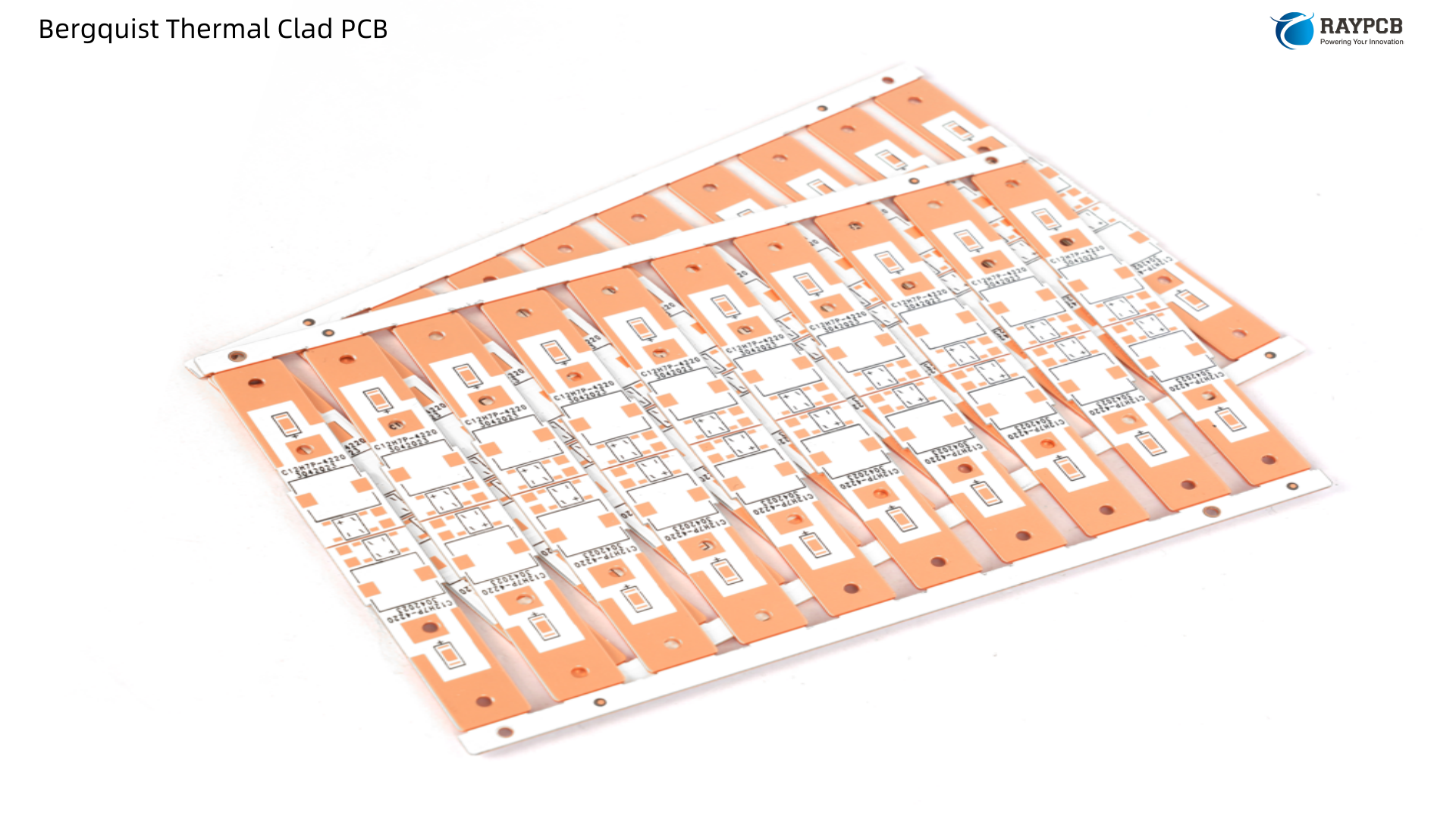
Both parts belong to Bergquist’s High Temperature (HT) dielectric family within the Thermal Clad Insulated Metal Substrate (IMS) product line. The part number is actually a coded descriptor: the first two digits after “HT-” give you the dielectric thickness in mils, and the last three give the copper circuit weight in tenths of an ounce.
So: HT-04503 = 4 mils dielectric? Actually no — in the original Bergquist numbering, HT-04503 refers to the 3 mil (0.003″ / 76µm) dielectric paired with a 0.5 oz copper circuit layer. The HT-07006 refers to the 6 mil (0.006″ / 152µm) dielectric. The number convention can be a bit confusing, which is why engineers default to checking dielectric thickness directly in the datasheet.
What they share: the same high-temperature epoxy-based dielectric formulation, designed to resist degradation from high temperature exposure. The HT-07006 is specifically described as a dielectric resistant to degradation from high temperature exposure that features even higher dielectric breakdown characteristics than the HT-04503. That sentence is the key to the whole comparison — the HT-07006 trades some thermal performance for more electrical isolation.
Side-by-Side Technical Specs: HT-04503 vs HT-07006
Here is everything that matters, pulled directly from the official Bergquist/Henkel datasheets:
Core Thermal and Electrical Properties
| Property | Test Method | HT-04503 | HT-07006 |
| Dielectric Thickness | — | 3 mil / 76 µm | 6 mil / 152 µm |
| Product Thermal Conductivity | MET 5.4-01-40000 | 4.1 W/mK | 4.1 W/mK |
| Dielectric Thermal Conductivity | ASTM D5470 | 2.2 W/mK | 2.2 W/mK |
| Thermal Resistance | ASTM D5470 | 0.45 °C·cm²/W | 0.71 °C·cm²/W |
| Thermal Impedance | MET 5.4-01-40000 | ~0.45 °C/W | 0.7 °C/W |
| Breakdown Voltage (AC) | ASTM D149 | ~8.5 kVAC | 11 kVAC |
| Dielectric Constant | ASTM D150 | 7 | 7 |
| Dissipation Factor (1 MHz) | ASTM D150 | 0.0129 | 0.0129 |
| Capacitance | ASTM D150 | ~32.2 pF/cm² | ~43 pF/cm² |
| Glass Transition (Tg) | ASTM E1356 | 150°C | 150°C |
| UL Max Operating Temp | UL 746B | 140°C | 140°C |
| Solder Limit (UL 796) | 60 seconds | 325°C | 325°C |
Physical and Mechanical Properties
| Property | Test Method | HT-04503 | HT-07006 |
| Peel Strength @ 25°C | ASTM D2861 | 1.1 N/mm | 1.1 N/mm |
| Storage Modulus @ 25°C | ASTM D4065 | 16 GPa | 16 GPa |
| Storage Modulus @ 150°C | ASTM D4065 | 7 GPa | 7 GPa |
| CTE (XY, below Tg) | ASTM D3386 | 25 µm/m°C | 25 µm/m°C |
| CTE (Z, above Tg) | ASTM D3386 | 95 µm/m°C | 95 µm/m°C |
| Flammability | UL 94 | V-0 | V-0 |
| CTI | IEC 60112 | 600 | 600 |
| Volume Resistivity | ASTM D257 | 1×10¹⁴ Ω·m | 1×10¹⁴ Ω·m |
Compliance and Agency Ratings
| Certification | HT-04503 | HT-07006 |
| RoHS Compliant | Yes | Yes |
| Halogen-Free | Yes | Yes |
| Lead-Free Solder | Compatible | Compatible |
| Eutectic AuSn (Au80/Sn20) | Compatible | Compatible |
| UL Recognition | Yes | Yes |
| ISO 9001 | Yes | Yes |
The table makes the core trade-off immediately clear: identical chemistry and compliance, different dielectric thickness, different thermal resistance, different voltage isolation.
The Fundamental Trade-Off: Thermal Performance vs. Voltage Isolation
This is the crux of the HT-04503 vs HT-07006 decision, and it comes down to a single engineering reality: thicker dielectric = better voltage isolation, worse thermal resistance. There is no way around it in a polymer-ceramic system where thermal conductivity of the dielectric itself is the same (2.2 W/mK for both).
Understanding Thermal Resistance Difference
The thermal resistance delta between the two is 0.26 °C·cm²/W (0.71 minus 0.45). That sounds small in isolation, but apply it to a real power stage. Consider a TO-263 MOSFET dissipating 15W with a mounting footprint of approximately 1.4 cm²:
ΔT (dielectric) = Power density × Thermal resistance = (15W / 1.4 cm²) × thermal resistance per unit area
With HT-04503: (15/1.4) × 0.45 = 4.8°C across the dielectric With HT-07006: (15/1.4) × 0.71 = 7.6°C across the dielectric
That 2.8°C difference compounds through the rest of your thermal stack. Over the lifetime of a product running continuously near its thermal limit, the additional junction temperature directly translates to accelerated aging. At typical MOSFET reliability models, every 10°C of additional junction temperature roughly halves the component’s operating life.
If you are tight on thermal budget, HT-04503 wins — its thinner dielectric is the better thermal conductor.
Understanding the Voltage Isolation Advantage of HT-07006
The Bergquist Selection Guide notes that for applications with an expected voltage over 480 Volts AC, a dielectric thickness greater than 0.003″ (76µm) is recommended. This directly disqualifies HT-04503 (76µm) for mains-connected, high-voltage power stages above that threshold, and makes HT-07006 (152µm) the correct choice.
The HT-07006 has a breakdown voltage of 11 kVAC, compared to the HT-04503 at 8.5 kVAC. For a system designed to IEC 60950 or IEC 62368 working voltage requirements for 240 VAC mains input, the HT-07006 provides a more comfortable safety margin with its higher dielectric breakdown and thicker insulation barrier.
This matters most in: variable frequency drives (VFDs), grid-tie inverters, AC/DC power supplies, EV onboard chargers, and any topology where the PCB copper is sitting at rail voltage while the aluminum base is chassis-connected.
Application Decision Matrix: When to Choose Each Grade
Choose HT-04503 When…
HT-04503 makes sense when your operating voltage is low enough that the 8.5 kVAC breakdown and 76µm dielectric are compliant with your safety agency requirements, and your thermal budget is tight. With a thermal resistance of only 0.32°C·cm²/W, the HT-04503 efficiently transfers heat, allowing for effective dissipation and temperature control.
Specific application fits:
- High-power LED assemblies operating on 24–48V DC bus
- DC motor drives at 48V or 96V bus voltage
- Telecom DC/DC converters at 48V input
- Solid state relays for DC load switching below 300V
- Battery management systems in the 12–60V range
- Audio amplifier output stages on low-voltage rails
The benefit here is direct: you get the maximum thermal conductivity advantage of the HT chemistry while staying within the dielectric thickness that minimizes thermal resistance.
Choose HT-07006 When…
HT-07006 is the right call when your circuit voltage demands more isolation than the HT-04503 dielectric can reliably provide, or when your safety certification requires the thicker insulation margin. The HT-07006 datasheet itself lists its typical applications as: high watt-density applications where achieving low thermal resistance is required, power conversion, heat-rails, solid state relays, motor drives, high reliability LED applications, and solar receivers.
The overlap with HT-04503 applications is real — but HT-07006 is specifically selected when:
- VFDs and inverters connected to 230/400V AC mains
- EV onboard chargers with DC bus voltages above 400V
- Grid-tied solar inverters and power optimizers
- Industrial motor drives at 480V three-phase
- Servo amplifiers operating from 240/400V AC
- High-voltage solid state relays for AC load control
Quick Application Selection Guide
| Application | Operating Voltage | Recommended Grade | Reason |
| High-power LED module (24V DC) | < 60V | HT-04503 | Thermal priority; voltage easily met |
| DC/DC telecom converter (48V in) | < 60V | HT-04503 | Low voltage, thermal efficiency wins |
| Battery management (12–72V EV) | < 100V | HT-04503 | Comfortable safety margin |
| Variable speed drive (230V AC) | 230–480V | HT-07006 | Voltage isolation requirement |
| Industrial inverter (400V AC) | 400–480V | HT-07006 | Mains isolation mandatory |
| EV onboard charger (400–800V DC) | 400–800V | HT-07006 | High voltage, safety critical |
| Solar inverter output stage | 600V+ DC | HT-07006 | High DC bus, stringent isolation |
| Audio output stage (±80V rails) | ±80V | HT-04503 | Low bus voltage, thermal priority |
What They Both Do Well: Shared Strengths of the HT Family
Before anyone assumes HT-07006 is the “worse” option because of its higher thermal resistance — that framing misses the point. Both dielectrics belong to the same high-performance family and outperform cheaper alternatives by a significant margin.
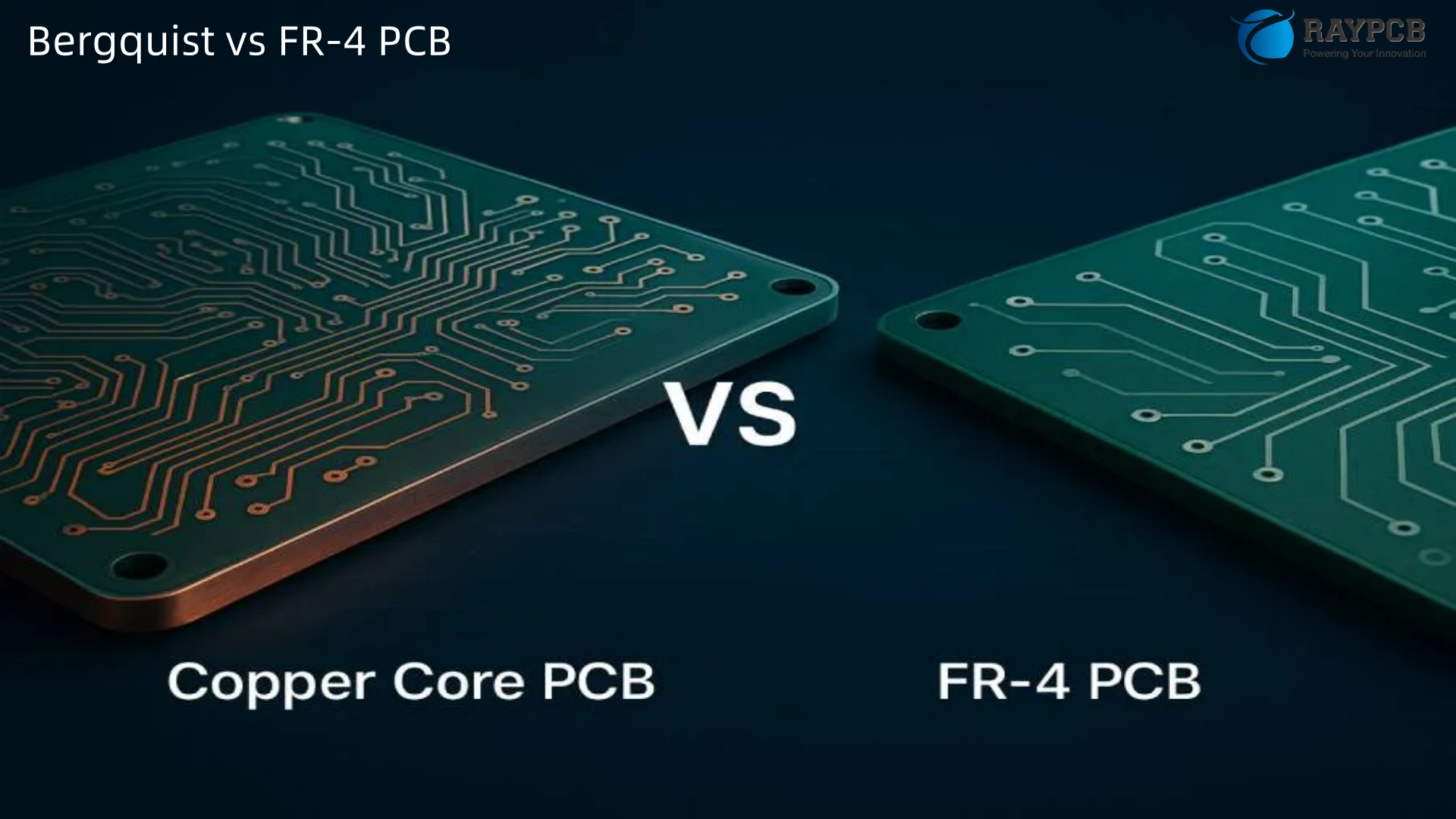
Against a standard epoxy prepreg MCPCB dielectric (typically 0.8–1.0 W/mK), both HT grades offer roughly 2–4× better thermal conductivity. Against FR-4 at 0.3 W/mK, the gap is even wider. For applications that previously relied on ceramic substrates (DBC, AMB), the HT series offers comparable thermal performance in an aluminum-based format that costs less and machines more easily.
Both grades support:
- Eutectic gold-tin (Au80Sn20) solder for direct die attach
- Lead-free reflow processes with standard SAC305 alloys
- Selective dielectric removal (SDR) for pedestal and direct metal-contact configurations
- Ultra Thin Circuit (UTC) constructions using Bergquist Bond-Ply 450 PA
- All standard aluminum alloys (1000, 3000, 5000, 6000 series) and copper base metals
- Base metal thicknesses from 0.5mm to 3.2mm
The shared UL 746B recognition at 140°C continuous operating temperature and the 325°C/60-second solder limit mean that production assembly processes do not need to differentiate between the two grades.
How HT-04503 and HT-07006 Compare to Other Thermal Clad Grades
Understanding where these two fit within the broader Bergquist lineup helps clarify when you might step outside the HT family entirely.
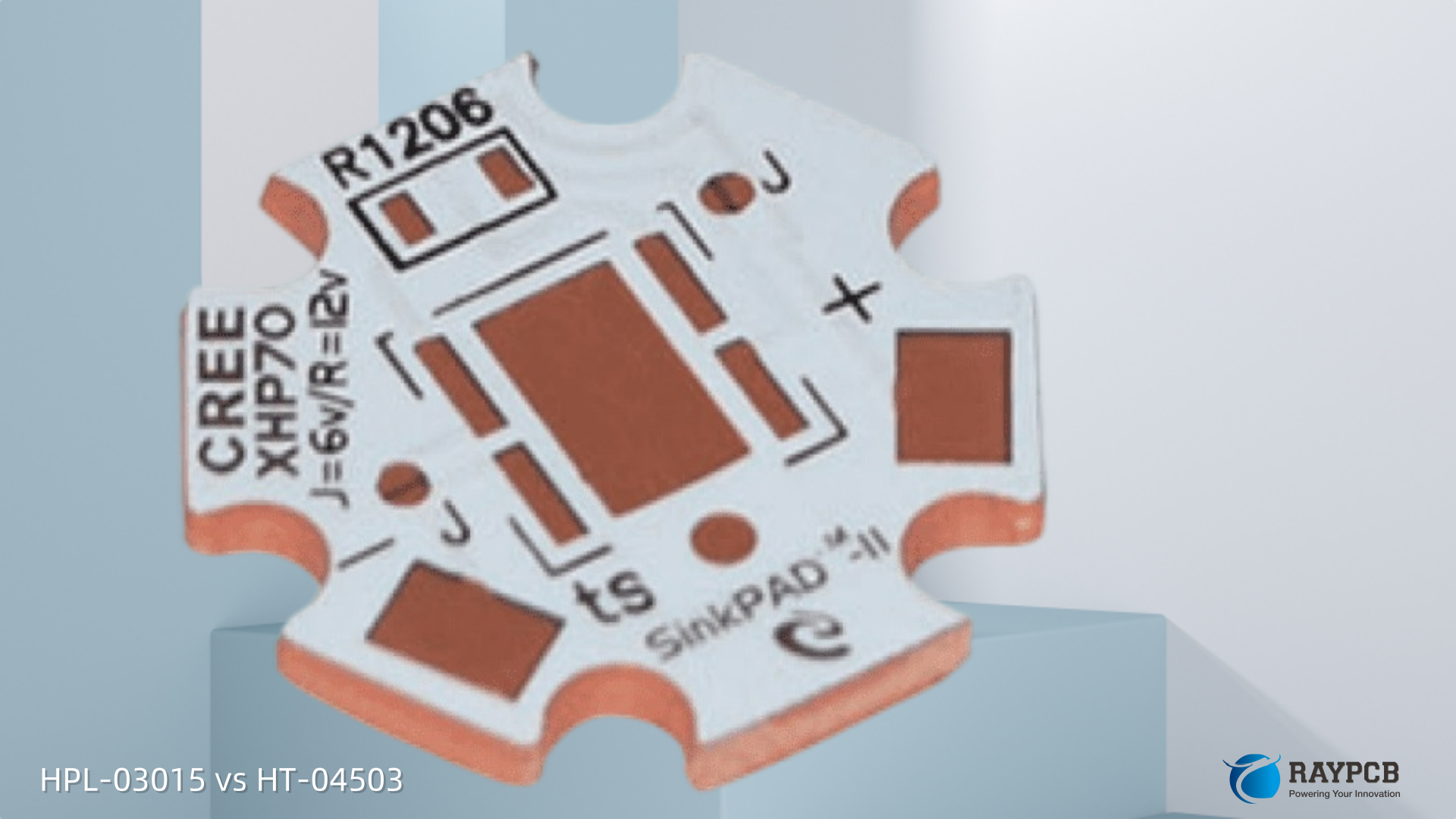
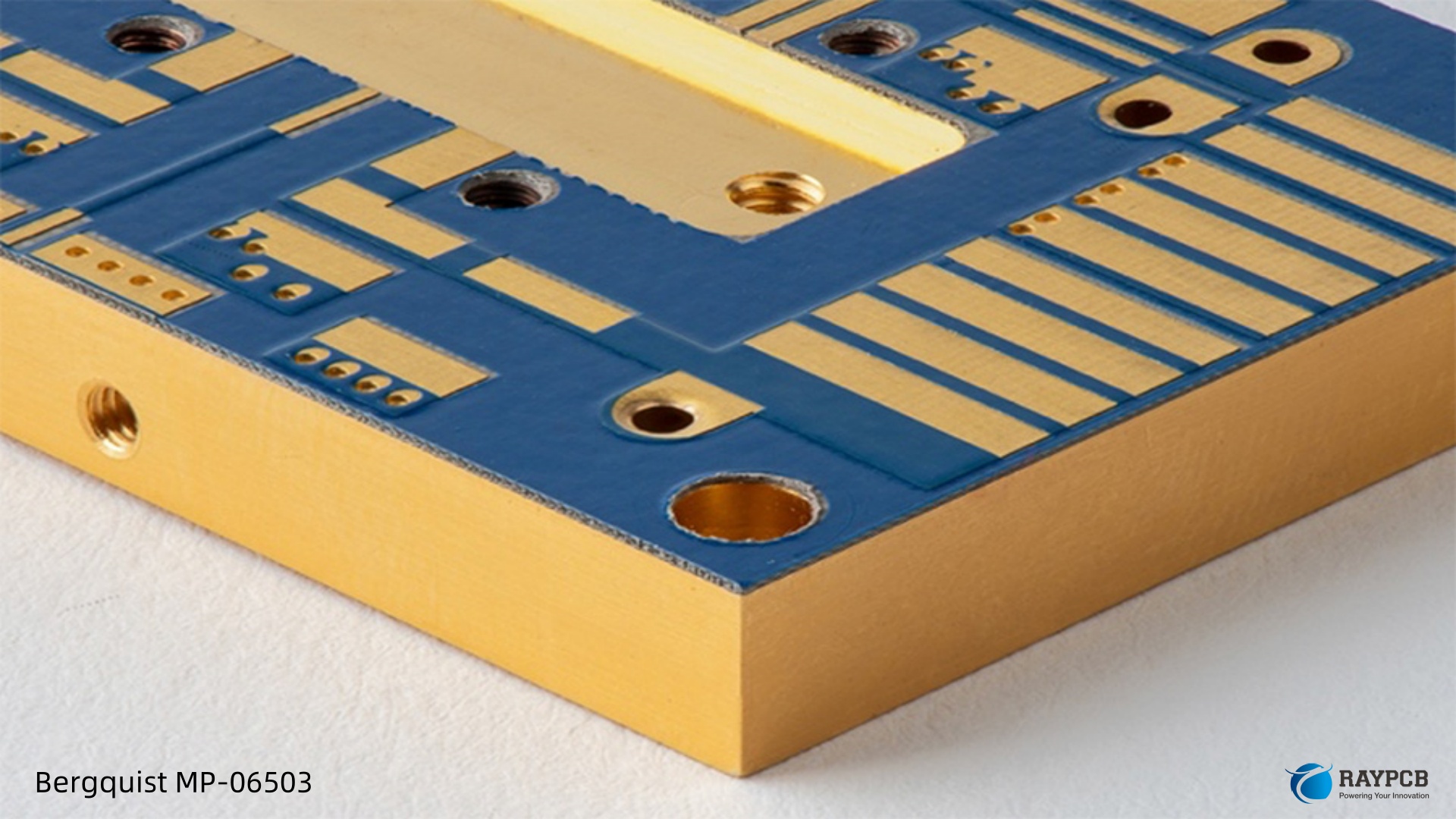
| Property | HPL-03015 | HT-04503 | HT-07006 | HT-09009 | MP-06503 |
| Dielectric thickness | 1.5 mil / 38µm | 3 mil / 76µm | 6 mil / 152µm | 9 mil / 229µm | 3 mil / 76µm |
| Thermal resistance (°C·cm²/W) | 0.30 | 0.45 | 0.71 | 0.90 | 0.58 |
| Breakdown voltage (kVAC) | ~2.5 | ~8.5 | 11.0 | ~20.0 | ~8.5 |
| Tg (°C) | 185 | 150 | 150 | 150 | 90 |
| Primary use | High-power LED | Mid-voltage power | High-voltage power | Very high isolation | General purpose |
If neither HT-04503 nor HT-07006 fits your spec, the HT-09009 steps up to 9 mil dielectric for systems requiring voltage isolation margins above what HT-07006 provides. At the low end, HPL-03015 delivers the best possible thermal resistance but is limited to lower voltage applications and has a lower dielectric thickness that mandates careful voltage derating.
Design Considerations Specific to Each Grade
Routing and Copper Weight
Both HT grades behave identically from a fabrication standpoint: standard SMT assembly, LPI solder mask, HASL or ENIG surface finish. Copper weights from 1 oz (35µm) through 3 oz (105µm) are standard; heavier copper is available on request. The 2 oz option is worth specifying for any trace carrying more than ~3A of continuous current, regardless of HT grade.
Component Placement Near Board Edge
With the HT-07006’s thicker dielectric, you get an additional mechanical benefit on boards where components sit close to the edge: slightly higher resistance to edge delamination under mechanical stress. It is a marginal difference for most designs, but relevant in vibration-exposed automotive underhood assemblies.
Thermal Via Strategy
Neither HT grade supports plated through-holes connecting to the base metal electrically. For high-power devices requiring the shortest possible thermal path, selective dielectric removal (SDR) creates a direct copper-to-aluminum contact window beneath the device footprint. This technique works equally well with both HT grades but is more commonly justified when using HT-07006 — because the thicker dielectric represents a larger thermal resistance penalty that SDR can eliminate for the highest-dissipation components.
Comparing to Arlon PCB Materials
Engineers specifying high-temperature substrates sometimes evaluate Arlon PCB materials alongside Bergquist HT grades. Arlon’s thermoset products like the 85N and 91ML address high-temperature FR-4 replacement applications in multilayer boards, but they are fundamentally different — glass-reinforced epoxy laminates rather than metal-core IMS. Arlon materials do not provide the metal-base thermal path that defines the HT-04503 and HT-07006 value proposition. If your design needs a drop-in FR-4 replacement with better Tg and thermal stability, an Arlon high-Tg laminate may be relevant. If you need to get heat out of a power device into a metal heatsink structure, that is firmly in Bergquist HT territory.
Useful Resources and Official Datasheets
Every engineer working with these materials should have the following documents open before finalizing a design:
| Resource | Description | Link |
| Bergquist Thermal Clad Selection Guide | Complete dielectric comparison, design rules, voltage guidelines | Digi-Key PDF |
| HT-04503 Datasheet (Bergquist/Henkel) | Full property table for 3 mil HT dielectric | mclpcb.com PDF |
| HT-07006 Datasheet (Bergquist/Henkel) | Full property table for 6 mil HT dielectric | mclpcb.com PDF |
| IPC-2221B | Generic Standard on Printed Board Design (voltage spacing tables) | IPC.org |
| IEC 60664-1 | Insulation coordination — essential for working voltage vs. dielectric thickness decisions | IEC Webstore |
| UL 796 | Standard for Printed Wiring Boards (solder limit rating reference) | UL Standards |
| Henkel Electronics Materials (Bergquist) | Manufacturer product page and distributor links | henkel.com |
| Digi-Key Bergquist IMS Listing | Stocking distributor with live pricing | Digi-Key |
5 FAQs: HT-04503 vs HT-07006
Q1: Can I substitute HT-07006 for HT-04503 if my supplier is out of stock?
Technically yes, but with a thermal performance penalty. The HT-07006’s thicker dielectric increases thermal resistance from 0.45 to 0.71 °C·cm²/W. Whether that matters depends entirely on how close your design is to its thermal limit. If you have margin, the swap is fine — and the HT-07006 gives you better voltage isolation as a bonus. If your thermal model shows junction temperatures already within 10°C of the component’s maximum, run the numbers again with the higher thermal resistance before approving the substitution.
Q2: Which grade should I use for a 240VAC motor drive?
HT-07006. The working voltage on a 240V AC system generates DC bus voltages of approximately 340V (peak), and safety agency requirements (IEC 62368, UL 508C) require meaningful clearance between the circuit potential and the chassis/heat sink ground. The HT-04503 at 8.5 kVAC breakdown will likely pass, but the HT-07006’s 11 kVAC rating and thicker dielectric provide a more robust safety margin for certification testing and field reliability.
Q3: Do I need to change my reflow profile when switching between HT-04503 and HT-07006?
No. Both materials share the same Tg (150°C), the same UL solder limit (325°C/60s), and the same epoxy chemistry. Standard lead-free SAC305 reflow profiles with peak temperatures of 245–255°C are compatible with both. The aluminum base metal has higher thermal mass compared to FR-4, so your profiling adjustment relates to the base metal thickness and mass, not the dielectric grade selection.
Q4: Is there a cost difference between HT-04503 and HT-07006?
In practice, HT-07006 panel stock typically costs slightly more than HT-04503 due to the higher dielectric material volume. The difference at PCB fabrication level is usually modest — a few percent — since substrate material is rarely the dominant cost driver once fabrication, copper, and finish are accounted for. If you are cost-optimized and voltage permits, HT-04503 is the leaner choice.
Q5: How do I determine which grade my existing board uses if there’s no BOM available?
Measure the board at its edge cross-section or request the dielectric thickness from the fabricator. The HT-04503 dielectric layer is nominally 76µm thick; the HT-07006 is 152µm. Even with copper and base metal variation, these differences are measurable with a calibrated micrometer on a board cross-section. You can also check the breakdown voltage — apply a controlled dielectric withstand test (hi-pot test): the 8.5 vs 11 kVAC ratings will tell you which material you have.
Final Verdict: HT-04503 vs HT-07006
The bottom line is straightforward. These are not competing products — they are complements within the same dielectric family addressing different points on the voltage-vs-thermal-performance curve.
HT-04503 wins when: operating voltage is below 480V AC or equivalent DC, thermal budget is tight, or you want the maximum thermal conductivity the HT chemistry can deliver.
HT-07006 wins when: the design involves mains-connected voltages, EV high-voltage buses, industrial 400/480V three-phase systems, or any application where safety certification demands more isolation distance than 76µm of dielectric can confidently provide.
Get the voltage isolation requirement nailed down first — that determination typically locks the dielectric grade. Then optimize copper weight, base metal thickness, and mounting configuration around the thermal budget. That order of operations will keep you out of trouble on both dimensions.