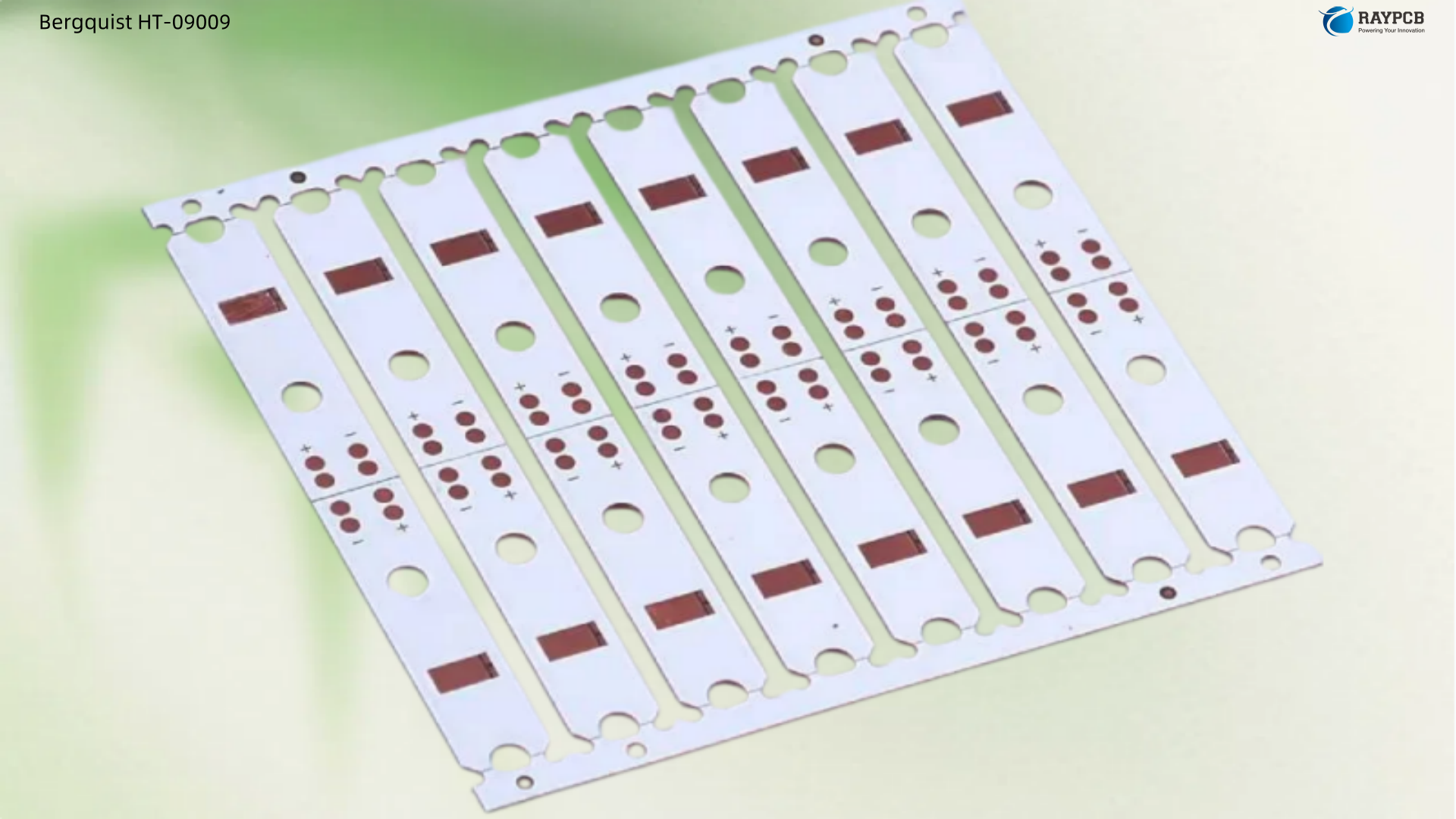
Bergquist HT-09009: Multi-Layer High Temperature Dielectric for Advanced MCPCB

Technical guide to the Bergquist HT-09009 high temperature MCPCB dielectric โ€” specs, thickness comparison, applications in high-voltage power electronics, and fabrication tips.

If you’re specifying dielectric materials for a metal core PCB that has to survive high operating temperatures, handle lead-free solder reflow without flinching, and hold its electrical isolation properties across thousands of thermal cycles โ€” you’ve probably already encountered the Bergquist HT series. The Bergquist HT-09009 occupies a specific and important place in that lineup: it’s the thicker-dielectric option in the High Temperature (HT) family, engineered for applications where greater electrical isolation headroom, higher breakdown voltage, and multi-layer assembly compatibility are non-negotiable.

This article gives you a detailed technical picture of what the HT-09009 actually is, how it fits within the broader Thermal Clad product family, what makes it the right choice for certain demanding applications โ€” and where you’d choose a different grade instead.

What Is Bergquist Thermal Clad and Why the Dielectric Is Everything

Bergquist is a US-based company that invented thermal clad PCBs. Henkel acquired Bergquist on September 1, 2014 and now offers technological solutions for electronics using Bergquist thermal management products.

Thermal Clad Insulated Metal Substrate (IMS) was developed by Bergquist as a thermal management solution for today’s higher watt-density surface mount applications where heat issues are a major concern. Thermal Clad substrates minimize thermal impedance and conduct heat more effectively and efficiently than standard printed wiring boards.

What makes Bergquist’s approach distinctive compared to competitors who just use standard prepreg is the dielectric formulation. The dielectric is a proprietary polymer/ceramic blend that gives Thermal Clad its excellent electrical isolation properties. Different from others, Bergquist doesn’t use fiberglass, allowing for better thermal performance. Glass carriers degrade thermal performance, which is why their dielectrics are glass-free.

Thermal Clad is a three-layer system comprised of a circuit layer (printed circuit foil with a thickness of 1 oz. to 10 oz.), a dielectric layer that offers electrical isolation with minimum thermal resistance, and a base layer that is often aluminum but other metals such as copper may also be used.

Understanding this architecture is essential before diving into the HT-09009 specifically, because the entire engineering case for MCPCB design hinges on what that dielectric layer can and can’t do.

Understanding the Bergquist HT Series Product Naming Convention

How to Read the HT Part Number

Bergquist’s Thermal Clad product codes follow a systematic naming structure that encodes key performance parameters directly into the part number. For the HT series:

  • HTย = High Temperature dielectric family
  • The digits that follow encode thermal conductivityย (in tenths of W/mยทK) and dielectric thicknessย (in mils)

Using this convention, the HT-09009 decodes as follows:

Code ElementMeaningHT-09009 Value
HTDielectric familyHigh Temperature
090Thermal conductivity indicator~2.2 W/mยทK nominal
09Dielectric thickness9 mil (229 ยตm)

For comparison, here’s how other HT series products decode:

Part NumberDielectric ThicknessThermal ConductivityThermal Impedance
HT-045033 mil (76 ยตm)4.1 W/mยทK0.05ยฐCยทinยฒ/W
HT-070066 mil (152 ยตm)2.2 W/mยทK0.27ยฐCยทinยฒ/W
HT-090099 mil (229 ยตm)~2.2 W/mยทKHigher (thicker dielectric)

The thicker the dielectric, the higher the thermal impedance but also the higher the dielectric breakdown voltage. The HT-09009 exists specifically for situations where that trade-off makes sense โ€” when you need more breakdown voltage headroom than the 6-mil or 3-mil options provide.

Bergquist HT-09009 Key Technical Specifications

The HT-09009 shares the core material chemistry of the entire HT dielectric family, with the distinguishing factor being its 9-mil (229 ยตm) dielectric thickness. Based on Bergquist’s published HT series data, the following properties apply:

Thermal Properties

PropertyValueTest Method
Thermal Conductivity~2.2 W/mยทKASTM D5470
Thermal Impedance (typical)Higher than HT-07006ASTM D5470
Max Operating Temperature (UL)130ยฐC continuousUL 746B
Max Soldering Temperature288ยฐC (10 seconds)IPC TM-650 2.4.13
UL Solder Rated325ยฐC / 60 secondsUL recognition
Glass Transition Temperature (Tg)>130ยฐC (higher thermal grades)ASTM E1356

Electrical Properties

PropertyValueTest Method
Dielectric Thickness9 mil (229 ยตm)โ€”
Dielectric Breakdown (typical)>15 kVACASTM D149
Dielectric Strength~2,000 V/milASTM D149
Dielectric Constant (ฮตr)~4.2 at 1 MHzASTM D150
Dissipation Factor~0.02 at 1 MHzASTM D150
Volume Resistivity>10โน MฮฉยทcmASTM D257
Surface Resistivity>10โน Mฮฉ/sqASTM D257

Mechanical and Chemical Properties

PropertyValue
Peel Strengthโ‰ฅ5 lb/in (0.9 N/mm)
FlammabilityUL 94V-0
RoHS ComplianceYes
Halogen-FreeYes
Water Absorption (168 hrs)<0.20%
CTE (x/y-axis)~18โ€“20 ppm/ยฐC

Important Note: Always verify current specifications against the official Henkel/TCLAD technical data sheet for your application. Dielectric performance can vary with copper weight and base metal selection.

What Makes the HT-09009 Specifically Suited for High Voltage and Multi-Layer Applications

Higher Dielectric Breakdown Voltage

For applications with an expected voltage over 480 Volts AC, Bergquist recommends a dielectric thickness greater than 0.003″ (76 ยตm). The HT-09009’s 9-mil (229 ยตm) thickness provides roughly three times the dielectric thickness of that minimum threshold, giving it substantial breakdown voltage headroom for high-voltage motor drives, inverters, and industrial power conversion equipment operating at or above 480V AC.

In power electronics, every volt of margin you can build into electrical isolation is real reliability you can count on in the field. The thicker dielectric in the HT-09009 translates directly into safer clearances in applications where transient overvoltage events, lightning strikes, or inductive switching spikes are expected.

Multi-Layer MCPCB Stack-Up Compatibility

Bergquist Thermal Clad substrates are not limited to use with metal base layers. Power conversion applications can enhance their performance by replacing FR-4 with Thermal Clad dielectrics in multi-layer assemblies. In this application, the thickness of the copper circuit layer can be minimized by the high thermal performance of Thermal Clad.

The HT-09009’s thicker dielectric makes it particularly well-suited to this multi-layer role. When Thermal Clad dielectric is used as the bonding/insulation layer between circuit layers in a hybrid multilayer assembly, the 9-mil variant provides better inter-layer isolation than the 3-mil or 6-mil options โ€” at the cost of slightly higher thermal impedance. For multilayer assemblies where control circuits and high-voltage power circuits coexist in the same stack-up, that isolation is often mandatory.

Eutectic Gold/Tin and Lead-Free Solder Compatibility

HT dielectrics are UL solder rated at 325ยฐC/60 seconds, enabling Eutectic Gold/Tin solders. This is not a capability that standard MCPCB materials can match. For applications in aerospace, military electronics, or high-reliability optoelectronics where AuSn eutectic die attach is required, the HT series dielectrics โ€” including the HT-09009 โ€” are among the few commercially qualified options that can withstand the process temperatures involved.

HT-09009 vs. Other Bergquist HT Dielectrics: Choosing the Right Thickness

This is the question that matters most in practice. The HT series is not a one-size-fits-all product family. Here’s how the options map to application requirements:

Dielectric GradeThicknessThermal ImpedanceBreakdown VoltageBest Application
HT-045033 mil (76 ยตm)0.05ยฐCยทinยฒ/W~6 kVACMaximum thermal performance, lower voltage (<480V)
HT-070066 mil (152 ยตm)0.27ยฐCยทinยฒ/W~11 kVACGeneral high-temperature power electronics
HT-090099 mil (229 ยตm)Higher~15+ kVACHigh voltage, multi-layer, AuSn die attach

Choose HT-09009 when:

  • Your bus voltage exceeds 480V AC and you need conservative breakdown margins
  • You’re designing a multilayer MCPCB assembly where inter-layer isolation is critical
  • Your assembly process uses Eutectic AuSn solder and requires >300ยฐC process compatibility
  • You need the best moisture and contamination resistance across the HT product range (thicker dielectric)

Choose HT-07006 or HT-04503 when:

  • Thermal impedance is your primary design constraint and voltage is below 480V
  • You’re building single-layer LED or power supply boards where maximum heat transfer takes priority
  • Cost is a factor โ€” thinner dielectrics are less expensive per panel

Bergquist HT-09009 vs. Competing High Temperature MCPCB Dielectrics

The Bergquist/TCLAD HT series isn’t the only game in town for high-temperature MCPCB applications. Here’s how HT-09009-class materials compare to alternatives:

MaterialSupplierThermal ConductivityDielectric ThicknessMax Solder TempDistinctive Feature
HT-09009Bergquist/TCLAD~2.2 W/mยทK9 mil (229 ยตm)325ยฐC/60sAuSn compatible, multi-layer
HT-07006Bergquist/TCLAD2.2 W/mยทK6 mil (152 ยตm)325ยฐC/60sStandard HT, LED/power
HT-04503Bergquist/TCLAD4.1 W/mยทK3 mil (76 ยตm)325ยฐC/60sHighest thermal conductivity in HT series
Arlon 92MLArlon PCB2.0+ W/mยทKVariousHighMilitary-grade reliability
Ventec VT-4B1Ventec2.0 W/mยทK4 mil288ยฐCCost-competitive HT alternative
Laird TflexLaird1.0โ€“6.0 W/mยทKPhase-changeโ€”Thermal interface material, not laminate

A Note on Arlon

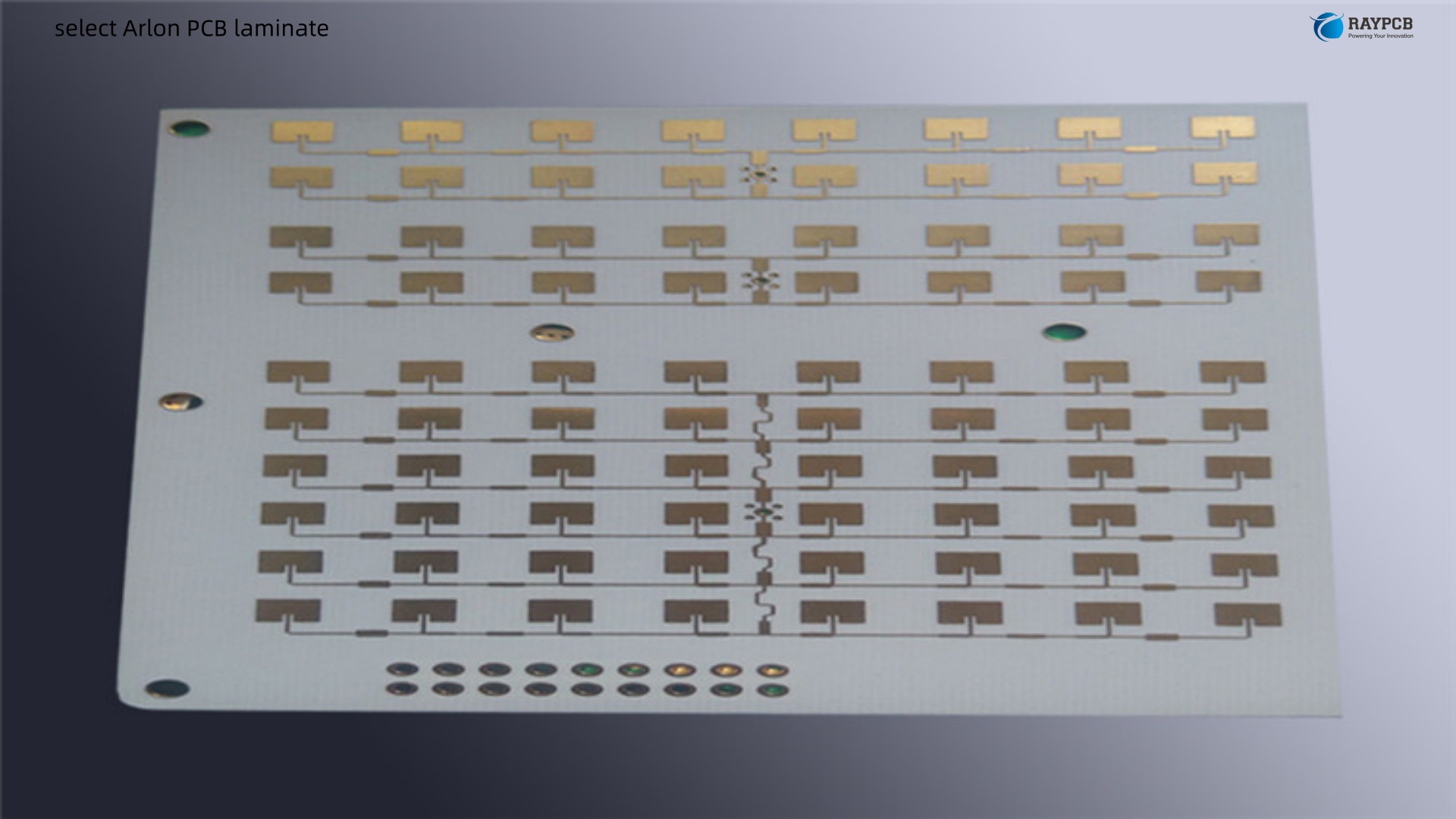
It’s worth calling out Arlon PCB materials as a legitimate alternative for high-temperature MCPCB dielectric applications, particularly for designs headed into military or aerospace environments. Arlon brings deep heritage in demanding reliability applications, and their high-temperature dielectric laminates are often evaluated alongside Bergquist HT grades in mil-spec qualification programs. The choice between them typically comes down to fabricator qualification, supply chain considerations, and whether a specific military or aerospace program already has one manufacturer qualified.

Primary Applications for the Bergquist HT-09009

Motor Drives and Variable Frequency Drives (VFDs)

Compact high-reliability motor drives built on Thermal Clad have set the benchmark for watt-density. Dielectric choices provide the electrical isolation necessary to meet operating parameters and safety agency test requirements. The availability of Thermal Clad HT makes high temperature operation possible.

The HT-09009 in particular is favored for VFDs operating on 480V AC industrial power systems. The combination of thicker dielectric, high Tg, and lead-free solder compatibility makes it well-matched to the thermal and electrical stress profile of IGBT-based motor control circuits.

High-Voltage Power Conversion

Due to the size constraints and watt-density requirements in DC-DC conversion, Thermal Clad has become the favored choice. It is available in a variety of thermal performances, is compatible with mechanical fasteners and is highly reliable. It can be used in almost every form-factor and fabricated in a wide variety of substrate metals, thicknesses and copper foil weights.

For AC-DC power supplies and DC-DC converters operating at or above 48V bus with primary-to-secondary isolation requirements, the HT-09009 provides the kind of working voltage headroom that gives safety certification agencies confidence and gives design engineers sleep at night.

Solid State Relays (SSRs) and Switches

High-voltage solid state relays are among the most classic applications for HT-grade MCPCB materials. The combination of high current density, high bus voltage, and compact form factor in SSRs makes the elevated breakdown voltage and high-temperature solderability of HT-09009 particularly valuable.

Multi-Layer Hybrid Assemblies

A multi-layer MCPCB has multiple layers of circuitry, a metal core, and a dielectric material. The multiple layers of circuitry are sandwiched between the insulation layers. These PCBs are compact-sized and used in applications where space is limited and require efficient heat dissipation. Multi-layer thermal clad PCBs are used in various applications including satellite systems, atomic accelerators, heart monitors, and file servers.

In these multi-layer configurations, the HT-09009’s 9-mil dielectric provides meaningful inter-layer electrical isolation โ€” essential when high-voltage power routing shares a stack-up with sensitive control or signal layers.

Design and Fabrication Considerations for HT-09009 MCPCB

Base Metal Selection

Available base metals include 5052 Aluminum in thicknesses of 0.8 mm to 3.2 mm, 6061 Aluminum from 0.8 mm to 4.8 mm, 4045 Aluminum, and Copper C1100 in various thicknesses. Most common thicknesses are 1.0 mm and 1.5 mm for aluminum bases.

For high-voltage applications using HT-09009, 1.5 mm or 2.0 mm aluminum base is the most common choice โ€” thick enough for good heat spreading while remaining manageable for routing and mechanical mounting.

Copper Foil Weight

Copper foil weight options include ED Copper in 1 oz (35 ยตm), 2 oz (70 ยตm), 3 oz (105 ยตm), 4 oz (140 ยตm), and 6 oz (210 ยตm), and RA Copper in 8 oz (280 ยตm) and 10 oz (350 ยตm).

For power applications with the HT-09009, 2 oz or 3 oz copper is typical. Heavier copper improves current-carrying capability and spreads heat more effectively in the circuit layer โ€” but increasing copper thickness while maintaining circuit flatness requires maintaining the copper layer at roughly 10% of the aluminum base thickness or thinner.

Lead-Free Assembly and Soldering

The HT-04503 and HT series dielectrics are lead-free solder compatible and Eutectic AuSn compatible, RoHS compliant and environmentally green, and available on all aluminum and copper metal substrates. These properties extend across the HT family, including the HT-09009.

Dielectric Integrity Testing

Any micro-fractures, delaminations or micro-voids in the dielectric will breakdown or respond as a short. Due to the capacitive nature of the circuit board construction, it is necessary to control the ramp up of the voltage to avoid nuisance tripping of the failure detect circuits in the tester and to maintain effective control of the test.

This is a practical point that catches out engineers new to MCPCB testing. The hi-pot test procedure for MCPCB dielectrics requires a slow voltage ramp โ€” typically 100โ€“500 V/s โ€” rather than the abrupt application used for standard PCB isolation testing.

Useful Resources for Bergquist HT-09009 and MCPCB Design

Official Product Documentation

Standards and References

Design Tools

5 Frequently Asked Questions About the Bergquist HT-09009

Q1: What is the main difference between the HT-09009 and HT-07006, and when should I choose the thicker grade?

Both are high temperature dielectrics from the same product family with the same base polymer/ceramic chemistry. The HT-09009’s 9-mil dielectric offers roughly 35% more thickness than the HT-07006’s 6-mil, which translates to higher dielectric breakdown voltage and greater inter-layer isolation for multi-layer assemblies โ€” at the cost of higher thermal impedance. Choose the HT-09009 when your bus voltage exceeds 480V AC, when you’re building a multi-layer MCPCB where isolation between power and control layers is critical, or when your process uses Eutectic AuSn solder die attach that demands maximum process temperature robustness. Choose HT-07006 when thermal performance is the primary constraint and your voltage is within moderate bounds.

Q2: Is the Bergquist HT-09009 compatible with standard FR4 fabrication processes?

Partially. The HT-09009 uses the same photo-chemical etching processes as standard FR4 for circuit layer patterning. However, because the base is aluminum or copper rather than glass-epoxy, drilling requires different tooling and parameters โ€” you’re typically routing rather than drilling through the full metal base for board outline, and via formation works differently in MCPCB designs. Solder mask and surface finish processes are compatible with standard SMT equipment. Fabricators experienced in MCPCB production will handle HT-09009 without issue; a fabricator who only runs FR4 will need to qualify the process before committing to production quantities.

Q3: What base metal should I choose for an HT-09009 application at 480V industrial voltage?

For 480V AC industrial applications, 6061 aluminum at 1.5 mm or 2.0 mm thickness is the most common choice. It provides the mechanical rigidity for rack-mounted power conversion equipment, good thermal spreading, and is compatible with standard machine screws for chassis mounting. If your thermal budget is very tight or your current density is extreme, copper base is an option โ€” but it costs significantly more and is heavier. Copper base is generally reserved for applications where thermal performance is so demanding that aluminum simply can’t provide adequate heat spreading, such as very high-density IGBT modules.

Q4: How does the HT-09009 perform through repeated thermal cycling compared to standard MCPCB dielectrics?

The HT dielectric family was specifically formulated for high-temperature durability. The polymer/ceramic blend maintains its mechanical and electrical properties across wide temperature ranges and through repeated thermal cycling from โˆ’40ยฐC to +125ยฐC and beyond in many applications. The critical variable is the coefficient of thermal expansion (CTE) match between the dielectric, the copper foil, and the aluminum base. CTE mismatch generates cyclic stress that can eventually delaminate the dielectric from the base metal or crack solder joints. Bergquist’s HT formulation is engineered to minimize this mismatch, but for extreme cycling profiles โ€” automotive under-hood, for instance โ€” run accelerated thermal cycle testing on your specific build before committing to production.

Q5: Where can I order Bergquist HT-09009 material, and what are typical lead times?

The HT-09009 is a standard Bergquist/TCLAD product available through authorized distributors including Digi-Key, Mouser, and Arrow Electronics for prototype and low-volume quantities. For production volumes, direct purchase through Henkel/TCLAD sales channels or authorized converter fabricators is typical. Lead times for standard configurations (aluminum base, 1 oz or 2 oz copper, standard thicknesses) are typically 2โ€“4 weeks from stock distributors, though custom base metal alloys, unusual foil weights, or non-standard panel sizes may require 4โ€“8 weeks. Always check current stock status with your distributor, as specific thickness/copper weight combinations may be made-to-order.

Final Thoughts: Is the Bergquist HT-09009 Right for Your MCPCB Design?

The HT-09009 is not the default choice for every MCPCB application. It’s a specialized grade within the Bergquist HT family, optimized for the specific engineering situation where you need both high-temperature dielectric performance and elevated breakdown voltage โ€” typically in industrial high-voltage power conversion, motor drives above 480V, multi-layer hybrid assemblies, or applications requiring Eutectic AuSn die-attach compatibility.

If your application runs below 480V and thermal impedance is your primary concern, the HT-04503 delivers dramatically better thermal performance with its 3-mil dielectric. If you’re specifying LED lighting or general-purpose power supply boards, the HT-07006 or the HPL family may be better fits.

But when the voltage is high, the temperatures are punishing, and the reliability stakes are real โ€” the HT-09009 is the Bergquist dielectric that was designed for exactly that design challenge.

For MCPCB fabrication using Bergquist HT-09009 and other specialty Thermal Clad materials, work with a fabricator who has a qualified process for IMS/MCPCB production, including dielectric hi-pot testing and certified lead-free assembly capability.
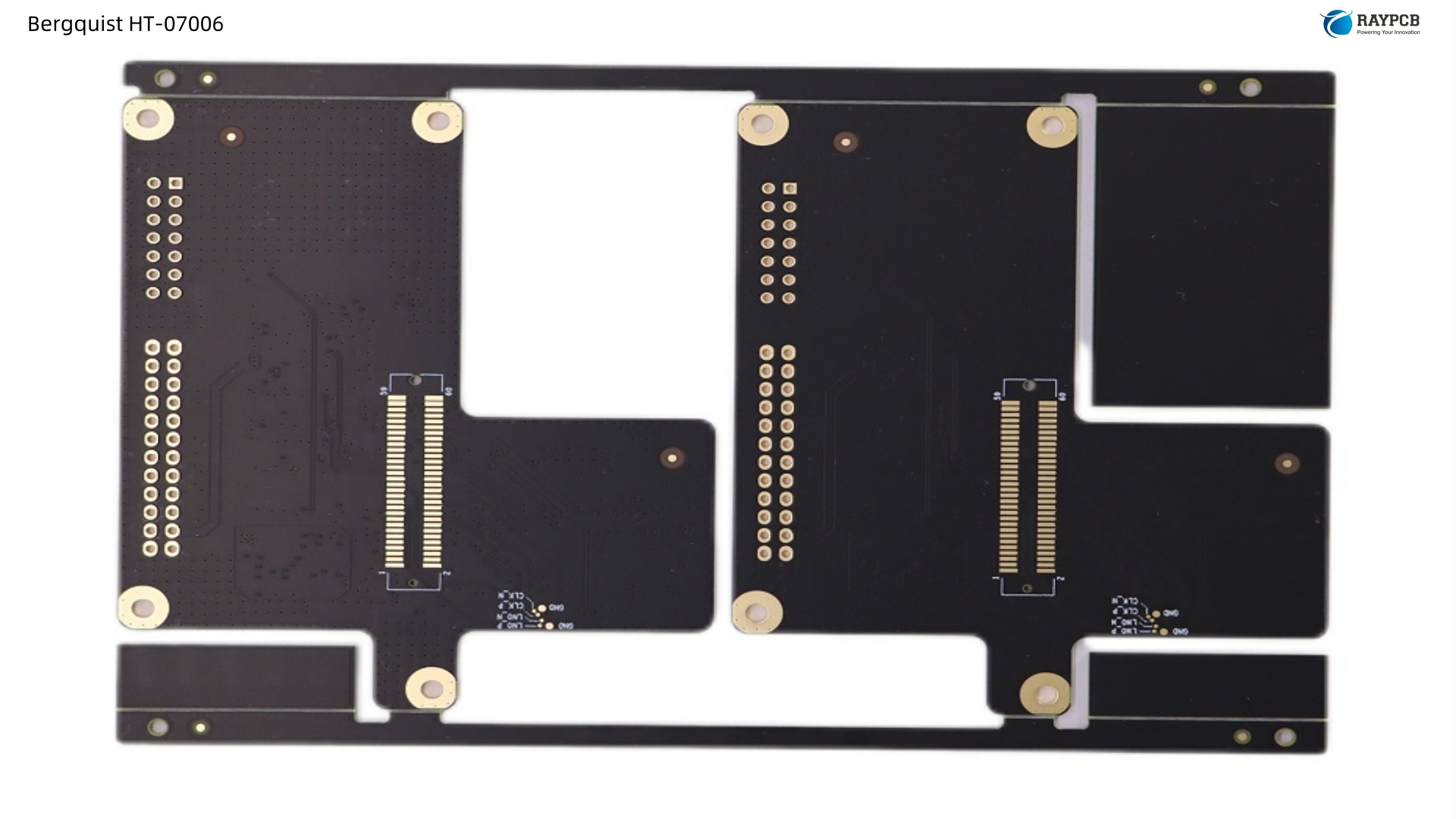
Bergquist HT-07006 Metal Core PCB: Complete Specifications & Applications

Complete Bergquist HT-07006 specifications: thermal conductivity 4.1 W/m-K, thermal resistance 0.71 ยฐCยทcmยฒ/W, 11 kVAC breakdown, 140ยฐC max operating temperature. Learn how this Thermal Clad MCPCB compares to HT-04503 and MP-06503, target applications, fabrication requirements, and design guidance from a PCB engineer’s perspective.

When you’re designing a board that handles serious power density โ€” motor drives, solid-state relays, high-current LED arrays, solar receivers โ€” standard FR4 stops being a viable option pretty quickly. The thermal resistance of a conventional epoxy laminate simply can’t keep junction temperatures in check at the watt densities these applications demand. That’s when engineers start looking at metal core PCBs (MCPCBs) and, specifically, at Henkel Bergquist’s Thermal Clad dielectric family.

The Bergquist HT-07006 is one of the most specified MCPCBs in that family. It’s the high-temperature, higher-isolation variant in the Thermal Clad lineup, carrying the thickest dielectric in the standard HT series at 6 mil (152 ยตm). This article goes through everything you need to know: what the HT-07006 actually is, the full verified specifications from the official technical data sheet, how it compares to the rest of the Thermal Clad range, where it belongs and where it doesn’t, and the fabrication details that will affect your design and manufacturing planning.

What Is the Bergquist HT-07006 MCPCB?

The Bergquist HT-07006 is a metal core PCB dielectric material manufactured under Henkel’s Thermal Clad product line. It is classified as a High Temperature (HT) dielectric โ€” the “HT” in the part number is not a marketing label, it refers to the dielectric’s specific formulation, which is engineered to resist thermal degradation at elevated continuous operating temperatures better than standard epoxy-based IMS (Insulated Metal Substrate) materials.

The part number encodes two key specifications: “07” refers to the nominal 7-mil dielectric thickness, and “006” indicates a thermal resistance of approximately 0.06 inยฒ-ยฐF/BTU (expressed in metric as 0.71 ยฐCยทcmยฒ/W). Understanding this nomenclature matters because it’s how Bergquist differentiates the entire Thermal Clad product line โ€” thickness and thermal resistance are the primary selection parameters.

The Thermal Clad Technology Behind HT-07006

The technical advantage of Thermal Clad doesn’t come from the aluminum or copper base metal โ€” it comes from the dielectric layer itself. Bergquist uses a proprietary polymer/ceramic composite blend for this layer. The polymer component provides electrical isolation, thermal aging resistance, and strong adhesion to both the base metal and the copper circuit foil above it. The ceramic filler drives up thermal conductivity while maintaining high dielectric strength. The result is a layer that achieves 2.2 W/m-K dielectric thermal conductivity and 11 kVAC breakdown voltage at a dielectric thickness of only 6 mil (152 ยตm).

This combination is mechanically more robust than thick-film ceramic substrates and direct bond copper (DBC) construction, while being significantly more cost-effective to fabricate at volume.

Bergquist HT-07006 Complete Specifications

The following data is taken directly from the official Bergquist / Henkel Technical Data Sheet (TDS) for BERGQUIST TCLAD TIC_TIP HT 07006, revision March 2019.

Physical Properties

PropertyValueTest Method
TechnologyEpoxyโ€”
AppearanceWhiteโ€”
Dielectric Thickness0.006 in (152 ยตm / 6 mil)โ€”
Peel Strength @ 25ยฐC1.1 N/mmASTM D2861
Glass Transition Temperature (Tg)150ยฐCASTM E1356
CTE โ€” XY/Z Axis Below Tg25 ยตm/mยทยฐCASTM D3386
CTE โ€” XY/Z Axis Above Tg95 ยตm/mยทยฐCASTM D3386
Storage Modulus @ 25ยฐC16 GPaASTM D4065
Storage Modulus @ 150ยฐC7 GPaASTM D4065

Electrical Properties

PropertyValueTest Method
Dielectric Constant7ASTM D150
Dissipation Factor @ 1 kHz0.0038ASTM D150
Dissipation Factor @ 1 MHz0.0129ASTM D150
Capacitance43 pF/cmยฒASTM D150
Volume Resistivity1ร—10ยนโด ฮฉยทmASTM D257
Surface Resistivity1ร—10ยนยณ ฮฉ/sqASTM D257
Breakdown Voltage11 kVACASTM D149

Thermal Properties

PropertyValueTest Method
Product Thermal Conductivity4.1 W/m-KMET 5.4-01-40000
Dielectric Thermal Conductivity2.2 W/m-KASTM D5470
Thermal Resistance0.71 ยฐCยทcmยฒ/WASTM D5470
Thermal Impedance0.7 ยฐC/WMET 5.4-01-40000

Chemical Properties

PropertyValueTest Method
Water Vapor Retention0.21 wt%ASTM E595
Out-Gassing Total Mass Loss0.23 wt%ASTM E595
Collect Volatile Condensable Material<0.01 wt%ASTM E595

Agency Ratings and Compliance

PropertyValueStandard
Maximum Operating Temperature140ยฐCUL 746B
Flammability RatingV-0UL 94
CTI (ASTM)0ASTM D3638
CTI (IEC)600IEC 60112
Solder Limit Rating (60 sec)325ยฐCUL 796

A few practical callouts from this data:

The 4.1 W/m-K product thermal conductivity is the system-level figure that includes the effect of the metal substrate and copper foil combined. The 2.2 W/m-K dielectric-only value is the number relevant to thermal resistance calculations in your design โ€” it’s the bottleneck in the heat path.

The 140ยฐC maximum continuous operating temperature (UL 746B) is the rated safe-use limit, not the point of failure. The Tg of 150ยฐC means the dielectric begins softening 10ยฐC above that UL limit, which is why Bergquist rates it conservatively. Design to stay well under 140ยฐC.

The 11 kVAC breakdown voltage is the key differentiator between HT-07006 and HT-04503. The thicker 6-mil dielectric of the HT-07006 provides higher isolation headroom โ€” a direct trade-off against thermal resistance versus the thinner HT-04503.

The 325ยฐC solder limit for 60 seconds confirms compatibility with both lead-free SAC reflow (peak ~260ยฐC) and eutectic AuSn bonding (280ยฐC).

Bergquist HT-07006 vs. Other Thermal Clad Dielectrics

Understanding where HT-07006 sits in the Bergquist lineup requires comparing it directly with the adjacent products in the Thermal Clad family. Here’s a comprehensive side-by-side:

ParameterHT-04503HT-07006MP-06503HT-09009HPL-03015
Dielectric Thickness (mil/ยตm)3 / 766 / 1523 / 769 / 2291.5 / 38
Thermal Resistance (ยฐCยทcmยฒ/W)0.450.710.650.900.30
Dielectric Thermal Conductivity (W/m-K)2.22.21.32.23.0
Breakdown Voltage (kVAC)8.511.08.520.02.5
Dielectric Constant77676
Max Operating Temp. (ยฐC)140140130150โ€”
FlammabilityV-0V-0V-0V-0โ€”
Tg (ยฐC)15015090150185
Peel Strength (N/mm)1.11.11.61.10.9

What this table makes clear:

The HT-07006 is essentially a higher-isolation version of the HT-04503. Both share the same dielectric thermal conductivity (2.2 W/m-K), same Tg (150ยฐC), same max operating temperature, and same flammability rating. The HT-07006 simply doubles the dielectric thickness from 3 mil to 6 mil, which raises breakdown voltage from 8.5 kVAC to 11 kVAC and also raises thermal resistance from 0.45 to 0.71 ยฐCยทcmยฒ/W. Thicker dielectric = better electrical isolation, but worse thermal performance โ€” that trade-off is the central design decision between HT-04503 and HT-07006.

The MP-06503, with its lower Tg of 90ยฐC and 1.3 W/m-K dielectric conductivity, is a lower-cost option for less demanding thermal environments. When your operating temperature stays well below 90ยฐC and you don’t need the high-temperature stability of the HT series, MP-06503 can reduce material cost without compromising reliability.

The HPL-03015 (High Power Lighting) series is a specialty variant with a 1.5-mil dielectric and 3.0 W/m-K conductivity โ€” optimized for LED arrays where the shortest possible thermal path matters more than isolation voltage. It’s not a substitute for HT-07006 in isolation-critical applications.

When to Use Bergquist HT-07006: Target Applications

High Watt-Density Power Electronics

The HT-07006’s most common home is in power conversion applications: DC-DC converters, AC-DC power supplies, inverter stages, and similar circuits where power MOSFETs, IGBTs, or SiC/GaN switches are switching high currents. In these designs, the thermal resistance between the device junction and the ambient environment is the critical parameter limiting how hard you can push the silicon. The HT-07006’s 0.71 ยฐCยทcmยฒ/W thermal resistance, combined with an aluminum or copper base plate that can be directly mounted to a chassis or heatsink, dramatically shortens that thermal path compared to FR4 with thermal interface materials stacked in between.

Solid-State Relays and Motor Drives

Solid-state relay manufacturers routinely specify Bergquist HT-07006 because it combines the electrical isolation needed between the control and power circuits (11 kVAC breakdown) with the thermal performance needed to keep switching devices from overheating at rated current. Motor drive applications share the same requirements: high isolation voltage, continuous high-power operation, and temperature stability up to 140ยฐC in enclosed industrial enclosures.

High-Reliability LED Applications

While the HPL series is optimized for the most demanding LED thermal performance, the HT-07006 is often preferred for high-reliability LED applications โ€” particularly where the operating environment involves elevated ambient temperatures, multiple thermal cycles, or applications where the higher breakdown voltage of HT-07006 provides additional margin. Street lighting, industrial high-bay luminaires, and automotive exterior lighting are typical examples.

Solar Receivers and Energy Conversion Systems

Solar receiver electronics, particularly bypass diode circuits and maximum power point tracking (MPPT) converters in photovoltaic arrays, benefit from the HT-07006’s combination of outdoor-survivable thermal stability, high isolation voltage, and compatibility with aluminum substrates that can be integrated directly into module structures.

Heat-Rail and Bus Bar Applications

The HT-07006’s 11 kVAC isolation rating makes it suitable for heat-rail assemblies where the board structure itself acts as a thermal interface between power components and a shared metallic cooling structure, while maintaining electrical isolation between the circuit and chassis.

Eutectic AuSn Die Attach

For applications that require eutectic gold-tin (80Au/20Sn) die bonding โ€” common in high-reliability optoelectronics, RF power modules, and military/aerospace assemblies โ€” the HT-07006’s 325ยฐC solder limit at 60 seconds is a critical specification. AuSn eutectic soldering occurs at ~280ยฐC, and the material’s ability to survive that process without dielectric degradation is a direct enabler for this assembly technique.

When HT-07006 Is Not the Right Choice

Understanding when not to use a material is as useful as knowing when to specify it.

ScenarioBetter AlternativeReason
Maximum thermal performance, lower isolation voltage neededHT-04503Half the thermal resistance (0.45 vs. 0.71 ยฐCยทcmยฒ/W)
Low-power LED modules, operating temp < 90ยฐCMP-06503Lower cost; sufficient for the thermal environment
Ultra-high-density LED arrays, sub-76ยตm dielectric neededHPL-03015Thinner dielectric, higher conductivity (3.0 W/m-K)
Multilayer board neededHT-09009 (multi-layer variant)HT-07006 is fundamentally a single-dielectric IMS
High-frequency RF/microwaveRogers RO4003C, PTFE laminatesHT-07006’s Dk of 7 and Df of 0.013 are unsuitable above 1 GHz
Extreme temperature environment (>150ยฐC Tg needed)Polyimide MCPCBs, Arlon PCB CE/BT systemsHT-07006 Tg is 150ยฐC; not suitable for applications requiring >140ยฐC continuous operation

Bergquist HT-07006 Design and Fabrication Considerations

Available Configurations

The HT-07006 is available in panel form (for PCB fabrication) and pre-made circuit configurations. It works with both aluminum and copper base metals:

  • Aluminum substrates:ย 5052 and 1100 alloy aluminum are the common choices. 5052 offers better mechanical strength; 1100 is softer and easier to machine but has slightly higher thermal conductivity.
  • Copper substrates:ย Higher thermal conductivity base (copper at ~380 W/m-K vs. aluminum at ~160 W/m-K), preferred for the most demanding thermal applications. Higher material and machining cost.

Copper Foil and Trace Current Capability

Per IPC-4562, copper foil thickness is certified to an area weight, not a direct thickness measurement. Nominal 1 oz copper is 35 ยตm (0.0014″). HT-07006 boards are available with standard copper weights from 1 oz up to 3 oz or heavier for high-current applications. One of the genuine advantages of Thermal Clad over FR4-based approaches is that the copper circuit layer can carry higher currents because the underlying metal substrate acts as an additional heat spreader โ€” you’re not solely relying on the trace geometry to manage thermal rise.

Surface Finishes Compatible with HT-07006

Surface FinishCompatibilityNotes
HASL (Lead-Free)YesMost common for cost-sensitive applications
ENIG (Electroless Nickel Immersion Gold)YesPreferred for fine-pitch components and wire bonding
Immersion SilverYesGood solderability; check shelf life requirements
OSPYesLow cost; shorter shelf life
Hard GoldYes, with careFor edge connectors and contact areas
Eutectic AuSnYesThe 325ยฐC solder limit directly enables this finish

Drilling and Routing Notes

Metal core PCBs require different tooling than FR4. Key points for your fabricator:

Drill speeds and feed rates must be optimized for the aluminum or copper base โ€” typical FR4 parameters will cause excessive tool wear or smearing. Scoring or V-groove depaneling is preferred for aluminum-base HT-07006 boards; router-based depaneling generates more heat and aluminum debris that must be managed. Isolated vias through the board can be created, but require a sleeve or through-hole technique to maintain isolation from the base metal.

Storage Requirements

Per the TDS, store HT-07006 panels in their unopened containers in a dry location at 5โ€“25ยฐC for a shelf life of 12 months. Exposure to humidity before lamination can degrade adhesion and dielectric properties. This is a standard IMS handling requirement, but worth confirming your fabricator follows it.

HT-07006 vs. Standard FR4: Why the Thermal Difference Matters

A lot of engineers understand intuitively that MCPCB outperforms FR4 thermally, but the magnitude of the difference is worth quantifying. FR4 has a thermal conductivity of approximately 0.25โ€“0.35 W/m-K. The HT-07006 dielectric layer alone is 2.2 W/m-K โ€” roughly 6โ€“9ร— higher. Once you add the aluminum or copper base metal into the thermal path, the difference in junction-to-ambient thermal resistance for a surface-mount power device becomes dramatic.

ParameterStandard FR4 + TIM + HeatsinkHT-07006 on Aluminum + Heatsink
Laminate thermal conductivity0.25โ€“0.35 W/m-K2.2 W/m-K (dielectric)
Thermal interfaces in heat path2โ€“3 (TIM layers, pad contacts)1 (dielectric only)
Board-to-heatsink attachmentMechanical with TIMDirect bolt or adhesive to base metal
Operating temp at same powerHigher (limited by FR4)Lower (better margin from Tg)
Design complexity for thermal managementHeat sink attachment, thermal vias, copper pours requiredSimplified; base metal acts as spreader

For designs where the choice between FR4 and MCPCB is genuinely marginal (low power density, good airflow, components rated for wide temperature range), FR4 with copper pours and thermal vias can be a valid choice. But once you’re above approximately 5โ€“10 W dissipated in a concentrated area with limited airflow, the HT-07006’s thermal architecture starts delivering real system-level benefits: smaller form factor, lower component temperatures, fewer external thermal management components, and longer service life.

Useful Resources for Bergquist HT-07006 PCB Engineering

These references belong in your materials library if you’re working with Thermal Clad products:

Bergquist Thermal Clad Selection Guide (Digikey hosted) โ€” Comprehensive comparison of all Thermal Clad dielectrics, thermal impedance charts, and design application guidance: https://media.digikey.com/pdf/Data%20Sheets/Bergquist%20PDFs/ThermalCladSelectionGuide.pdf

Bergquist HT-07006 Official TDS (Henkel/MCL PCB hosted) โ€” Complete technical data sheet with all tested properties: https://www.mclpcb.com/wp-content/uploads/2021/05/Bergquist-HT-07006.pdf

Henkel Electronics โ€” Bergquist Product Portal โ€” Distributor datasheets, SDS, and product availability: https://www.henkel-adhesives.com/us/en/products/thermal-management.html

IPC-2221B: Generic Standard on Printed Board Design โ€” Covers thermal management design rules including MCPCB: https://www.ipc.org/ipc-2221

IPC-4101E: Specification for Base Materials for Rigid and Multilayer Printed Boards โ€” The qualification standard that covers IMS laminate materials: https://www.ipc.org/ipc-4101

ASTM D5470: Standard Test Method for Thermal Transmission Properties of Thermally Conductive Electrical Insulation Materials โ€” The test method behind the thermal resistance values in the TDS: https://www.astm.org/d5470-17.html

Digikey HT-07006 Product Listing โ€” Stock availability and pricing reference: https://www.digikey.com (search: “HT-07006 Bergquist”)

Frequently Asked Questions About Bergquist HT-07006

Q1: What is the difference between Bergquist HT-07006 and HT-04503?

Both HT-07006 and HT-04503 use the same dielectric chemistry (2.2 W/m-K, Tg 150ยฐC, UL V-0) and are rated for the same maximum operating temperature of 140ยฐC. The key difference is dielectric thickness: HT-04503 is 3 mil (76 ยตm) and HT-07006 is 6 mil (152 ยตm). The thicker dielectric in HT-07006 raises the AC breakdown voltage from 8.5 kVAC to 11 kVAC, providing more isolation headroom. The trade-off is higher thermal resistance โ€” 0.71 ยฐCยทcmยฒ/W versus 0.45 ยฐCยทcmยฒ/W for HT-04503. If your application needs higher isolation voltage and can tolerate slightly higher thermal resistance, choose HT-07006. If thermal performance is the priority and your isolation requirement is met at 8.5 kVAC, choose HT-04503.

Q2: Is Bergquist HT-07006 compatible with lead-free soldering?

Yes, fully. The HT-07006 TDS confirms lead-free solder compatibility, with a solder limit rating of 325ยฐC for 60 seconds (UL 796). Standard SAC305 lead-free reflow peaks at 245โ€“260ยฐC, well within this limit. The material is also RoHS compliant. Multiple reflow passes are possible, though as with any MCPCB material, minimizing thermal excursions beyond the rated limits will preserve long-term adhesion and dielectric integrity.

Q3: Can I design a multilayer PCB using Bergquist HT-07006?

HT-07006 is fundamentally a single-dielectric IMS construction โ€” one copper circuit layer on one dielectric on one metal base. True multilayer stack-ups with multiple routing layers are available in the Thermal Clad family through the HT-09009 and dedicated multi-layer configurations. For most high-power applications where HT-07006 is appropriate, single-layer construction handles the circuit requirements because the power stage topology doesn’t require the routing density of a multilayer board. Where multilayer is genuinely needed, discuss the specific stack-up with your fabricator against the Bergquist multi-layer selection guide.

Q4: What base metal should I use with HT-07006 โ€” aluminum or copper?

The answer depends on your thermal and mechanical requirements. Aluminum (5052 or 1100 alloy) is lighter, significantly cheaper, easier to machine, and easier to anodize for corrosion protection or cosmetic finish. Copper base offers higher base-metal thermal conductivity (~380 W/m-K vs. ~160 W/m-K for aluminum), which becomes meaningful in very high thermal load applications where spreading resistance in the base metal itself is a bottleneck. Copper is also preferred when you need to directly solder or braze the base metal to a heatsink, or when the board is part of a copper bus structure. For most LED, motor drive, and power supply applications, aluminum is the standard choice.

Q5: Where can I buy Bergquist HT-07006 laminate panels, and what’s the typical lead time?

HT-07006 panels are available through Henkel’s direct sales channel and authorized electronic components distributors including Digikey, Arrow, and Mouser. For PCBs fabricated on HT-07006 material, specialized MCPCB manufacturers maintain panel stock and can produce quick-turn prototypes. Standard fabricated board lead times from MCPCB-specialized shops typically run 5โ€“10 business days for prototypes and 2โ€“4 weeks for production quantities, though this varies by region and complexity. Always confirm material availability before committing to a design schedule, particularly for copper-base variants which are less commonly stocked.

Summary: Is Bergquist HT-07006 Right for Your Design?

The Bergquist HT-07006 earns its place in a design when three conditions converge: power density is high enough that standard FR4 thermal management is inadequate, the application requires electrical isolation above the 8.5 kVAC that the thinner HT-04503 provides, and the operating environment demands continuous reliability at temperatures up to 140ยฐC. Those conditions are met frequently in solid-state relays, industrial motor drives, power conversion systems, high-reliability LED fixtures, and solar energy electronics.

It is not the right choice when you need maximum thermal performance at the lowest possible thermal resistance (choose HT-04503), when cost constraints favor a simpler laminate for a thermally mild application, or when your application demands higher temperature stability than the 150ยฐC Tg can provide. In those edge cases, evaluating alternative MCPCB dielectrics or high-temperature laminate systems will serve you better.

For the majority of high-power IMS applications that land in the moderate-to-high power density range with meaningful isolation requirements, the HT-07006 is a well-characterized, widely available, UL-certified material with a long fabrication track record. The specifications are thoroughly documented, the fabrication ecosystem is mature, and the thermal performance is consistent. That combination makes it one of the most reliable material choices in the MCPCB toolkit.

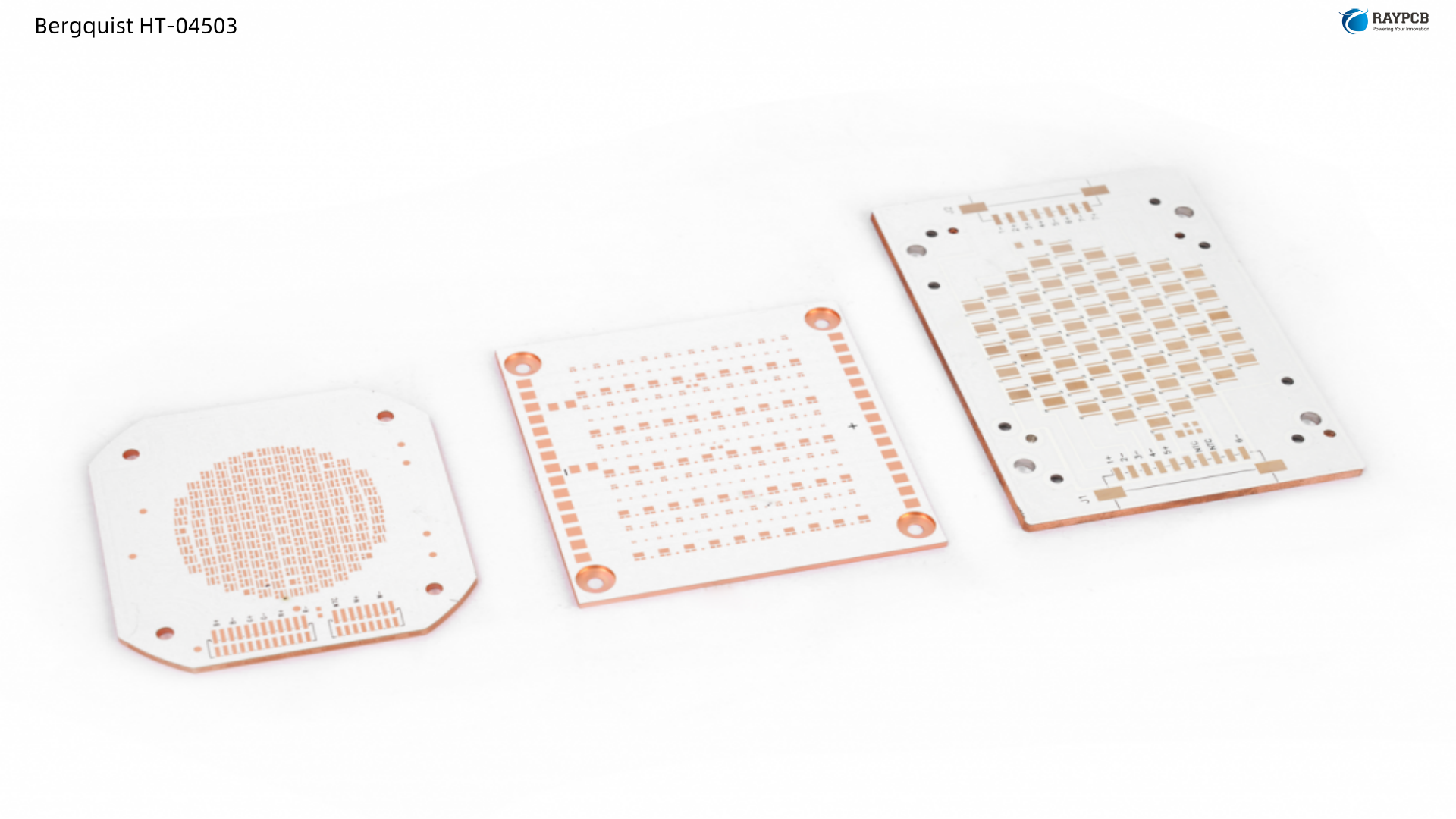
Bergquist HT-04503 MCPCB: Datasheet, Specifications & Design Guide

Complete Bergquist HT-04503 specifications โ€” 4.1 W/m-K, 8.5 kVAC, 140ยฐC rating โ€” plus design guide, grade comparisons, and application selection for MCPCB engineers.

When thermal management stops being a footnote and becomes the whole problem, most experienced power electronics engineers end up in the same place: metal core PCBs. And within that category, the Bergquist HT-04503 consistently shows up on short lists for high-watt-density, high-temperature applications. Part of the Thermal Clad family from Bergquist (now a Henkel brand), the HT-04503 is not a general-purpose MCPCB material โ€” it’s an engineered dielectric optimized for applications where standard aluminum PCB substrates run out of headroom.

This guide compiles the full specification data, explains what the numbers actually mean for your design, positions the HT-04503 against other Thermal Clad grades, and gives you the practical design guidance you need to use it correctly.

What Is the Bergquist HT-04503?

The HT-04503 is a Thermal Clad insulated metal substrate (IMS) from Bergquist, characterized by a 3 mil (76 ยตm) dielectric layer designed for high-temperature service. The product code tells you the key parameters directly: “HT” stands for High Temperature, “045” refers to the dielectric thickness (0.003″ = 3 mil, with “045” being an internal designation tied to thermal resistance), and “03” indicates the 3 mil dielectric thickness in the Bergquist naming convention.

The dielectric itself is a proprietary polymer/ceramic blend โ€” not standard epoxy. The polymer component provides electrical isolation and resistance to thermal aging. The ceramic filler is what drives thermal conductivity while maintaining dielectric strength at thicknesses where standard epoxy resins would begin to show pinholes and breakdown. This combination allows the HT-04503 dielectric to hold a breakdown voltage of 8.5 kVAC at just 76 ยตm thickness โ€” a figure that should get attention from anyone designing for mains-isolated power electronics.

The “High Temperature” designation is meaningful, not marketing. The HT dielectric maintains its properties at continuous operating temperatures up to 140ยฐC (U.L. 796 rated), with a glass transition temperature of 150ยฐC. That puts it in a different tier from standard MCPCB materials, which typically begin to soften and lose bond strength well below that range.

Bergquist HT-04503 Full Datasheet Specifications

The table below presents the complete published technical data from the official Bergquist HT-04503 datasheet. Every value listed corresponds to a named test method โ€” a point worth emphasizing when comparing competing MCPCB substrates, where thermal conductivity figures are sometimes cited without methodology.

Table 1: Bergquist HT-04503 Complete Technical Specifications

ParameterValueTest Method
THERMAL PROPERTIES  
Product Thermal Conductivity4.1 W/m-KBergquist MET 5.4-01-40000
Dielectric Thermal Conductivity2.2 W/m-KASTM D5470
Thermal Resistance0.05ยฐCยทinยฒ/W (0.32ยฐCยทcmยฒ/W)ASTM D5470
Thermal Impedance0.45ยฐC/WBergquist MET-5.4-01-40000
Glass Transition Temperature (Tg)150ยฐCASTM E1356
Max Operating Temperature140ยฐCU.L. 796
Max Soldering Temperature325ยฐCU.L. 796
ELECTRICAL PROPERTIES  
Dielectric Constant7ASTM D150
Dissipation Factor0.0033 / 0.0148 (at 1 kHz / 1 MHz)ASTM D150
Capacitance540 pF/inยฒ (85 pF/cmยฒ)ASTM D150
Volume Resistivity10ยนโด ฮฉยทmASTM D257
Surface Resistivity10ยนยณ ฮฉ/sqASTM D257
Dielectric Strength2,000 V/mil (80 kV/mm)ASTM D149
Breakdown Voltage8.5 kVACASTM D149
MECHANICAL PROPERTIES  
ColorWhiteVisual
Dielectric Thickness0.003″ (76 ยตm)Visual
Peel Strength at 25ยฐC6 lb/in (1.1 N/mm)ASTM D2861
CTE (XY/Z axis) below Tg25 ยตm/mยทยฐCASTM D3386
CTE (XY/Z axis) above Tg95 ยตm/mยทยฐCASTM D3386
Storage Modulus at 25ยฐC16 GPaASTM 4065
Storage Modulus at 150ยฐC7 GPaASTM 4065
CHEMICAL PROPERTIES  
Water Vapor Retention0.24% wt.ASTM E595
Out-Gassing Total Mass Loss0.28% wt.ASTM E595
Collect Volatile Condensable Material0.01% wt.ASTM E595
AGENCY RATINGS  
U.L. Max Operating Temperature140ยฐCU.L. 746B
U.L. Flammability RatingV-0U.L. 94
Comparative Tracking Index (CTI)0/600ASTM D3638 / IEC 60112
Solder Limit Rating325ยฐC / 60 secondsU.L. 796
COMPLIANCE  
Lead-Free Solder CompatibleYesโ€”
Eutectic AuSn CompatibleYesโ€”
RoHS CompliantYesโ€”

Understanding the Two Thermal Conductivity Values

A common point of confusion is why the datasheet lists two thermal conductivity values: 4.1 W/m-K for “Product Thermal Conductivity” and 2.2 W/m-K for “Dielectric Thermal Conductivity.” These are not contradictory โ€” they measure different things.

The 4.1 W/m-K figure is a system-level measurement (Bergquist’s proprietary MET test method using a TO-220 setup) that accounts for the full substrate stack including the aluminum base and copper circuit layer. The 2.2 W/m-K value is the intrinsic thermal conductivity of the dielectric layer alone, measured via ASTM D5470. When you’re modeling thermal resistance in a design tool, the 2.2 W/m-K dielectric-only value is what you’ll use alongside the dielectric thickness to calculate junction-to-baseplate thermal resistance. The 4.1 W/m-K figure is useful for comparative benchmarking against competing products but cannot be directly substituted into a layer-by-layer thermal model.

The thermal resistance specification of 0.05ยฐCยทinยฒ/W at 3 mil dielectric thickness is a direct output of that ASTM D5470 measurement. To put it in context: standard aluminum MCPCB materials at equivalent dielectric thicknesses typically land between 0.10 and 0.20ยฐCยทinยฒ/W. The HT-04503 essentially halves the thermal resistance of a typical entry-level MCPCB dielectric.

Bergquist HT-04503 vs. Other Thermal Clad Grades

The HT-04503 doesn’t exist in isolation โ€” it’s one product in the Thermal Clad lineup. Engineers selecting MCPCB materials should understand where the HT series sits relative to the Multi-Purpose (MP) and High Power Lighting (HPL) grades.

Table 2: Bergquist Thermal Clad Grade Comparison

ParameterHT-04503 (High Temp)MP-06503 (Multi-Purpose)HT-07006 (High Temp 6 mil)HPL-03015 (High Power Lighting)
Dielectric Thickness3 mil (76 ยตm)6 mil (152 ยตm)6 mil (152 ยตm)1.5 mil (38 ยตm)
Dielectric Thermal Conductivity2.2 W/m-K2.4 W/m-K2.2 W/m-K~3.0+ W/m-K
Thermal Resistance0.05ยฐCยทinยฒ/W0.09ยฐCยทinยฒ/Wโ€”0.02ยฐCยทinยฒ/W
Breakdown Voltage8.5 kVAC6.0 kVAC11.0 kVAC~3.5 kVAC
Max Operating Temp (UL)140ยฐC130ยฐC140ยฐC150ยฐC+
Glass Transition Temp150ยฐC~130ยฐC150ยฐC185ยฐC
Primary ApplicationPower conversion, SSR, motor drivesGeneral-purpose, multi-applicationHigh-isolation powerHigh-power LED
Lead-Free CompatibleYesYesYesYes

The comparison reveals how each grade trades off thermal resistance against electrical isolation. The HT-04503 occupies the sweet spot for most high-power industrial applications: thinner dielectric than the HT-07006 (lower thermal resistance, higher temperature capability), more isolation voltage than the HPL-03015 (which is optimized for LED boards where mains isolation is not the priority), and significantly better high-temperature performance than the MP-06503 general-purpose grade.

If your design is a mains-connected power converter running at sustained high ambient temperatures, the HT-04503 is the appropriate choice. If you’re building a high-bay LED fixture operating at lower ambient temperatures with modest isolation requirements, the HPL-03015 may offer better thermal performance at the cost of isolation voltage margin.

Decoding the Part Number and Available Configurations

The Bergquist Thermal Clad HT-04503 is available on both aluminum and copper metal substrates โ€” a point sometimes overlooked in procurement. Aluminum is the standard choice for cost and weight, but copper-base variants are available for applications where higher thermal spreading (leveraging copper’s roughly 4ร— higher thermal conductivity vs. aluminum) justifies the cost and weight penalty.

Standard MCPCB Stack-Up Using HT-04503

A typical single-layer HT-04503 MCPCB consists of three layers from top to bottom:

Circuit Layer (Copper Foil): The component mounting and interconnect layer. Standard offerings are 1 oz (35 ยตm) copper, with 2 oz (70 ยตm) available for higher current carrying capacity. The copper foil is certified to an area weight requirement per IPC-4562 rather than measured directly for thickness โ€” a nuance worth noting when specifying to a fabricator.

Dielectric Layer (HT-04503): The 3 mil (76 ยตm) polymer-ceramic blend. This is the thermal and electrical performance layer. Its CTE of 25 ยตm/mยทยฐC below Tg provides reasonable match to both the aluminum base (~23 ยตm/mยทยฐC) and copper circuit layer (~17 ยตm/mยทยฐC), reducing interfacial stress during thermal cycling.

Metal Base (Aluminum or Copper): Typically 1.0 mm, 1.5 mm, or 2.0 mm thick aluminum (6061 or 5052 alloy). Acts as the primary heat spreader and mechanical substrate. The base attaches to a heatsink via thermal interface material or direct bolted contact.

Table 3: Standard HT-04503 Board Configuration Options

ParameterStandard OptionsNotes
Metal Base MaterialAluminum (standard), Copper (premium)Al 5052 or 6061 typical
Base Thickness0.8 mm, 1.0 mm, 1.5 mm, 2.0 mm1.5 mm most common
Copper Weight1 oz (35 ยตm), 2 oz (70 ยตm), 3 oz (105 ยตm)Specify per current needs
Surface FinishHASL (lead-free), ENIG, OSPENIG preferred for fine-pitch SMT
Solder Mask ColorWhite (standard for LED), Black, GreenWhite maximizes LED light reflection
Dielectric Thickness3 mil (76 ยตm) โ€” fixed for HT-04503Use HT-07006 for 6 mil
Max Panel SizeTypically up to 500 ร— 600 mmVerify with fabricator

PCB Design Guide: Getting the Best from Bergquist HT-04503

Selecting the right material is step one. Getting the design right to exploit its properties is the part that separates boards that perform from boards that just test okay.

Thermal Via and Pad Design Considerations

One critical difference between designing for MCPCB and standard FR-4: through-holes in MCPCB are electrically isolated blind stubs, not continuous barrels connecting to the metal base. In standard Thermal Clad construction, drilled holes are lined with the same dielectric system and do not penetrate the metal base. This means conventional thermal vias to the baseplate aren’t available โ€” the dielectric provides the only thermal path from the circuit layer to the aluminum base.

For surface-mount power components, this makes pad geometry critical. Thermal pads under components should be maximized within DFM constraints to spread the heat flux over the largest possible dielectric area. Since thermal resistance scales inversely with contact area (R_th = R_material / A), doubling the effective pad area under a MOSFET or LED package halves the component’s contribution to junction-to-baseplate thermal resistance.

Direct screw-mount thermal pads โ€” with the dielectric separating the component’s thermal slug from the aluminum baseplate โ€” are a particularly effective topology. The HT-04503’s 8.5 kVAC breakdown voltage provides ample margin for most industrial mains-connected designs using this approach.

Solder Mask and Surface Finish Selection

The HT-04503 is rated for maximum soldering temperatures of 325ยฐC for 60 seconds (U.L. 796). Lead-free SAC305 reflow peaks at approximately 250โ€“260ยฐC, leaving substantial margin. Eutectic AuSn (80/20) compatibility at higher process temperatures is also specified, which matters for die-attach applications in solid-state relay and power module constructions.

ENIG (Electroless Nickel Immersion Gold) surface finish is generally preferred over HASL on MCPCB for fine-pitch surface mount components because HASL can produce uneven deposit thickness that complicates coplanarity on small packages. For LED applications, a white solder mask significantly improves optical efficiency by reflecting secondary light emission from the PCB surface rather than absorbing it.

Trace Width and Current Carrying Capacity on MCPCB

The copper circuit layer on an HT-04503 board carries current just like any other PCB copper, but with an important advantage: because the dielectric efficiently transfers heat to the aluminum baseplate, traces on MCPCB can sustain higher continuous current than the same geometry on FR-4 at the same temperature rise. IPC-2152 current-carrying capacity tables, which are derived from FR-4 data, are conservative for MCPCB โ€” but unless you have empirical data for your specific thermal configuration, using IPC-2152 as a starting point and applying a derating factor remains the safe engineering approach.

For high-current applications (motor drive bus bars, power converter output stages), 2 oz or 3 oz copper is available and worthwhile. The thermal dissipation from IยฒR losses in the copper itself becomes a secondary heat source that the dielectric must also conduct โ€” heavier copper reduces this contribution.

Mechanical Mounting and Assembly Considerations

The aluminum base of an HT-04503 MCPCB can be mounted directly to a heatsink using thermal interface material (TIM). Bergquist also offers compatible Bond-Ply and Hi-Flow TIM products for this interface, which is convenient for supply chain management if you’re already specifying Bergquist for the MCPCB substrate.

For designs with multiple MCPCBs in a chassis, consider the CTE mismatch between the 3003/5052 aluminum base (~23 ยตm/mยทยฐC) and steel or cast aluminum chassis hardware when designing fastener patterns for boards that experience wide temperature swings. The HT-04503 dielectric’s CTE of 25 ยตm/mยทยฐC below Tg closely tracks the aluminum base, which keeps internal stress at the dielectric-metal interface controlled through the normal operating range.

Application Profiles: Where Bergquist HT-04503 Excels

Table 4: HT-04503 Application Suitability Guide

ApplicationWhy HT-04503 WorksKey Spec DriversNotes
High-power LED modulesLowest thermal resistance at 3 mil; white solder mask0.05ยฐCยทinยฒ/W thermal resistanceHPL may win at very thin dielectrics if isolation <3.5 kV acceptable
AC/DC power convertersHigh isolation voltage + elevated temperature operation8.5 kVAC breakdown; 140ยฐC operating tempMains-connected designs benefit from breakdown margin
Solid state relays (SSR)Direct component-to-baseplate topology; high-temp dielectric8.5 kVAC; 150ยฐC TgCTE match reduces dielectric fatigue in cycling
Motor drives and invertersSustained high-temp operation; high current density140ยฐC UL rating; 2โ€“3 oz copper optionsIGBT and MOSFET thermal management
Solar/concentrator PVOutdoor ambient temp + self-heating; UV stable polymerHigh-temp dielectric; low outgassingLow CVCM (0.01%) suits sealed enclosures
Automotive electronics-40 to 125ยฐC cycling; vibration; lead-free assembly150ยฐC Tg; CTE <Tg = 25 ยตm/mยทยฐC; lead-free ratedVerify AEC-Q compatibility with full qualification
Heat-rail assembliesLong, distributed heat paths on single substrateProduct thermal conductivity 4.1 W/m-KCopper base variant improves lateral spreading

Comparing HT-04503 to Alternative High-Performance MCPCB Materials

For completeness, engineers evaluating the HT-04503 should understand where it sits against other premium MCPCB substrate families. The Arlon PCB material portfolio offers alternative high-temperature IMS options for applications where different thermal/electrical trade-offs are needed. Ceramic substrates (AlN, Alโ‚‚Oโ‚ƒ) offer better CTE matching to silicon but at significantly higher cost and with brittleness constraints. The HT-04503’s polymer-ceramic dielectric falls between standard MCPCB and ceramic in performance โ€” closer to ceramic in thermal capability but with the manufacturing flexibility and cost profile of a conventional PCB process.

Table 5: HT-04503 vs. Alternative Thermal Management Substrates

Substrate TypeThermal ConductivityIsolation VoltageMax TempRelative CostPCB-Compatible Process
Bergquist HT-04503 (MCPCB)2.2 W/m-K (dielectric)8.5 kVAC140ยฐC (UL)ModerateYes
Standard MCPCB (generic)1.0โ€“1.5 W/m-K3โ€“5 kVAC105โ€“130ยฐCLowYes
Bergquist HPL-03015~3.0+ W/m-K (dielectric)~3.5 kVAC150ยฐC+ (Tg)ModerateYes
Ceramic (Alโ‚‚Oโ‚ƒ)20โ€“25 W/m-K>10 kV>300ยฐCHighNo (specialized)
Ceramic (AlN)150โ€“180 W/m-K>10 kV>300ยฐCVery HighNo (specialized)
Direct Bond Copper (DBC)24โ€“28 W/m-KModerate>300ยฐCHighNo (specialized)
FR-4 with thermal viasEffective 1โ€“3 W/m-K3โ€“5 kVAC130ยฐC (Tg limited)Very LowYes

Fabrication Notes: Working With HT-04503 MCPCB Material

A few process details worth knowing before sending files to your fabricator:

Dielectric Testing. Because micro-fractures or micro-voids in the dielectric can manifest as electrical shorts under voltage, Bergquist recommends testing finished boards with a controlled voltage ramp rate. The capacitive nature of the MCPCB construction (capacitance of 540 pF/inยฒ is substantial) can cause nuisance trips if testers apply voltage too rapidly. Specify a controlled ramp-up per Bergquist fabrication guidelines.

Drilling. MCPCB drilling requires carbide tooling and controlled parameters to prevent dielectric cracking or delamination at hole walls. Through-hole components work, but pad connections to the base metal are not electrically available โ€” all through-holes are dielectrically isolated from the aluminum base.

Solder Mask Application. Standard liquid photoimageable (LPI) solder masks are compatible. For white solder mask on LED boards, verify that your fabricator’s white LPI formulation has been qualified with MCPCB substrates โ€” adhesion characteristics differ from FR-4.

Storage. Bergquist specifies optimal storage at 5โ€“25ยฐC with a 12-month shelf life in unopened packaging. Moisture absorption (0.24% water vapor retention per ASTM E595) is relatively controlled, but pre-baking before assembly is recommended if material has been stored in humid conditions.

Useful Resources for Engineers Working With HT-04503

Bookmark these references for material qualification, design validation, and procurement:

Official Datasheets and Documentation

Standards Referenced in HT-04503 Datasheet

  • ASTM D5470ย โ€” Standard Test Method for Thermal Transmission Properties of Thermally Conductive Electrical Insulation Materials
  • ASTM D149ย โ€” Standard Test Method for Dielectric Breakdown Voltage and Dielectric Strength of Solid Electrical Insulating Materials
  • IPC-2152ย โ€” Standard for Determining Current Carrying Capacity in Printed Board Design

Distributor and Procurement

Frequently Asked Questions About Bergquist HT-04503

What makes the HT-04503 a “high temperature” MCPCB material?

The designation refers to the dielectric polymer system, which is formulated to resist thermal degradation at sustained elevated temperatures. The glass transition temperature of 150ยฐC and U.L.-certified maximum operating temperature of 140ยฐC distinguish it from standard MCPCB dielectrics (typically Tg ~130ยฐC, operating limit ~105โ€“125ยฐC). In practice this means the HT-04503 maintains its mechanical integrity, bond strength, and electrical isolation properties through repeated excursions toward 140ยฐC, where a standard MCPCB dielectric would begin softening and losing peel strength.

What is the difference between the HT-04503 and HT-07006?

Both are High Temperature series Thermal Clad materials, but the HT-07006 uses a 6 mil (152 ยตm) dielectric instead of the 3 mil (76 ยตm) in the HT-04503. The thicker dielectric in the HT-07006 raises breakdown voltage to 11 kVAC (vs. 8.5 kVAC for HT-04503) at the cost of higher thermal resistance. Choose the HT-04503 when thermal performance is the priority and 8.5 kVAC isolation is sufficient. Choose the HT-07006 when your isolation requirements demand greater voltage margin โ€” for instance, in 480 VAC industrial equipment where creepage and clearance requirements plus safety margins push isolation needs above what the 3 mil product provides.

Can the Bergquist HT-04503 be used for double-sided or multilayer MCPCB?

Single-sided construction (one copper circuit layer over the dielectric and metal base) is the standard and most common configuration. Double-sided MCPCB is technically possible but requires specialized construction โ€” typically two single-sided substrates bonded back-to-back with a thermally conductive adhesive, or use of Bergquist’s Bond-Ply adhesive films to build up multilayer assemblies with thermal vias in the dielectric. True through-hole multilayer MCPCB with the base metal as a middle layer is a specialty construction that should be explicitly discussed with your fabricator before committing to the design.

Is the Bergquist HT-04503 suitable for automotive applications?

The material properties โ€” 150ยฐC Tg, 140ยฐC UL operating temperature, lead-free solder compatibility, and CTE of 25 ยตm/mยทยฐC โ€” are consistent with automotive under-hood requirements. However, “suitable” in the automotive sense requires AEC-Q component-style qualification, which is application-specific. The material passes the thermal, electrical, and mechanical benchmarks that automotive designs demand. Whether it meets your specific OEM’s supplier qualification requirements is a separate process that requires engaging Henkel/Bergquist directly through their automotive channel.

How does the HT-04503 thermal resistance compare to using thermal vias in FR-4?

An optimized via-in-pad array in FR-4, filled with thermally conductive epoxy, can achieve effective thermal conductivity of roughly 1โ€“3 W/m-K through the via cluster โ€” considerably less than the HT-04503 dielectric’s 2.2 W/m-K over its full surface. More importantly, the thermal path in FR-4 with vias is discontinuous and sensitive to via fill quality, while the HT-04503 dielectric provides a continuous, uniform thermal path across the entire component footprint. For component junction temperatures above ~100ยฐC under sustained load, or for designs where thermal resistance budget is tight, the MCPCB approach using HT-04503 consistently outperforms FR-4 with thermal vias.

The HT-04503 is one of those materials that rewards the engineer who takes the time to understand its specifications properly. The thermal resistance number is exceptional, the isolation voltage is better than it has any right to be at 3 mil thickness, and the temperature capability puts it in territory that FR-4 and generic MCPCB materials simply can’t reach. Design it right, specify your fabricator’s process correctly, and this material will outlast the components mounted on it.

Bergquist HPL-03015: Ultra-Thin High Power LED PCB Material Guide

If you’re designing a high-power LED board and you’re still trying to manage junction temperatures with copper pours and thermal vias on FR4, you’re fighting the material instead of working with it. Standard FR4 has a thermal conductivity of roughly 0.25โ€“0.35 W/m-K. The dielectric layer in Bergquist HPL-03015 delivers 3.0 W/m-K โ€” nearly ten times better โ€” at a thickness of just 38 ยตm (1.5 mil). That combination of ultra-thin dielectric and high conductivity is what makes HPL-03015 the go-to MCPCB material for lighting engineers who need to extract every degree of thermal headroom from their design.

This guide covers the full verified specifications from the official Henkel Bergquist Technical Data Sheet, a thorough comparison against other Thermal Clad materials, practical design and fabrication guidance, and an honest picture of where HPL-03015 excels and where it doesn’t.

What Is Bergquist HPL-03015?

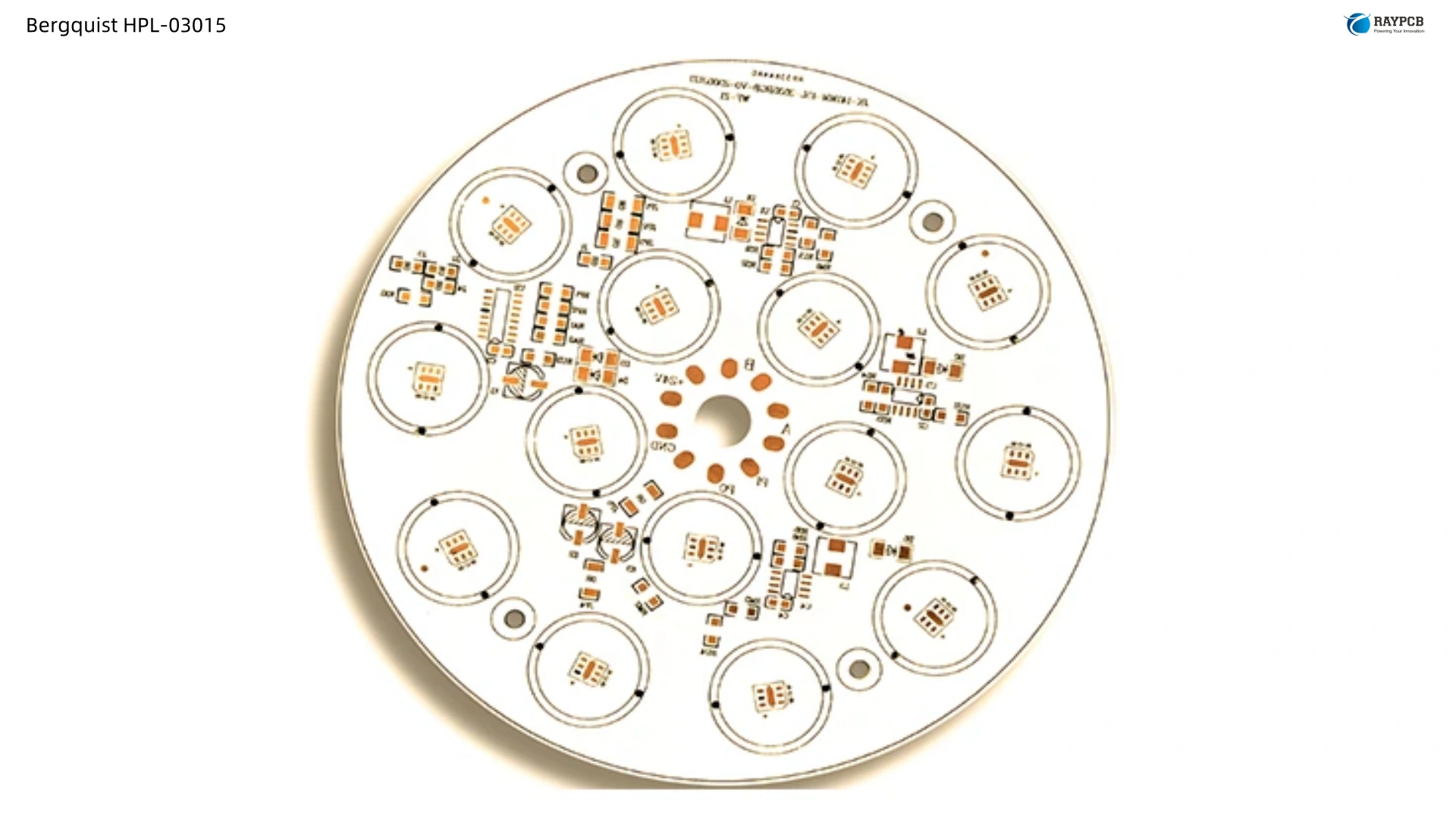
The Bergquist HPL-03015 is a High Power Lighting (HPL) dielectric in Henkel’s Thermal Clad metal core PCB family. It is an insulated metal substrate (IMS) material specifically engineered for high-density LED applications where achieving the lowest possible thermal resistance is the primary design constraint.

The part number follows the same Thermal Clad naming convention: “03” encodes a nominal 3-mil dielectric specification class, and “015” refers to the thermal resistance of 0.015 ยฐC-inยฒ/W โ€” though the measured value on the datasheet is 0.02 ยฐC-inยฒ/W (0.13 ยฐC-cmยฒ/W). Understanding this shorthand helps you compare HPL-03015 directly to other Thermal Clad products at a glance.

The Three-Layer Construction of HPL-03015

Like all Thermal Clad IMS products, the HPL-03015 is a three-layer composite in its base form:

Copper circuit layer โ€” The top layer, available in standard copper weights (1 oz or 2 oz), carries the circuit pattern. It is patterned by standard subtractive etch processes.

Proprietary dielectric layer โ€” This is where the material’s value lives. The HPL dielectric is a polymer-ceramic composite blend, engineered to conduct heat phonons efficiently while maintaining electrical isolation. At just 0.0015″ (38 ยตm), it is the thinnest dielectric in the Bergquist Thermal Clad line. The ceramic filler concentration is higher than in standard Thermal Clad dielectrics, which drives up thermal conductivity while slightly increasing dielectric constant.

Aluminum base layer โ€” The structural foundation of the board, typically 1.0 mm or 1.6 mm thick, using 5052 or 1100 alloy aluminum. This layer acts simultaneously as a heat spreader and mechanical support. It can be directly attached to a heatsink, enclosure wall, or luminaire housing without any additional thermal interface material between the PCB and the cooling structure in many designs.

Bergquist HPL-03015 Complete Specifications

All values below are taken directly from the official Bergquist / Henkel Technical Data Sheet (PDS_HPL_0414) and the Reliance EMS TDS archive.

Thermal Properties

PropertyValueTest Method
Product Thermal Conductivity7.5 W/m-KMET 5.4-01-40000
Dielectric Thermal Conductivity3.0 W/m-KASTM D5470
Thermal Resistance0.02 ยฐC-inยฒ/W (0.13 ยฐC-cmยฒ/W)ASTM D5470
Thermal Impedance0.30 ยฐC/WMET-5.4-01-40000
Glass Transition Temperature (Tg)185ยฐCASTM E1356
Maximum Operating Temperature140ยฐCUL 796
Maximum Soldering Temperature325ยฐCUL 796

Important note on the two thermal conductivity figures: The 7.5 W/m-K product value is the system-level measurement that includes the aluminum base metal and copper foil in the thermal path. The 3.0 W/m-K dielectric-only value is what matters for calculating thermal resistance in your design โ€” the dielectric is always the thermal bottleneck. Use 3.0 W/m-K for your junction-to-case calculations, not 7.5.

Electrical Properties

PropertyValueTest Method
Dielectric Constant6.6ASTM D150
Dissipation Factor @ 1 kHz0.003ASTM D150
Dissipation Factor @ 1 MHz0.005ASTM D150
Capacitance925 pF/inยฒ (140 pF/cmยฒ)ASTM D150
Volume Resistivity10ยนโด ฮฉยทmASTM D257
Surface Resistivity10ยนยณ ฮฉ/sqASTM D257
Dielectric Strength2000 V/mil (75 kV/mm)ASTM D149
Breakdown Voltage5.0 kVACASTM D149

Operating Voltage Ratings

Voltage TypeRating
Continuous AC120 VAC
Continuous DC170 VDC
Peak Recurring260 VDC

Mechanical Properties

PropertyValueTest Method
Dielectric Thickness0.0015″ (38 ยตm / 1.5 mil)Visual
ColorOff-whiteVisual
Peel Strength @ 25ยฐC5 lb/in (0.9 N/mm)ASTM D2861
CTE XY/Z Axis Below Tg35 ยตm/mยทยฐCASTM D3386
CTE XY/Z Axis Above Tg85 ยตm/mยทยฐCASTM D3386
Storage Modulus @ 25ยฐC18 GPaASTM D4065
Storage Modulus @ 150ยฐC12 GPaASTM D4065

Chemical Properties

PropertyValueTest Method
Water Vapor Retention0.11 wt%ASTM E595
Out-Gassing Total Mass Loss0.15 wt%ASTM E595
Collect Volatile Condensable Material<0.01 wt%ASTM E595

Agency Ratings and Compliance

PropertyValueStandard
UL Maximum Operating Temperature140ยฐCUL 796
UL Flammability RatingV-0UL 94
Comparative Tracking Index (CTI)0 / 600ASTM D3638 / IEC 60112
Solder Limit Rating325ยฐC for 60 secondsUL 796
RoHS ComplianceYesโ€”
Lead-Free Solder CompatibleYesโ€”
Eutectic AuSn CompatibleYesโ€”

Key Specification Callouts for Designers

The 5.0 kVAC breakdown voltage is the most important limitation to internalize before selecting HPL-03015. Compared to HT-07006 at 11 kVAC, HPL-03015 offers just under half the isolation headroom. The trade-off for that lower voltage rating is dramatically better thermal performance. For 120 VAC mains-connected LED driver circuitry with proper clearance and creepage distances, 5.0 kVAC is typically sufficient. For industrial motor drives or solid-state relays operating at higher bus voltages, it is not.

The 185ยฐC Tg is the highest in the standard Thermal Clad lineup, which is counterintuitive given that the material is rated for only 140ยฐC maximum continuous operation. The gap exists because UL 796 rates maximum operating temperature conservatively relative to Tg. The 185ยฐC Tg means the dielectric has excellent thermal stability through the 140ยฐC rated range with meaningful margin โ€” it won’t soften or lose adhesion at rated conditions the way a lower-Tg material would.

The 0.9 N/mm peel strength is noticeably lower than the 1.1 N/mm in the HT series. This is a direct consequence of the ultra-thin dielectric. Thinner adhesive bond line means less mechanical peel resistance. In practice, HPL-03015 peel strength is sufficient for standard surface mount assembly and reflow, but it is something to be aware of if your assembly process involves aggressive handling or rework.

HPL-03015 vs. Other Bergquist Thermal Clad Dielectrics

This is the comparison table that should drive your material selection conversation with your fabricator:

ParameterMP-06503HT-04503HPL-03015HT-07006HT-09009
Dielectric Thickness3 mil / 76 ยตm3 mil / 76 ยตm1.5 mil / 38 ยตm6 mil / 152 ยตm9 mil / 229 ยตm
Dielectric Thermal Conductivity (W/m-K)1.32.23.02.22.2
Product Thermal Conductivity (W/m-K)โ€”โ€”7.54.1โ€”
Thermal Resistance (ยฐC-cmยฒ/W)0.650.450.130.710.90
Breakdown Voltage (kVAC)8.58.55.011.020.0
Glass Transition Temp. Tg (ยฐC)90150185150150
Max Operating Temp. (ยฐC)130140140140150
Peel Strength (N/mm)1.61.10.91.11.1
CTE Below Tg (ยตm/mยทยฐC)โ€”25352525
Primary Use CaseGeneral LED, consumerHigh-power, industrialHigh-density LEDIsolated power, relaysVery high isolation

What jumps out immediately: HPL-03015 has the lowest thermal resistance of any standard Thermal Clad product โ€” 0.13 ยฐC-cmยฒ/W versus 0.45 for HT-04503 and 0.71 for HT-07006. This is achieved through a combination of thinner dielectric (half the thickness of the HT series) and higher dielectric thermal conductivity (3.0 vs. 2.2 W/m-K). The trade-off is isolation voltage: at 5.0 kVAC, HPL-03015 is the lowest in the family.

The highest Tg (185ยฐC) combined with the lowest thermal resistance is what makes HPL-03015 uniquely suited for high-power LED applications. More LED watts mean more heat, which pushes dielectric temperatures higher. You want a material whose Tg margin is as wide as possible above the actual dielectric operating temperature โ€” and HPL-03015 delivers the best of both metrics simultaneously.

When to Use Bergquist HPL-03015 in Your LED PCB Design

High-Watt-Density LED Arrays

This is HPL-03015’s home turf. Any LED array exceeding approximately 5โ€“10 W/cmยฒ of surface power density will generate junction temperatures on FR4 that force you to either derate the LEDs, add external heatsinking that increases system cost and size, or accept shortened LED lifespan. HPL-03015’s 0.13 ยฐC-cmยฒ/W thermal resistance reduces the temperature rise across the dielectric to a fraction of what FR4 or even standard IMS materials produce. For a 10 W device on a 10 cmยฒ footprint, that difference can translate to a 30โ€“50ยฐC lower die temperature compared to FR4 with thermal vias โ€” directly translating to longer L70 lumen maintenance life.

Automotive Exterior Lighting

Automotive headlamps, daytime running lights (DRL), and rear combination lights are among the most thermally stressed LED applications. Under-hood and front-fascia ambient temperatures can reach 85โ€“105ยฐC continuously, and LED packages in these fixtures must maintain consistent luminous flux over 15,000+ hours. HPL-03015’s 185ยฐC Tg and 140ยฐC maximum operating temperature give adequate thermal margin in most automotive exterior lighting thermal budgets. The material is also eutectic AuSn compatible, making it suitable for die-attach processes used in automotive-grade LED modules.

High-Bay Industrial Luminaires and Street Lighting

Industrial high-bay luminaires running 200โ€“600W LED arrays present one of the most challenging thermal environments in the lighting industry. Enclosure temperatures are often elevated, airflow is limited, and thermal cycling from on/off switching stresses the dielectric repeatedly over years of service. HPL-03015’s combination of low thermal resistance and high Tg produces a design that runs cooler under continuous load and survives more thermal cycles than standard IMS materials before dielectric microcracking and adhesion degradation become reliability issues.

Projector and Display Backlighting

Projector lamp replacement with high-power LED engines requires extremely dense LED packing with managed thermal uniformity. Backlight applications for large-format displays share the same requirements: high heat flux in a constrained area, with tight tolerances on operating temperature to maintain color consistency and flux stability. HPL-03015’s thin dielectric geometry also means lower capacitance variation across the board area, which helps in applications where consistent electrical impedance matters.

Headlamp and Specialty Lighting Applications

Beyond automotive, HPL-03015 is regularly specified for marine, aviation, and military lighting applications where luminaires operate in elevated ambient environments and are expected to deliver long service intervals without thermal-degradation failures.

When HPL-03015 Is Not the Right Material

Being specific about the limits of a material is as important as understanding its strengths.

ApplicationWhy HPL-03015 Is Wrong for This JobBetter Alternative
Motor drives and solid-state relays5.0 kVAC breakdown is insufficient for high-bus-voltage isolationBergquist HT-07006 (11 kVAC)
High-voltage power conversion (>120 VAC)Continuous AC voltage rating is only 120 VACHT-07006 or HT-09009
Multi-layer routing boardsHPL-03015 is a single-dielectric IMS; multilayer not standardHT-09009 multi-layer configurations
General-purpose LED (low watt density)Cost premium not justified; thermal margin isn’t the bottleneckMP-06503 or standard FR4
Extreme-isolation military/aerospace power5.0 kVAC breakdown is marginalHT-09009 (20 kVAC), Arlon PCB CE/BT systems
RF or high-frequency signal circuitsDk of 6.6 and Df of 0.005 at 1 MHz are unsuitable for GHz-range signalsRogers RO4003C, RO4350B

HPL-03015 PCB Design Considerations

Thermal Resistance Calculation in Practice

The standard junction-to-ambient thermal model for an LED on HPL-03015 on an aluminum chassis follows this chain:

ฮธ(total) = ฮธ(j-s) [package] + ฮธ(dielectric) [HPL-03015] + ฮธ(base-metal) [Al] + ฮธ(mounting interface) + ฮธ(heatsink)

The HPL-03015 contribution (ฮธ dielectric) at 0.13 ยฐC-cmยฒ/W is typically the smallest resistive element in this chain when the board is properly mounted. In many direct-mount configurations to aluminum extrusions or housings, the mounting interface can actually become the dominant thermal resistance โ€” making proper mounting surface finish and contact pressure as important as the PCB material selection itself.

Pad Layout and Thermal Pad Design

Because the dielectric layer is only 38 ยตm thick, the thermal footprint of an LED’s thermal pad directly drives heat into the aluminum base very efficiently. There’s less lateral spreading in the dielectric itself โ€” the heat path is highly directional. This means you don’t need large copper spreading areas under LED packages to achieve good thermal performance. The aluminum base distributes the heat laterally once it passes through the dielectric. Design your copper thermal pads to match the package recommendations from the LED manufacturer, then let the base metal do the spreading work.

Copper Weight Selection

Standard copper weights for HPL-03015 are 1 oz (35 ยตm) and 2 oz (70 ยตm). For LED arrays with individual device currents under 1A at standard trace widths, 1 oz is sufficient. For designs running multi-amp LED strings or high-current bus traces, 2 oz copper reduces IยฒR heating in the circuit layer, which compounds nicely with the thermal performance of the dielectric. The base metal also helps, as heat generated in copper traces conducts down through the dielectric into the aluminum almost as efficiently as heat from the LED packages themselves.

Surface Finish Compatibility with HPL-03015

Surface FinishCompatibleNotes
HASL (Lead-Free)YesMost common; good for through-hole and SMD
ENIGYesPreferred for fine-pitch LED packages and wire bonding
Immersion SilverYesGood solderability; check shelf life for LED assembly
OSPYesLowest cost; 12-month shelf life typically
Hard GoldYesFor edge contacts and connectors on same panel
Eutectic AuSnYes325ยฐC solder limit directly supports 280ยฐC AuSn process

Assembly and Solder Process Notes

HPL-03015 is fully compatible with lead-free SAC305 reflow at standard peak temperatures of 245โ€“260ยฐC โ€” well below the 325ยฐC solder limit. The thin dielectric requires slightly more care during rework because local heating during hot-air rework can cause localized delamination if the heat dwell time is excessive. Standard rework practice for MCPCB applies: use a regulated rework station, minimize dwell time, and pre-warm the board before component removal.

For high-volume LED assembly using pick-and-place reflow, HPL-03015 processes like any standard aluminum MCPCB. The solder mask is typically white (to improve LED lumen extraction via reflection), though black solder mask is available for applications where contrast between the board and LED is needed. Confirm your fabricator’s solder mask ink compatibility with the HPL dielectric surface before specifying unusual solder mask colors.

Aluminum Base Thickness Options

The aluminum base is typically available in 1.0 mm, 1.2 mm, 1.6 mm, and 2.0 mm standard thicknesses. The choice depends on mechanical rigidity requirements, thermal spreading performance, and how the board mounts into its enclosure:

Base ThicknessApplication ContextNotes
1.0 mmCompact luminaires, strip LED modulesLighter; may require support features for large panel formats
1.2 mmStandard LED downlights, retrofit modulesCommon balance of weight and rigidity
1.6 mmHigh-power arrays, commercial lighting enginesMost common specified thickness
2.0 mmIndustrial high-bay, heavy-duty luminairesMaximum rigidity; best thermal spreading for large boards

HPL-03015 vs. FR4 with Thermal Vias: The Real Comparison

The argument for using FR4 with copper-filled thermal vias on LED boards comes down to familiarity and cost. It’s a valid approach for low-power LEDs. But let’s quantify the thermal difference at higher power levels.

ParameterFR4 (0.25 W/m-K) with Thermal ViasHPL-03015 (3.0 W/m-K dielectric)
Effective dielectric conductivity~0.6โ€“1.0 W/m-K (with vias)3.0 W/m-K (uniform)
Thermal resistance (typical LED pad)~5โ€“15 ยฐC/W depending on via density~0.3โ€“0.8 ยฐC/W
Thermal uniformity across arrayVariable (hot spots between vias)Uniform (continuous dielectric)
Junction temperature rise at 5W per LED~20โ€“50ยฐC above board~3โ€“6ยฐC above board
Heatsink requiredTypically yes, often largeOften reduced or eliminated
Board fabrication complexityHigh (via drilling, filling, plating)Low (standard MCPCB process)
Material cost (bare laminate)LowerHigher

For anything above 3W per LED in a dense array, the thermal via approach on FR4 loses the cost argument because the system cost of the heatsink and the reduced LED lifetime more than compensate for the higher material cost of HPL-03015.

Useful Resources for Bergquist HPL-03015 Designs

These references belong in your library if you are evaluating or qualifying HPL-03015 for a design:

Official HPL-03015 TDS (MCL PCB hosted) โ€” Full technical data sheet with all measured properties: https://www.mclpcb.com/wp-content/uploads/2021/05/Bergquist-HPL-03015.pdf

Bergquist Thermal Clad Selection Guide (Mouser hosted) โ€” Complete dielectric comparison table and thermal impedance charts: https://www.mouser.com/catalog/additional/Bergquist_PDS_HPL_0414%20v6.pdf

Henkel Electronics Product Portal โ€” Current product availability, SDS documents, and regional contacts: https://www.henkel-adhesives.com/us/en/products/thermal-management.html

Digikey HPL-03015 Listing โ€” Distributor availability and cross-reference: https://www.digikey.com (search: “HPL-03015 Bergquist”)

ASTM D5470 โ€” Standard Test Method for Thermal Transmission Properties of Thermally Conductive Electrical Insulation Materials (the basis for the thermal resistance figures in the TDS): https://www.astm.org/d5470-17.html

IPC-2221B โ€” Generic Standard on Printed Board Design (covers IMS design rules): https://www.ipc.org/ipc-2221

US DOE EERE Solid-State Lighting Program โ€” LED thermal management resources and application guides: https://www.energy.gov/eere/ssl/solid-state-lighting

GlobalSpec HPL-03015 Datasheet Archive โ€” Secondary archive of HPL specifications: https://datasheets.globalspec.com/ds/4336/HenkelElectronics/84D18505-B814-46F3-873F-D7E744FB83D1

Frequently Asked Questions About Bergquist HPL-03015

Q1: What is the difference between Bergquist HPL-03015 and HT-04503?

Both are high-performance Thermal Clad IMS dielectrics for high-temperature applications, but they target different design requirements. HPL-03015 is thinner (38 ยตm vs. 76 ยตm for HT-04503), has higher dielectric thermal conductivity (3.0 vs. 2.2 W/m-K), lower thermal resistance (0.13 vs. 0.45 ยฐC-cmยฒ/W), and a higher Tg (185 vs. 150ยฐC). The trade-off is that HPL-03015 has lower breakdown voltage (5.0 vs. 8.5 kVAC) and lower peel strength (0.9 vs. 1.1 N/mm). HPL-03015 is the right choice when maximum thermal performance and LED lifespan extension is the priority. HT-04503 is better when you need higher isolation voltage along with good thermal performance, such as in motor drives or power supplies where the LED circuit is not isolated by other means.

Q2: Can Bergquist HPL-03015 be used for non-LED applications like power MOSFETs and IGBTs?

Technically yes, but with important caveats. The 5.0 kVAC breakdown voltage limits HPL-03015 to applications operating from relatively low bus voltages โ€” 120 VAC and 170 VDC continuous are the rated operating voltages. Many power conversion designs exceed these levels, which makes HT-07006 or HT-09009 more appropriate. For low-voltage, high-current DC applications like synchronous buck converters or low-voltage motor drives where device isolation requirements are modest, HPL-03015’s thermal performance does benefit power semiconductor applications. Always verify the isolation requirements of your specific circuit before specifying HPL-03015 outside of its LED-optimized use case.

Q3: Is the 7.5 W/m-K or 3.0 W/m-K figure the correct thermal conductivity to use for design calculations?

Use 3.0 W/m-K for all thermal resistance calculations in your design. The 7.5 W/m-K product thermal conductivity is a system-level measurement (MET 5.4-01-40000 test method) that includes the aluminum base and copper foil contributions to the overall thermal conductivity. For engineering thermal resistance models, the dielectric-only value of 3.0 W/m-K (measured by ASTM D5470) accurately represents the resistive element you are designing around. The 7.5 W/m-K figure is useful for comparing Bergquist HPL-03015 against competing IMS products where system-level conductivity is the reported metric, but it should never be plugged directly into a dielectric-specific thermal resistance calculation.

Q4: How does HPL-03015’s 185ยฐC Tg affect long-term reliability in LED applications?

Very positively. The 45ยฐC margin between the 140ยฐC maximum operating temperature (UL 796) and the 185ยฐC Tg means the dielectric is always operating well below its transition point during rated continuous use. In FR4 and lower-Tg IMS materials, the dielectric closer to its Tg accelerates polymer chain relaxation and microcracking under repeated thermal cycling, which eventually leads to adhesion loss, delamination, and increased thermal resistance at the LED thermal pad interface. HPL-03015’s wide Tg margin slows this aging mechanism significantly, contributing directly to the extended LED lumen maintenance life that Bergquist positions as a core benefit of the Thermal Clad line.

Q5: What fabricators in China and globally can manufacture PCBs using Bergquist HPL-03015?

HPL-03015 panels and fabricated boards are available through MCPCB-specialized manufacturers globally. In China, companies including Andwin Circuits and Beijing Ruikai Electronic (who maintain a Bergquist Thermal Clad distribution relationship) regularly produce HPL-03015-based boards. In North America and Europe, MCPCB shops that work with the full Bergquist Thermal Clad lineup typically stock HPL-03015 or can source it through Henkel’s distribution channel via Digikey, Arrow, or Mouser. Lead times for prototype quantities are typically 5โ€“10 business days; production runs 2โ€“4 weeks, varying by region. When qualifying a new fabricator for HPL-03015, ask specifically for IPC Class 2 or Class 3 process qualification, material traceability documentation, and confirm they have process validation data for the HPL dielectric โ€” not all MCPCB shops are equally experienced with the ultra-thin 38 ยตm dielectric layer.

Summary: Is Bergquist HPL-03015 the Right Choice for Your LED PCB?

The HPL-03015 earns its specification when three conditions are present: your LED power density is high enough that thermal management is genuinely the design constraint, your isolation voltage requirement is met by 5.0 kVAC and 120 VAC continuous operating voltage, and the thermal performance improvement justifies the material cost premium over standard FR4 or lower-grade IMS materials.

For high-power luminaire manufacturers, automotive LED module designers, and anyone building a lighting system where LED lifespan and lumen maintenance are commercial differentiators, HPL-03015 delivers a measurable technical advantage that compounds across the product lifetime. Lower dielectric operating temperature, better Tg margin, and reduced thermal resistance to the aluminum heat spreader all translate directly into longer-lasting, more efficient LED products.

The specification decision is straightforward once you run the thermal numbers. If the temperature delta across the dielectric is your performance bottleneck, HPL-03015 is the most effective standard IMS solution available in the Bergquist lineup.

Bergquist CML-11006 Ceramic Multi-Layer PCB: Complete Datasheet & Design Guide

Complete datasheet and design guide for the Bergquist CML-11006 ceramic multi-layer PCB โ€” specs, thermal performance, layout rules, assembly notes, and FAQ.

If you’ve spent any time sourcing materials for high-power or high-isolation PCB designs, you’ve probably bumped into the Bergquist Thermal Clad lineup. The Bergquist CML-11006 sits in a specific niche within that family โ€” it’s the ceramic multi-layer (CML) dielectric variant engineered for applications where both elevated voltage isolation and strong thermal performance need to coexist. This guide walks through the key electrical and thermal specs, design considerations, assembly notes, and practical usage advice from an engineer’s perspective.

What Is the Bergquist CML-11006?

The Bergquist CML-11006 is a Thermal Clad Insulated Metal Substrate (IMS) material featuring a ceramic-filled multi-layer dielectric. The product code itself tells you a lot: “CML” stands for Ceramic Multi-Layer, “110” references the thermal impedance characteristic, and “06” refers to the 6-mil (150 ยตm) dielectric thickness. It’s part of Bergquist’s broader Thermal Clad portfolio, which was developed as a thermal management solution for watt-dense surface-mount applications where conventional FR-4 boards simply can’t keep up.

Thermal Clad substrates minimize thermal impedance and conduct heat more effectively and efficiently than standard printed wiring boards (PWBs). These substrates are more mechanically robust than thick-film ceramics and direct bond copper constructions that are often used in these applications.

The CML-11006 specifically targets applications that need multi-layer dielectric construction โ€” a key differentiator from single-layer Thermal Clad variants. The multi-layer build increases dielectric thickness and breakdown voltage while preserving reasonable thermal conductivity, making it a go-to choice for applications in the 500โ€“1000V operating range.

Bergquist CML-11006 Key Specifications

The table below summarizes the core performance parameters for the Bergquist CML-11006 based on the Thermal Clad Selection Guide. Note that the CML designation indicates the ceramic multi-layer dielectric formulation:

Thermal & Electrical Performance Table

ParameterCML-11006HT-04503MP-06503HT-07006
Dielectric Thickness6 mil / 150 ยตm3 mil / 75 ยตm3 mil / 75 ยตm6 mil / 150 ยตm
Thermal Conductivity~1.3 W/mยทK2.2 W/mยทK1.3 W/mยทK2.2 W/mยทK
Thermal Impedance (ยฐCยทinยฒ/W)~0.110.050.090.07
Dielectric Constant (Permittivity)~6767
Proof Test (VDC)>2500150015002500
Breakdown Voltage (kVAC)>116.08.511.0
Glass Transition Temperature (ยฐC)9015090150

Engineering Note: The CML-11006’s multi-layer dielectric construction is the critical distinction. By stacking the ceramic-filled layers, you get a significantly higher proof voltage capability compared to a single-layer 6-mil dielectric โ€” important when designing for reinforced insulation requirements in IEC 60950 or IEC 62368-1 compliant products.

Physical & Construction Specs

ParameterCML-11006 Value
Dielectric TypeCeramic polymer multi-layer blend
Nominal Dielectric Thickness0.006 in (150 ยตm)
Copper Foil Range1 oz to 10 oz (35โ€“350 ยตm)
Standard Base MetalAluminum (1.6 mm / 0.062 in typical)
Base Metal OptionsCopper also available
UL CertificationYes (lab certified)
RoHS ComplianceYes
Manufacturing StandardISO 9001:2000

Understanding the Multi-Layer Ceramic Dielectric

The technology of Thermal Clad resides in the dielectric layer. It is the key element for optimizing performance in your application. The dielectric is a proprietary polymer/ceramic blend that gives Thermal Clad its excellent electrical isolation properties and low thermal impedance.

What makes the CML series different from other Thermal Clad grades is the multi-layer structure of that dielectric. While products like the MP-06503 use a single homogeneous dielectric layer, the CML-11006 bonds multiple ceramic-filled dielectric layers together. The result is two important engineering benefits:

Higher defect tolerance. Any micro-void or inclusion in a single-layer dielectric creates a direct breakdown path. With multiple layers, a defect in one layer is blocked by the intact layers on either side. This is particularly relevant for HiPot testing and long-term field reliability in AC line-connected products.

Improved isolation voltage. For applications with an expected voltage over 480 Volts AC, Bergquist recommends a dielectric thickness greater than 0.003″ (75ยตm). The CML-11006 at 150 ยตm multi-layer construction exceeds this recommendation and is well-suited for 480 VAC industrial or 600 VDC bus applications.

The ceramic filler helps to boost thermal conductivity. High-frequency applications need the best dielectric material. In the CML-11006, the ceramic loading is balanced to give acceptable thermal performance without sacrificing the dielectric integrity that multi-layer construction provides.

Three-Layer Board Architecture

Thermal Clad is a unique, three-layered system comprised of: a Circuit Layer (the printed circuit foil with thickness of 1oz to 10oz / 35โ€“350ยตm in standard Thermal Clad); a Dielectric Layer (which offers electrical isolation with minimum thermal resistance, the multi-layer dielectric bonds the base metal and circuit metal together and has UL recognition); and a Base Layer (often aluminum, but other metals such as copper may also be used, with the most widely used base material thickness being 0.062 in / 1.6mm in aluminum).

For the CML-11006 specifically, that dielectric layer is where most of the engineering magic โ€” and most of the design constraints โ€” live.

Choosing the Base Metal for CML-11006

When selecting the base metal for a Bergquist CML-11006 board, the primary tradeoff is thermal conductivity versus cost and machinability:

Base MetalThermal ConductivityTypical Use Case
Aluminum (6061)~160 W/mยทKCost-sensitive, LED drivers, consumer power
Copper~390 W/mยทKHighest heat spreading, industrial power converters
Aluminum (1100 series)~220 W/mยทKModerate performance with better formability

Aluminum at 1.6 mm is the default and handles the vast majority of power electronics applications. If you’re designing a high-density motor drive or DC-DC converter pushing serious watt density, the copper base option is worth the cost premium.

Thermal Performance: What the Numbers Actually Mean

The thermal impedance value for the CML-11006 is approximately 0.11 ยฐCยทinยฒ/W. That sounds abstract, but here’s how to use it in practice.

Thermal impedance in ยฐCยทinยฒ/W tells you the temperature rise across the dielectric per watt of heat per unit area. To get the actual junction-to-board-back temperature drop through the dielectric:

ฮ”T = Impedance ร— Power / Area

For a 1 inยฒ footprint with 10W dissipation:

ฮ”T = 0.11 ร— 10 / 1 = 1.1ยฐC across the dielectric

Lower thermal impedance results in lower junction temperatures. The lower the thermal impedance, the more efficiently heat travels out of the components.

This is why the CML-11006 competes favorably against thick ceramic substrates. Direct-bonded copper (DBC) on alumina has very good thermal performance but is brittle and expensive. The CML-11006 gives you a mechanically robust metal substrate with a thermally competitive ceramic-filled dielectric โ€” at standard PCB fabrication costs.

Thermal Performance vs. FR-4

MaterialThermal ConductivityRelative Heat Dissipation Efficiency
Standard FR-40.25 W/mยทKBaseline (poor)
MP-06503 (single layer)1.3 W/mยทK~5ร— better than FR-4
CML-11006 (multi-layer)~1.3 W/mยทK~5ร— better than FR-4
HT-045032.2 W/mยทK~9ร— better than FR-4
Aluminum substrate (bare)160 W/mยทKโ€” (base layer, not dielectric)

The CML-11006 isn’t the thermal champion in the Thermal Clad lineup โ€” that goes to the HT or HPL grades. But it delivers a reasonable thermal path while its multi-layer isolation is the real design driver.

Design Considerations for Bergquist CML-11006 PCB Layouts

Trace and Clearance Guidelines

High thermal conductivity is relevant to your application when the thickness of the dielectric material is taken into consideration. Impedance to heat flow is proportional to the ratio of thickness to thermal conductivity.

For high-voltage designs on CML-11006, trace clearances on the top copper must be designed to the operating voltage, not just the dielectric capability. The board-level clearance on the copper surface is the most common failure mode โ€” not the dielectric itself. Use IPC-2221 creepage and clearance tables as your baseline, and remember that the metal base on an IMS board may be connected to chassis ground in many designs, which creates a specific creepage path to consider.

Key layout rules for CML-11006 designs:

  • Maintain copper-to-board-edge clearance of at least 0.5 mm minimum; 1.0 mm is safer for 500V+ designs
  • Avoid sharp trace corners โ€” use 45ยฐ or radiused bends to reduce E-field concentration at trace edges
  • Keep high-power component pads large enough to spread heat effectively โ€” don’t minimize pad size on MOSFETs or diodes just to save board space
  • When designing multi-row LED strings, balance the thermal footprint across the board to avoid hot spots

Drilling and Routing CML-11006

Unlike standard FR-4, the CML-11006 has an aluminum or copper base layer. This requires carbide tooling for routing and drilling. Key notes:

  • Use sharp, uncoated carbide drill bits โ€” TiN coating can cause aluminum buildup and smearing
  • Drill speeds should follow recommendations for metal-clad boards, not FR-4 parameters
  • Depaneling is best done by V-score or CNC routing โ€” tab-routed panels with perforated tabs can stress the dielectric at the break points on thicker base materials

Copper Weight Selection

The circuit layer is the printed circuit foil with thickness of 1oz to 10oz (35โ€“350ยตm) in standard Thermal Clad.

For power electronics on CML-11006, 2 oz copper (70 ยตm) is a common starting point for moderate current designs. If you’re running bus bars or high-current traces for motor drives or converters above 20A, 3 oz or heavier copper is worth specifying. Heavier copper also improves the thermal spreading in the circuit layer itself, which is an additional benefit beyond the current-carrying improvement.

Assembly and Soldering Recommendations

Reflow Soldering

The CML-11006 is compatible with standard SMT reflow processes. A few practical notes:

  • Peak reflow temperature:ย Standard 245โ€“260ยฐC SAC305 profile is acceptable; the aluminum base acts as a heat sink and may require a longer soak zone to bring the board to temperature uniformly
  • Thermal mass:ย The metal substrate has higher thermal mass than FR-4, so ensure your oven profile accounts for slower ramp rates to temperature
  • Flux residue:ย Chemical soak cleaning with Loncoterge or alcohol for 15 minutes is evaluated during qualification testing. Standard no-clean flux is acceptable for most designs; if you do clean, verify that your cleaning chemistry does not attack the dielectric edge if the board has been routed or scored

Component Mounting and Mechanical Fasteners

Thermal Clad is compatible with mechanical fasteners and is highly reliable. It can be used in almost every form-factor and fabricated in a wide variety of substrate metals, thicknesses and copper foil weights.

When mounting through-hole components or hardware to a CML-11006 board, use standard metalwork practices for the aluminum base โ€” avoid over-torquing fasteners, which can cause the dielectric to delaminate locally around the hole. Thread-lock compounds compatible with aluminum are fine.

Qualification and Reliability Testing

New materials undergo a rigorous 12 to 18-month qualification program prior to being released to the market. In state-of-the-art laboratories and test facilities, Bergquist performs extensive testing on all their thermal materials for electrical integrity. Bergquist utilizes stringent development procedures outlined in Bergquist document #Q-6019. The lab facilities at Bergquist are UL certified and manufacturing facilities are ISO 9001:2000 certified.

For the CML-11006 specifically, the qualification test matrix covers:

TestCondition
Thermal Bias Aging125ยฐC / 100V / 2000 hours
Temperature Cycling500 cycles, -40ยฐC to +150ยฐC
Temp/Humidity/Bias85ยฐC / 85% RH / 100V / 2000 hours
Thermal ShockSand bath 300ยฐC / 1 min
Solder Shock230ยฐC / 10 min
Breakdown VoltageDC and AC
Peel AdhesionSequential aging

This kind of test rigor is one reason why the Bergquist Thermal Clad family has become a trusted baseline for industrial and automotive power electronics designs. The CML-11006’s multi-layer construction adds an additional margin in the breakdown voltage tests specifically.

Bergquist CML-11006 vs. Other Thermal Clad Grades: Which One to Use?

This is the question I see come up most often from engineers evaluating the Thermal Clad lineup:

GradeBest ForTrade-off
CML-11006High isolation voltage + moderate thermalLower thermal conductivity vs. HT grades
HT-04503Highest thermal performance at 3 milLower isolation voltage than CML
HT-07006High thermal + high isolation at 6 milSingle-layer dielectric; CML multi-layer offers higher breakdown margin
MP-06503Cost-effective general purposeLowest thermal conductivity in the family
LTI-04503/06005Lower Tg applications, cost-drivenNot suitable for high temperature environments
HPL-03015Maximum thermal โ€” LED street lightingThinnest dielectric, lowest isolation voltage

If your design operates above 480VAC or in an environment where reinforced insulation to chassis ground is required by your safety standard, the CML-11006 is the right starting point. If pure thermal performance is your driver and voltage isolation is modest, the HT-04503 or HT-07006 will serve you better.

Typical Applications for the Bergquist CML-11006

Due to the size constraints and watt-density requirements in DC-DC conversion, Thermal Clad has become the favored choice. It offers a variety of thermal performances, is compatible with mechanical fasteners and is highly reliable. Compact high reliability motor drives built on Thermal Clad have set the benchmark for watt-density.

The CML-11006 sees frequent use in:

Industrial Power Converters: AC-DC converters operating from 277VAC or 480VAC mains benefit from the CML’s higher isolation rating. The ceramic dielectric also performs well in environments where capacitive coupling between the power circuit and chassis needs to be minimized.

Motor Drive Inverters: Three-phase inverter bridges for BLDC and PMSM motor control where the intermediate DC bus runs at 400โ€“800VDC. The CML-11006 provides the isolation headroom needed between the switching node copper and the aluminum heatsink base.

Solid State Relays: The implementation of Solid State Relays in many control applications calls for very thermally efficient, and mechanically robust substrates. Thermal Clad offers both. The material construction allows mounting configurations not reasonably possible with ceramic substrates. New dielectrics meet the high thermal performance expectations and can even out-perform existing ceramic-based designs.

High-Brightness LED Drivers: Where the LED driver operates from line voltage and the board must isolate the aluminum heatsink from live circuits while managing LED thermal load.

Automotive Power Electronics: EV onboard chargers (OBC) and DC-DC converters where high-voltage isolation to the vehicle chassis is a hard requirement.

Comparison with Alternative PCB Substrate Technologies

Engineers sometimes ask how CML-11006 compares to Arlon PCB materials or standard ceramic substrates. Here’s a practical comparison:

TechnologyThermal ConductivityIsolationMechanical DurabilityRelative Cost
Bergquist CML-11006~1.3 W/mยทKExcellent (multi-layer)High (metal base)Moderate
Arlon IMS MaterialsVaries (1โ€“3 W/mยทK)GoodHigh (metal base)Moderate
Direct Bond Copper (DBC) on Alumina~24 W/mยทK substrateExcellentBrittle, fragileHigh
Standard FR-40.25 W/mยทKBasicGoodLow
Aluminum Nitride (AlN) Ceramic170โ€“200 W/mยทKExcellentBrittleVery High

The CML-11006 sits in a sweet spot: it’s not trying to beat DBC or AlN on thermal performance, but it gives you a mechanically rugged, cost-manageable substrate with multi-layer isolation that’s difficult to achieve at comparable cost any other way.

Useful Resources and Datasheets

Engineers working with the Bergquist CML-11006 should keep the following references on hand:

ResourceDescriptionLink
Bergquist Thermal Clad Selection GuideComplete dielectric comparison, design rules, assembly guidelinesDigikey PDF
Thermal Clad Selection Guide (TJK)Updated version with full CML-11006 parameter tableTJK PDF
Bergquist HT-04503 DatasheetReference for high-performance HT dielectric specsMCLPCB PDF
Bergquist MP-06503 DatasheetMulti-purpose dielectric baseline datasheetMCLPCB PDF
Bergquist HPL-03015 DatasheetHigh-power LED dielectric specsSuntechcircuits
IPC-2221 Design StandardClearance and creepage design rulesIPC.org
Henkel/Bergquist Product PageCurrent product availability and orderingHenkel Adhesives
RayPCB Bergquist Materials OverviewPractical guide to Bergquist material selectionRayPCB Article

Frequently Asked Questions About the Bergquist CML-11006

What does “CML” stand for in Bergquist CML-11006?

CML stands for Ceramic Multi-Layer โ€” it describes the dielectric construction type. Unlike single-layer Thermal Clad dielectrics, the CML uses a stacked, multi-layer ceramic-filled polymer system to achieve higher breakdown voltage and better defect tolerance while maintaining acceptable thermal conductivity for power electronics use.

Can the Bergquist CML-11006 be used with copper base instead of aluminum?

Yes. While aluminum at 1.6 mm is the most common base metal, Bergquist Thermal Clad products including the CML-11006 are available on copper base. Copper provides roughly 2.4ร— better thermal spreading than aluminum but is heavier and more expensive. For extremely high watt-density converters where every degree of junction temperature matters, copper base CML-11006 is a legitimate option.

What is the maximum operating voltage for the Bergquist CML-11006?

The proof test voltage for the CML-11006 is above 2500 VDC, with AC breakdown exceeding 11 kVAC. In practice, operating voltages should be derated from these test values for long-term reliability. For 480 VAC industrial applications, the CML-11006 provides appropriate safety margin for reinforced insulation classifications when properly designed with adequate surface clearances.

Is the Bergquist CML-11006 compatible with lead-free solder processes?

Yes. Like the rest of the Bergquist Thermal Clad family, the CML-11006 is RoHS compliant and designed for lead-free assembly. Bergquist MP-06503 is lead-free solder compatible, eutectic AuSn compatible, and RoHS compliant and environmentally green. The CML-11006 carries the same compliance posture across the Thermal Clad lineup.

How does the Bergquist CML-11006 compare to direct bond copper (DBC) substrates?

DBC on alumina or aluminum nitride offers higher thermal conductivity through the substrate itself, but requires a ceramic carrier that is fragile, difficult to machine, and cannot be easily formed or routed. The CML-11006 on an aluminum base is mechanically robust, can be CNC routed to complex shapes, and can accommodate mounting hardware โ€” advantages that often outweigh the thermal conductivity difference in real-world production designs. DBC remains the better choice in discrete power module packaging where thermal resistance through the substrate is the dominant constraint.

The Bergquist CML-11006 is a mature, well-qualified thermal substrate for engineers who need voltage isolation alongside thermal management โ€” not one at the expense of the other. Its multi-layer ceramic dielectric is the defining characteristic that separates it from the rest of the Thermal Clad lineup, and understanding that distinction is the starting point for knowing whether it belongs in your next power electronics design.

Bergquist Aluminum PCB Price Guide: Factors That Affect Cost [2025]

Understand what drives Bergquist aluminum PCB price in 2025 โ€” from dielectric grade and copper weight to order volume and surface finish โ€” with benchmark pricing tables and practical cost-saving advice for PCB engineers.

When someone asks for a Bergquist aluminum PCB price, the honest answer is: it depends on more variables than most buyers expect. You can get a simple single-layer aluminum board for a few dollars per unit in volume, or you can spend 10ร— that on a high-spec TCLAD HPL-03015 board with ENIG finish and tight tolerances โ€” and both are legitimately called “Bergquist aluminum PCBs.” Understanding what drives that range is the difference between a realistic budget and a surprise at quoting time.

This guide breaks down every cost lever that affects Bergquist aluminum PCB pricing in 2025, gives you real benchmark ranges across dielectric grades and configurations, and shows you exactly where to push back on cost without compromising thermal performance.

Why Bergquist Aluminum PCBs Cost More Than Generic Aluminum Boards

Before diving into the price factors, it’s worth establishing why the cost baseline for genuine TCLAD (formerly Bergquist) material is higher than a standard generic aluminum PCB in the first place.

Generic aluminum PCBs use standard prepreg as the dielectric layer โ€” a material that achieves thermal conductivity in the range of 1.0โ€“2.0 W/mยทK. Standard prepreg doesn’t provide the high thermal conductivity and resulting thermal performance required to assure the lowest possible operating temperatures for high-intensity LEDs. That’s precisely why TCLAD developed its proprietary polymer-ceramic dielectric chemistry โ€” and why boards built from it cost more.

TCLAD HPL-03015, the highest-performing grade, achieves 7.5 W/mยทK thermal conductivity โ€” roughly 4ร— to 7ร— better than generic aluminum substrates. HT-04503 delivers 2.2 W/mยทK with a 6 kV dielectric breakdown versus the typical 1โ€“2 kV of economy alternatives. That material performance is real engineering value, and it comes at a real material cost premium that flows through to finished board pricing.

The 7 Key Factors That Drive Bergquist Aluminum PCB Price

1. Dielectric Grade Selection

The single biggest cost variable unique to Bergquist aluminum PCBs is the dielectric grade. TCLAD offers four primary families โ€” HPL, HT, LM (Low Modulus), and MP (Multi-Purpose) โ€” and the price differential between them is significant.

TCLAD DielectricThermal ConductivityRelative Laminate CostPrimary Use
MP-06503 (Multi-Purpose)1.3 W/mยทKLowest (baseline)General purpose, cost-sensitive
HT-04503 (High Temp)2.2 W/mยทKLowโ€“MediumLED, automotive, power supply
HT-07006 (High Temp)2.2 W/mยทKMediumHigh-voltage industrial
HPL-03015 (High Power Lighting)7.5 W/mยทKHighest (+30โ€“50% vs MP)COB LED, high-density arrays
LM-04503 (Low Modulus)1.7 W/mยทKMediumFlexible/formable applications

HPL-03015 commands the highest material premium because its proprietary dielectric formulation is the most technically advanced in the lineup and requires tighter process controls to manufacture. If thermal performance is your primary constraint and cost is secondary, HPL-03015 is the right call. If you’re running a cost-sensitive LED driver board at moderate power densities, MP-06503 or HT-04503 will deliver adequate performance at meaningfully lower laminate cost.

2. Base Metal Type and Thickness

Aluminum is the standard and most cost-effective base metal for TCLAD boards. Copper base is also available but significantly more expensive โ€” as a reference point, an aluminum substrate at 0.125″ (3.18mm) thickness has similar cost to a copper substrate at just 0.040″ (1.0mm) thickness. Copper base is generally reserved for designs where CTE matching to ceramic components is critical, or where maximum lateral heat spreading is needed.

For aluminum base, the standard thickness is 1.57mm (0.062″). Available thicknesses run from 0.8mm through 3.2mm. Thicker aluminum adds modest material cost but can simplify heatsink mounting in some assemblies. The typical cost impact of moving from 1.57mm to 2.0mm aluminum base is in the range of 5โ€“10% of total board cost.

3. Board Size and Panel Utilization

Area-based pricing calculates PCB costs by multiplying the board’s surface area by a unit price determined by factors such as layer count, material, and manufacturing processes. For Bergquist aluminum PCBs, this is especially meaningful because TCLAD laminate is more expensive per square foot than FR-4, and panel utilization directly determines how much of that premium you’re paying for versus discarding as waste.

Irregular board shapes โ€” non-rectangular outlines, large cutouts, or unusual geometries โ€” reduce panel utilization and effectively increase your cost per board. A circular LED board that wastes 40% of the panel area to achieve its shape is paying full price for material it’s throwing away. Where design constraints allow, rectangular or efficiently nestable shapes reduce scrap and lower unit cost meaningfully.

4. Copper Weight

Standard copper weight for most Bergquist aluminum LED PCBs is 1 oz (35 ยตm). Available weights typically range from 0.5 oz up to 3 oz or 4 oz for high-current power applications. Heavier copper drives up cost through higher raw copper spend and slower, more chemically demanding etching. Moving from 1 oz to 2 oz copper typically adds 15โ€“25% to the circuit layer material cost.

Copper WeightNominal ThicknessRelative Cost vs. 1 ozTypical Application
0.5 oz17.5 ยตmโˆ’15%Thin signal traces, tight pitch
1 oz35 ยตmBaselineStandard LED, power modules
2 oz70 ยตm+20โ€“25%Higher current traces, DC bus
3 oz105 ยตm+40โ€“55%Motor drive, high-power conversion

5. Surface Finish

Surface finish affects both cost and solderability. For Bergquist aluminum PCBs going into LED assemblies, the two most common finishes are HASL LF (Lead-Free Hot Air Solder Leveling) and ENIG (Electroless Nickel Immersion Gold).

ENIG can add $0.20 to $0.50 per square inch to the cost due to its durability and corrosion resistance. For LED applications with small, flat thermal pads where pad coplanarity matters for consistent thermal contact, ENIG is worth the premium. HASL is acceptable for non-critical solder joints but can introduce pad topography variation that affects thermal resistance at the solder interface.

Surface FinishRelative CostPad FlatnessShelf LifeBest For
HASL LFLowestVariable12 monthsCost-sensitive, non-critical pads
ENIG+$0.20โ€“$0.50/inยฒExcellent12 monthsLED thermal pads, fine pitch
OSPLowGood3โ€“6 monthsCost-sensitive, fast-turn prototypes
Immersion SilverMediumExcellent6โ€“9 monthsHigh-frequency, flat pads

6. Order Volume and Lot Size

Volume plays a significant role in determining the aluminum PCB manufacturing cost. Small batch orders or prototypes are more expensive per unit because setup costs are spread over fewer boards.

For Bergquist aluminum PCBs specifically, the volume break is more pronounced than for FR-4 because specialty TCLAD laminate procurement costs are higher and fabs carry less raw material safety stock. Ordering at or above the fab’s panel minimum is usually the first significant cost inflection point.

Typical volume pricing tiers for a standard single-layer Bergquist aluminum PCB (100mm ร— 100mm, 1 oz copper, HASL LF):

QuantityApproximate Unit Price RangeNotes
1โ€“5 pcs (prototype)$25โ€“$60 per boardSetup costs dominate
10โ€“25 pcs$12โ€“$25 per boardPartial panel sharing
50โ€“100 pcs$5โ€“$12 per boardFull panel utilization
500โ€“1,000 pcs$2โ€“$5 per boardVolume pricing begins
5,000+ pcs$0.80โ€“$2 per boardFull production scale

These are indicative ranges for HT-04503 or MP-grade dielectric. HPL-03015 will typically run 25โ€“40% higher across all tiers.

7. Lead Time and Expedite Fees

Standard lead time for Bergquist aluminum PCBs runs 7โ€“14 working days at most qualified fabs. Expedited manufacturing can increase costs by 20โ€“50%, depending on the deadline. Rush orders with 2โ€“3 day turnarounds command the highest premium due to prioritized production scheduling and often air freight on raw material.

For TCLAD material, there’s an additional wrinkle: the fab must have the specific dielectric grade in raw material stock. HPL-03015 is less commonly stocked than HT-04503 or MP-06503, so rush timelines on HPL boards require confirming raw material availability before committing to a lead time with your customer.

Bergquist Aluminum PCB vs. Generic Aluminum PCB: Real Cost vs. Real Performance

One of the most common budget conversations in LED hardware engineering is whether genuine TCLAD material is worth the premium over a generic aluminum PCB. Here’s the engineering answer in numbers.

MetricGeneric Aluminum PCBTCLAD HT-04503TCLAD HPL-03015
Thermal Conductivity1.0โ€“2.0 W/mยทK2.2 W/mยทK7.5 W/mยทK
Typical Unit Thermal Resistance0.08โ€“0.15 ยฐCยทinยฒ/W0.05 ยฐCยทinยฒ/W0.02 ยฐCยทinยฒ/W
Dielectric Breakdown1โ€“2 kV6.0 kV2.5 kV
Price Premium vs. Genericโ€”+20โ€“40%+50โ€“80%
Junction Temp at 3W (25mmยฒ pad)Higher by ~5โ€“15ยฐCReference~3โ€“4ยฐC lower than HT
Supply TraceabilityOften noneFull mill certFull mill cert

For low-power LED designs (under 1W per package) with large thermal pad areas, generic aluminum PCBs are often sufficient and the price premium for TCLAD is difficult to justify. For high-density COB arrays, automotive LED modules, or any application where junction temperature is a validated reliability constraint, the TCLAD performance advantage is real and the cost premium per board is typically small relative to the system lifetime value of maintaining junction temperatures within spec.

Engineers evaluating alternative IMS substrate materials alongside TCLAD will also find it useful to compare Arlon PCB laminates, which offer their own thermally conductive substrate families at different price and performance points.

Additional Cost Factors Engineers Often Overlook

Solder Mask Color

White solder mask is standard for LED boards due to its optical reflectivity benefits for luminaire efficiency. Most fabs include white as standard for LED PCBs without a color premium. The real cost variable here is not the color itself but whether you’re specifying a high-reflectance white with a gloss measurement requirement โ€” that level of specification can add a small premium at some fabs and requires incoming inspection to verify.

Electrical Testing

100% electrical testing (flying probe or fixture test) adds cost but is non-negotiable for production IMS boards. A dielectric micro-void or delamination that passes visual inspection but fails under voltage creates a field failure in a luminaire. The TCLAD selection guide is explicit: micro-fractures, delaminations, or micro-voids in the dielectric will break down or respond as a short under voltage. For prototype quantities, flying probe test is economical. For volume production, a dedicated test fixture is more cost-effective above roughly 500 boards per run.

Panelization and Depaneling Method

IMS boards are CNC routed rather than V-scored, since V-scoring exposes the aluminum edge and risks isolation failures. CNC routing with carbide tooling is included in most fab quotes for standard outlines. Complex outlines with tight internal radii increase machining time and add cost. Tab routing (routing with breakaway tabs remaining until manual separation) is the most common panelization format โ€” confirm with your fab whether tabs and their spacing are included in the unit count quotation.

Cost Reduction Strategies Without Sacrificing Performance

Match dielectric grade to actual thermal need. Run your thermal resistance calculation first. If HT-04503 keeps junction temperatures within spec at your power density, don’t pay for HPL-03015. The HPL premium is only justified when the thermal model shows you need it.

Optimize board shape for panel yield. Rectangular boards with minimal cutouts are the lowest-cost shapes. If your design requires a complex outline, discuss panelization efficiency with your fab before finalizing the mechanical drawing.

Specify HASL for non-critical pads, ENIG for LED thermal pads. Selective surface finish specifications let you pay for premium finish only where it matters thermally. Not all fabs support partial ENIG, but it’s worth asking.

Consolidate copper weight. If most traces only need 1 oz copper but you have a few high-current paths, consider using a 1 oz laminate with wide copper pours rather than upgrading the entire board to 2 oz.

Order at panel multiples. Understand your fab’s standard panel size and design your array to fill panels efficiently. Wasted panel area is wasted TCLAD laminate โ€” and that’s the most expensive part of the board.

Useful Resources for Bergquist Aluminum PCB Pricing

ResourcePurposeLink
TCLAD Inc.Official manufacturer, spec sheets, authorized fab listtclad.com
TCLAD Selection Guide (PDF)Full dielectric family comparison and base metal optionsDigiKey PDF
HPL-03015 DatasheetSpecs for the high-power lighting dielectricmclpcb.com PDF
HT-04503 DatasheetSpecs for the high-temperature dielectricmclpcb.com PDF
IPC-2221BTrace width, copper weight, and clearance standardipc.org
Arlon PCB LaminatesAlternative IMS substrates for cost comparisonArlon PCB at RayPCB
WE-Online IMS Design RulesDFM rules relevant to cost-driving design decisionsWรผrth Elektronik PDF

Frequently Asked Questions

Q1: What is a realistic Bergquist aluminum PCB price range for a 100mm ร— 100mm board in 2025?

For a standard single-layer board (HT-04503 dielectric, 1 oz copper, 1.6mm total thickness, HASL LF finish), expect $25โ€“$60 per board for 5-piece prototype quantities, dropping to $2โ€“$5 per board at 500โ€“1,000 piece production runs. HPL-03015 boards run approximately 25โ€“40% higher across all quantity tiers. These are bare board prices and do not include SMT assembly, components, or heatsink hardware.

Q2: Why does an overseas fab quote sometimes look surprisingly cheap for a Bergquist aluminum PCB?

There are two legitimate reasons and one risky one. Legitimate: lower labor rates in China reduce fabrication cost at volume. Legitimate: fabs with high IMS volume may have better TCLAD laminate pricing from their distributor. Risky: some overseas fabs substitute generic aluminum substrate for genuine TCLAD without disclosure. The price difference between genuine HPL-03015 and a 1.5 W/mยทK generic substitute is not subtle. Always require a material certificate referencing TCLAD Inc. lot numbers with any overseas production order.

Q3: Does aluminum base thickness significantly affect the board price?

Moderately โ€” roughly 5โ€“10% premium moving from 1.57mm to 2.0mm, with larger increments for 3.0mm or 3.2mm boards. More impactful is whether you’re specifying a non-standard thickness. Common standard thicknesses are 0.8mm, 1.0mm, 1.57mm, and 2.0mm. Anything outside that range may require custom laminate procurement, which adds both cost and lead time. Stick to standard thicknesses whenever your mechanical envelope allows.

Q4: Is ENIG worth the cost premium on a Bergquist aluminum PCB?

For LED thermal pads where coplanarity directly affects thermal interface resistance, yes. The flat, repeatable surface of ENIG ensures consistent solder joint standoff and predictable thermal resistance across production. For through-hole hardware, test points, or non-thermal SMT pads, HASL LF is adequate and cheaper. If your fab supports partial ENIG coverage, that’s the most cost-efficient approach โ€” ENIG where thermal performance matters, HASL everywhere else.

Q5: How does Bergquist aluminum PCB pricing compare to Rogers or ceramic substrates?

Bergquist TCLAD aluminum boards sit in the mid-range of specialty PCB substrate pricing. Generic aluminum boards run 20โ€“50% cheaper. Rogers high-frequency laminates (4350B, 5880, etc.) are a different product category optimized for RF dielectric constant stability rather than thermal conductivity โ€” they run $20โ€“$50 per square foot and are not a thermal management substitute. Ceramic substrates (DBC alumina or AlN) offer thermal conductivities above 170 W/mยทK but at substantially higher cost and with brittle handling properties that require specialized assembly. For most LED and power electronics applications, a TCLAD copper-base variant is the next performance step after aluminum-base TCLAD, before the design need justifies jumping to ceramic.

Summary

Bergquist aluminum PCB price is driven by seven primary factors: dielectric grade, base metal choice, board size and panel utilization, copper weight, surface finish, order volume, and lead time. Of these, dielectric grade and order volume have the largest individual impact. The best cost control strategy is running your thermal model before specifying material โ€” matching the minimum TCLAD grade to your actual thermal requirement, then optimizing fabrication parameters around that material choice.

Genuine TCLAD material costs more than generic aluminum substrates for a real reason: the thermal performance is measurably better and the supply chain is traceable. Whether that premium is justified comes down to your power density, junction temperature budget, and the cost of a field failure in your end application.

Suggested Meta Description:

Understand what drives Bergquist aluminum PCB price in 2025 โ€” from dielectric grade and copper weight to order volume and surface finish โ€” with benchmark pricing tables and practical cost-saving advice for PCB engineers. (157 characters)

What Is Glass Transition Temperature (Tg) in PCB Materials? Tg PCB Laminate Explained

Tg PCB laminate explained: learn what glass transition temperature means for FR4 and other PCB materials, how it’s measured (DSC, TMA, DMA), which Tg to choose for your application, and why it directly impacts via reliability, lead-free soldering performance, and board longevity. Practical tables and engineering guidelines included.

If you’ve spent any time specifying PCB laminates, you’ve run into the term Tg on every datasheet. It gets listed right alongside dielectric constant and CTE โ€” but what does it actually mean for your board, and when should it change your material selection? This guide breaks it down from a practical engineering perspective.

What Is Glass Transition Temperature (Tg) in PCB Laminates?

Glass transition temperature (Tg) is the temperature at which the polymer resin matrix in a PCB laminate transitions from a hard, rigid, glassy state into a softer, rubber-like state. Below Tg, molecular chains in the resin are essentially locked in place โ€” the material is stiff, dimensionally stable, and well-behaved. Cross that threshold, and chain segments start gaining mobility. The material doesn’t melt, but its mechanical and physical properties shift noticeably.

The word “glass” here has nothing to do with the fiberglass reinforcement in your FR4. It’s a materials science term for any amorphous solid that lacks a crystalline structure โ€” and epoxy resin qualifies. When a resin goes through its glass transition, it behaves more like a viscous liquid than a solid, even though it looks the same to the naked eye.

For PCB engineers, Tg matters because it defines a thermal threshold beyond which your laminate begins to soften, expand more rapidly along the Z-axis, and lose the mechanical integrity needed to hold your vias, traces, and layer stack together under stress.

Why Tg PCB Laminate Selection Matters for Your Design

Thermal Expansion and Via Reliability

Below Tg, a typical FR4 laminate expands in the Z-axis at roughly 60โ€“80 ppm/ยฐC. Above Tg, that same laminate can jump to 200โ€“300 ppm/ยฐC โ€” a threefold to fivefold increase. The glass fabric and copper layers restrain in-plane (X/Y) expansion well, but all that excess volume has to go somewhere: straight up the Z-axis, directly through your plated through-holes and vias.

This differential expansion is the primary mechanism behind barrel cracking and via fatigue in thermally cycled boards. High-layer-count boards are especially vulnerable because the cumulative Z-axis stress across ten or more layers adds up quickly.

Lead-Free Soldering Requirements

The shift to RoHS lead-free soldering pushed reflow peak temperatures from around 220ยฐC (eutectic SnPb) up to 240โ€“260ยฐC (SAC305 and similar alloys). Standard FR4 with a Tg of 130โ€“140ยฐC gets briefly pushed well past its transition point during reflow. Boards survive this because the exposure is short, but higher-Tg materials see less expansion during those peaks, which reduces pad lifting risk, limits drill smear during fabrication, and protects via wall integrity through multiple reflow passes.

Mechanical Stability During Operation

If your PCB operates continuously near its Tg โ€” even 10โ€“15ยฐC below it โ€” you’re accelerating material fatigue. Prolonged exposure just under Tg causes microcracking in the resin matrix, gradual softening, and eventually delamination. The general engineering rule is to maintain at least 20โ€“30ยฐC of margin between your highest expected operating temperature and the laminate’s Tg.

Tg Categories: Standard, Mid, and High Tg PCB Materials

The industry broadly breaks PCB laminate materials into three Tg tiers. Here’s how they compare:

Tg CategoryTg RangeTypical Resin SystemCommon Applications
Standard Tg130โ€“140ยฐCStandard epoxy (FR4)Consumer electronics, general-purpose boards
Mid Tg150โ€“160ยฐCModified epoxy, phenolic-cured epoxyIndustrial controls, PLCs, telecom
High Tgโ‰ฅ170ยฐCHigh-performance epoxy, BT, polyimideAutomotive, aerospace, server boards, high-layer-count PCBs
Very High Tg200โ€“280ยฐCPolyimide, cyanate ester, Rogers materialsMilitary, RF/microwave, extreme environments

Per IPC-4101, a laminate qualifies as “High Tg” when its measured Tg exceeds 170ยฐC. Anything below that, regardless of what a marketing datasheet says, is not a high-Tg material by standard classification.

How Tg Is Measured: DSC, TMA, and DMA

One thing that trips up a lot of engineers: the Tg value on a datasheet depends heavily on the measurement method used. Three techniques are common in the PCB industry, and they don’t give identical results.

MethodWhat It MeasuresTypical Tg Reading vs TMA
DSC (Differential Scanning Calorimetry)Change in heat capacity as material is heated~5ยฐC higher than TMA
TMA (Thermomechanical Analysis)Z-axis dimensional change (expansion inflection point)Reference baseline
DMA (Dynamic Mechanical Analysis)Changes in elastic modulus and damping under oscillating load~15ยฐC higher than TMA

IPC-TM-650 2.4.25 defines the DSC method as the standard for laminate qualification. If you’re comparing Tg values between two suppliers, make sure both are using the same measurement method โ€” otherwise you’re not making an apples-to-apples comparison. A material rated Tg 170ยฐC by DMA might only show 155ยฐC by TMA.

The takeaway: Tg is a transition range, not a single sharp point. Treat datasheet values as reference figures, not absolute limits.

Common PCB Laminate Materials and Their Tg Values

Here’s a practical reference table covering the materials you’ll encounter most often:

MaterialTypical Tg (ยฐC)Resin TypeNotes
Standard FR4 (e.g., Isola FR402, Shengyi S1141)130โ€“140Dicy-cured epoxyGeneral-purpose; not recommended for lead-free reflow without margin
Mid-Tg FR4 (e.g., Shengyi S1000, TU-768)150โ€“160Modified epoxyGood balance of cost and thermal performance
High-Tg FR4 (e.g., Shengyi S1000-2, Isola 370HR)170โ€“180Phenolic-cured epoxyStandard choice for complex, high-layer boards
Bismaleimide Triazine (BT)170โ€“190BT resinLow CTE, low moisture absorption; IC substrates
Polyimide (PI)240โ€“270PolyimideExtreme temperature; flex and rigid-flex boards
Arlon PCB materials200โ€“260Cyanate ester / polyimideAerospace, military; very low CTE
Rogers RO4350B~280Ceramic-filled PTFEHigh-frequency RF; excellent Dk stability with temperature

Note that Rogers and similar PTFE-based materials have Tg values derived from a different physical mechanism than FR4 โ€” their in-practice thermal performance is governed more by Td (decomposition temperature) and CTE stability than by the traditional glassy-to-rubbery transition.

Tg vs. Td: Don’t Confuse Them

Engineers sometimes conflate Tg with Td (thermal decomposition temperature). They’re related but distinct:

Tg is where the resin softens and transitions state. The board doesn’t catastrophically fail at Tg โ€” it just starts losing stiffness and expanding more rapidly.

Td is the temperature at which the resin begins to chemically break down and lose mass (typically defined as 5% weight loss by TGA). This is a point of no return โ€” decomposition is irreversible.

T260 / T288 values (time to delamination at 260ยฐC or 288ยฐC) are separate quality indicators that measure how long a laminate can survive at those temperatures before the layers separate. For backplanes and thick-board applications, T288 is often a more meaningful reliability specification than Tg alone.

ParameterWhat It DefinesReversible?
TgOnset of softening and increased CTEYes (board recovers on cooling)
TdChemical decomposition beginsNo
T260/T288Time to delamination at set temperaturesNo

How to Choose the Right Tg for Your PCB

Step 1: Determine Your Thermal Environment

What’s the highest temperature the board will see โ€” both in operation and during assembly? Don’t forget:

  • Reflow oven peak temperature (typically 245โ€“260ยฐC for SAC alloys)
  • Rework cycles (each BGA rework event adds another full thermal excursion)
  • Operating environment (under-hood automotive, industrial enclosure, ambient consumer electronics)

Step 2: Apply the Safety Margin Rule

Add at least 20โ€“30ยฐC margin above your maximum operating temperature when selecting Tg. Some conservative designs specify 35ยฐC margin for long-life or safety-critical applications.

Step 3: Factor in Board Complexity

Board TypeRecommended Tg
Simple 1โ€“4 layer consumer board130โ€“150ยฐC
6โ€“8 layer industrial board150โ€“170ยฐC
10+ layer complex or server board170ยฐC+
Automotive, aerospace, or military170โ€“280ยฐC depending on specific requirements

Step 4: Consider the Full Cost Picture

Higher Tg isn’t free. Phenolic-cured and polyimide resins are harder on drill bits, may require slower drill speeds, and can demand tighter lamination temperature controls. They also cost more per panel. For a standard consumer product that will never see temperatures above 85ยฐC, specifying a high-Tg material adds cost with no reliability benefit.

The Relationship Between Tg and CTE

This is an area where getting the material right pays dividends. Coefficient of thermal expansion (CTE) in the Z-axis changes dramatically above Tg. Higher-Tg materials delay the onset of that sharp CTE increase, which means your via barrels experience less mechanical fatigue per thermal cycle.

For designs that will see repeated thermal cycling โ€” automotive ECUs, industrial power supplies, outdoor equipment โ€” low Z-axis CTE is often more important than Tg in isolation. Some advanced laminates use inorganic fillers specifically to reduce Z-axis CTE independent of Tg, giving you better via reliability even before the transition temperature becomes an issue.

Useful Resources for PCB Material Selection

For engineers who need to go deeper on laminate selection and Tg data, these are worth bookmarking:

  • IPC-4101Eย โ€“ Specification for Base Materials for Rigid and Multilayer Printed Boards (the primary laminate qualification standard)
  • IPC-TM-650 2.4.25ย โ€“ Official test method for Tg by DSC
  • Isola Group Datasheetsย โ€“ https://www.isola-group.comย โ€“ includes downloadable datasheets for 370HR, IS410, and other high-performance laminates
  • Rogers Corporation Material Dataย โ€“ https://www.rogerscorp.com/advanced-electronics-solutionsย โ€“ RF/microwave material specs including RO4000 series
  • Shengyi Technology Datasheetsย โ€“ https://www.syst.com.cnย โ€“ S1000-2, S7439, and other high-Tg FR4 options
  • Taconic Advanced Dielectric Divisionย โ€“ https://www.taconic-add.comย โ€“ PTFE-based materials for high-frequency and high-temperature use

Frequently Asked Questions About Tg PCB Laminate

Q1: Is Tg the same as the maximum operating temperature of a PCB?

No. Tg marks where the resin begins to soften and expand rapidly โ€” it’s not a hard failure point. The maximum continuous operating temperature for most laminates is recommended at 20โ€“25ยฐC below Tg, not at or above it. Operating at Tg accelerates material aging even if the board doesn’t immediately fail.

Q2: Why does my fabricator’s datasheet show a different Tg than the laminate manufacturer’s spec?

Almost certainly a measurement method difference. DSC, TMA, and DMA give different readings for the same material. DSC typically reads about 5ยฐC above TMA; DMA reads roughly 15ยฐC above TMA. Always check which method was used before comparing values across datasheets.

Q3: Does high Tg automatically mean better PCB performance?

Not necessarily. High-Tg materials offer better thermal stability and lower Z-axis expansion, but they can be more brittle, may have lower peel strength (copper adhesion), and often cost more to process and purchase. For applications that don’t demand it, a well-characterized standard-Tg material is often the smarter choice.

Q4: Do I need high Tg for lead-free soldering?

It depends on board complexity. Simple boards often survive lead-free reflow on standard FR4, since the high-temperature exposure is brief. However, for boards with 8+ layers, BGAs, fine-pitch vias, or multiple reflow cycles, moving to 170ยฐC+ Tg material is strongly advisable to prevent pad lifting and via fatigue.

Q5: What Tg should I specify for an automotive PCB?

Under-hood automotive applications typically demand Tg of 170ยฐC or higher, with some designs requiring polyimide materials at 240ยฐC+ for components closest to the engine. Infotainment and cabin electronics can often use mid-Tg FR4 (150โ€“160ยฐC), but always verify against the specific thermal profile and IPC-6012 Class 3 requirements if applicable.

Summary

Tg PCB laminate selection isn’t about chasing the highest number on a datasheet โ€” it’s about matching the material’s thermal characteristics to your actual application environment with appropriate margin. For most engineers, the decision tree is straightforward: determine peak temperatures (including soldering and rework), add a 25โ€“30ยฐC buffer, consult the laminate comparison tables above, and verify with your fabricator that the material is stocked and qualified.

The one mistake worth avoiding: treating Tg as an absolute maximum temperature. It’s a transition point, and your board should be designed to never approach it during normal operation.

How to Select the Right Arlon PCB Laminate for Your RF Design

A practical guide to selecting the right Arlon PCB laminate for RF designs. Compare CuClad, DiClad, CLTE-XT, TC350, and 25N by frequency, loss tangent, thermal load, and application โ€” with data tables and a selection checklist.

Material selection is one of those decisions that bites you later if you get it wrong early. Pick a laminate that’s too lossy and your filter insertion loss blows the link budget. Pick one with poor Dk stability and your antenna drifts off-frequency as the board heats up. Pick one that’s hard to process and you’ll spend weeks troubleshooting fabrication issues that have nothing to do with your circuit design.

Arlon โ€” now part of the Rogers Corporation family โ€” has been building specialty laminates for over 50 years, and the catalog is deep. When you’re trying to select an Arlon PCB laminate for an RF design, you’re looking at a portfolio that spans pure PTFE composites, ceramic-filled PTFE, ceramic-filled thermosets, and high-temperature polyimides. Each resin system has a specific sweet spot, and none of them is a universal answer.

This guide walks through the selection process the way an RF board designer actually approaches it: starting with the performance requirements that actually constrain the choice, then mapping those constraints to the right Arlon product family and grade, with data tables and real application guidance throughout.

Why Arlon Laminate Selection Matters More Than Most Engineers Realize

The standard FR-4 workflow doesn’t prepare you for high-frequency material selection. In FR-4 world, you pick a Tg and a thickness, and that’s basically it. RF laminate selection is a multi-variable problem involving dielectric constant, loss tangent, Dk stability over temperature and frequency, CTE, moisture absorption, thermal conductivity, and mechanical properties โ€” and these variables interact.

A wide range of dielectric loss is available depending on material choice. Traditional FR-4 may have loss values as high as 0.025, while lower-loss materials such as Arlon’s 25N will have intermediate loss values in the range of 0.0025 to 0.003. PTFE-based laminates with woven glass reinforcement can reach Dk as low as 2.17 with loss as low as 0.0009 at 10 GHz. That’s roughly a 28:1 range in dissipation factor across the material landscape โ€” and every point on that range represents a different engineering trade-off in processability, dimensional stability, cost, and performance ceiling.

Getting the selection right requires understanding what each Arlon product family actually optimizes for, and which of your design requirements genuinely drive the choice.

The Four Core Questions to Answer Before You Select an Arlon PCB Laminate

What Is Your Operating Frequency Range?

Frequency is the first filter in any RF laminate selection. Below about 1 GHz, standard FR-4 or moderately low-loss thermosets often perform adequately. Above 1 GHz, loss tangent becomes progressively more critical, and by the time you reach X-band (8โ€“12 GHz) and above, only PTFE-based or very low-loss ceramic-filled thermosets maintain acceptable insertion loss.

A general frequency-to-material-family mapping for Arlon’s portfolio looks like this:

Frequency RangeTypical Arlon Material CandidatesKey Consideration
< 1 GHz25N/25FR, standard epoxy (45N)FR-4-like processing acceptable
1โ€“6 GHz25N/25FR, CLTE, 55NTLoss tangent becomes design driver
6โ€“18 GHz (X/Ku band)CLTE-XT, TC350, CuClad 217, DiClad 880Dk stability and Df both critical
18โ€“40 GHz (K/Ka band)CLTE-XT, AD Series, CuClad 217Low Df and Dk uniformity paramount
40โ€“80 GHz (mmWave)AD1000, CLTE-XTUltra-low loss, tight Dk tolerance
> 80 GHzAD1000, specialized PTFE gradesContact Rogers/Arlon for specific guidance

This isn’t a hard rule โ€” 77 GHz automotive radar designs use CLTE-XT and AD-series materials, while some 5G infrastructure work at sub-6 GHz still specifies PTFE for its Dk stability rather than loss performance. Frequency is the starting gate, not the final answer.

How Critical Is Insertion Loss in Your Design?

The second question is whether your loss budget actually requires PTFE. PTFE is the gold standard for low-loss performance, but it comes with fabrication complexity: surface activation treatment for PTH plating, sodium or plasma etch required before metallization, and softer material handling. If your loss budget can accommodate a Df in the 0.002โ€“0.003 range, Arlon’s ceramic-filled thermoset materials (particularly the 25N/25FR family) give you substantially easier processing and lower cost.

The practical decision points:

  • Df โ‰ค 0.001 at operating frequency: You need PTFE โ€” CuClad, DiClad, IsoClad, CLTE-XT, or AD-series grades
  • Df 0.001โ€“0.003: Consider Arlon 25N/25FR (ceramic thermoset) or CLTE (PTFE, more processable than pure PTFE)
  • Df 0.003โ€“0.010: 25N/25FR covers this range with significant cost and processability advantages
  • Df > 0.010: FR-4 or standard epoxy systems may be adequate for the RF performance; evaluate on other criteria

What Are Your Thermal and Environmental Requirements?

Thermal management is the most commonly underweighted factor in early RF laminate selection. If you’re designing a power amplifier board or a transmit/receive module where active devices are dissipating meaningful power into the substrate, Dk and Df are not your only concerns.

Arlon’s TC350 was specifically engineered for this scenario. It’s a woven fiberglass reinforced, ceramic-filled PTFE composite designed to provide enhanced heat transfer through best-in-class thermal conductivity (1.0 W/mK), while also reducing dielectric loss and insertion loss. The thermal conductivity of TC350 provides higher power handling, reduces hot-spots, and improves device reliability by reducing junction temperatures and extending the life of active components.

Equally important is coefficient of thermal expansion (CTE), particularly in the Z-axis. For multilayer boards with plated through holes, the PTH reliability across temperature cycling is directly governed by Z-axis CTE. PTFE by itself has high Z-CTE, but ceramic-filled PTFE materials โ€” like Arlon’s CLTE and CLTE-XT โ€” use ceramic filler to suppress Z-axis expansion and bring it nearer to copper’s expansion rate, dramatically improving PTH reliability.

Arlon MaterialThermal Conductivity (W/mK)Z-CTE (ppm/ยฐC)Best For
CuClad 217 / DiClad 880~0.26~170Low-loss circuits, not power-thermal designs
CLTE / CLTE-XT~0.24~28โ€“35Phase stability, PTH reliability, satellite
TC3501.0 (best-in-class)LowPower amplifiers, high-heat RF modules
25N / 25FR~0.26~55Standard RF circuits, moderate temperature
Arlon 85N (polyimide)~0.35~55Extreme-temperature, aerospace

What Are Your Mechanical and Dimensional Stability Requirements?

Dimensional stability governs registration accuracy in multilayer builds and determines how much a board moves through the thermal cycles of assembly. This is especially relevant for large panels with fine registration requirements, phased array builds with tight element placement tolerances, and any design where trace width variation across a panel would affect impedance control.

Woven fiberglass reinforcement provides better dimensional stability than nonwoven. The CuClad and DiClad families (woven, PTFE-based) are more dimensionally stable than IsoClad (nonwoven). For applications where the finished PCB needs to be bent or formed โ€” conformal antennas, wrap-around installations โ€” IsoClad’s nonwoven construction is the enabling technology, but you accept reduced rigidity in exchange.

Arlon’s RF Laminate Families: A Practical Breakdown

PTFE-Based Woven Fiberglass Families: CuClad, DiClad, IsoClad

These three families represent Arlon’s traditional highest-performance PTFE substrate portfolio. All use fiberglass/PTFE composite construction to achieve the lowest-loss performance in the catalog. The key differentiator between them is the reinforcement structure.

CuClad uses cross-plied woven fiberglass โ€” alternating plies oriented 90ยฐ to each other. This produces true electrical and mechanical isotropy in the XY plane that no other woven or nonwoven PTFE laminate can match. It’s the right choice for phased arrays, precision filters, and any design where consistent Dk in all in-plane directions affects performance. CuClad 217 (Dk 2.17, Df 0.0009) represents the lowest-loss grade in the family.

DiClad uses single-direction woven fiberglass โ€” plies aligned in the same orientation. It achieves excellent Dk uniformity and dimensional stability, and covers a wider range of grades (DiClad 527 at Dk 2.40โ€“2.65 through DiClad 880 at Dk 2.17/Df 0.0009). It’s the practical workhorse for filters, couplers, power dividers, and LNAs when XY isotropy isn’t required.

IsoClad uses nonwoven random fibers, enabling it to be bent and formed to curved surfaces. IsoClad 917 (Dk 2.17, Df 0.0013) and IsoClad 933 (Dk 2.33, Df 0.0016) cover conformal antenna, radome, and wrap-around antenna applications that the woven families cannot support.

FamilyConstructionDk RangeBest DfXY IsotropyFormablePrimary Application
CuCladCross-plied woven2.17โ€“2.600.0009Yes (unique)NoPhased arrays, precision filters
DiCladSingle-direction woven2.17โ€“2.650.0009NoNoFilters, couplers, LNAs, power dividers
IsoCladNonwoven random fiber2.17โ€“2.330.00133D isotropicYesConformal antennas, radomes

Ceramic-Filled PTFE: CLTE, CLTE-XT, AD Series, TC350

These materials add ceramic filler to the PTFE composite to improve temperature stability, reduce CTE, and in TC350’s case, radically improve thermal conductivity. They trade some of the absolute lowest-Dk performance for significantly better phase stability, PTH reliability, and thermal behavior.

CLTE (Dk nominally 2.98) was engineered specifically to minimize the change in Dk caused by the 19ยฐC second-order phase transition in PTFE’s molecular structure. This makes it the choice for designs where phase stability over temperature is a hard requirement โ€” satellite electronics, space-qualified boards, large phased arrays operating over wide temperature ranges.

CLTE-XT is a lower-loss version of CLTE with the lowest thermal expansion, highest phase stability, and lowest moisture absorption of any product in its class. It’s particularly suited for mmWave designs operating at 28 GHz, 39 GHz, and 77 GHz where simultaneously controlling phase variation with temperature and maintaining sub-0.001 loss tangent is required.

The AD Series (AD250, AD255, AD300, AD350, AD1000) covers ceramic-filled PTFE grades from Dk 2.50 to Dk 10.2, with AD1000 being the ultra-high-Dk option for antenna miniaturization. AD-series materials provide tight Dk tolerances (typically ยฑ0.04) and stable electrical properties across temperature โ€” important for 5G and automotive radar where element size and array geometry are tightly controlled.

TC350 is the thermal management specialist. Its 1.0 W/mK thermal conductivity is best-in-class and directly extends component life in power-dense RF modules. The material also uses relatively smooth microwave-grade copper, which reduces skin effect losses compared to the rougher “toothy” copper that some ceramic hydrocarbon materials require for adequate bond strength.

Ceramic-Filled Hydrocarbon Thermoset: Arlon 25N and 25FR

Arlon 25N and 25FR deserve a specific callout because they occupy a genuinely useful middle ground in the material landscape. These woven fiberglass reinforced, ceramic-filled composite materials combine low dielectric constant properties from a non-polar organic resin with low expansion from ceramic filler. They were specifically designed for high-performance commercial circuits where the high cost of PTFE materials is prohibitive, yet the instability, electrical loss, and other shortcomings of traditional thermoset materials are unacceptable.

In plain terms: 25N/25FR processes more like FR-4 than PTFE does โ€” no sodium treatment required, better dimensional stability, easier drilling โ€” while delivering Df in the 0.0025โ€“0.003 range at frequencies up to approximately 10 GHz. For commercial wireless infrastructure, cellular base station feed networks, and cost-sensitive RF commercial products in the 1โ€“10 GHz range, this family is often the right answer.

The 25N/25FR does have some processing differences from standard FR-4 to watch: the material is softer than FR-4, requiring guide plate use; it shrinks more than FR-4 during lamination, so expansion ratios need to be established per design and structure; and vacuum of 30 minutes before heating is recommended during lamination, with controlled temperature rise at 2โ€“3ยฐC per minute.

The Arlon Laminate Selection Decision Framework

Combining all of the above into a practical selection workflow:

Step 1 โ€” Establish your frequency ceiling. This determines whether PTFE is required or whether ceramic thermoset grades can serve the design.

Step 2 โ€” Define your loss budget. Work backward from system link budget or amplifier gain requirement to the maximum acceptable substrate Df. This gives you the upper bound on loss tangent.

Step 3 โ€” Assess thermal loads. If active devices are dissipating more than a few watts/cmยฒ, TC350 or a thermal-management-oriented material needs to be on the short list.

Step 4 โ€” Check phase stability requirements. Designs with tight phase matching over temperature (phased arrays, satellite feeds, temperature-compensated oscillator circuits) need CLTE or CLTE-XT, not pure PTFE grades whose Dk shifts through the 19ยฐC PTFE phase transition.

Step 5 โ€” Determine if isotropy or conformability is required. Phased arrays and multi-direction circuits may need CuClad’s cross-plied isotropy. Conformal antenna installations may require IsoClad’s nonwoven flexibility.

Step 6 โ€” Weigh fabrication capability. PTFE requires a PTFE-capable fabricator with sodium or plasma treatment for PTH prep. If your fabricator isn’t set up for it, 25N/25FR or CLTE grades that process more like FR-4 may be the practical path.

Quick Application Reference Table

ApplicationRecommended Arlon MaterialKey Reason
Phased array antenna (precision)CuClad 217XY isotropy, lowest Dk/Df
Base station antenna feedDiClad 880 / CLTELow loss, Dk uniformity
Power amplifier boardTC350Best-in-class thermal conductivity
Satellite / space electronicsCLTE-XTPhase stability, lowest expansion
5G mmWave (28 / 39 GHz)CLTE-XT / AD1000Ultra-low loss, tight Dk tolerance
77 GHz automotive radarAD1000 / CLTE-XTmmWave performance, stable Dk
Microwave filter / coupler / LNACuClad 217 / DiClad 880Lowest loss, Dk uniformity
Power divider / combinerDiClad 870 / 880Low loss, proven performance
Conformal / wrap-around antennaIsoClad 917Bendable nonwoven construction
Commercial wireless, cost-sensitive25N / 25FRFR-4-like processing, good loss
High-temperature aerospaceArlon 85N polyimideTg 250ยฐC, extreme reliability
EW / ECM / military radarCuClad 217 / CLTE-XTLowest loss, phase stability
Multilayer with PTH reliability concernCLTE / TC350Controlled Z-CTE matches copper

Fabrication Considerations That Affect Your Laminate Choice

One aspect of Arlon laminate selection that often doesn’t appear in datasheets is the fabrication supply chain constraint. Not all PCB manufacturers can process all Arlon materials.

For the PTFE-based families (CuClad, DiClad, IsoClad, CLTE, CLTE-XT, AD-series), the critical requirement is PTFE surface activation treatment for plated-through holes. Drilled holes must be treated with sodium solution or plasma treatment before electroless copper deposition, or the result is poor adhesion and plated voids. A manufacturer without this process capability simply cannot reliably build PTFE boards.

For TC350 specifically, the smooth low-profile copper is an advantage for electrical performance but requires proper surface preparation for inner layer bonding. TC350’s soft substrate nature also means it’s relatively forgiving of drilling parameters โ€” it drills cleanly without the smearing risk of some harder PTFE variants.

For 25N/25FR, the manufacturing process is more accessible. The material processes more like a standard thermoset โ€” no PTFE surface activation required, standard drilling parameters apply with minor adjustments, and inner layer brownoxide treatment before lamination gives good bond quality.

The practical recommendation for any new Arlon PCB program is to confirm PTFE processing capability with your fabricator early in the design cycle, before schematic completion if possible. Discovering your preferred fabricator can’t run PTFE after you’ve completed layout and stackup is an expensive schedule hit.

Useful Resources for Engineers Selecting Arlon Laminates

ResourceDescriptionLink
Arlon Microwave Materials Guide (PDF)Comprehensive product guide: CuClad, DiClad, IsoClad, CLTE, 25N, TC350arlonemd.com
Arlon Everything You Wanted to Know (PDF)Deep technical guide on Tg, CTE, loss, TCDk, and material physicsarlonemd.com
Rogers Laminate Properties ToolInteractive selector: filter Arlon/Rogers materials by Dk, Df, CTE, frequencytools.rogerscorp.com
CuClad Series Datasheet (PDF)CuClad 217, 233, 250 โ€” full electrical, mechanical, and physical datarogerscorp.com
DiClad Series Datasheet (PDF)DiClad 527, 870, 880 โ€” full property datarogerscorp.com
IsoClad Series Datasheet (PDF)IsoClad 917, 933 โ€” full property datarogerscorp.com
TC350 Datasheet (PDF)Full TC350 thermal, electrical, and mechanical datanwengineeringllc.com
Arlon 25N / 25FR Datasheet (PDF)Full property data for ceramic-filled thermoset gradesintegratedtest.com
IsoClad Fabrication Guide (PDF)Rogers’ official processing guide for IsoClad laminatesrogerscorp.com
MatWeb โ€” CuClad 217Third-party material database with searchable property datamatweb.com

5 FAQs: Selecting the Right Arlon PCB Laminate for RF Designs

1. At what frequency should I stop using standard FR-4 and start considering Arlon microwave materials?

There’s no single threshold, but a practical guideline is that above 1 GHz you should at least run the numbers on insertion loss using both FR-4 (Df ~0.020) and your candidate Arlon material. For many commercial designs below 2โ€“3 GHz with short transmission lines and modest loss budgets, FR-4 remains a cost-effective choice. Once you’re above 5 GHz, or if you have long transmission lines at lower frequencies, or if your system noise figure and gain budget don’t absorb the extra loss, Arlon’s 25N/25FR or CLTE-class materials start making engineering sense. By 10 GHz and above, PTFE-based Arlon grades are typically the only way to hit serious performance targets. The honest answer: simulate your transmission line lengths in FR-4 vs. candidate Arlon material and let the dB numbers make the decision, not the frequency number alone.

2. Is Arlon 25N a PTFE material, and does it require the same processing as CuClad or DiClad?

Arlon 25N is not a PTFE material. It’s a ceramic-filled, non-polar thermoset resin on woven fiberglass โ€” specifically designed for high-frequency commercial applications where PTFE’s processing complexity and cost are prohibitive. Unlike PTFE-based Arlon grades, 25N does not require sodium or plasma surface treatment for PTH plating. It processes more like FR-4 with some modifications: the material is softer than FR-4 (use guide plates), shrinks more during lamination (establish expansion ratios per design), and benefits from a vacuum hold and controlled temperature ramp during pressing. For a fabricator comfortable with high-Tg FR-4, transitioning to 25N is relatively straightforward. Transitioning to CuClad or DiClad is a larger process change.

3. What’s the practical difference between CLTE-XT and CuClad 217 for a phased array design?

Both materials achieve Df around 0.0009 at microwave frequencies, so insertion loss performance is broadly comparable. The key differences: CuClad 217 has cross-plied construction giving it true XY isotropy โ€” ideal for phased arrays where beam steering accuracy depends on uniform Dk in all in-plane directions. CLTE-XT has ceramic filler that suppresses Z-axis CTE and provides superior Dk temperature stability โ€” ideal for phased arrays that operate over wide temperature ranges (spaceborne, airborne). In practice, the decision often comes down to temperature range: CuClad 217 is the right call for ground-based, thermally stable environments; CLTE-XT is the right call for airborne, spaceborne, or outdoor installations where the board sees -55ยฐC to +125ยฐC or beyond.

4. How do I choose between TC350 and CLTE-XT when both are ceramic-filled PTFE materials?

These materials are optimized for different problems. TC350 is a thermal management material first: its 1.0 W/mK thermal conductivity is roughly 4ร— better than standard PTFE composites, making it the choice when you need to conduct heat through the substrate from active devices. Its Df (typically around 0.0017 at X-band) is good but not the lowest available. CLTE-XT is a phase stability and low-loss material: it achieves Df ~0.0009 and exceptional Dk temperature stability, but its thermal conductivity is standard PTFE-class. If your primary challenge is “I need to remove heat from power devices while maintaining RF performance,” specify TC350. If your primary challenge is “I need phase-stable, ultra-low-loss performance across temperature,” specify CLTE-XT. If you face both problems simultaneously, consult Rogers/Arlon engineering โ€” it’s a design-specific trade-off that depends on your actual power density and loss budget.

5. Can I mix Arlon microwave materials with FR-4 in the same multilayer stackup?

Yes โ€” hybrid stackups using Arlon microwave materials for the RF signal layers and standard FR-4 (or high-Tg epoxy) for non-RF layers are common and cost-effective, particularly for boards that combine RF front-end circuits with digital baseband and power management layers. The key engineering consideration is CTE matching between the Arlon and FR-4 layers. Different expansion rates during lamination and thermal cycling create stress at the material interfaces. The choice of bondply between layers is critical โ€” use an appropriate adhesive system compatible with both material types, and validate the stackup design for delamination risk using Rogers/Arlon’s technical service resources. A second consideration is the lamination temperature: PTFE-based materials typically require higher lamination temperatures than standard FR-4 prepreg systems, which can be managed by using appropriate bondply materials and controlled press cycles.

Putting It All Together: A Selection Checklist

Before specifying any Arlon microwave laminate, running through these questions will catch the common specification gaps:

Checklist ItemWhy It Matters
Operating frequency range defined?Drives material family selection
Insertion loss budget calculated?Sets upper bound on Df
Thermal power density estimated?Determines if TC350-class thermal conductivity is needed
Temperature operating range defined?CLTE/CLTE-XT needed for wide temperature ranges
Phase stability spec established?Drives CLTE vs pure PTFE decision
Isotropy required?Only CuClad provides cross-plied XY isotropy
Conformal/bendable circuit?Only IsoClad supports nonwoven forming
Fabricator PTFE capability confirmed?Critical for CuClad/DiClad/CLTE/AD-series boards
Dk tolerance specified?“LX” grade available on CuClad for per-sheet testing
Hybrid stackup planned?Confirm bondply compatibility between material layers

Material selection done right takes an hour of analysis and saves weeks of board respins. The Arlon portfolio is broad enough to serve almost any RF application from commercial wireless to military mmWave โ€” the work is matching each material family’s engineering strengths to your design’s actual requirements, not defaulting to familiar part numbers or hoping the datasheet Dk matches your simulation.

PTFE vs Polyimide PCB Laminates: Full Comparison Guide (Arlon Focus)

Compare PTFE vs polyimide PCB laminates โ€” electrical performance, thermal ratings, Arlon grades, fabrication tips, and a decision guide for RF and aerospace engineers.

If you’ve spent any time spec’ing materials for a demanding PCB design, you know that the decision between PTFE vs polyimide PCB laminates is rarely straightforward. Both are high-performance materials. Both cost significantly more than FR-4. And both can look equally appealing on paper until you dig into what your specific application actually needs โ€” and what it costs to build.

The confusion is understandable. PTFE laminates dominate RF and microwave design. Polyimide laminates dominate high-temperature and aerospace applications. But there’s real overlap between the two in areas like military avionics, high-layer-count backplanes, and hybrid boards where RF layers share a stackup with thermally demanding digital circuits. Picking wrong has consequences: either a board that fails at temperature, or one whose signal performance is strangled by excessive dielectric loss.

This guide approaches the comparison the way an RF/high-reliability engineer would: focusing on the properties that actually drive the decision, with specific data from Arlon’s product lines, which cover both material families in genuine depth.

Why the PTFE vs Polyimide PCB Question Matters More Now

With the rollout of 5G infrastructure, expansion of satellite constellations, and growth in aerospace electronics, the volume of PCBs that can’t be built on standard FR-4 is growing. At the same time, lead-free assembly requirements have pushed thermal demands on substrates higher, making old-generation polyimides look more attractive, and raising legitimate reliability questions about PTFE-based boards in high-temperature reflow scenarios.

The search intent behind “PTFE vs polyimide PCB” is almost always an engineer trying to make a concrete material selection decision. So let’s skip the generic introduction and get into the actual engineering tradeoffs.

Understanding the Two Material Families

What Makes PTFE-Based PCB Laminates Unique

Polytetrafluoroethylene (PTFE) โ€” known commercially as Teflon โ€” has been used as a PCB substrate for over 50 years. Its defining characteristic is an extraordinarily low and stable dielectric constant combined with very low loss tangent, both of which remain remarkably flat across a wide frequency range. This is why PTFE is the default material for anything running at microwave frequencies.

Arlon’s PTFE lineup, marketed under the AD Series, CuClad, DiClad, and CLTE product families, gives designers a range of Dk values from 2.17 all the way to 10.2 (with the AD1000), spanning fiberglass-reinforced, ceramic-filled, and pure PTFE constructions. The addition of ceramic filler โ€” visible in product names like AD255A, AD260A, and AD320A โ€” further improves dimensional stability and CTE without sacrificing the core electrical advantages.

The fundamental challenge with PTFE is that it’s physically soft and chemically inert. Those same properties that make it electrically excellent also make it difficult to fabricate: it resists adhesion during bonding, requires special drill bit protocols to avoid smearing, and needs elevated lamination pressures compared to FR-4.

What Makes Polyimide PCB Laminates Unique

Polyimide is a thermosetting polymer resin with a fundamentally different value proposition. Its defining characteristic is thermal stability. Arlon’s polyimide products โ€” the 33N, 35N, 85N, 85HP, and 85NT series โ€” all carry glass transition temperatures of 250ยฐC or above, with decomposition temperatures ranging from 389ยฐC to 430ยฐC. That is a genuinely extreme thermal capability.

The practical consequence: polyimide boards can survive higher reflow temperatures, longer solder dwell times, more thermal cycles, and higher sustained operating temperatures than any epoxy system, and by a significant margin. Arlon’s technical literature states outright that their 85N polyimide is the best available laminate resin for long-term high-temperature applications, with no flame retardants or other thermally unstable additives.

The tradeoff is electrical performance. Polyimide has a dielectric constant typically in the range of 3.8โ€“4.5, with loss tangent values around 0.010โ€“0.015 at high frequencies. Neither figure is competitive with PTFE for microwave applications. Polyimide is not an RF material; it’s a thermal and mechanical material.

Head-to-Head: PTFE vs Polyimide PCB Properties

Core Electrical Properties Compared

This is the most decisive comparison for frequency-dependent designs.

PropertyArlon AD Series (PTFE)Arlon Polyimide (85N/33N/35N)Standard FR-4
Dielectric Constant (Dk)2.5 โ€“ 3.5 (grade-dependent)3.8 โ€“ 4.54.2 โ€“ 4.8
Loss Tangent (Df) at 10 GHz0.0014 โ€“ 0.0030.010 โ€“ 0.0150.018 โ€“ 0.025
Dk Stability vs. FrequencyExcellent โ€” flat from MHz to mmWaveModerate โ€” rises at higher frequenciesPoor at > 2โ€“3 GHz
Dk Stability vs. TemperatureVery good (ceramic-filled grades)GoodModerate
Signal Speed (relative)Fastest (lowest Dk)MediumSlowest of the three

The loss tangent gap here is not subtle. At 10 GHz, Arlon’s AD260A (Df ~0.002) will lose roughly 5โ€“8x less signal power per unit length than a polyimide substrate running at Df ~0.012. For a 100mm microstrip line at 10 GHz, that difference translates to multiple dB of insertion loss โ€” significant in any antenna, filter, or amplifier design.

The verdict for electrical performance is not close: if your signals are above 3 GHz and you care about insertion loss, PTFE is the right answer.

Thermal Properties: Where Polyimide Wins

This is where polyimide earns its premium. The thermal comparison between PTFE and polyimide PCB laminates is similarly one-sided in the opposite direction.

Thermal PropertyArlon AD Series (PTFE)Arlon Polyimide (85N)Notes
Glass Transition Temp (Tg)N/A โ€” thermoplastic250ยฐCPolyimide far exceeds any PTFE
Decomposition Temp (Td)~326ยฐC (PTFE melt point)407โ€“430ยฐC (by grade)85N/85HP best-in-class
Z-axis CTE (below Tg)~150โ€“200 ppm/ยฐC (std PTFE) / lower with ceramic~45โ€“55 ppm/ยฐCPolyimide significantly lower
Z-axis Expansion (25โ€“250ยฐC)Varies~1.2% (85N) / ~1.0% (85HP)Critical for PTH reliability
Lead-free Reflow CompatibilityManageable (ceramic grades)Excellent85N preferred for Pb-free
Long-term High-Temp PerformanceModerateBest available85N = best-in-class by Arlon

The Z-axis CTE and total expansion figures matter enormously for plated-through-hole (PTH) reliability. PTH barrels fail when the laminate expands so much in the Z-direction during thermal cycling that it tears the copper plating. Arlon’s technical data shows polyimide Thermount multilayers surviving 2โ€“3x more thermal cycles than standard polyimide-glass boards. PTFE, without ceramic loading, has inherently high CTE and requires careful design to manage PTH reliability.

The Arlon 85N and 85HP are particularly relevant here. The 85HP adds micro-fine proprietary fillers that double thermal conductivity versus standard polyimide, reduce Z-direction expansion rate further (to 1.0%), and resist resin cracking during drilling. For any application with sustained high-temperature operation or high thermal cycling count, these are the materials to evaluate.

Mechanical and Dimensional Properties

PropertyArlon PTFE (AD Series)Arlon Polyimide (85N/35N)Notes
Dimensional StabilityModerate (better with ceramic fill)GoodPolyimide more stable in X-Y
Flexural StrengthLower (PTFE is soft)HighPolyimide mechanically stiffer
Moisture Absorption< 0.1%0.19โ€“0.27% (by grade)PTFE lower moisture uptake
Water Absorption (85N)N/A0.27%Store carefully; bake before lamination
RigiditySoft โ€” handling care requiredRigid and robustPTFE requires nesting fixtures
CAF ResistanceModerateVery good (especially 85NT/Thermount)CAF = Conductive Anodic Filament

The softness of PTFE is a recurring process concern. In practical fabrication, PTFE-based panels require nesting fixtures during drill and lamination to maintain trace alignment and prevent deformation. Arlon’s own process guidelines recommend specific drill speeds, fresh bit requirements, and sodium etch or plasma activation of bond surfaces before lamination โ€” none of which apply to polyimide in the same way.

Polyimide’s higher moisture absorption is worth watching. Arlon’s 85N prepreg must be stored below 30% relative humidity and vacuum-desiccated for 8โ€“12 hours immediately before lamination. Moisture trapped in the laminate book will cause voids, delamination, or measling during the lamination cycle. This is a known process variable that experienced polyimide fabricators manage routinely.

Cost and Manufacturability

Cost is always part of the material selection conversation, even if engineers don’t always say so openly.

FactorArlon PTFE (AD Series)Arlon Polyimide (85N/33N)Notes
Raw Material CostHighMedium-HighPTFE typically higher unit cost
Processing ComplexityHighMedium-HighPTFE: special drill, bond, lamination
Available FabricatorsModerateMore widespreadMore shops handle polyimide
Panel Size / MOQLimited; longer lead timesBetter availabilityPTFE has tighter supply
Lead-Free Process CompatibilityManageable (ceramic grades)ExcellentNo additional concern with 85N
Yield RiskHigher (soft material, registration)LowerPolyimide more forgiving on floor

PTFE is generally more expensive than polyimide on a per-panel basis, and the list of fabricators capable of handling it correctly is shorter. Not every CM that says they can do PTFE has actually qualified the full process: sodium etch surface prep, appropriate lamination press capable of 1000+ PSI at temperature, proper drill protocols. Vetting the fabricator is part of the material selection process.

Arlon’s PTFE Product Lineup vs. Arlon’s Polyimide Lineup

Arlon is one of the few laminate suppliers that competes seriously in both categories, which makes a direct comparison within the same manufacturer’s portfolio especially useful for engineers who want to source from a single vendor.

Arlon PTFE / Microwave Materials (AD Series and Related)

ProductDkDfKey Feature
AD255A2.550.0014Lowest loss in AD Series; ceramic+PTFE+glass
AD260A2.60~0.002Per-panel FSR tested; ceramic-filled
AD300A3.00~0.002Balanced Dk/cost; ceramic-loaded
AD320A3.200.0032Stable to 40 GHz; 5G/mmWave
AD350A3.50~0.003Higher Dk; compact designs
CLTE-XT2.94~0.0012Lowest loss/CTE/moisture in its class
AD100010.2~0.0023Ultra-high Dk; miniaturization

Arlon Polyimide Materials

ProductTgTdFlammabilityKey Application
33N250ยฐC389ยฐCUL94 V-0Commercial, V-0 required, aerospace
35N250ยฐC406ยฐCUL94 V-1Faster cure time vs. 33N
85N250ยฐC407ยฐCHBHigh layer count MLBs; long service life
85HP>250ยฐC430ยฐCHB2x thermal conductivity; superior Td
85NT250ยฐC426ยฐCHBNon-woven aramid; HDI, CAF-resistant
37N199ยฐC320ยฐCV-0Low-flow; rigid-flex bonding
38N200ยฐC330ยฐCV-0Low-flow prepreg; second-generation

The structural difference in the two lineups reflects the fundamentally different engineering objectives. The PTFE family is organized around Dk targets โ€” the designer picks the dielectric constant they need and then works outward to select thickness, foil type, and bonding ply. The polyimide family is organized around thermal performance tiers, with the 85N/85HP at the top for maximum service life and the 33N/35N offering V-0 flame ratings where those are required.

When to Use PTFE vs Polyimide PCB: Decision Framework

Choose PTFE (Arlon AD Series) When:

Your primary driver is electrical performance at high frequency. Specifically:

  • Operating frequency exceeds 3 GHz and insertion loss matters
  • Phase stability over temperature is required (phased array, mmWave)
  • Tight impedance tolerance (ยฑ5% or better) on RF transmission lines
  • Low passive intermodulation (PIM) performance required (e.g., antenna combiner boards)
  • Applications: 5G base station antennas, satellite transponders, radar, power dividers, LNA boards, mmWave sensors

Choose Polyimide (Arlon 85N/33N/35N) When:

Your primary driver is thermal reliability and mechanical durability:

  • Board operates continuously above 150ยฐC ambient, or sees repeated thermal cycling
  • High layer count (16+ layers) with fine-pitch vias demanding low Z-CTE
  • Lead-free assembly with aggressive reflow profiles and multiple reflow cycles
  • Mil-spec or aerospace qualification requiring IPC-4101/40 or /41 compliance
  • Semiconductor burn-in test fixtures (extremely high thermal cycling)
  • Oil and gas downhole electronics (sustained 200ยฐC+ operating temperatures)
  • Applications: avionics control boards, military backplanes, semiconductor test fixtures, space electronics

The Hybrid Scenario: Both PTFE and Polyimide in One Board

In practice, some of the most challenging designs combine both. A radar front-end board might use AD Series PTFE layers for the RF signal path while using a high-Tg polyimide or epoxy system for the digital processing layers. This hybrid stackup requires careful attention to CTE matching at the material boundaries and a fabricator who has qualified the specific lamination cycle for the material pairing.

For Arlon PCB fabrication involving hybrid stackups, early engagement with the manufacturer is essential โ€” most won’t discover a CTE incompatibility until they’re already into the lamination cycle.

Processing: Key Differences in Fabrication

Engineers who have only worked with FR-4 will find both PTFE and polyimide have quirks. Here’s a comparison of the major fabrication variables:

Process StepPTFE (AD Series)Polyimide (85N)FR-4 (reference)
Inner layer oxideSodium etch / plasma activationBrown oxideBlack or brown oxide
Prepreg storageNormal RH< 30% RH; vacuum desiccate 8โ€“12 hrs before useNormal RH
Lamination pressure800โ€“1200 PSI200โ€“400 PSI200โ€“400 PSI
Lamination temperatureUp to 380ยฐC218ยฐC (425ยฐF) cure temp175โ€“185ยฐC
Drill protocolFresh bits; reduced SFM; no smear350 SFM; chip-breaker bits not recommendedStandard
De-smearPlasma preferredPlasma or alkaline permanganatePermanganate
Surface finish compatibilityENIG, Immersion Ag, HASLENIG, HASLAll standard finishes
Lead-free reflow bakePre-bake recommendedBake 1โ€“2 hr at 121ยฐC before reflowStandard

The most common fabrication failure modes to watch for: PTFE smear in drill holes (causes plating adhesion failure), moisture-induced voids in polyimide (causes delamination and measling), and bond surface contamination in PTFE multilayers (causes delamination at the bond interface). All three are process control issues, not inherent material failures โ€” but they require experience to manage.

Useful Resources for Engineers

ResourceDescriptionURL
Arlon EMD Laminate GuideComprehensive technical guide covering all Arlon material families, Dk/Df, Z-axis expansion, Tgarlonemd.com
Arlon 85N Product PageOfficial datasheet with process guidelines for high-temperature polyimidearlonemd.com/arlon_product/85n
Arlon AD Series DatasheetElectrical and mechanical data for AD250 through AD350Acirexx.com/wp-content/uploads/AD-Series.pdf
IPC-4101Standard for base materials for rigid and multilayer PCBs (references /40, /41 for polyimide)ipc.org
IPC-TM-650 Test MethodsTest method database for Dk, Df, CTE, peel strength, moistureipc.org/test-methods
MatWeb Arlon MaterialsMaterial property database entries for Arlon 33N, 35N, 85N, AD Seriesmatweb.com
RayPCB Arlon GuideFabrication service and material overview for Arlon PCB manufacturingraypcb.com/arlon-pcb

5 Frequently Asked Questions: PTFE vs Polyimide PCB

Q1: Can I use polyimide as a substitute for PTFE in an RF design to save cost?

Not in most cases above 3 GHz. The loss tangent of polyimide (Df ~0.010โ€“0.015) is typically 5โ€“10x higher than PTFE-based laminates at microwave frequencies. For a base station antenna or radar front-end, that translates directly to increased insertion loss, reduced gain, and degraded noise figure. The cost savings disappear quickly when the design fails EMC or RF performance testing. If cost is the driver and frequency is below 3 GHz, a thermoset ceramic-hydrocarbon material like Rogers RO4350B or Arlon 25N might be a better middle ground โ€” better loss than polyimide, cheaper and more manufacturable than PTFE.

Q2: Can PTFE laminates be used in high-temperature environments like aerospace?

With important caveats, yes. PTFE itself melts at approximately 326ยฐC, so it won’t decompose, but its CTE above that temperature is not the issue โ€” the issue is that PTFE-based PCBs generally have higher Z-axis CTE than polyimide, increasing PTH reliability risk in high thermal cycling environments. Ceramic-filled PTFE grades like Arlon’s AD260A and AD320A significantly reduce Z-axis CTE, improving PTH durability. For aerospace RF boards that must also survive high thermal cycling โ€” like avionics radar front-ends โ€” engineers often specify ceramic-filled PTFE grades and design PTH aspect ratios conservatively to manage the risk. Pure thermal endurance applications, however, remain polyimide territory.

Q3: What is the Arlon 85N and why is it considered the top polyimide?

Arlon 85N is a pure polyimide resin system with no flame retardants or other thermally unstable additives โ€” which is the key distinction. Many polyimide-branded products contain brominated flame retardants or other modifiers that reduce thermal stability. The pure formulation of 85N gives it a Tg of 250ยฐC, Td of 407ยฐC, and Z-axis expansion of just 1.2% over a 25โ€“250ยฐC range. Arlon’s own technical literature describes it as the best available material for long-term high-temperature applications. The 85HP variant adds micro-fine proprietary fillers that raise Td to 430ยฐC and halve the Z-axis expansion rate โ€” the most demanding tier of the polyimide range. For high-layer-count aerospace or military MLBs, 85N/85HP is the correct starting point.

Q4: Is the manufacturing process for PTFE more difficult than polyimide?

Yes, generally. PTFE requires more specialized process steps: surface activation (sodium etch or plasma) to enable bonding where polyimide uses standard brown oxide; lamination pressures of 800โ€“1200 PSI versus ~200โ€“400 PSI for polyimide; and drill protocols that prevent PTFE smearing in via holes. The number of contract manufacturers with a fully qualified PTFE process is smaller than those handling polyimide. Polyimide does have its own requirements โ€” strict prepreg humidity control, specific bake cycles before lamination, and plasma de-smear preference โ€” but it is on the whole more accessible to a broader range of shops. When qualifying a new CM for either material, request their process qualification documentation and ask specifically about their etch/activation step for PTFE or their prepreg storage protocol for polyimide.

Q5: Is it possible to build a multilayer PCB using both PTFE and polyimide layers?

Technically yes, but it requires careful engineering and a fabricator experienced in hybrid stackups. The primary concern is the large CTE difference between PTFE-based materials and polyimide: the differential thermal expansion between layers during lamination and solder reflow can stress via barrels and create reliability problems. The standard approach is to use ceramic-filled PTFE grades โ€” which have lower CTE than unfilled PTFE โ€” in the RF zone, and a high-Tg polyimide or even a controlled-CTE thermoset in the digital zone, with a carefully selected transition prepreg between the two material regions. Critical RF signal layers should stay entirely within the PTFE zone; no RF signal should cross a material boundary if it can be avoided.

Summary: PTFE vs Polyimide PCB โ€” The Short Version

The right material depends almost entirely on what problem you’re actually solving. PTFE-based laminates like Arlon’s AD Series exist to solve the RF signal integrity problem: they give you low Dk, ultra-low Df, and stable electrical properties from MHz to mmWave. They’re the right answer when your board is dominated by high-frequency performance requirements. Polyimide laminates like Arlon’s 85N and 33N exist to solve the thermal durability problem: they give you the highest Tg, lowest Z-axis expansion, and best long-term thermal stability of any PCB laminate family. They’re the right answer when your board must survive extreme temperatures, aggressive thermal cycling, or high-reliability service life requirements.

When both problems exist simultaneously โ€” which happens more often than you’d think in aerospace, defense, and advanced communications โ€” the answer is to use both, in the right layers of the stackup, built by a fabricator who has done it before.

PTFE PCB Material: Everything You Need to Know

Complete PTFE PCB material guide for RF engineers: Dk/Df properties, laminate types (RO3000, RT/duroid), vs FR4 comparison, fabrication process, and application examples.

Target Keyword: PTFE PCB material

If you’ve ever quoted an RF or microwave board to a fab shop and heard the words “that requires PTFE processing,” you already know this material is in a different category from FR4. The price goes up, lead times stretch, and not every shop will take the job. But understanding exactly what PTFE PCB material does โ€” and why those trade-offs exist โ€” is essential knowledge for any engineer working above a few gigahertz, in harsh environments, or on platforms where signal loss and long-term reliability can’t be compromised.

This guide covers PTFE PCB material from first principles: what the chemistry actually means for your design, how it compares to alternatives, which laminate families to consider, and what happens inside the fab when your boards get processed. No padding, no repetition โ€” just what you actually need to know.

What Is PTFE PCB Material?

PTFE stands for polytetrafluoroethylene, a synthetic fluoropolymer first produced for industry by DuPont in 1948 and widely recognized today under the Teflon brand name. In PCB applications, PTFE serves as the dielectric substrate โ€” the insulating material between copper layers that determines how signals propagate through the board.

PTFE PCB material is a synthetic polymer with a chemically inert and thermally stable molecular structure. The strong bonds between carbon and fluorine lead to non-reactivity, resisting chemical degradation. That carbon-fluorine backbone is what gives PTFE its defining characteristics: very low surface energy, near-zero moisture absorption, outstanding chemical resistance, and a dielectric constant that stays flat across a wide frequency and temperature range.

Pure PTFE is rarely used by itself in PCB laminates. Pure PTFE has a lubricating nature that makes bonding to copper layers difficult. Hence, most manufacturers reinforce PTFE with glass, woven, or ceramic to make the substrate. The additives and fillers are what differentiate commercial PTFE PCB materials from each other โ€” woven glass reinforcement adds dimensional stability, ceramic fillers improve CTE and enable tighter Dk control, and combinations of both allow material designers to tune properties for specific applications.

Key Electrical Properties of PTFE PCB Material

This is the core reason engineers specify PTFE. The electrical advantages over FR4 are not marginal โ€” they’re fundamental, and they become more significant as frequency increases.

Low and Stable Dielectric Constant (Dk)

Teflon possesses a low and flexible dielectric constant between 2.1 and 2.5. This value is comparatively much lower than FR4, which has a value of nearly 4.5. Lower Dk means faster signal propagation velocity through the substrate, which matters when you’re managing timing, impedance matching, and antenna resonance. More importantly, PTFE’s Dk remains stable as frequency increases โ€” FR4’s Dk drifts noticeably from 1 GHz through 10 GHz, creating headaches for any design with tight impedance tolerances.

Ultra-Low Loss Tangent (Df)

Teflon PCBs are characterized by an exceptionally low loss tangent, normally about 0.001 or lower, thus reducing signal loss and making high-frequency signals travel far with little or no distortion. FR4 typically runs Df of 0.018โ€“0.025. At 1 GHz, that difference is noticeable. At 10 GHz or above, it’s the difference between a functional system and a signal integrity disaster. For every centimeter of trace on a high-frequency board, PTFE is dissipating a small fraction of the energy that FR4 would consume.

Why Both Numbers Matter Together

Dk determines signal velocity and impedance. Df determines how much energy you lose in transmission. A low Dk with a high Df (which some ceramic-filled materials exhibit) still gives you poor insertion loss at high frequency. PTFE’s advantage is that both numbers are excellent simultaneously, and both remain stable with temperature and frequency changes.

Thermal and Mechanical Properties

Operating Temperature Range

PTFE PCBs can operate reliably across an exceptionally wide temperature range, often cited from -200ยฐC to +260ยฐC. The melting point of pure PTFE is approximately 327ยฐC, which is why it survives lead-free assembly processes without degradation โ€” the peak reflow temperature of 260ยฐC sits comfortably below the material’s limits.

PTFE maintains toughness and 5% elongation even at -196ยฐC, which matters in aerospace and space applications where boards can see cryogenic temperatures during launch phases or in shadow orbits.

Coefficient of Thermal Expansion (CTE)

This is where pure PTFE has a well-known weakness. PTFE’s z-axis CTE is high โ€” typically around 100โ€“200 ppm/ยฐC for pure PTFE, compared to ~60 ppm/ยฐC for FR4 in the z-direction. The nearly pure PTFE substrates offer excellent electrical performance; however, due to high CTE values, a high layer count multilayer may not be reliable.

Ceramic fillers address this directly. Its CTE of 16 ppm/ยฐC (vs copper’s 17 ppm) prevents delamination in aerospace thermal cycling (-55ยฐC to +150ยฐC) โ€” but that figure applies to filled ceramic PTFE composites, not pure PTFE. Selecting the right grade of PTFE laminate requires understanding how the filler system controls CTE, particularly for multilayer builds.

Moisture Absorption

The molecular structure of PTFE results in an extremely low moisture absorption of less than 0.02% for PTFE/woven glass base materials. Microwave laminates made from thermoset resin systems exhibit significantly higher values. This matters because moisture absorption in PCB substrates shifts the dielectric constant, degrades surface insulation resistance, and can cause delamination under rapid thermal changes. For boards deployed in marine environments, outdoor infrastructure, or high-humidity industrial settings, PTFE’s hydrophobic nature is a meaningful reliability advantage.

PTFE PCB Material: Full Properties Comparison Table

PropertyPure PTFECeramic-Filled PTFEFR4
Dielectric Constant (Dk) @ 10 GHz2.1โ€“2.22.2โ€“10+ (tunable)4.0โ€“4.5
Loss Tangent (Df) @ 10 GHz<0.0010.001โ€“0.0030.018โ€“0.025
Max Operating Temp260ยฐC260ยฐC130โ€“170ยฐC
Z-axis CTE150โ€“200 ppm/ยฐC16โ€“50 ppm/ยฐC50โ€“60 ppm/ยฐC
Moisture Absorption<0.02%<0.02โ€“0.04%0.1โ€“0.2%
Chemical ResistanceExcellentExcellentGood
Mechanical StrengthLow (soft)ModerateGood
Relative CostHighHighโ€“Very HighLow
Fab ComplexityHighModerateโ€“HighLow

Types of PTFE PCB Laminates: Major Product Families

Understanding the PTFE PCB material landscape means knowing the major product families. Different suppliers have engineered their laminates for specific performance priorities.

Rogers RO3000 Series โ€” Ceramic-Filled PTFE for Commercial RF

Rogers RO3000 high frequency circuit materials are ceramic-filled PTFE composites intended for use in commercial microwave and RF applications. This family of advanced laminates offers exceptional electrical and mechanical stability. RO3000 Series laminates are circuit materials with consistent mechanical properties, regardless of the dielectric constant selected.

The RO3000 family includes RO3003 (Dk 3.0), RO3006 (Dk 6.15), RO3010 (Dk 10.2), and RO3035 (Dk 3.5). RO3003 laminates offer excellent stability of dielectric constant over various temperatures and frequencies, including the elimination of the step change in Dk that typically occurs near room temperature with PTFE glass materials. This is ideal for applications including automotive radar at 77 GHz, advanced driver assistance systems (ADAS), and 5G wireless infrastructure.

Rogers RT/duroid Series โ€” Heritage PTFE for Aerospace and Defense

The RT/duroid series represents Rogers’ heritage product line โ€” glass microfiber reinforced PTFE composites that have been flying on satellites and missiles for decades. When absolute reliability matters more than cost, this is where you go.

RT/duroid 5880 (Dk 2.20) is the benchmark material for millimeter-wave antennas and very low-loss applications. RT/duroid 6002 (Dk 2.94) offers cost-effective PTFE performance with better thermal conductivity than FR4. RT/duroid 6002 works up to GHz frequencies, has low electrical loss, and low moisture absorption. The RT/duroid 6006 and 6010 grades with high Dk values (6.15 and 10.2) target compact antenna designs where miniaturization requires high-Dk substrates.

Rogers RT/duroid 5880 vs. 5870: Quick Comparison

PropertyRT/duroid 5880RT/duroid 5870
Dielectric Constant (Dk)2.202.33
Loss Tangent (Df) @ 10 GHz0.00090.0012
ReinforcementGlass microfiberWoven glass
Primary ApplicationmmWave, low-loss filtersGeneral microwave
UL Flame RatingUL 94 V-0UL 94 V-0

Arlon 25N and 25FR โ€” Woven Glass PTFE Systems

Arlon PCB laminates include PTFE-based families alongside their polyimide systems. The 25N and 25FR series are PTFE/woven glass composites offering Dk values around 3.38, targeting military, aerospace, and telecommunications applications where UL 94 V-0 flammability (provided by the 25FR grade) is a program requirement. Arlon’s PTFE laminates are qualified to MIL-S-13949 and are available from AS9100-certified supply chains, which matters for defense programs with documented material qualifications.

Taconic and AGC Nelco PTFE Families

Taconic (now part of Isola Group) offers the TLY, TLC, and RF series PTFE materials. The TLY series is a PTFE/glass composite similar to RT/duroid 5870, while the RF-35 (Dk 3.5) is positioned as a cost-competitive alternative to Rogers materials for commercial RF applications.

AGC (formerly Arlon/Polyclad PTFE division) produces the CuClad series and AD series. CuClad 217 (Dk 2.17) and CuClad 250 (Dk 2.45) are nearly pure PTFE systems for the lowest-loss applications.

PTFE Laminate Families Compared

MaterialManufacturerDkDf @ 10 GHzTypeBest For
RT/duroid 5880Rogers2.200.0009Glass microfiber PTFEmmWave, aerospace
RT/duroid 6002Rogers2.940.0012Woven glass PTFEMicrowave, cost-effective
RO3003Rogers3.000.0010Ceramic-filled PTFE77 GHz ADAS, 5G
RO3010Rogers10.200.0022Ceramic-filled PTFECompact antennas
25NArlon3.380.0025Woven glass PTFEMilitary/Aero MIL-spec
TLY-5Taconic2.170.0009PTFE/glassLow-loss RF
RF-35Taconic3.500.0018Ceramic-filled PTFECommercial RF
CuClad 217AGC2.170.0009Pure PTFE/glassLowest-loss applications

When to Use PTFE PCB Material: Decision Guide

The practical question most engineers face is: does my design actually need PTFE, or can I use a more manufacturable alternative?

Use PTFE When Operating Frequency Exceeds 5 GHz

Below about 3 GHz, many designs can get acceptable performance from FR4 with careful layout โ€” controlled impedance, short high-frequency traces, and proper ground reference management. PTFE PCBs are specifically designed to transmit signals at frequencies of 5 GHz and above, making them an optimal choice for microwave and RF applications.

Between 3โ€“5 GHz, the right answer depends on trace lengths, loss budget, and whether low-Dk, low-Df is driving the choice or whether Rogers RO4000 series (which can be processed like FR4) covers the need.

Use PTFE When Insertion Loss Directly Impacts System Performance

In radar, satellite communications, and precision RF measurement, insertion loss isn’t just a “nice to have” โ€” it directly affects system range, SNR, and sensitivity. PTFE provides a stable dielectric constant, low dissipation factor, and good thermal resistance compared to FR4. In a low-noise amplifier front end where every fraction of a dB matters, PTFE substrate can make the difference between meeting sensitivity specification and failing.

Use PTFE in Harsh Environment Applications

PTFE is ideal in scenarios with varying thermal extremes; it consistently maintains its physical or electrical properties from cryogenic lows to extremes at the high end of the spectrum. This makes it a suitable choice for electronics in extreme thermal environments including avionics, military, and space-borne systems.

The moisture resistance argument is also compelling for outdoor infrastructure. PTFE is non-hygroscopic, meaning it does not absorb moisture, which helps prevent the ingress of water and humidity into the PCB. This characteristic protects components and circuitry from moisture-related damage and extends the service life of electronic devices.

Consider Alternatives When Fabrication Cost Is a Primary Constraint

The RO4000 series (hydrocarbon ceramic, not PTFE) was specifically engineered to bridge this gap. The real advantage of the entire RO4000 family is fabrication cost. Your PCB shop doesn’t need special equipment, plasma treatments, or sodium etch processes. They can drill it, plate it, and etch it just like FR-4. That translates to lower costs and faster turn times.

If your application runs at 2โ€“5 GHz, doesn’t have extreme temperature requirements, and cost pressure is real, RO4003C or RO4350B will likely satisfy the design without the fabrication complexity of true PTFE.

PTFE PCB Manufacturing: What Actually Happens in the Fab

This is where engineers often get surprised. PTFE processing is genuinely different from FR4, and the differences start before a single drill hits the panel.

Surface Preparation: Sodium Etching vs. Plasma Treatment

The core challenge is that PTFE’s non-stick nature โ€” the property that makes it so useful in everything from cookware to chemical plant seals โ€” also means copper won’t bond to it under normal conditions. Wetting the surface of PTFE with commercially available solvents and liquid adhesives is virtually impossible. The PTFE surface therefore must be chemically modified to produce a surface which is capable of forming hydrogen bonds.

Two methods dominate:

Sodium naphthalene etching strips fluorine atoms from the carbon backbone of the polymer, leaving a surface that can form hydrogen bonds and accept copper adhesion. The main effect of sodium etching is defluorination of PTFE, reducing the fluorine-to-carbon atomic ratio from PTFE’s theoretical ratio of 2.0 to 0.2 or less after exposure to sodium naphthalene for just one minute. Historically, this used hazardous THF as a carrier solvent. Modern formulations use safer glyme-based carriers, which have the added benefit of working better at elevated temperature โ€” tests of diglyme-based etchants used at 50ยฐC have shown bond strength increases of 50% or more over room temperature etching.

Plasma treatment is increasingly preferred for production environments. For the activation of PTFE surface treatment, most shops now use plasma treatment โ€” it’s easy to operate and significantly reduces waste water treatment compared to chemical methods. Sodium etching provides superior bond strength to plasma etching, making it the preferred option for most applications. Some manufacturers favor plasma etching as the plasma etch chamber is equipment common to flex/rigid-flex printed circuits and doesn’t require treatment with specialty chemicals.

Drilling PTFE: Key Parameters

The use of a new tool is recommended when drilling PTFE substrates laminated with copper. The tool must be used with slow infeed and at a high chip load. This helps eliminate laminate fibers and PTFE tailing easily. PTFE is softer than FR4, which paradoxically creates more drilling challenges, not fewer โ€” the material deforms rather than cutting cleanly, causing smear in the hole walls and tailing at breakout.

Most fabricators prefer ceramic-filled PTFE grades specifically because they drill more cleanly. The ceramic content gives the material enough hardness to produce consistent hole walls without the fibers and tailing that pure PTFE generates.

Hybrid PTFE/FR4 Stackups

All-PTFE stackups are rare due to bond strength issues; high-temperature bonding is a possibility, but this can also age the materials and affect shelf or service life. Instead, manufacturers prefer a hybrid stackup that combines the strengths of PTFE with FR4 on the appropriate layers.

In a hybrid stackup, the PTH process requires careful sequencing. In the case of a hybrid using FR4 and nearly pure PTFE, the plasma or permanganate process should be done first for treating the FR4 material, and then followed by the sodium naphthalene treatment for the PTFE surfaces. Getting this sequence wrong can result in inadequate hole wall adhesion on one material or over-etching of the other.

Copper Plating Considerations

PTFE laminates that are pure possess a high z-axis CTE, so it becomes necessary to use plated copper on through-hole walls with high tensile strength. This is because copper with high tensile strength has high ductility, which helps reduce the chances of barrel cracks, pad lifts, and blistering.

Ductile, high-tensile copper is specified specifically to accommodate the high z-axis movement of PTFE during thermal cycling. A barrel crack in a through-hole on a satellite transmitter board is a mission-critical failure โ€” the copper plating spec is not a place to economize.

Surface Finishes for PTFE PCBs

ENIG or immersion silver/tin finishes are ideal for high-frequency reliability. HASL (hot air solder leveling) is generally avoided on PTFE boards โ€” the thermal shock of the HASL process can stress the laminate, and the uneven surface profile of HASL is incompatible with the tight impedance tolerances required in microwave designs. ENIG (Electroless Nickel Immersion Gold) provides a flat, solderable surface without the thermal excursion, and its Ni/Au layer has well-characterized RF behavior.

Testing PTFE PCBs After Fabrication

TDR testing for impedance, VNA for insertion/return loss, and environmental testing ensure mission-critical reliability. TDR (time-domain reflectometry) gives a trace-by-trace view of impedance consistency. Vector Network Analyzer (VNA) testing measures S-parameters directly โ€” insertion loss (S21) and return loss (S11) โ€” confirming that the fabricated board meets the RF performance the design requires.

Real-World Application Areas for PTFE PCB Material

5G Infrastructure and mmWave

RO3003 laminates are ideal for 5G wireless infrastructure in the mmWave bands, where base station antenna arrays and beamforming modules operate at 28 GHz, 39 GHz, and beyond. At these frequencies, every substrate decision has measurable system impact.

Automotive Radar (77 GHz ADAS)

Automotive radar at 77 GHz and advanced driver assistance systems (ADAS) are primary applications for ceramic-filled PTFE laminates like RO3003. The Dk stability over temperature is critical here โ€” a car sitting in the Arizona desert (ambient 60ยฐC under-hood) and then running at -40ยฐC winter startup must have consistent radar performance throughout. PTFE’s temperature-stable Dk delivers that.

Satellite Communications

Satellite communications and radar systems rely on PTFE PCBs to reduce signal loss and ensure accurate signal transmission, which is critical for high-performance systems. Feed networks, LNAs, and downconverter circuits in satellite ground stations and on-board payload electronics almost universally use PTFE substrates.

Aerospace and Military Electronics

Military radar, electronic warfare systems, and airborne communications equipment all operate in environments where the combination of extreme temperatures, vibration, and high-frequency signal performance requirements puts conventional substrates out of contention. PTFE resists reliably in radiation-filled or high-vibration environments where other materials might fail.

Medical Imaging Equipment

High-frequency ultrasound transducer boards and MRI gradient amplifiers use PTFE substrates where both the electrical performance and chemical inertness are valuable โ€” medical equipment requires materials that can be cleaned with aggressive disinfectants without degrading.

Industrial Sensor Systems

PTFE is highly resistant to almost all common chemicals, including strong acids, alkalis, and organic solvents, making PTFE PCBs particularly suitable for applications in harsh environments such as aerospace, industrial, and chemical processing. Level sensors, flow meters, and process monitoring electronics deployed in chemical plants or oil and gas environments benefit from PTFE’s chemical inertness and moisture resistance.

PTFE vs. FR4 vs. Rogers RO4000: How to Choose

CriterionFR4Rogers RO4000PTFE (RO3000/RT/duroid)
Frequency RangeDCโ€“3 GHz (practical)DCโ€“20+ GHzDCโ€“100+ GHz
Loss Tangent (Df)0.018โ€“0.0250.0021โ€“0.00370.0009โ€“0.003
Dielectric Constant (Dk)4.0โ€“4.53.48โ€“3.552.1โ€“10+
Dk Stability vs. TempPoorGoodExcellent
Moisture Absorption0.1โ€“0.2%0.06%<0.02%
Max Service Temp130โ€“170ยฐC280ยฐC260ยฐC
CTE (z-axis)50โ€“60 ppm/ยฐC46 ppm/ยฐC16โ€“200 ppm/ยฐC*
Fab ComplexityLowLow (FR4-like)High
Relative Material Cost1ร—4โ€“6ร—6โ€“12ร—
PTH Treatment NeededStandardStandardSodium etch/plasma

*Depends heavily on filler system. Ceramic-filled PTFE is much lower than pure PTFE.

Useful Resources for PTFE PCB Design and Fabrication

ResourceDescriptionLink
Rogers RT/duroid 5880 DatasheetOfficial specs, fabrication notesrogerscorp.com
Rogers RO3003 DatasheetCeramic-filled PTFE for 77 GHz / 5Grogerscorp.com/ro3003
Rogers Laminate Selector ToolInteractive material selector by frequency and Dkrogerscorp.com/laminate-properties-tool
IPC-4103 StandardSpecification for high-frequency base materials (PTFE)ipc.org
IPC-2141AControlled impedance PCB design guideipc.org
PTFE Surface Treatment (Wikipedia)Detailed technical overview of sodium etch and plasmaen.wikipedia.org/wiki/Surface_treatment_of_PTFE
Rogers Fabrication Guidelines PDFProcessing guide for PTFE multilayers and striplinerogerscorp.com/resources
Taconic RF LaminatesAlternative PTFE laminate suppliertaconic.com
AGC Multi-Material PTFE ArticleTechnical article on PTFE/woven glass fab in PCB industryagc-multimaterial.com

FAQs: PTFE PCB Material

Q1: What is the difference between PTFE and Rogers PCB material?

“Rogers” refers to a brand of high-frequency PCB laminates made by Rogers Corporation, not a single material type. Some Rogers materials are PTFE-based (the RO3000 series, RT/duroid series), while others are not. The popular RO4000 series, for instance, uses a hydrocarbon ceramic system that is not PTFE โ€” it was specifically designed to deliver PTFE-like electrical performance while being processable on standard FR4 equipment. So PTFE is a material chemistry; Rogers is a manufacturer. Many PTFE PCB materials come from Rogers, but not all Rogers materials are PTFE.

Q2: Can standard PCB fab shops process PTFE boards?

Not all of them, and you should ask directly before committing. PTFE processing requires either a plasma etch chamber or sodium naphthalene treatment capability for through-hole preparation, specific drilling parameter knowledge, and vacuum lamination capability. Many general-purpose shops serving the commercial FR4 market don’t have this equipment. Shops that specialize in RF, microwave, aerospace, or high-frequency boards are the right partners for PTFE work. Always confirm plasma desmear capability and ask whether they’ve run the specific material grade you’re specifying.

Q3: Why is PTFE PCB material so expensive compared to FR4?

Several factors compound. Raw material cost is higher because PTFE polymerization and the manufacturing of ceramic-filled composite laminates is more complex than glass/epoxy FR4. Fabrication adds cost because of the specialized surface treatment, different drilling parameters, and lower panel throughput that results from the slower, more careful processing PTFE requires. Yield rates are typically lower than FR4 due to the additional process steps and the softer, more deformation-prone substrate. The combination means that a PTFE board often costs 5โ€“10 times more than an equivalent FR4 board โ€” but for the applications that need PTFE, that premium is justified by the system-level performance requirements.

Q4: Can PTFE PCBs be used in multilayer designs?

Yes, but it requires careful design and the right material selection. Nearly pure PTFE substrates offer excellent electrical performance, however due to high CTE values, a high layer count multilayer may not be reliable. The solution is either to use ceramic-filled PTFE (which has a much lower CTE than pure PTFE) or to design a hybrid stackup where PTFE layers handle the RF signal routing and FR4 or polyimide layers provide mechanical stability and carry the digital/power signals. Hybrid stackups are the most common approach for complex multilayer designs with both RF and digital content.

Q5: What surface finish should I specify on a PTFE PCB?

ENIG (Electroless Nickel Immersion Gold) is the most widely used surface finish for PTFE PCBs in RF and microwave applications. It provides a flat, solderable surface without the thermal stress of HASL, and its predictable skin depth behavior at high frequencies makes impedance modeling straightforward. Immersion silver is also used where the lowest insertion loss is required, as silver has better conductivity than the nickel layer in ENIG. OSP (Organic Solderability Preservative) is occasionally used for cost-sensitive assemblies, but its organic nature makes it less suitable for boards that will be in service at elevated temperatures. Avoid HASL on PTFE boards โ€” the thermal shock can stress the laminate and the surface profile is incompatible with tight-tolerance microwave designs.

Conclusion

PTFE PCB material earns its place in your material stack when the design requirements push past what FR4 and even the FR4-processable alternatives can deliver. The physics are unambiguous: PTFE PCB boards have a lower dielectric constant than FR4, which makes them a good candidate for high-frequency devices. Its Dk ranges from around 2 to 2.2 only, while FR4 is almost double the value. It also has a low loss tangent of less than 0.001.

The cost and fabrication complexity are real, and they shouldn’t be dismissed. But treating PTFE as the default material for every RF board misses the engineering calculus โ€” the right question is always whether the application justifies the premium. For 5G mmWave front ends, satellite LNAs, 77 GHz automotive radar, aerospace avionics, and any design where signal loss is directly tied to system performance, the answer is usually yes.

Know your material options within the PTFE family, select the right filler system for your CTE and Dk requirements, partner with a fab that has genuine PTFE processing experience, and the material will perform exactly as the datasheets promise.