
RAYPCB · Shengyi materials and manufacturing
Shengyi S1000-2M PCB: connect high-Tg material data to the build
Compare S1000-2M thermal-expansion data, plan multilayer construction and specify the testing and cost scope for a manufacturing review.
Share your current requirements and open questions. Tool use is optional.
What is Shengyi S1000-2M PCB material?
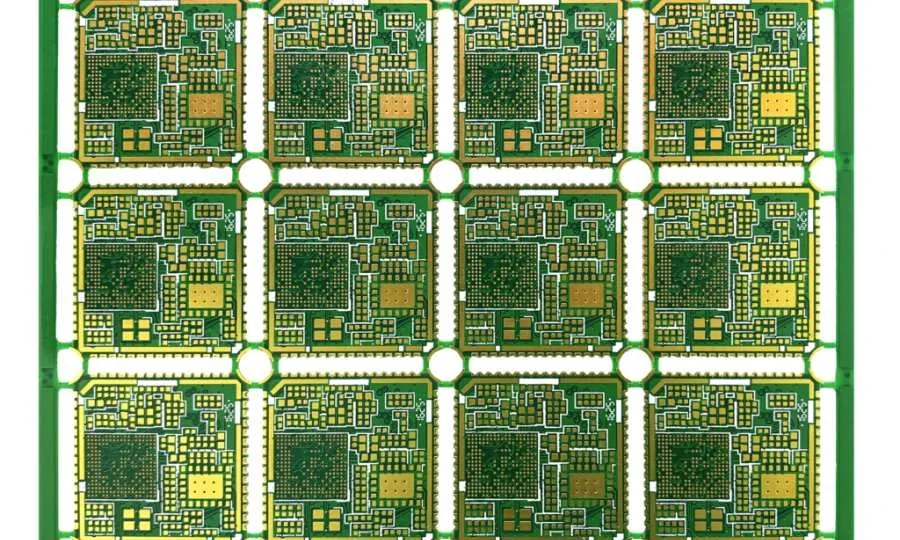
Shengyi S1000-2M is a high-Tg rigid FR-4 laminate used in multilayer PCB constructions, with S1000-2MB as the associated prepreg. A useful manufacturing requirement links that material identity to the board thickness, copper, plated holes, electrical requirements and acceptance evidence. The grade name alone does not determine a completed board's thermal reliability or high-speed performance.
This page focuses on reviewing thermal-expansion data and translating a high-Tg material choice into an actual build. It helps engineers distinguish a supplier's total Z-expansion result from a predicted hole lifetime. It also helps procurement compare quotations that use the same construction and test scope rather than an undefined “high-temperature FR-4” label.
S1000-2M values need methods and conditions
| Property | Selected typical supplier reference | What to keep with it |
|---|---|---|
| Tg | 180°C DSC; 185°C DMA | Test method and material revision |
| Td | 355°C, TGA at 5% mass loss | Decomposition criterion |
| Total Z expansion | 2.4% over 50–260°C | Temperature interval and reference specimen |
| T288 | 30 minutes, TMA | Laboratory method, separate from a production profile |
| Dk / Df | 4.6 / 0.018 at 1 GHz | IPC-TM-650 2.5.5.9 and construction context |
These selected values are from Shengyi's official S1000-2M product table. They are typical references, not guaranteed finished-board acceptance limits. In particular, do not import an unverified lower Df from a third-party comparison and use it to approve a channel or claim a percentage loss improvement.
If your requirement is written as a generic transition class, the Tg180 PCB guide explains that broader intent. The Shengyi family page compares grades by method. Here the next step is to identify the S1000-2M construction that your fabrication and qualification records will represent.
What total Z expansion can tell you
Total Z expansion describes a dimensional change through the material thickness over a stated thermal interval. It is not the same quantity as a coefficient in ppm/°C, and it is not a plated-hole strain measurement. Keep the percent sign, interval, test method and specimen construction together when comparing values.
For dimensional planning, multiplying an initial thickness by a total expansion percentage gives an illustrative free thickness change. This calculation can make the scale easier to understand. It does not describe how copper barrels, resin, glass, components and mechanical constraints share strain in a real board, and it does not determine fatigue life.
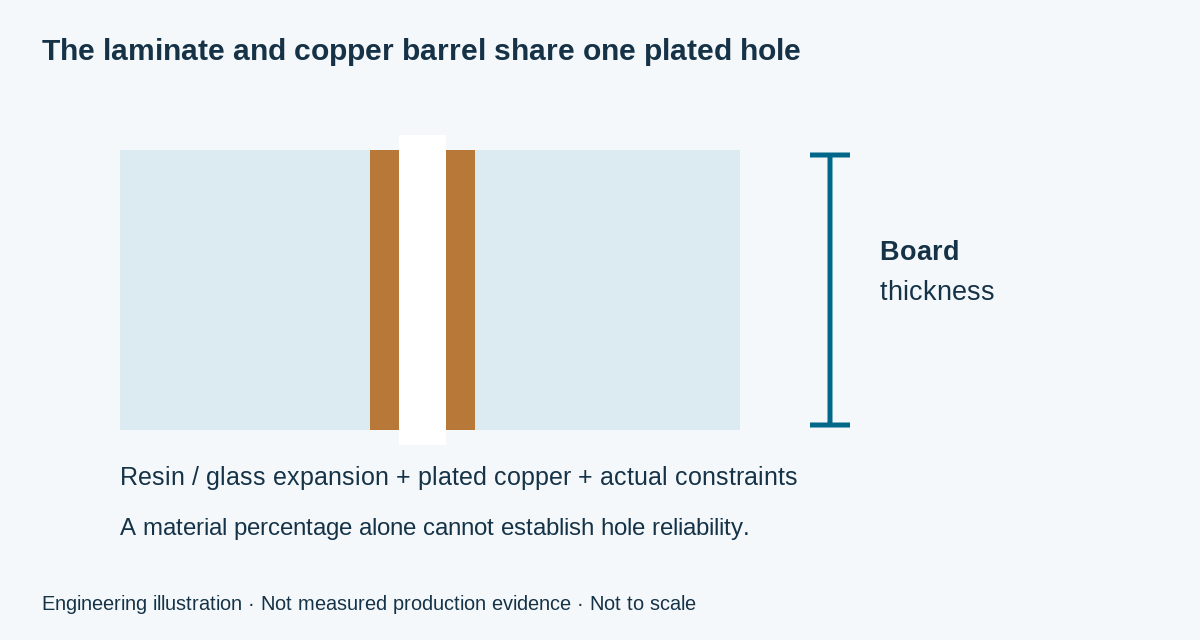
A thick board and a thin board can have the same percentage expansion but different absolute free dimensional changes. That observation is a reason to review the actual hole and stackup geometry. It is not a reason to extrapolate a material test directly into a universal maximum layer count, aspect ratio or permitted number of soldering operations.
Compare free dimensional changes over the same interval
Enter two starting thicknesses, two measured total-expansion percentages and the start/end temperatures associated with each value. The worksheet refuses to compare different temperature intervals. Add the grade, method, conditioning and source reference in the basis field so the exported result can be checked against the underlying documents.
RAYPCB ENGINEERING
Shengyi Material EngineeringShengyi S1000-2M PCB Engineering Planner
Loading Shengyi S1000-2M PCB Engineering Planner…
The example uses 3.2 mm for both candidates and compares 2.4% with 2.8% over 50–260°C. It calculates 76.8 µm and 89.6 µm of free dimensional change, respectively. Candidate A minus B is −12.8 µm. These values illustrate the arithmetic using material references; they are not measured results from a fabricated S1000-2M or S1000H board.
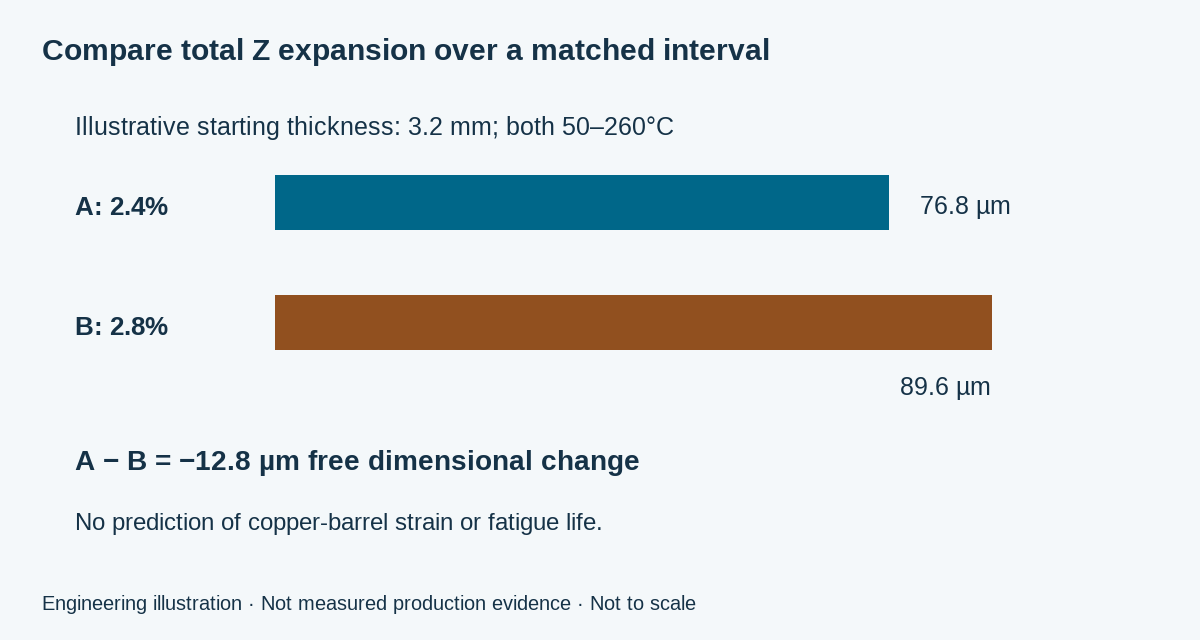
Equal temperature intervals are only the first comparability check. The tool cannot verify your source documents, conditioning, resin/glass construction or measurement quality. Review those before treating a difference as meaningful. If the test ranges differ, obtain comparable data instead of scaling the percentages in proportion to temperature span, especially across a material transition.
Review the hole structure with the thermal requirement
Prepare a stackup that identifies each copper layer, dielectric gap, core and bonding region. Add the finished board thickness and tolerances. For plated holes, distinguish the finished-hole requirement from a proposed drill diameter, and state any acceptance requirement that depends on the hole structure rather than on material identity alone.
The copper barrel is part of a constrained composite structure. Its behavior can depend on geometry, plating distribution, manufacturing condition and the actual exposure history. A favorable material data-sheet entry therefore cannot replace a qualified construction and process. Agree which representative samples or coupons will address the reliability concern before ordering them.
Use the multilayer PCB planning guide when layer allocation remains open. For a preliminary geometry and fabrication review, follow the PCB DFM workflow. Keeping these tasks connected reduces the chance that material, electrical layout and manufacturing each assume a different stackup.
High Tg does not automatically mean low loss
Thermal transition and dielectric loss answer different questions. A board can meet its thermal material requirement while still needing a different electrical construction for a long or demanding channel. Review frequency-specific dielectric data, copper profile, route length, reference geometry, vias and connectors as part of the electrical design.
Do not assign a guaranteed data rate to S1000-2M using a single Df number. The relevant question is whether the actual interconnect meets its allocated channel requirements under the chosen model and measurement conditions. Construction-specific material data and channel evidence are more useful than a generic description such as “suitable for all high-speed designs.”
The controlled-impedance page helps organize trace geometry and coupon requirements. If the project has become primarily an RF or low-loss material-selection task, return to the appropriate material route instead of forcing the original high-Tg choice to answer a different design problem.
Define assembly history and qualification separately
Record the intended assembly operations, rework allowance and important service exposures. A material T288 result and a measured production soldering profile are different records. Neither should be substituted for the other. Components, board thermal mass, moisture condition and the actual process can affect the final assembly requirement.
For example, a communication controller may have a dense multilayer stackup and several thermal operations before shipment. The review should identify the construction, the expected history and the acceptance evidence after representative exposure. This is a planning scenario, not a claim that every board with the S1000-2M label has already passed that program.
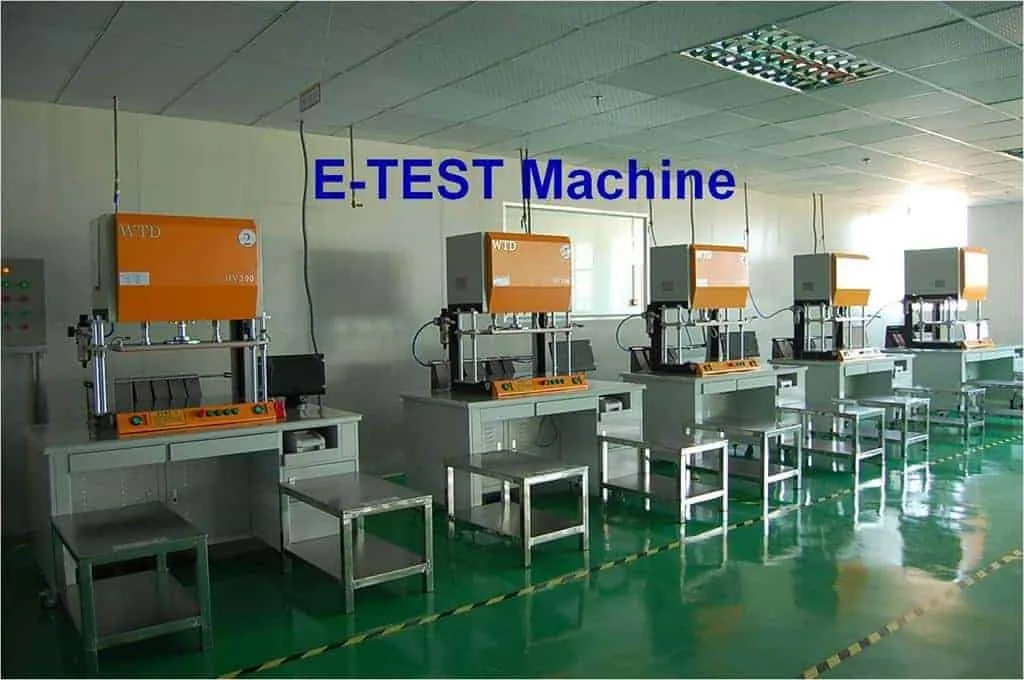
Keep routine netlist testing distinct from reliability qualification. The PCB electrical-testing page addresses production continuity/isolation checks. A material or hole-reliability concern may need additional agreed evidence. State the samples, conditioning, method, acceptance criteria and report ownership before comparing the associated costs.
Build a release record that survives a repeat order
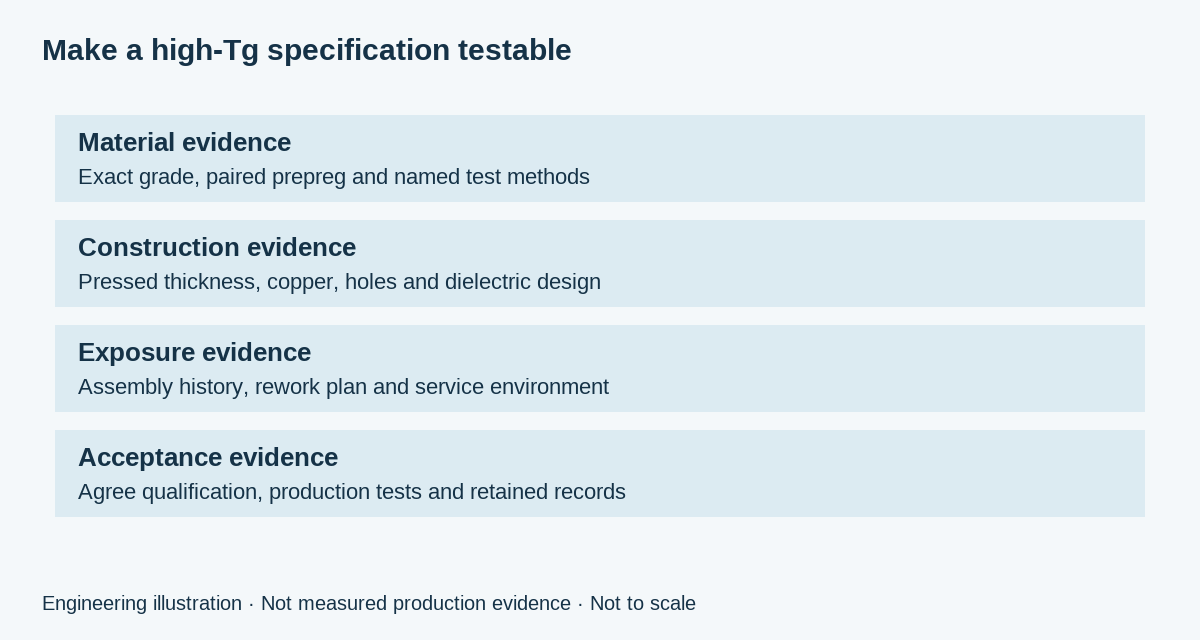
The accepted build should connect four records: material identity, approved construction, exposure assumptions and acceptance evidence. If a supplier proposes a construction change, identify which records need revision. A part-number match alone does not prove that an altered core/prepreg arrangement or hole process represents the previously qualified build.
Retain the drawing revision, approved deviations, material identification and test scope together. During a repeat order, check whether the design, source, quantity or delivery format has changed. Resolve open questions before releasing production rather than expecting the fabricator to infer the significance of an old prototype result.
When comparing with S1000H dimensional planning, keep the decision tied to requirements. The higher-Tg label does not automatically improve every feature, and a lower-cost construction is not automatically a valid alternative. Define the relevant thermal, electrical, dimensional and qualification differences before approving a change.
What belongs in an S1000-2M quotation?
Specify the core/prepreg system, copper, layer count, board and hole dimensions, finish, quantities and requested reports. These details determine a more useful quotation than a generic brand-and-Tg request. Include any controlled impedance, coupon, material-traceability or qualification requirement that changes the scope of work.
Compare offers using the same fabrication revision and order basis. Setup, test tooling, samples and verification may be separate from the recurring board amount. Packaging, freight, tax, assembly and components should be identified rather than silently assumed. Ask for the validity date and material-availability basis instead of treating an earlier quote as a current market rate.
RAYPCB ENGINEERING
Shengyi Material EngineeringShengyi S1000-2M PCB Budget Brief
Loading Shengyi S1000-2M PCB Budget Brief…
The worksheet can export a technical RFQ with no cost entered. If you have dated allowances, it calculates the batch total and allocation per board from those inputs only. It does not use an FR-4 price multiplier or automatically transfer the thermal comparison into a quote. Attach the brief manually with the construction files for review.
S1000-2M PCB questions
Is S1000-2M Tg180 or Tg185?
The official table reports 180°C by DSC and 185°C by DMA. Use the method requested by the drawing or qualification plan. A typical value from another method cannot be silently substituted for a specified minimum or used as a universal conversion between methods.
Can I use the total-expansion percentage at another temperature range?
Not by simple proportional scaling. The published total belongs to its stated interval and test conditions. Obtain appropriate data or use a separately justified model for a different interval. The worksheet deliberately rejects mismatched ranges to keep an invalid comparison from appearing precise.
Does the expansion tool predict via fatigue?
No. It calculates unconstrained dimensional change from a percentage and initial thickness. It does not model copper strain, plating distribution, resin behavior, cycling damage or failure probability. Use the result to frame a construction review, then agree the qualification evidence needed for the actual plated-hole structure.
What if S1000-2M is unavailable in the proposed construction?
Ask for a documented alternative construction and material comparison, including any effect on electrical geometry, thermal behavior, processing and qualification. Keep approval with the responsible design owner. Availability and lead time need a current enquiry; this page and its worksheets do not establish stocked thicknesses or delivery commitments.
Request S1000-2M PCB manufacturing review
Send the named laminate and prepreg, drawing revision, stackup, quantities and required evidence. Identify open material, construction or qualification questions so engineering can prepare a useful manufacturing proposal.
Attach a downloaded tool brief manually. Contact does not automatically receive these inputs. References reviewed September 2026. Illustrations use planning examples; photographs do not establish prices, delivery times or project-specific acceptance.