Sale!
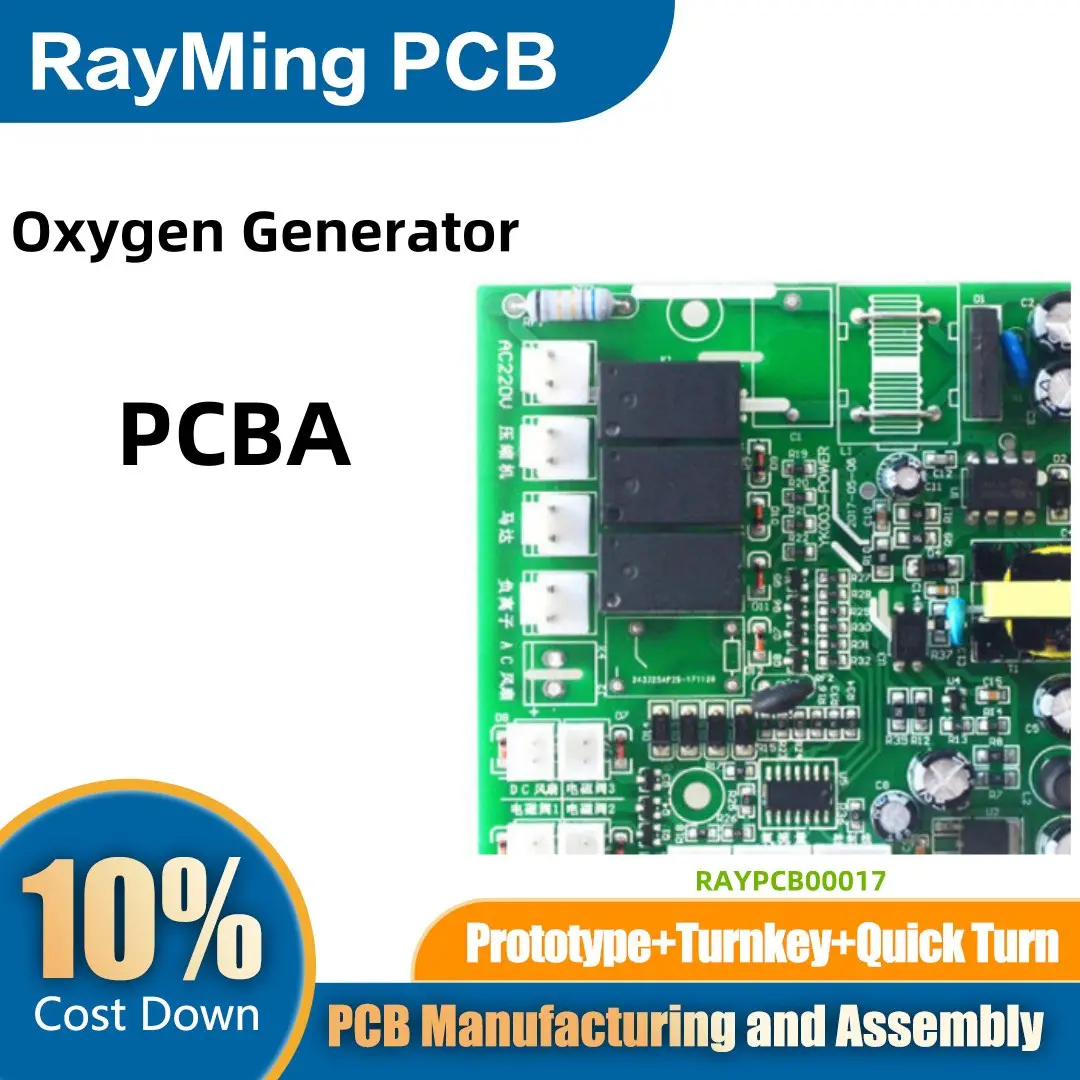
RAYPCB Oxygen generator PCBA Manufacturing $ 50.00Original price was: $50.00. $ 49.00Current price is: $49.00.
Description
1. Design Considerations
1.1 Safety and Regulatory Compliance
Adherence to medical device standards (e.g., IEC 60601-1 for medical electrical equipment)
Compliance with FDA regulations for medical devices (if applicable)
RoHS compliance for environmental safety
1.2 Environmental Factors
Operating temperature range: typically 10°C to 40°C (50°F to 104°F)
Humidity resistance: up to 95% non-condensing
Protection against dust and water ingress (IP rating)
1.3 Circuit Design
Microcontroller selection (e.g., ARM Cortex-M series)
Sensor interfaces (oxygen concentration, pressure, flow rate)
Power management for various voltage requirements
User interface controls and displays
Alarm systems for low oxygen levels or system malfunctions
Data logging and connectivity (optional, for advanced models)
1.4 PCB Layout
Multi-layer design (4-6 layers common)Proper isolation between high and low voltage sections
EMI/EMC considerations to prevent interference with other medical equipment
Thermal management for heat-generating components
1.5 Component Selection
High-reliability components with long MTBF (Mean Time Between Failures)
Medical-grade components where applicable
Low-drift, high-precision sensors for accurate oxygen measurement
Robust connectors suitable for frequent use
2. Manufacturing Process
2.1 PCB Fabrication
Material selection: FR-4 or high-performance laminates
Copper weight: 1 oz or 2 oz depending on current requirements
Surface finish: ENIG (Electroless Nickel Immersion Gold) for good solderability and shelf life
Cleanliness: Implementation of thorough cleaning processes to remove all flux residues
2.2 Assembly
Use of lead-free solder in compliance with RoHS
Automated optical inspection (AOI) after component placement and soldering
X-ray inspection for BGAs and hidden solder joints
In-circuit testing (ICT) for assembled boards
2.3 Conformal Coating
Application of conformal coating (e.g., acrylic or silicone) to protect against moisture and contaminants
Careful masking of connectors and test points before coating
2.4 Functional Testing
Comprehensive functional testing of each unit
Calibration of oxygen sensors
Simulation of various operating conditions
3. Quality Control and Certification
3.1 Quality Management System
Implementation of ISO 13485 for medical devices
Establishment of rigorous quality control procedures
3.2 Reliability Testing
HALT (Highly Accelerated Life Testing) to identify potential weaknesses
Burn-in testing to eliminate early failures
3.3 Traceability
Component-level traceability
Process traceability for each manufacturing step
Unique serialization of each PCBA
4. Validation and Verification
4.1 Performance Testing
Accuracy testing of oxygen concentration measurement
Flow rate and pressure control verification
Power consumption and efficiency testing
4.2 Safety Testing
Electrical safety testing (e.g., ground continuity, leakage current)
EMC testing for emissions and immunity
Alarm system verification
4.3 Environmental Testing
Temperature and humidity cycling
Vibration and shock testing (for portable units)
Altitude simulation (if applicable)
5. Documentation and Regulatory Submissions
5.1 Technical Documentation
Detailed design documentation
Manufacturing process documentation
Test reports and validation results
5.2 Regulatory Submissions
Preparation of FDA 510(k) submission (for US market)
CE marking documentation (for European market)
Other regional regulatory requirements as applicable
6. Post-Production Support
6.1 Field Performance Monitoring
Collection and analysis of field performance data
Implementation of improvements based on real-world usage
6.2 Maintenance and Calibration
Development of maintenance schedules and procedures
Provision for periodic calibration of oxygen sensors
6.3 End-of-Life Considerations
Design for easy recycling and disposal
Compliance with WEEE directive for electronic waste
Discuss your PCB or assembly project
Share your design files, build quantity and technical requirements. Include any open questions about materials, assembly or testing so the scope can be reviewed with your quotation.
Discuss your project
Review PCB manufacturing or PCB assembly services before sending your files.