
RAYPCB · ENGINEERING GUIDE
ITEQ IF-BC Bondply: Callout Verification and Fill Planning
An ITEQ IF-BC bondply callout needs an exact supplier document before it becomes a production instruction. The current public ITEQ bonding-sheet page identifies IF-BH and IF-BL series; that is not evidence that IF-BC is interchangeable with either. This page keeps the legacy question open while providing a useful geometric review of the intended bonding job.
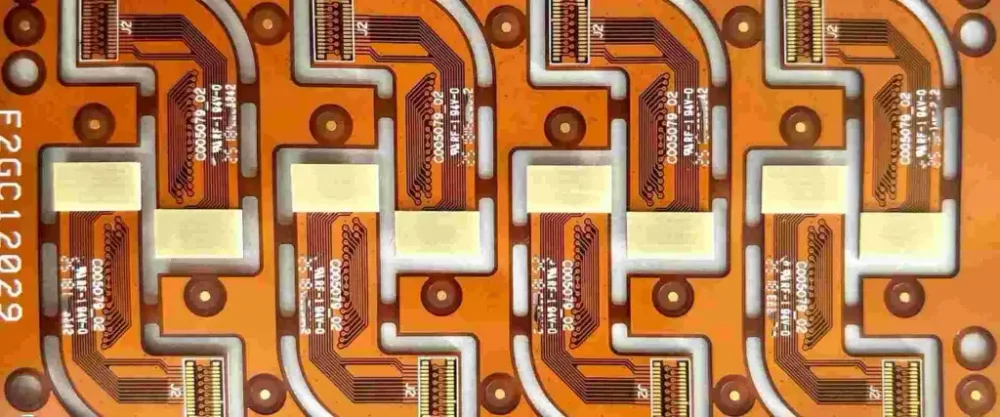
Resolve identity without inventing a grade table
Retain the original drawing text, lot label or supplier quotation that introduced IF-BC. Request the full designation, revision and supplied form. Do not assign BH a guessed high-Tg meaning or BL a guessed low-Tg meaning: the current public page describes BL as a low-loss series. The correct mapping requires a supplier statement and design approval.
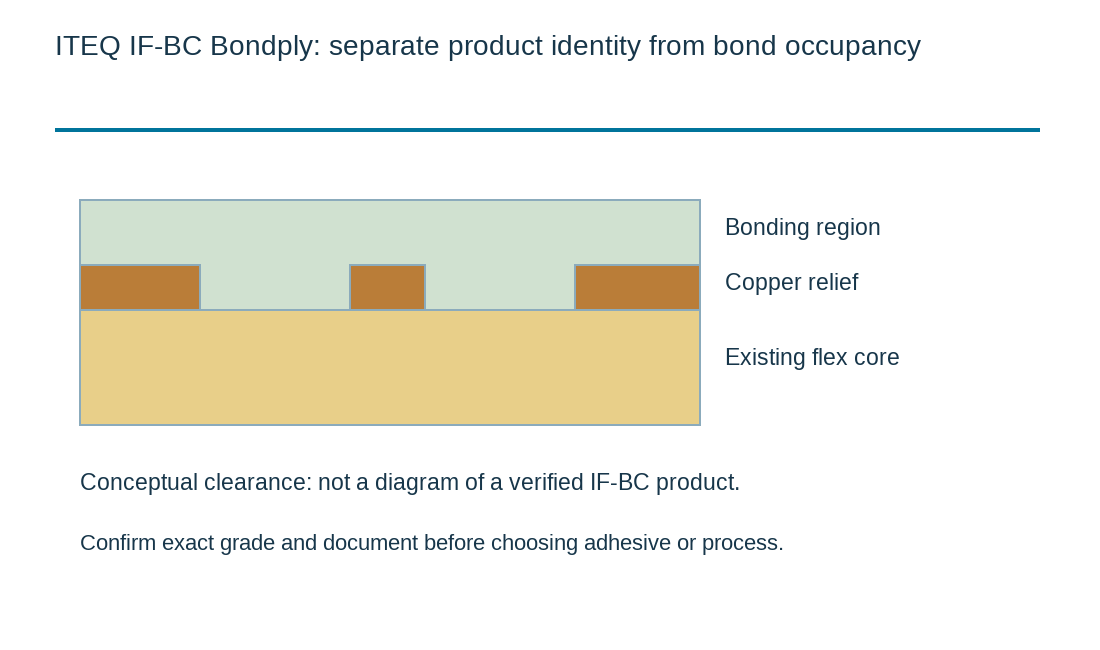
Construction and decision boundaries
| Review item | What this page establishes | What remains project-specific |
|---|---|---|
| IF-BC identity | Current exact mapping not established | Original record and supplier response needed. |
| Current catalog | BH normal / BL low-loss labels | No inferred equivalence or guessed Tg. |
| Tool scope | Pattern occupancy | Not a product specification or cure cycle. |
Describe the surfaces being bonded
State whether the material joins patterned flex layers, a rigid cap or a stiffener. Identify copper relief, open areas, required final separation and where flow must be controlled. A bondply task differs from a protective IF-FC coverlay task. A proposed material should be evaluated for the actual surfaces and process history, not only for a familiar family name.
| Review item | What to establish |
|---|---|
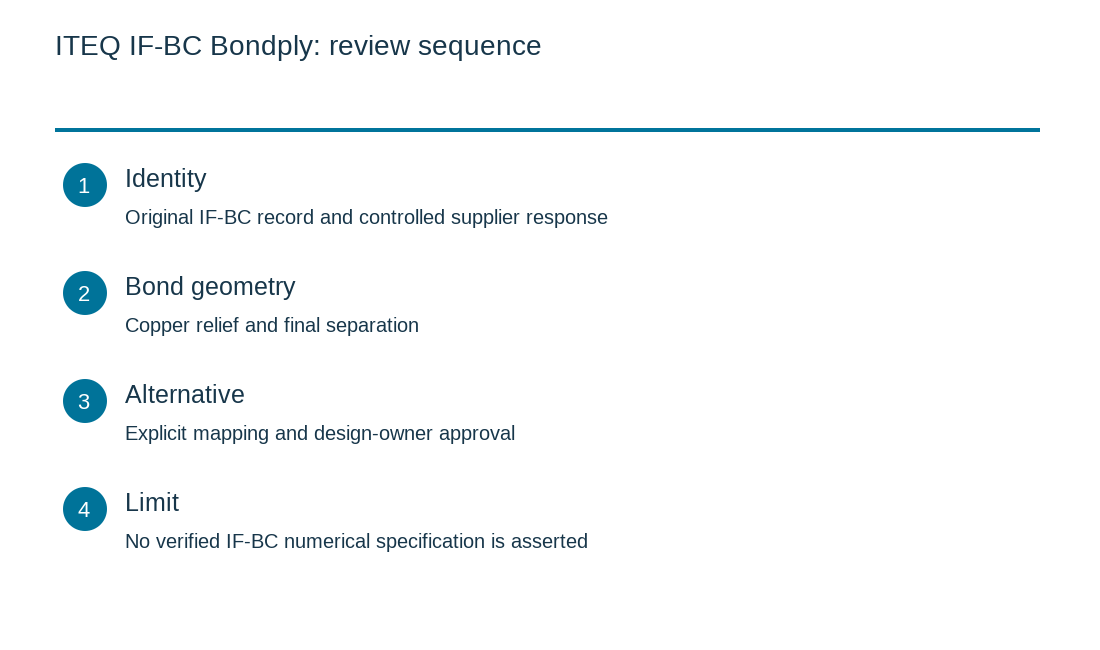
| Identity | Original IF-BC record and controlled supplier response |
| Bond geometry | Copper relief and final separation |
| Alternative | Explicit mapping and design-owner approval |
| Limit | No verified IF-BC numerical specification is asserted |
Use the volume worksheet as geometry
Enter the evaluated area, copper feature height, retained coverage and final separation above the copper. The result describes ideal space around one patterned surface. It does not determine incoming adhesive thickness, available flow or a cure schedule. The opposing pattern, carrier, squeeze-out and local resin movement require the actual product and fabricator's process model.
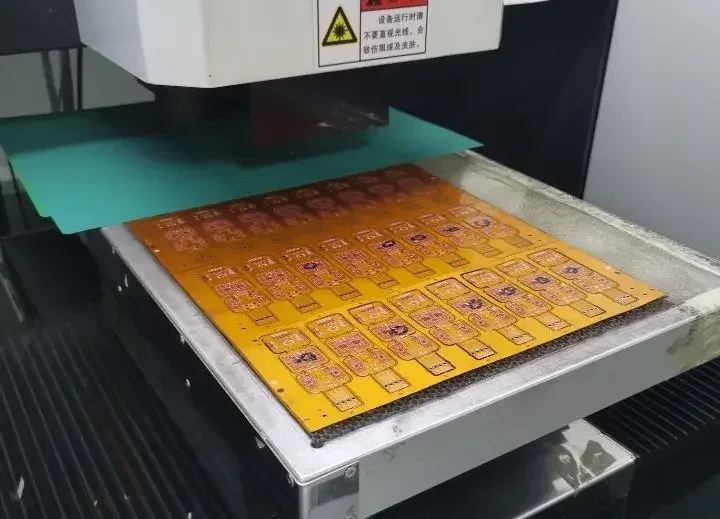
Keep the missing evidence visible
Before a trial, list the identity, storage, cure, flow and adhesion questions that remain unresolved. Assign a source or responsible reviewer to each. A numerical result from the worksheet does not close any of those questions. If a different product is proposed, retain both the original callout and the reason the change is acceptable.
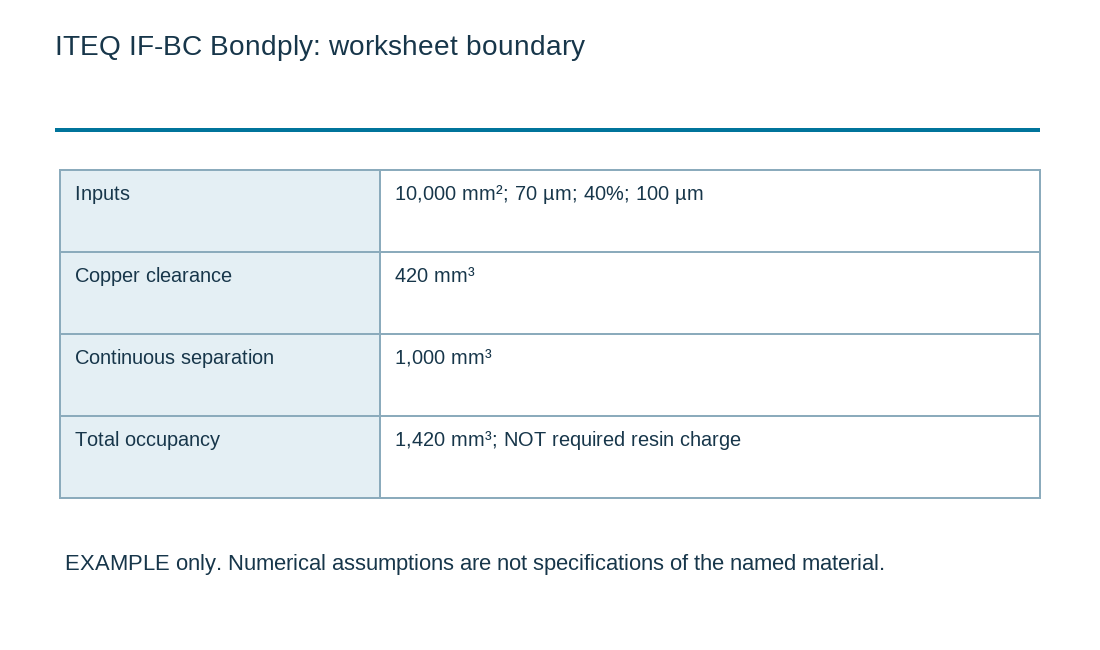
Coordinate the surrounding stack
An unclear IF-E laminate name should not be treated as a verified matching system merely because the same manufacturer is named. Check both sides of the bond. The Kapton VN legacy-callout workflow illustrates the same change-control distinction for film: historical identity, current supply and approved replacement are separate records.
Copper-clearance volume illustration
Copper-clearance volume illustration
Use the current inputs and keep the assumptions
Start with the example only to inspect the units and the calculation boundary. Replace every assumption with a value tied to your own document or measurement. An empty numeric field is not zero. The review-reference field is a local label; avoid entering customer names, confidential part numbers or other private information into a public worksheet.
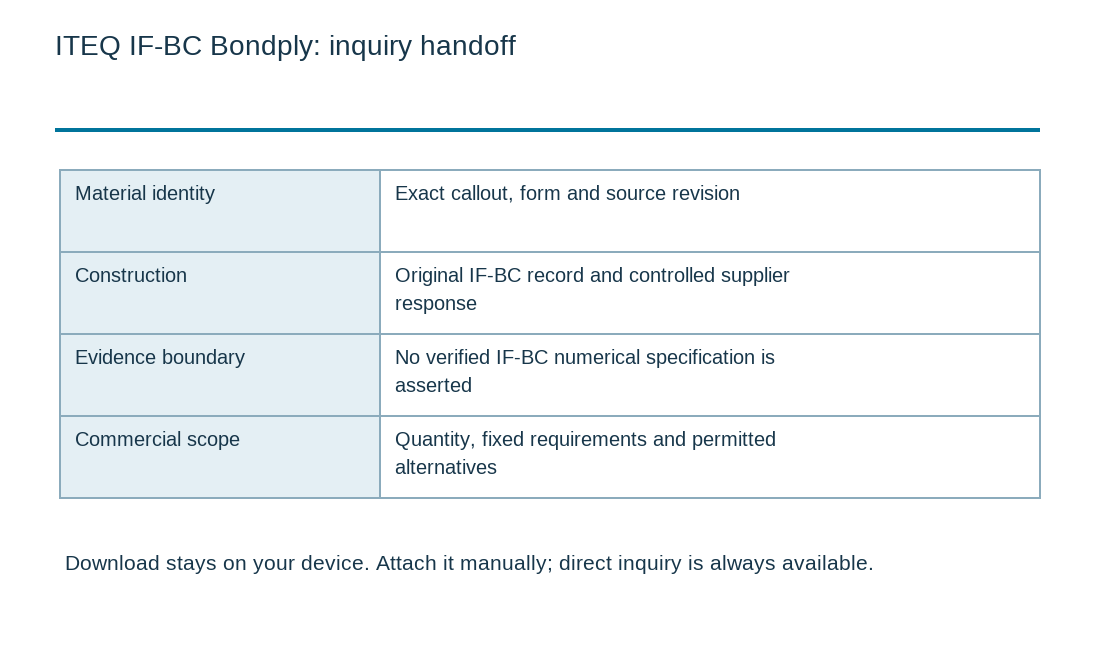
After calculating, read the notes alongside the numerical result. Changing any input invalidates the displayed result and disables its download until you calculate again. For a comparison, keep the units, geometry, material condition and measurement boundary consistent. A long decimal result does not imply equally precise input data. The downloadable record stays on your device and can be attached manually to an inquiry. It is not automatically transferred into the Contact form.
If an input is unknown, identify the person or document needed to resolve it. Do not fill a gap with a favorable generic value simply to obtain a result. You can request a material or fabrication review without using the tool. The arithmetic illustrates a relationship; it does not accept a construction, certify a material, establish current pricing or replace a supplier process specification.
| Input | What to establish before using it |
|---|---|
| Review reference | Nonconfidential revision label. |
| Evaluated bond area · mm² | Panel or coupon area with consistent pattern coverage. |
| Copper feature height · µm | Height of the one patterned surface being evaluated. |
| Retained copper coverage · % | Area fraction occupied by copper on that surface. |
| Final separation above copper · µm | Ideal continuous bondline above the highest copper; excludes roughness and glass. |
Optional cost comparison from your own allowances
Use a quotation or a clearly labeled internal assumption for each input. Keep the quantity, construction and inspection scope the same when comparing alternatives. This uncalibrated planning model adds entered values; it contains no current market rates and does not issue a RAYPCB quotation. You can contact the team without completing it.
Optional project allowance comparison
Ask for a bounded proposal
Send the source callout, stack sections, copper map, flow boundaries and acceptance requirements. Invite a documented alternative where the drawing permits one. Ask the quotation to identify open engineering or trial work separately from recurring production. This is more useful than publishing invented thermal and flex-life values for an unresolved product code.
Release the material with its finished flex construction
Bonding material is specified by the job it must perform between two surfaces. State their pattern relief, final separation and the acceptable flow region. A volume calculation is only a geometric check. It cannot set a press cycle or determine the material charge because flow, squeeze-out, wetting and cure depend on the exact product and process. Resolve an incomplete product code before releasing a production lamination instruction.
Start the release drawing with the shape the circuit will occupy in the product. Show the flat outline, assembled position, motion envelope and regions that must remain flat. Identify installation folds separately from movement during service. A flex that is bent once to clear an enclosure has a different verification problem from a cable that moves on every operating cycle. State the mechanism, travel, speed, temperature and expected duty rather than writing only flexible PCB.
Then define each cross-section that actually exists. The bend span, connector tail, component island and rigid transition may have different copper, coverlay, adhesive and stiffener layers. A single finished-thickness number cannot describe all of them. Indicate the measurement locations and include tolerances where fit or electrical behavior depends on them. Ask the fabrication team to return the proposed construction for approval before it becomes a purchasing assumption.
Copper deserves its own record. Distinguish supplied foil from copper remaining after imaging, etching and plating. Identify which surfaces receive additional metal and whether the bending region is plated. The foil process label alone does not establish fatigue life: thickness, grain direction, surface treatment, pattern shape and mechanical restraint also affect the construction. Do not select a copper variant solely because a comparison table calls it the premium option.
Choose verification coupons to reproduce the critical feature. A flat electrical coupon can check continuity or a specified transmission geometry; it does not reproduce repeated motion around a hinge. A bend specimen needs the relevant stack, trace layout, radius definition, temperature, cycling method and failure criterion. Monitor the failure mechanism of interest and keep the sample count with the result. A successful demonstration is useful evidence, but its scope must remain attached to it.
Review assembly as part of the material decision. Components and connectors impose local mass and force, and the support tooling changes how a flexible panel moves during printing, placement and heating. State component keep-out regions, supported areas and the sequence in which temporary supports are removed. A material thermal test is not the oven profile for the populated assembly. Moisture conditioning and permitted thermal exposure need a product-specific instruction.
For purchasing, separate the recurring board cost from tooling, fixtures and qualification. Compare the same quantity, panel assumptions, copper, surface finish, inspection and delivery format. An inexpensive laminate can become an expensive assembly if it requires extra handling or poor nesting. Conversely, a more elaborate stack should solve a stated need; adding layers or thicker copper without an electrical or mechanical reason can create unnecessary work.
Prepare a concise inquiry package even when some inputs are unknown. Include the schematic or connection requirement where relevant, fabrication data, stack sections, mechanical drawing, quantity and a short list of open decisions. Mark exact-material requirements separately from permitted alternatives. Keep the previous approved revision available for repeat builds. The engineering conversation can start with an incomplete stack, provided the missing items are explicit and no unapproved substitution is presented as settled.
Standards, source context and limits
Use the edition, amendment and material-document revision named in the purchase agreement. A standards title, marketing label or supplier product family does not establish that a particular lot meets a requirement. Public summaries are useful for scope; the controlled specification and applicable test method govern acceptance.
The examples on this page are illustrative engineering scenarios. They are not RAYPCB production records or guaranteed material values. Source links identify the organizations responsible for the referenced information. Confirm applicability to the exact grade, construction and test condition before carrying a number into a drawing or qualification report. For a flex board, distinguish the design requirements in IPC-2223, finished-board qualification and performance in IPC-6013, and the material scopes of IPC-4202, IPC-4203 and IPC-4204. These cover different deliverables; naming them does not certify the material or factory. State the contracted revision and applicable material sheet. Source review date: 3 October 2026. Legacy designation, present availability and an approved replacement are separate questions.
For fabrication scope and the agreed construction requirements, see PCB manufacturing.