RAYPCB · ENGINEERING GUIDE
Isola 185HR PCB: Thermal Data and Multilayer Design
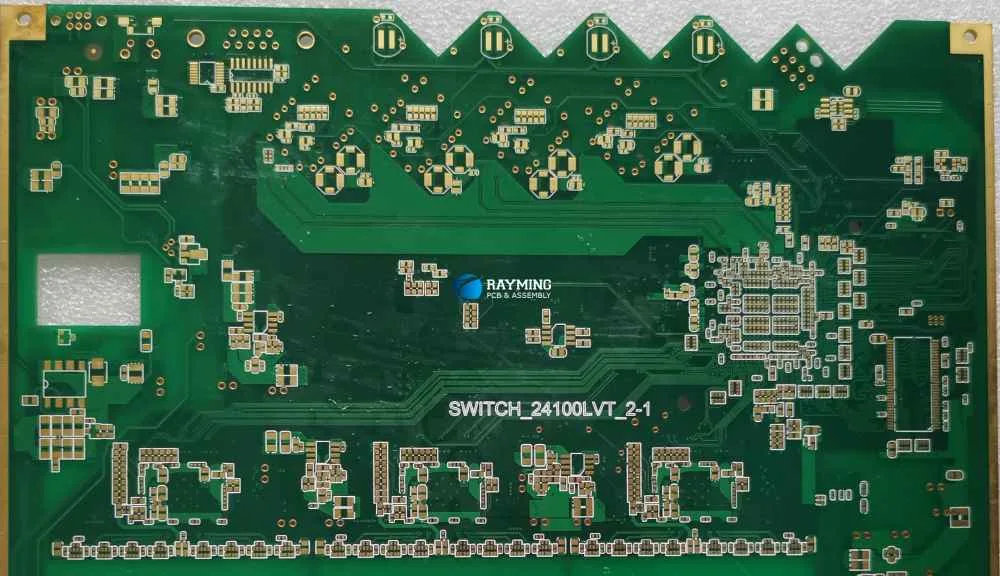
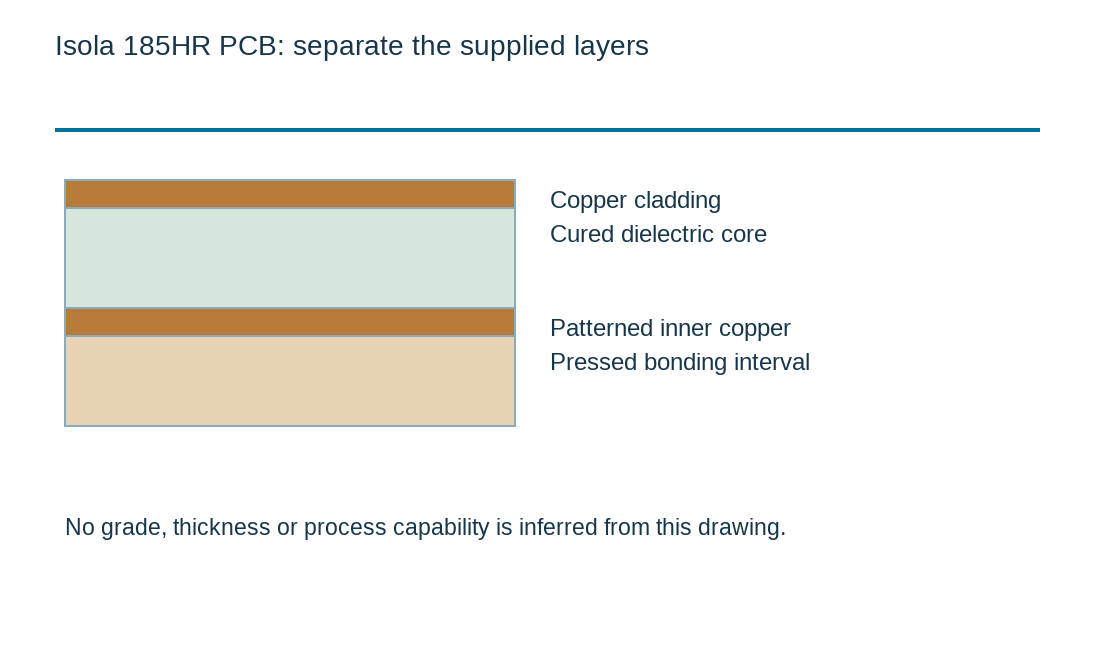
Isola 185HR is an epoxy laminate and prepreg system for thermally demanding multilayer boards. Selecting it means defining a build with a particular resin, reinforcement and copper construction, rather than simply requesting a high-Tg PCB. This guide connects the material data to plated-hole geometry, assembly exposure and the information needed for a useful manufacturing response.
The Isola PCB overview covers the wider material range. Here the focus is an existing 185HR requirement or a comparison against a defined thermal requirement, with electrical performance evaluated separately.
What the 185HR thermal numbers actually describe
Isola's product data lists typical DSC Tg of 180°C and a 5% mass-loss decomposition temperature of 340°C. These are different tests. Tg identifies a polymer transition, while Td describes mass loss during a specified thermal measurement. Neither is an allowable continuous board operating temperature or a ready-made soldering profile.
The sheet also presents integrated thickness expansion over a specified interval. Do not compare that percentage directly with an in-plane coefficient expressed in ppm/°C. For a thick multilayer, ask which property is relevant to the copper barrel and which is relevant to the package interface. Those questions may lead to different evidence.
Evidence and construction decision
| Item | Source or model boundary | Action for the design review |
|---|---|---|
| Tg | 180°C DSC, typical | Separate transition from allowable service temperature. |
| Td | 340°C at 5% mass loss | Preserve the test criterion. |
| Hole reliability | Material data alone are insufficient | Specify construction and thermal sequence. |
Begin with the hole that is hardest to manufacture
List the smallest drilled holes, their traversed thickness and the number of thermal excursions expected before shipment. Include component removal or replacement where that is part of the agreed assembly route. A thin prototype and a thick backplane using the same resin do not impose identical demands on the plated interconnects.
Mark the critical hole family in the fabrication drawing. Agree representative coupon locations and the required inspection or reliability evidence with the manufacturing team. A material name should not replace a hole-construction review. If comparing IS 420, use matched board geometry and acceptance requirements so that the comparison has a meaningful boundary.
| Review item | What to establish |
|---|---|
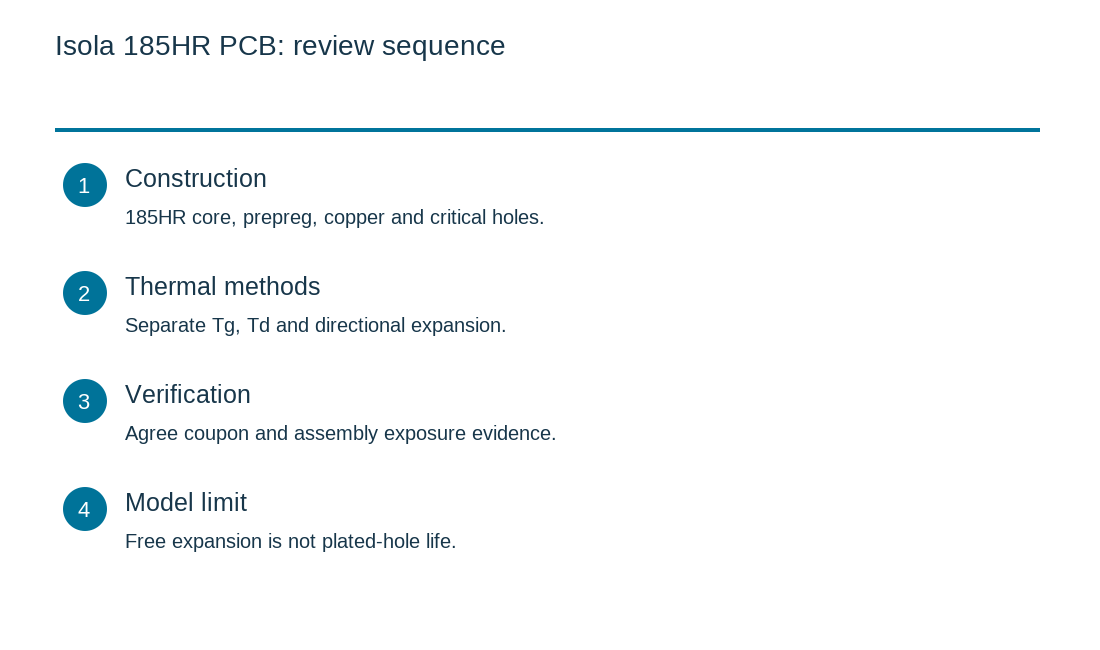
| Construction | 185HR core, prepreg, copper and critical holes. |
| Thermal methods | Separate Tg, Td and directional expansion. |
| Verification | Agree coupon and assembly exposure evidence. |
| Model limit | Free expansion is not plated-hole life. |
Keep electrical construction data with the stackup
The official 185HR page provides frequency-dependent electrical values and construction tables. Headline Dk and Df are not a universal pair for every core thickness or resin content. Record glass style, finished dielectric separation, copper profile and the method used for the design model.
An impedance target can often be met with more than one trace geometry, but that does not make the resulting insertion loss or fabrication tolerance identical. Ask for the actual proposed stackup before freezing a routed design. When a long channel is the reason for changing materials, compare a complete channel rather than interpreting higher Tg as lower loss.
Piecewise free thickness expansion
Piecewise free thickness expansion
Use the current inputs and keep the assumptions
Start with the example only to inspect the units and the calculation boundary. Replace every assumption with a value tied to your own document or measurement. An empty numeric field is not zero. The review-reference field is a local label; avoid entering customer names, confidential part numbers or other private information into a public worksheet.
After calculating, read the notes alongside the numerical result. Changing any input invalidates the displayed result and disables its download until you calculate again. For a comparison, keep the units, geometry, material condition and measurement boundary consistent. A long decimal result does not imply equally precise input data. The downloadable record stays on your device and can be attached manually to an inquiry. It is not automatically transferred into the Contact form.
If an input is unknown, identify the person or document needed to resolve it. Do not fill a gap with a favorable generic value simply to obtain a result. You can request a material or fabrication review without using the tool. The arithmetic illustrates a relationship; it does not accept a construction, certify a material, establish current pricing or replace a supplier process specification.
| Input | What to establish before using it |
|---|---|
| Review reference | Nonconfidential revision label. |
| Initial dielectric thickness · mm | Unconstrained specimen approximation. |
| Start temperature · °C | Must be less than final temperature. |
| End temperature · °C | Heating illustration only; not an approved exposure. |
| Assumed transition temperature · °C | Simplified sharp transition; use a defined measurement method. |
| CTE below transition · ppm/°C | Direction-specific value over the relevant interval. |
| CTE above transition · ppm/°C | Direction-specific value, not copied from in-plane CTE. |
Optional cost comparison from your own allowances
Use a quotation or a clearly labeled internal assumption for each input. Keep the quantity, construction and inspection scope the same when comparing alternatives. This uncalibrated planning model adds entered values; it contains no current market rates and does not issue a RAYPCB quotation. You can contact the team without completing it.
Optional project allowance comparison
Use the expansion worksheet to expose assumptions
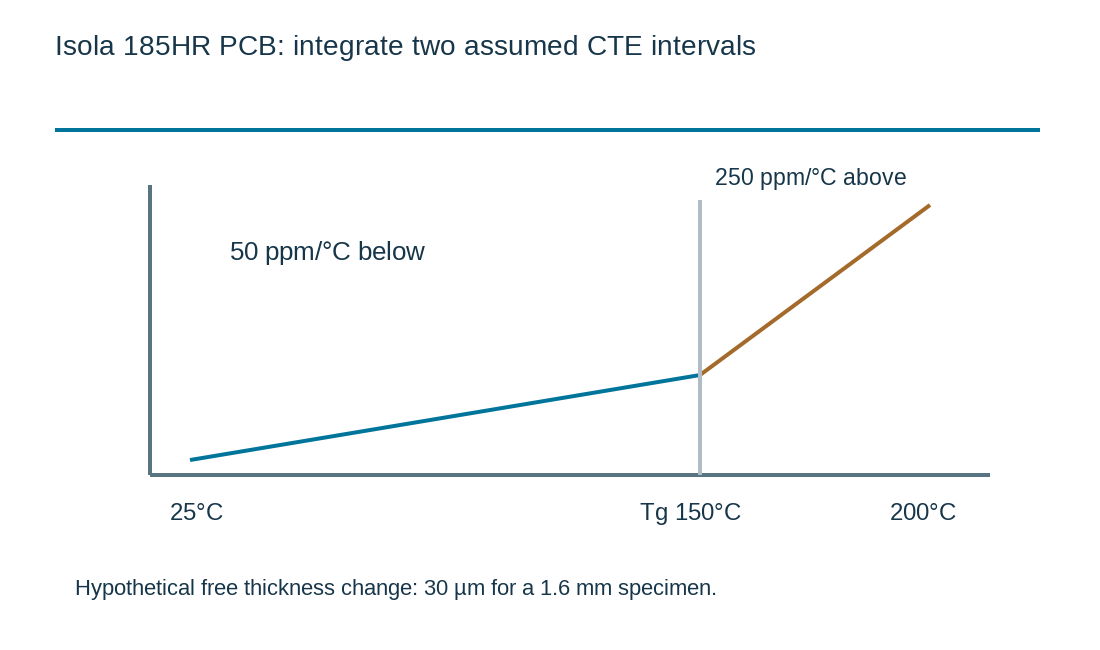
The tool integrates two user-entered thickness expansion coefficients around an idealized transition. Its example uses a 1.6 mm specimen, a 25–200°C excursion, a 150°C transition and coefficients of 50 and 250 ppm/°C. The resulting free thickness increase is 30 µm. Those numbers are deliberately hypothetical, not an embedded 185HR specification.
The result excludes copper constraint, viscoelastic response and cyclic damage. It helps check units and identify the temperature interval that dominates an estimate. It cannot predict plated-hole fatigue life or release the board for manufacture. Use measured construction data and agreed qualification when reliability drives the decision.
Compare alternatives without losing the original requirement
An IS 410 legacy drawing may need a documented replacement review; an IS 550H construction may be considered when low expansion or halogen requirements drive the change. Neither comparison establishes an automatic equivalent. Preserve the original limits, test methods and customer approval route.
For commercial review, separate laminate choice from tooling, finished-board testing and one-time qualification work. The optional allowance calculator contains no material price database. Enter comparable quoted figures, keep the quantity and deliverables fixed, and document what is excluded before interpreting a difference.
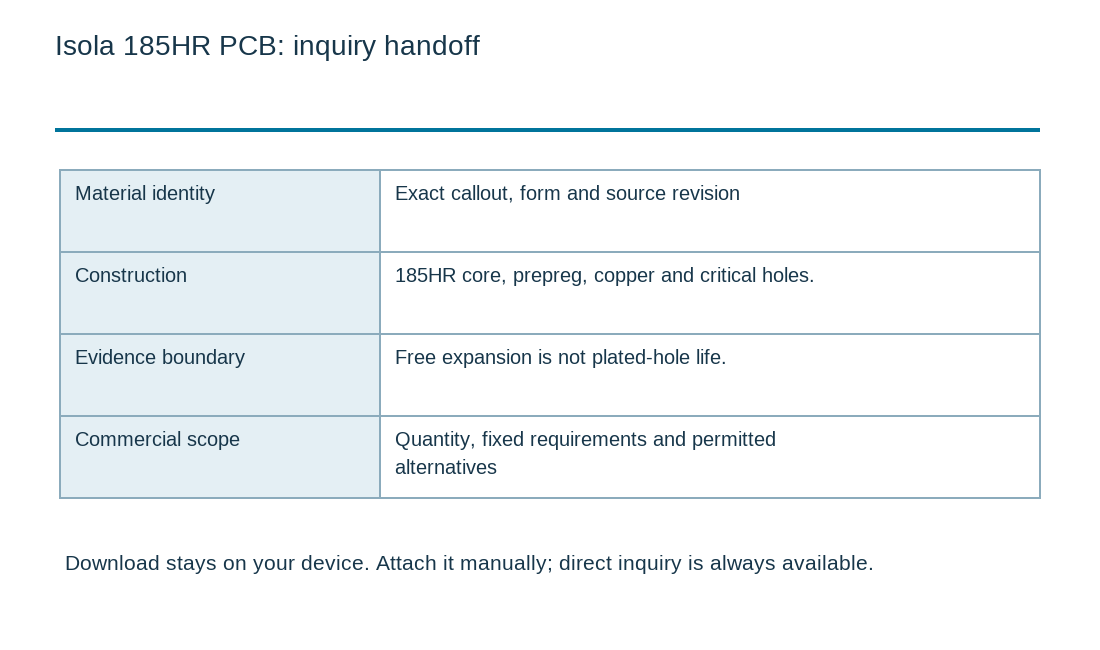
Send a focused 185HR manufacturing inquiry
Provide the revision, stackup, board dimensions, order quantity, copper and finish, drill information and relevant assembly exposure. Identify controlled-impedance layers and any mandatory material source or substitution restriction. Include the evidence you expect with the finished boards.
A useful reply identifies the proposed construction and any open exceptions. Availability, lead time and price are confirmed against that proposal. Keep the approved material and stackup together for repeat orders; a supplier change that preserves the 185HR name can still require a construction review.
Close the material and construction decision together
The finished board combines a dielectric, copper patterns, holes, surface coatings and a manufacturing history. Its behavior cannot be inferred from a family name alone. State the supplied grade, reinforcement, thickness, copper and processing conditions that matter to the intended application.
Keep handling and assembly requirements with the fabrication drawing. A thin panel, punched outline or unusual support condition can change the production route even when the electrical circuit is simple. Ask the fabricator to review the actual features and panel format rather than assuming a dimensional example represents a production capability.
For cost comparison, hold the drawing, quantity, test scope and acceptance requirements constant. Record one-time tooling separately from recurring work, and distinguish raw material utilization from accepted-board yield. Any calculator on this page uses supplied assumptions; an actual quotation requires the files and an agreed scope.
A source-qualified table should be read alongside the exclusions and footnotes, not separated from them. If the supplier limits an application, identify whether that limitation affects the current design before requesting a price. A familiar family classification does not override an explicit restriction, and a positive calculator result cannot remove it.
For a repeat build, compare the newly proposed supply with the previously approved material record. Exact grade, manufacturing site where relevant, foil treatment, reinforcement and dimensional basis can matter. Define which changes require notification and which need technical approval. This avoids turning a purchasing substitution into an unnoticed design change.
Receiving records should support the agreed identity and traceability requirement. A certificate for a raw material, a finished-board inspection report and an assembly test result cover different boundaries. Request the records that actually answer the project questions rather than collecting unrelated certificates.
When a source contains conflicting values, keep the discrepancy visible until a controlled revision or written supplier response resolves it. Do not create a new table by combining the most favorable entries from several sources. The released drawing, material list and quotation should all describe the same accepted construction.
Standards, source context and limits
Use the edition, amendment and material-document revision named in the purchase agreement. A standards title, marketing label or supplier product family does not establish that a particular lot meets a requirement. Public summaries are useful for scope; the controlled specification and applicable test method govern acceptance.
The examples on this page are illustrative engineering scenarios. They are not RAYPCB production records or guaranteed material values. Source links identify the organizations responsible for the referenced information. Confirm applicability to the exact grade, construction and test condition before carrying a number into a drawing or qualification report. Sources were reviewed on 3 October 2026. A public catalog search is not proof that an unlisted product never existed. Where the exact designation or current technical sheet could not be verified, this page provides a clarification workflow rather than an invented material specification. Current supply, construction availability and qualification remain separate questions.