What is Rogers RT/Duroid 5880LZ Material?

Rogers RT Duroid 5880LZ

Introduction to RT/Duroid 5880LZ

RT/Duroid 5880LZ is a ceramic-filled, PTFE composite material manufactured by Rogers Corporation for use in high frequency circuit boards and microwave components.

Some key facts about RT/Duroid 5880LZ:

  • Belongs to the RT/duroid 6000 series of high frequency laminates
  • Features a dielectric constant of 1.96 at 10 GHz
  • Enables performance up to mmWave frequencies
  • Low loss material suitable for exacting circuit applications
  • Uses a filler system to achieve properties and performance
  • Utilized in designs from HF to Ku band and above

With its optimal electrical and mechanical properties, RT/duroid 5880LZ allows circuits to achieve excellent gain and low insertion loss even at millimeter-wave frequencies. In this article, we examine RT/Duroid 5880LZ in more detail including its properties, applications, key benefits, and usage guidelines.

Dielectric Composition
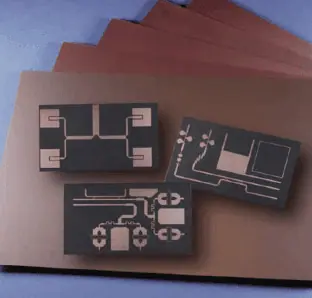
rt duroid 5880
rt duroid 5880

Rogers RT/duroid 5880LZ is a filled, ceramic-PTFE composite dielectric material, consisting of:

  • PTFE (Polytetrafluoroethylene): This provides the basic matrix and gives the material is low dielectric constant. PTFE offers high strength and flexibility along with heat and chemical resistance.
  • Ceramic filler: This is a proprietary formulation of ceramic particulate blended with the PTFE. The filler system enables the dielectric properties while also enhancing thermal and mechanical performance.
  • Glass reinforcement: Glass microfibers are added for improved dimensional stability and temperature coefficient of expansion (CTE).

The composition results in a flexible circuit material that is lightweight and easily fabricates while delivering electrical performance beyond conventional PTFE. The material offerings include prepreg, laminates, bondply, and cable dielectrics.

Dielectric Properties

The dielectric properties of Rogers RT/Duroid 5880LZ that make it suitable for high frequency applications include:

  • Dielectric constant (Dk): 1.96 ยฑ 0.02 @ 10 GHz
  • Dissipation factor (Df): 0.0019 @ 10 GHz
  • Dielectric strength: > 1.6 kV/mil (> 63 kV/mm)

The low and stable dielectric constant over frequency allows for tighter circuit layouts and high frequency operation. The low loss tangent means more of the transmitted signal is retained as it passes through transmission lines, striplines, and other circuit elements. High dielectric strength enables thinner laminates and improved power handling.

Key Material Benefits

Rogers RT/Duroid 5880LZ offers several benefits that make it advantageous for engineers to design high frequency PCBs and components:

  • Extremely low loss for optimal circuit efficiency up to mmWave bands
  • Lightweight with outstanding dimensional stability
  • Allows miniaturization of circuits with thin laminates
  • Good thermal conductivity for power handling
  • Low moisture absorption for reliable electrical performance
  • Excellent CTE match to common metal platings
  • Simple machining and fabrication
  • RoHS compliant and lead-free
  • Enables circuits to achieve wider bandwidths

Typical Applications

RT/Duroid 5880LZ is well suited for the following typical applications:

  • Wireless infrastructure antennas and filters
  • Military phased array radar and communications
  • Satellite communications and telemetry
  • Automotive radar transceivers
  • Point-to-point backhaul radios
  • Test and measurement equipment
  • 5G equipment and mmWave antennas

The low loss, dimensional stability, and fabricability make it an optimal choice where every dB of loss matters. circuits operating from L through Ku band and beyond benefit the most from 5880LZ’s properties.

Available Product Forms
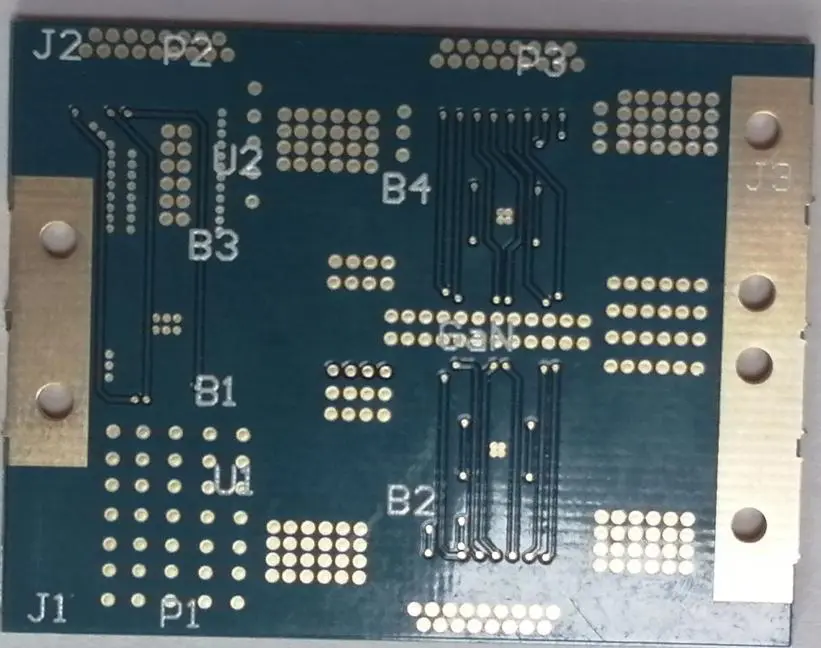
Rogers-RO3203-pcb

Rogers offers RT/Duroid 5880LZ in the following product formats:

Prepreg

  • 5880LZ reinforced prepreg
  • Available on various glass styles
  • Multiple resin content options
  • Rolls or panel forms

Laminates

  • Double-sided clad sheets
  • Thicknesses from 0.005″ to 0.125″
  • Rolls or panel sizes
  • One ounce ED copper standard

Bondply

  • Adhesive bonded multilayer material
  • Alternating dielectric and double-sided copper layers
  • Eliminates press cycles for multilayer boards

Wire and Cable

  • Coaxial and multi-conductor cables
  • Semirigid and flexible constructions
  • Custom cable solutions

Key Properties Data

Below table summarizes the key properties of RT/Duroid 5880LZ laminates:

PropertyValueTest Method
Dielectric Constant (Dk)1.96 ยฑ 0.02IPC-TM-650 2.5.5.5 Clamped Stripline
Dissipation Factor (Df)0.0019IPC-TM-650 2.5.5.5
Dielectric Strength1.6 kV/mil minIPC-TM-650 2.5.6.2
Volume Resistivity1 x 10^15 Ohm-cmIPC-TM-650 2.5.17
Surface Resistivity5 x 10^15 Ohm-cm minIPC-TM-650 2.5.17
Coefficient of Thermal Expansion (CTE)13IPC-TM-650 2.4.24
Thermal Conductivity0.69 W/mKASTM C518
Moisture Absorption<0.02%IPC-TM-650 2.6.2.1
Density2.2 g/cm3ASTM D792
Hardness50 (Shore D)ASTM D2240
Flexural Strength27.6 ksiIPC-TM-650 2.4.4
Tensile Modulus540 ksiASTM D638
Compressive Modulus12.7 ksiASTM D695
Peel Strength6.5 pliIPC-TM-650 2.4.8
Shear Strength750 psiIPC-TM-650 2.4.8
Glass Transition Temperature (Tg)280ยฐCIPC-TM-650 2.4.24

Design and Layout Guidelines

duroid-5870

To achieve optimal circuit performance on RT/Duroid 5880LZ, designers should follow these PCB layout recommendations:

  • Maintain line width/spacing ratio of โ‰ฅ 0.5
  • Use smaller traces and spacing at higher frequencies
  • Include a continuous ground plane whenever possible
  • Minimize number of laminate cuts and material discontinuities
  • Watch for resonance points and avoid narrowband designs
  • Use impedance matching, coupling andtransitions as needed
  • Add more power supply filter โ€“ing as frequency increases
  • Allow sufficient distance between circuits and board edges
  • Carefully model losses as frequency increases

Fabrication and Assembly

RT/Duroid 5880LZ laminates can be easily fabricated using conventional PCB processing techniques:

  • Imaging: Photolithography, laser direct imaging
  • Etching: Ammoniacal or cupric chloride etchants
  • Plating: Electrolytic and electroless copper plating
  • Solder mask: Liquid photoimageable or dry film
  • Silkscreen: Epoxy and UV ink compatible
  • Automated routing, milling, drilling processes
  • V-scoring for snap separation of circuits

For best results, refer to the IPC specifications together with the RT/duroid fabrication guidelines published by Rogers Corporation.

Solder assembly can be done using standard surface mount and through-hole component attachment processes. Rogers recommends 250ยฐC as the maximum soldering temperature for most applications.

Availability and Costs

RT/Duroid 5880LZ material is available directly from Rogers Corporation or through their global network of distributors. It is offered in panel sizes up to 18 x 24 inches and 24 inch wide master rolls.

Being a premium microwave material, RT/Duroid 5880LZ costs more than standard FR-4 laminates. However, it enables far superior performance for demanding high frequency applications. Volume discounts may be available for qualified customers.

Comparing to Other Microwave Materials

There are several other PTFE-based microwave laminate options for high frequency designs besides RT/Duroid 5880LZ:

RT/Duroid 5870

  • Similar ceramic-filled PTFE material
  • Slightly higher dielectric constant of 2.33
  • Better for broader bandwidths

RT/Duroid 6002

  • Pure PTFE with Dk of 2.94
  • Excellent dimensional stability
  • Lower cost alternative

Rogers RO3000 Series

  • Woven glass reinforced ceramic/PTFE
  • Dk options from 3.0 to 10.2
  • Provides good balance of cost and performance

Rogers RO4000 Series

  • Filled hydrocarbon ceramic laminates
  • Dk of 3.38 to 3.55 for optimal high frequency use
  • Low cost, high yield

Each material has different trade-offs between frequency coverage, loss, cost, and fabricability. 5880LZ provides the best overall combination at mmWave bands.

Rogers Corporation Company Profile

Rogers Corporation (NYSE: ROG) is a global leader in engineered materials solutions. Founded in 1832 and headquartered in Chandler, Arizona, Rogers develops advanced materials for mission-critical applications in electrification, 5G infrastructure, connected mobility, clean energy and more.

Rogers invented the first circuit materials that enabled the growth of modern electronics. RT/duroidยฎ materials launched in 1958 were the worldโ€™s first ceramic-filled thermoset fluoropolymer circuit materials. Today, Rogersโ€™ advanced circuit materials enable the performance, reliability and density demands of evolviny technologies.

Some key facts about Rogers Corporation:

  • 2021 sales of $974 million with 49% in Advanced Connectivity Solutions
  • Over 200 patents on advanced materials technologies
  • Operations in Asia, Europe and the Americas
  • Major R&D centers in the USA, Belgium, China and Germany
  • Employs over 3,500 people worldwide

In addition to circuit materials, Rogers offers specialized components for EVs/HEVs, wireless infrastructure, rail and clean energy applications through its EMS division. The company also produces engineered foams and composites for automotive and industrial markets.

Conclusion

Rogers RT/Duroid 5880LZ gives engineers a high performance microwave dielectric to achieve low loss circuits through mmWave frequencies. The ceramic-filled PTFE composite enables stable dielectric properties, tight dimensional control, excellent circuit fabrication, and rugged reliability.

With its precisely engineered filler system, 5880LZ achieves the optimal balance of electrical performance and mechanical stability needed for today’s cutting-edge wireless, radar and satellite communication systems. It allows maximum utilization of available bandwidth while overcoming losses that limit conventional materials.

As high frequency circuits push to 40 GHz and above, RT/Duroid 5880LZ will continue enabling next-generation microwave PCB innovations well into the future through its industry-leading low loss, consistency and fabrication strengths.

Frequently Asked Questions

Here are some common questions about RT/Duroid 5880LZ answered:

Q: What is the dielectric constant of RT/Duroid 5880LZ?

A: RT/Duroid 5880LZ has a dielectric constant of 1.96 ยฑ 0.02 at 10 GHz. This low, stable dielectric constant enables excellent performance up to mmWave frequencies.

Q: What are some typical applications for 5880LZ material?

A: Typical applications include wireless infrastructure, radar and satellite communications, automotive radar, test equipment, and 5G mmWave. Its low loss and stability suits it for applications where circuit efficiency is critical.

Q: Does Rogers 5880LZ require special fabrication processes?

A: No, standard PCB manufacturing processes like imaging, etching, drilling/routing can be used. Rogers provides guidelines for optimal results based on IPC standards.

Q: What copper foil types are used with 5880LZ laminates?

A: One ounce electrodeposited or rolled copper foil is typically used. Other foil weights up to 4 oz. copper are optionally available.

Q: What is the difference between RT/duroid 5880 and 5870 materials?

A: RT/duroid 5880LZ has a lower Dk of 1.96 while 5870 has a Dk of 2.33. 5880LZ achieves lower loss for mmWave, while 5870 offers wider bandwidths.
What is Rogers Ro4003c Material?

Rogers RO4003C

Rogers 4003C is a popular radio frequency (RF) circuit board laminate material designed for high frequency applications up to gigahertz frequencies. This article provides an in-depth look at 4003C material properties, key electrical and physical characteristics, design considerations, and datasheet parameters that engineers need to know when using this versatile microwave substrate.

Overview of Rogers 4003 Material

The Rogers Corporation 4003C laminate is a ceramic-filled thermoset PTFE composite reinforced with microfiber glass fabric. It was engineered to meet the demands of high frequency analog and digital circuits operating up to frequencies as high as 3GHz.

Some key properties that make 4003C suitable for microwave PCBs include:

  • Stable dielectric constant of 3.55 +/- 0.05
  • Low dissipation factor of 0.0027
  • Tight dielectric tolerance for impedance control
  • High thermal conductivity of 0.71 W/m/K
  • Low z-axis coefficient of thermal expansion (CTE)
  • Lead-free assembly compatibility
  • UL 94 V-0 flammability rating
  • Excellent dimensional stability
  • High strength and moisture resistance
  • RoHS compliant materials

Ro4003c achieves an optimal balance of electrical performance, mechanical integrity, and ease of fabrication for RF applications. Next weโ€™ll look at the 4003C datasheet specs in more detail.

Rogers 4003C Datasheet Parameters

Rogers RO4533

Here are some of the key parameters and characteristics provided on the Rogers 4003C datasheet for PCB design and fabrication:

ParameterValue
Dielectric Constant (ฮตr)3.55 +/- 0.05
Dissipation Factor0.0027
Volume Resistivity>1×10^14 ohm-cm
Surface Resistivity>5×10^13 ohms
Dielectric Strength>1.5 kV/mil
Loss Tangent0.0009 (2.5GHz)
Z-Axis CTE60 ppm/ยฐC
XY CTE17 ppm/ยฐC
Tg280ยฐC
Td340ยฐC
Thermal Conductivity0.71 W/m/K
Moisture Absorption<0.2%
Copper Peel Strength1 lb/in
Lead-Free Process260ยฐC

These properties make 4003C suitable for controlled impedance RF circuits through microwave frequencies. Weโ€™ll look at some of the key parameters in more detail.

Rogers RO4003C Calculator – RayPCB Engineering Tools

Rogers RO4003C Calculator

RayPCB Engineering Tools

Rogers RO4003C

Dk
3.38
Df @10GHz
0.0027
Tg
>280ยฐC
Thermal K
0.71 W/mยทK
โšก Impedance Calculator
๐Ÿ“Š Material Data
๐Ÿ“ Stack-up Builder
๐Ÿ“ก RF Analysis
๐Ÿ”ฌ Material Compare
Transmission Line Calculator
โ•โ•โ•
Microstrip
โ‰กโ‰กโ‰ก
Stripline
โ•”โ•โ•—
GCPWG
Calculated Impedance
50.00ฮฉ
Effective Dk: 2.800
Cross Section View
โšก Electrical Properties
Dielectric Constant (Dk)3.38 ยฑ0.05@10GHz, 23ยฐC
Dissipation Factor (Df)0.0027@10GHz, 23ยฐC
Volume Resistivity1.7ร—10ยนโฐ MฮฉยทcmC-96/35/90
Surface Resistivity5.7ร—10โน MฮฉC-96/35/90
Electrical Strength31 kV/mmIPC-TM-650
๐ŸŒก๏ธ Thermal Properties
Thermal Conductivity0.71 W/mยทK
CTE (X-axis)11 ppm/ยฐC-55 to 288ยฐC
CTE (Y-axis)14 ppm/ยฐC-55 to 288ยฐC
CTE (Z-axis)46 ppm/ยฐC-55 to 288ยฐC
Glass Transition (Tg)>280ยฐCTMA
Decomposition (Td)425ยฐCTGA
๐Ÿ”ง Mechanical Properties
Peel Strength (1 oz Cu)6.0 lb/inAfter solder float
Flexural Strength200 MPaLengthwise
Density1.79 g/cmยณ
Moisture Absorption0.06%48hr immersion
FlammabilityUL 94 V-0
๐Ÿ“ Standard Core Thicknesses
0.203 mm (8 mil)
0.305 mm (12 mil)
0.406 mm (16 mil)
0.508 mm (20 mil)
0.813 mm (32 mil)
1.524 mm (60 mil)
Copper Foil Options
0.5 oz (17.5 ฮผm)
1 oz (35 ฮผm)
2 oz (70 ฮผm)
๐Ÿ“ Stack-up Builder
Total Stack-up Thickness: 0.578 mm (22.8 mil)
Visual Stack-up

Stack-up Summary

Copper Layers
2
Dielectric Layers
1
๐Ÿ“ก Frequency Analysis
10.0 GHz
Wavelength (ฮป)
17.932 mm
ฮป/4 = 4.483 mm
Skin Depth (ฮด)
0.661 ฮผm
In copper
Effective Dk
2.800
For microstrip
๐ŸŽฏ Application Frequency Bands
GPS L1/L2
1.2-1.6 GHz
WiFi 2.4G
2.4-2.5 GHz
WiFi 5G
5.1-5.8 GHz
X-Band
8-12 GHz
Ku-Band
12-18 GHz
K-Band
18-27 GHz
Ka-Band
26-40 GHz

RO4003C Frequency Performance

  • Ultra-low loss (Df=0.0027) for superior signal integrity
  • Stable Dk (ยฑ0.05) across frequency range up to 40 GHz
  • Excellent phase stability for antenna designs
  • Consistent performance across temperature range
๐Ÿ”ฌ Material Comparison
Property RO4003C โ˜… FR-4 RO4350B RT/duroid 5880
Dk @10GHz 3.38 4.2-4.5 3.48 2.20
Df @10GHz 0.0027 0.02 0.0037 0.0009
Tg (ยฐC) >280 130-140 280 >500
CTE Z (ppm/ยฐC) 46 60-70 32 237
Thermal K (W/mยทK) 0.71 0.25 0.69 0.20
Cost Index $$ $ $$ $$$$
Lead-Free Compatible โœ“ โœ“ โœ“ โœ—
Max Frequency 40 GHz ~3 GHz 77 GHz 110 GHz

Why Choose RO4003C?

  • Lowest loss in the RO4000 series (Df=0.0027)
  • Excellent for high-frequency applications up to 40 GHz
  • Compatible with standard FR-4 fabrication processes
  • Lead-free assembly compatible
  • Ideal for LNAs, filters, and antenna feed networks
  • Cost-effective alternative to PTFE materials
Get RO4003C PCB Quote from RayPCB
RayMing 4 Layer 1.6mm Rogers 4003 Circuit Board

RayMing 4 Layer 1.6mm Rogers 4003 Circuit Board

Original price was: $760.00.Current price is: $720.00.

Rogers 4003 is a ceramic-filled, woven glass reinforced hydrocarbon/ceramic laminate material specifically engineered for high-frequency and high-speed digital applications

Dielectric Constant and Loss Tangent

The dielectric constant of 4003C is 3.55 with tight tolerances of +/- 0.05. This allows circuit designers to engineer precise, consistent impedances across fabricated boards.

The low loss tangent of 0.0027 (at 10GHz) ensures signals propagate through 4003C PCBs with minimal attenuation. Loss increases gradually with frequency but remains below 0.005 up to 3GHz.

Thermal Performance

Rogers ro4003c provides excellent thermal conductivity at 0.71 W/m/K in the z-axis. This allows heat to dissipate in the dielectric layer which helps maintain signal integrity and component life at high power levels.

The moderate z-axis coefficient of thermal expansion (CTE) of 60 ppm/ยฐC provides good reliability under temperature cycling to reduce risks of trace fractures.

Lead-Free Assembly Compatibility

4003C laminates withstand the 260ยฐC soldering temperatures required for lead-free electronics assembly. The material remains stable through multiple reflow cycles without electrical or mechanical degradation.

Microwave/RF Design Capability

With its stable electrical properties and tight tolerances, 4003C enables fabrication of controlled impedance transmission lines and passive networks that function consistently through microwave frequencies up to several GHz.

The low loss tangent allows complex RF circuits with many lamination layers to avoid excessive signal loss.

4003C Material Grades

Rogers offers several variants of 4003C tailored for different applications:

  • 4003C for general RF/microwave use up to 3GHz
  • 4003C-AP for automotive applications
  • 4003C-2 (double clad) for stripline impedance layers
  • High frequency laminates above Rogers ro4003c for mmWave

Consult Rogers for guidance selecting the optimal 4003C grade for your particular cost, performance and reliability requirements.

Design Considerations Using Rogers 4003C

Here are some key design practices engineers should follow when working with Rogers 4003C material:

  • Use impedance calculators like Saturn PCB Toolkit to determine stripline dimensions
  • Select laminate thickness to achieve target impedance
  • Model discontinuities like stubs, vias, bends in traces
  • Include power and ground plane effects in impedance models
  • Account for frequency-dependent Dk variations
  • Limit glass weave skew to under 5 degrees
  • Watch for resin starvation, voids and thickness variations
  • Allow for Dk tolerance when budgeting impedances

Paying attention to these factors is necessary to achieve repeatable RF performance that matches simulations.

Typical Applications of Rogers 4003C

Rogers RO4500 PCB

Some examples of products using Rogers 4003C laminates include:

  • RADAR systems
  • Radio transceivers
  • Wireless infrastructure
  • High speed data links
  • Test and measurement equipment
  • Broadband amplifiers
  • Medical imaging equipment
  • Automotive sensors
  • Aerospace avionics

4003C is commonly used in wireless and industrial electronics operating up to several GHz where low cost, high performance circuit materials are needed.

Comparison to Other Popular RF Laminates

Parameter4003CRO4350BRO3003Taconic RF-35
Dielectric Constant3.553.483.03.5
Loss Tangent0.00270.00370.00130.0019
Dk Toleranceยฑ0.05ยฑ0.05ยฑ0.04ยฑ0.05
Lead-Free Process260ยฐC280ยฐC288ยฐC260ยฐC
Thermal Conductivity0.71 W/m/K0.69 W/m/K0.69 W/m/K0.35 W/m/K
CostMediumMediumLowLow

Ro4003c provides a good balance of cost and high frequency performance.

Availability of Rogers 4003C Material

As one of Rogersโ€™ most popular laminates, 4003C is well-stocked by authorized distributors worldwide. Common inventory includes:

  • 0.005โ€ to 0.125โ€ dielectric thicknesses
  • Reinforced and non-reinforced cores
  • Isola 370HR resin system
  • 1โ„2, 1, and 2 oz. electrodeposited copper foils
  • Glass fabric styles 1035, 2113, 3313
  • Sheets and panel sizes up to 18โ€ x 24โ€

Work closely with your PCB supplier to ensure adequate material availability and lead times for your prototype through production needs.

FQA about Rogers 4003C Laminates

Rogers RT duroid 6006 PCB

What is the dielectric constant of Rogers 4003C?

Ro4003c has a stable dielectric constant of 3.55 +/- 0.05 tolerance across a wide frequency range up to gigahertz frequencies.

Can Rogers 4003C withstand lead-free soldering temps?

Yes, Ro4003c remains stable through lead-free assembly reflow profiles up to 260ยฐC and multiple soldering cycles.

What are some typical applications for Rogers 4003?

4003C is commonly used for RF circuits in wireless communications, RADAR, medical and test equipment and other applications up to 3GHz.

Does Rogers 4003C laminate meet UL flammability ratings?

Rogers 4003C achieves a UL 94 V-0 rating for flame resistance to meet safety requirements.

What is the loss tangent of Rogers 4003C at 5GHz?

The loss tangent of 4003C at 5GHz frequencies is approximately 0.0035 which provides good low loss microwave performance.

Conclusion

With its controlled dielectric constant, low loss, thermal performance, and stability, Rogers 4003C laminate has become a popular PCB substrate for high frequency RF and microwave circuits through multi-GHz frequencies. Careful modeling of transmission lines, discontinuities, and plane effects is necessary to achieve impedances and performance that match simulations. When designed properly, Rogers 4003C enables consistent, repeatable RF PCB performance across prototyping through volume production for wireless, aerospace, defense and industrial electronics applications.

How to Find Rogers RO4533 PCB Manufacturer

Rogers RO4533

Rogers RO4533 is a ceramic-filled laminate strengthened with glass hydrocarbon-based materials. This laminate offers good mechanical and electrical properties that make them ideal for antenna designs. Rogers RO4533 laminates belong to the 4500 series. This circuit material offers a lot of advantages which makes it well suited for use over a wide range of frequencies.

Rogers RO4533 is specifically designed for high-speed and high-performance applications. These laminates meet the requirements of antenna designers. The low dielectric characteristics and thickness tolerance are some of its great benefits.

Due to the low loss performance and the controlled dielectric constant of these laminates, they are well suited for microstrip antenna applications. These laminates also offer passive intermodulation response, a great feature that meets the requirements of the antenna industries. RO4533 laminates are compatible with lead-free solder processing.

Properties of Rogers RO4533

RO4533 laminates feature great mechanical, thermal, and electrical qualities that make them useful in several applications. Some of these properties will be discussed below;

Low dielectric constant: The dielectric constant measures the capacity of a material to store energy in an electric field. Rogers RO4533 has a dielectric constant of 3.3 at 10GHz /23ยฐC. A low dielectric constant material is desirable in the antenna market. Materials with low dielectric constant donโ€™t break down easily when exposed to intense electric fields.

Excellent Coefficient of thermal expansion: The coefficient of thermal expansion of this material is measured at 13 and 11 ppm/ยฐC in the X and Y-axis respectively. The CTE of a PCB material describes how it expands in response to a change in temperature. Rogers RO4533 has a low CTE, which implies that this material can be used in any type of temperature.

High thermal conductivity: Thermal conductivity measures the capacity of a printed-circuit-board material to transfer heat. The thermal conductivity of Rogers RO4533 is measured at 0.6 W/m/K. This thermal property meets the requirement for antenna-grade laminates.

Low moisture absorption: The rate at which Rogers RO4533 laminates absorb moisture is very low. Its moisture absorption is measured at 0.02%. These laminates can withstand a humid environment. Typically, PCB materialsโ€™ rates of moisture absorption are lower than 0.2%.

Dissipation factor: The dissipation factor of Rogers 4533 is 0.0025 at 10GHz/23ยฐC. This measure shows the loss rate of energy due to the inherent properties of a material. These laminates have an efficient insulator system since their dissipation factor is low.

Exceptional dimensional stability:ย The dimensional stability of Rogers Ro4533 is less than 0.2mm/m. This shows that the size of this material remains the same even when it is exposed to high temperatures.

Benefits of Rogers 4533

Rogers RO4533 PCB

Rogers RO4533 laminates provide the electrical and thermo-mechanical qualities required by antenna designers. These laminates offer a lot of benefits to users.

Cost-effective option: Rogers RO4533 is a cost-effective option for antenna designers. It is a better alternative to PTFE antenna technologies which enables designers to optimize the performance of their antennas.

RoHS compliant: PCBs that are RoHS-compliant are the ideal option for antenna designers. Rogers RO4533 is RoHS compliant, which means that this material complies with the standard provided by RoHS.

Environmentally-friendly: This laminate is lead-free process compatible and halogen-free. It is also flame-retardant making it safe for the environment.  

Thermoset resin system: The resin system of Rogers Ro4533 laminates are fabricated to offer the properties suitable for ideal antenna performance.

Other benefits include:

  • More yields on bigger panel sizes
  • Improved handling and long life span when used with thin materials
  • Low PIM performance
  • Offers excellent PTH reliability
  • Exceptional passive intermodulation response for antenna applications

Rogers RO4533 Applications

Rogers RO4533 laminates offer stable and reliable electrical and mechanical properties ideal for use in applications such as;

  • WiMAX antenna networks
  • Cellular infrastructure base station antennas

Processing and Fabrication Guidelines for RO4533

Rogers RO4533 circuit materials come with a reverse treat copper foil. This construction helps to minimize conductor loss and boost PIM performance while using the thermo-mechanical and electrical dielectric characteristics of the resin system. RO4533 laminates are not designed for multilayer use.

Surface pre-clean: To avoid surface oxidation, the panels should undergo a micro-etch before processing.

Entry/exit material: To reduce copper burns, entry and exit materials should be rigid and flat. Aluminum and composite boards are good entry materials.

Maximum stack height: The materialโ€™s thickness drilled shouldnโ€™t exceed 70% of the flute length.

Deburring: Nylon brush scrubbers can be used to deburr RO4533 circuit material

What to Consider when Choosing Rogers RO4533

When choosing Rogers RO4533, certain factors should be considered. These factors are discussed below;

Application requirements: Different applications require different properties. You should consider if Rogers RO4533 properties are compatible with the application you want to use it for. This is a very important factor you should consider first.

 Material thickness: The dielectric thickness of your material is very important since this material features great thickness tolerance.

Availability: Ensure Rogers RO4533 is available in large supply. You can confirm from your product supplier.

Type of copper clad: This laminate comes in different copper foil options. Although most applications use the standard EDC foil, the LoPro reverse-treat copper can also be an option

Installation space size:ย You should be aware of the size of the space you intend to install your Rogers RO4533. This will help you choose the ideal size for your application.

Frequently Asked Questions

What determines the price of Rogers RO4533?

Different factors like thickness and size, cost of freight, electrical and mechanical properties, copper thickness, type of cladding material, and special requirements determine the price of Rogers RO4533

How can RO4533 be stored?

The storage conditions of RO4533 will determine the storage period. This material can be stored in ambient conditions for an indefinite period. However, it is important you avoid conditions that may result in mechanical damages. Note that storing these materials under corrosive environments will reduce their lifespan.

Conclusion

Rogers RO4533 materials are high-performance laminates designed by Rogers Corporation. These materials are fabricated to meet the demands of the antenna industries. Rogers RO4533 laminates are compatible with FR-4 and lead-free solder processing. The mechanical and electrical properties of these laminates are exceptional.